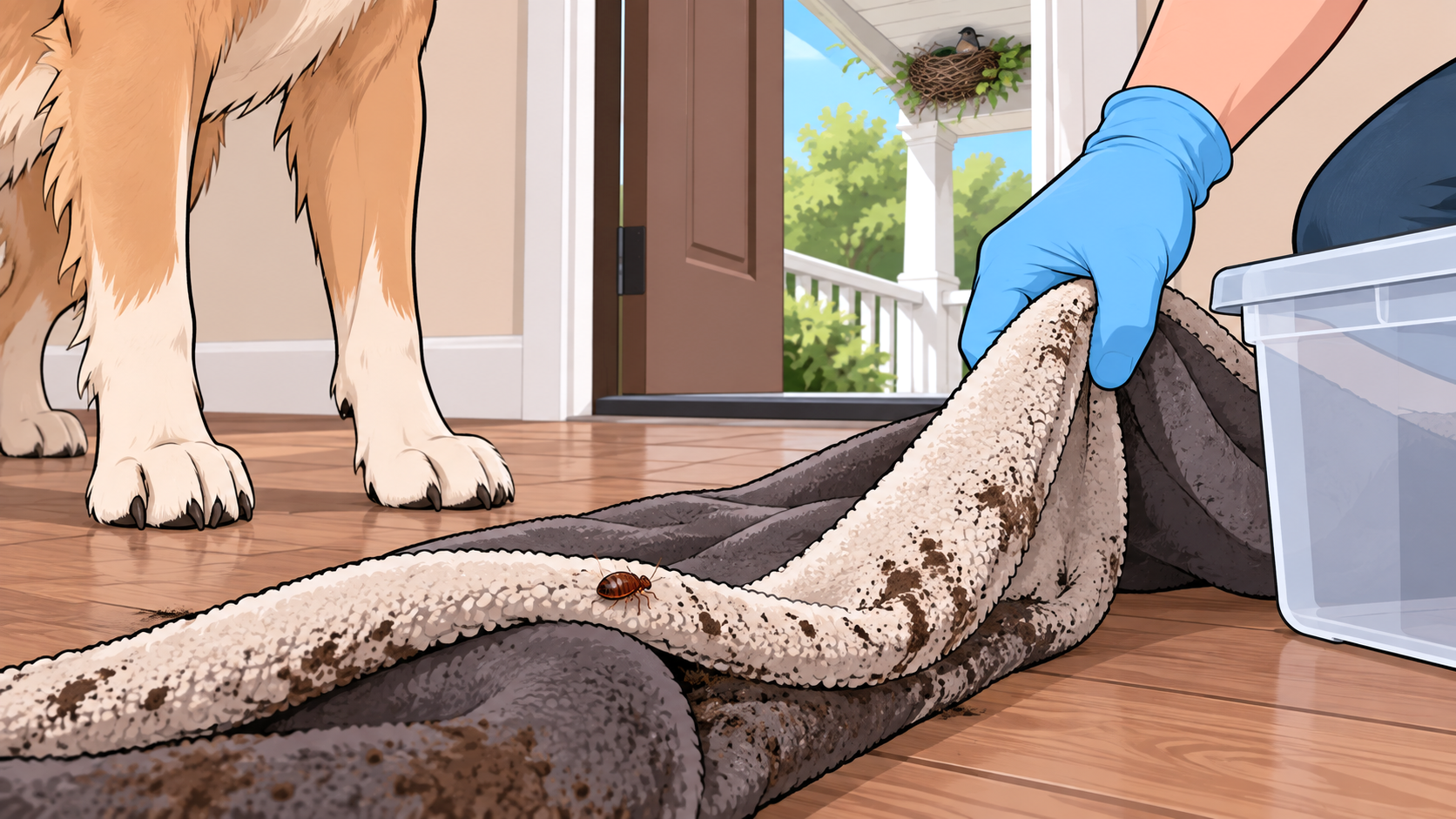
Researchers collected bed bugs from 13 New Jersey apartments that were also infested with house mice. Every bed bug selected for analysis showed visible evidence of a blood meal, yet molecular testing found no mouse DNA in any of them.
Bed bugs can feed on mice, rats, chickens and other warm-blooded animals, but humans are their preferred hosts. Field records confirm rodents as possible hosts, although a study of mouse-infested homes found no evidence of recent mouse feeding among the bed bugs tested. Chickens are different because common bed bugs can establish infestations in poultry facilities and repeatedly feed on birds. So the answer is yes, but the likelihood depends heavily on the host and setting.
Bed Bugs Can Feed on More Than Humans
Common bed bugs (Cimex lectularius) are strongly associated with people, but they are not physiologically restricted to human blood. Their growth and development are optimal when feeding on humans, yet they can also feed on other mammals and birds. Documented alternative hosts include chickens, mice, rats and rabbits.
That makes rodents legitimate potential hosts rather than animals bed bugs are physically incapable of feeding on.
Still, the ability to take a blood meal from an animal does not tell us how often bed bugs actually do it inside occupied homes. That question has been tested directly with mice, and the results are more revealing.
Researchers Found No Mouse Blood in Bed Bugs From Mouse-Infested Homes
A peer-reviewed study examined 39 common bed bugs collected from 13 occupied apartments in four New Jersey buildings. Every apartment had confirmed mouse activity, and researchers deliberately selected bed bugs with visible traces of a previous blood meal.
They then used host-specific molecular testing capable of detecting mouse DNA after a bed bug had fed on mouse blood.
None of the field-collected bed bugs tested positive for mouse DNA. The researchers confirmed that their method could detect mouse blood in laboratory-fed bed bugs for up to seven days after feeding, strengthening the evidence that the field specimens had not recently fed on mice.
One bed bug sample did test positive for feline DNA, suggesting that interactions with domestic pets deserve further study. The sample was relatively small, so the study does not prove that residential bed bugs never feed on mice. Earlier host records document feeding on both mice and rats. What the results suggest is that rodent feeding may be considerably less common in occupied homes than simply having both pests under the same roof would imply.
Mice and Bed Bugs Usually Occupy Different Parts of a Home
The researchers proposed a straightforward explanation for the lack of mouse blood: bed bugs and mice may share a building without regularly sharing the same immediate space. Common bed bugs usually establish harborages around places where people remain still long enough for them to feed. Typical hiding places include mattresses, box springs, bed frames, sofas and nearby cracks and crevices.
House mice use different spaces, including structural voids and other protected nesting areas. That spatial separation reduces the opportunities for bed bugs around a human sleeping area to encounter mice regularly, even when mice are active elsewhere in the same apartment.
It also fits what we already know about what bed bugs eat. Alternative hosts are possible, but the common bed bug remains strongly associated with humans.
Rats Are Possible Hosts Too
Rats belong in the same general category as mice. Historical field records cited in the molecular study document common bed bugs feeding on both rats and mice. UC IPM likewise lists rats among the mammals bed bugs can use as alternative hosts.
There is much less evidence establishing how frequently common bed bugs feed on rats inside modern occupied homes, however. The New Jersey blood-meal study involved homes with house mice, not rats, so its finding should not be extended into a precise estimate of rat feeding.
The defensible conclusion is narrower: bed bugs can feed on rats, but we do not have good evidence showing that rats are a routine blood source for bed bugs living alongside people.
Chickens Can Support Bed Bug Populations
Chickens are a more significant alternative host.
Common bed bugs have been documented as pests of poultry, and research cited in the blood-meal study describes populations associated with poultry facilities. This is not simply a case of a hungry bed bug occasionally biting an animal that happens to be nearby.
Chicken blood can support common bed bugs, and infestations can become established in poultry environments.
That distinction matters for backyard flocks and commercial poultry operations. Bed bugs can hide in cracks, crevices and structural components of poultry housing, emerging to feed on birds before returning to their harborages.
Finding bed bugs around chickens therefore deserves investigation as a possible bed bug infestation rather than assuming every small blood-feeding pest in a coop must be a poultry mite.
Rodents Don’t Explain Most Household Bed Bug Infestations
Finding mice and bed bugs in the same home does not mean one infestation caused the other.
The New Jersey study is particularly useful here because all 13 sampled dwellings had both pests, yet none of the tested bed bugs contained detectable mouse DNA. Simply having mice available did not make them an obvious blood source for the bed bugs living there.
A household bed bug investigation should therefore continue to focus on sleeping and resting areas and on how the insects may have been transported or dispersed through the building.
Likewise, eliminating mice should not be expected to eliminate bed bugs. Each infestation needs its own control strategy.
Animals can still matter in other ways. Bed bugs may occasionally feed on pets or other animals, and belongings associated with animals can potentially move hitchhiking bugs. We cover that distinction separately in whether animals can carry bed bugs into a home.
Questions About Bed Bugs and Other Animals
Do bed bugs prefer mice or rats?
There is not enough field evidence to establish a meaningful preference between mice and rats. Both have been recorded as alternative hosts, but humans remain the primary host associated with common bed bugs in occupied homes.
Can bed bugs survive in a house after the people move out if mice are present?
Potentially, but the presence of mice does not mean bed bugs will routinely switch to feeding on them. Bed bugs can also survive extended periods without feeding, so finding them in a vacant property does not prove rodents have been sustaining the population.
Can backyard chickens get bed bugs?
Yes. Common bed bugs can feed on chickens and have become established pests in poultry environments. If suspicious insects are found in a coop, accurate identification matters because bed bugs are not the only blood-feeding arthropods associated with poultry.
Will getting rid of mice get rid of bed bugs?
No. Mouse control does not substitute for bed bug treatment. Bed bugs can persist without rodents and are primarily associated with human sleeping and resting areas in occupied homes.
Meta description: Can bed bugs feed on mice, rats or chickens? Yes, but research suggests rodent feeding is uncommon in homes, while chickens can support bed bug populations.
One thought on “Can Animals Carry Bed Bugs Into Your Home?”