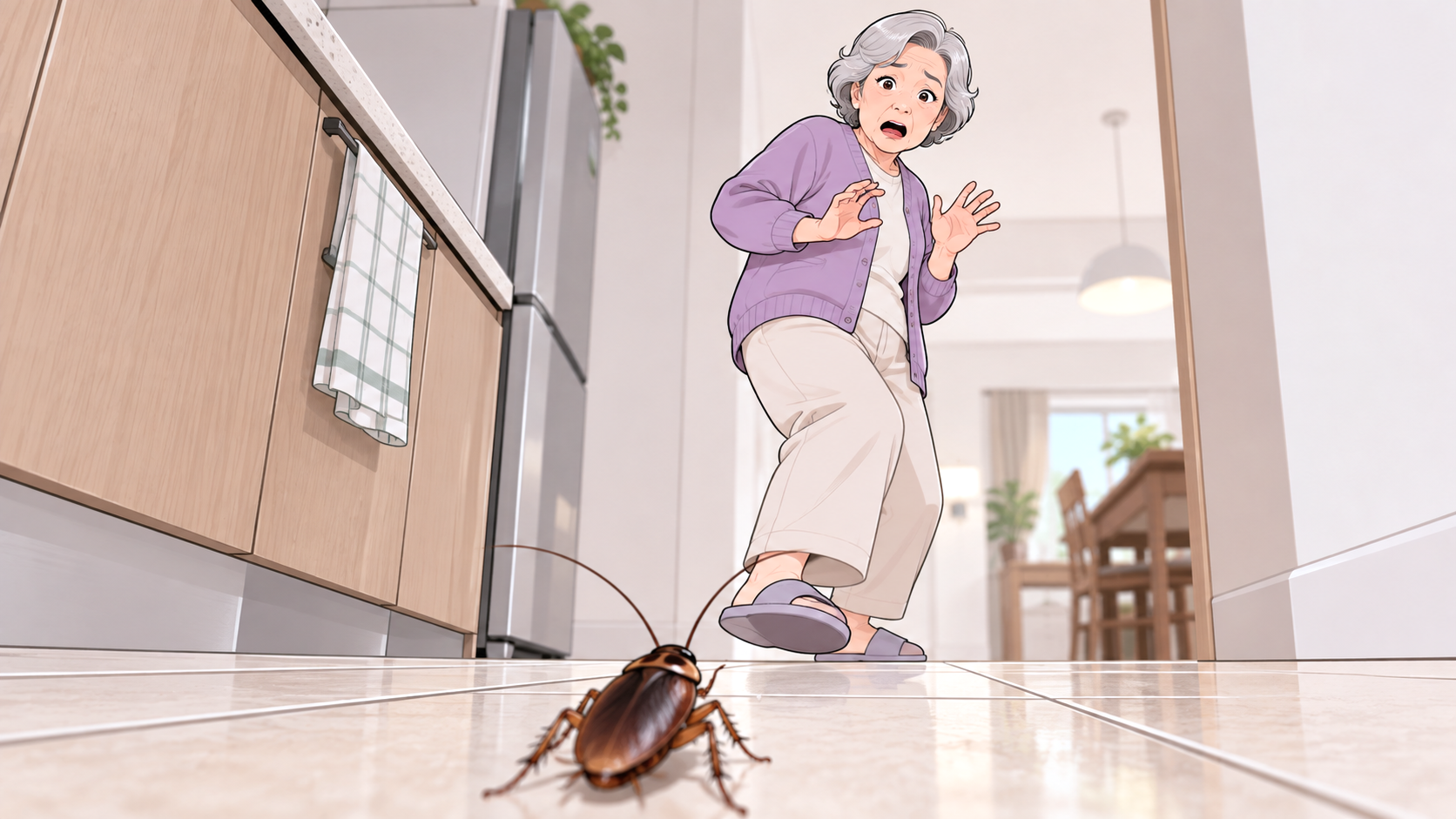
A cockroach appearing on a kitchen wall can provoke a reaction far stronger than its size would suggest. Some people freeze, others run away, and a few experience intense anxiety even when looking at a photograph. The response often combines two different emotions: fear of unexpected contact and disgust at an insect associated with dirt and contamination.
People are commonly afraid of cockroaches because of their unpredictable movements, appearance, association with unhygienic environments, and negative experiences learned over time. Individual sensitivity also influences the reaction. For some, cockroaches are merely unpleasant; for others, encountering one can trigger a specific animal phobia.
Psychological research suggests that cockroaches can provoke particularly strong negative reactions, sometimes exceeding those associated with animals commonly regarded as more dangerous.
Disgust May Be Stronger Than Fear
Someone who refuses to touch a cockroach may not believe it will attack them. Instead, they may feel an overwhelming sense of revulsion, especially at the thought of the insect contacting their food, clothing, or skin.
Disgust is an emotional response associated partly with avoiding potential contamination. Humans often react negatively to objects linked with waste, decay, bodily fluids, and environments perceived as unclean. Cockroaches can activate these associations without presenting an immediate physical threat.
A study published in Behaviour Research and Therapy, A Test of a Disease-Avoidance Model of Animal Phobias, found that sensitivity to disgust and contamination was associated with fear of animals such as cockroaches, spiders, and rats. These reactions differed from fear of animals more obviously capable of causing serious physical injury.
The emotional response can also extend beyond direct contact. In one experiment examining contamination beliefs, participants were less willing to eat a cookie after it had touched an insect, even when the relevant reaction involved disgust rather than a demonstrated infection risk. The research on disgust sensitivity and avoidance behavior illustrates how perceived contamination can influence decisions.
Although cockroach droppings can contain allergens and other contaminants, disgust does not measure actual exposure. Someone may find a harmless photograph revolting while experiencing no comparable reaction to a genuinely contaminated object.
Their Sudden Movements Trigger Startle Responses
A cockroach remaining motionless in a distant corner may be unpleasant, but one suddenly moving across the floor can provoke an immediate jump or retreat.
Rapid, unexpected movement activates attention and defensive responses before someone has consciously evaluated what is happening. The insect’s relatively small size does little to prevent this reaction when its direction or next movement feels unpredictable.
Cockroaches are particularly effective at producing such surprises because they can accelerate quickly, change direction, and disappear beneath furniture. Their running speed and rapid escape movements can make an otherwise manageable encounter feel difficult to control.
The response may become stronger when the person cannot predict where the insect will go. A cockroach moving toward someone’s shoes can create the impression of intentional approach, even though its apparent movement toward people does not establish aggression.
Flying cockroaches introduce another source of uncertainty. Their movement through the air can bring them unexpectedly close to someone’s face or body, while the flight capabilities of different cockroach species vary considerably.
The resulting fear may be directed less at the insect itself than at the possibility of sudden physical contact.
Why Cockroaches Can Seem More Frightening Than Snakes or Spiders
A 2021 study involving 424 participants examined emotional responses to photographs of cockroaches, spiders, snakes, cats, and butterflies.
The researchers found that cockroach photographs received significantly more unpleasant ratings than photographs of the other animal groups. The study, Cockroaches Are Scarier Than Snakes and Spiders, also examined participants’ fear of cockroaches and individual differences in disgust sensitivity.
This finding does not mean everyone fears cockroaches more than snakes, nor does it establish which animal is objectively more dangerous. The experiment measured emotional responses to selected images within a particular participant sample.
Cockroaches combine characteristics that may provoke several kinds of aversion simultaneously. Their long antennae, spiny legs, flattened bodies, and quick movements create a visual impression that some people find disturbing. Meanwhile, their association with rubbish, drains, and household infestations adds a contamination-related interpretation.
Another study involving more than 300 participants assessed reactions to live arthropods, including cockroaches. The research on fear and disgust toward live arthropods found that emotional ratings differed across animal groups and were influenced by characteristics including body size.
Such studies demonstrate that reactions are not determined by objective danger alone. Appearance, context, previous associations, and individual differences all influence which creatures people find frightening.
Fear Can Be Learned Without a Bad Cockroach Encounter
Not everyone who is terrified of cockroaches has experienced a frightening incident involving one.
Children can acquire negative associations by watching adults panic, hearing repeated warnings, or observing dramatic reactions when insects appear. Television, social media, and other cultural influences may reinforce the idea that cockroaches are especially revolting.
The NHS explanation of phobia development identifies frightening experiences, family influences, and learned responses among factors that can contribute to specific fears.
Direct experiences can also strengthen an existing aversion. Discovering a cockroach unexpectedly inside clothing, seeing several emerge from a cupboard, or having one land nearby may produce a lasting association between cockroaches and distress.
Repeated avoidance can preserve that association. If someone immediately leaves every room where a cockroach appears, they may experience relief without discovering whether remaining at a safe distance would have been manageable.
People raised around insects without strongly negative social reactions may develop different attitudes. Nevertheless, familiarity does not guarantee comfort, and cultural background alone cannot predict an individual’s response.
What Happens in the Brain During Cockroach Phobia?
Researchers have investigated whether people with cockroach phobia process these insects differently from individuals without the condition.
A neuroimaging study examined 24 adults, including 12 diagnosed with cockroach phobia, while they watched three-dimensional cockroach-related visual material during functional magnetic resonance imaging.
The study published in the International Journal of Clinical and Health Psychology identified differences in brain activity involving regions associated with emotional processing, threat detection, and memory.
Among these regions was the amygdala, which participates in processing emotionally significant information, including potential threats. Other regions involved in the findings included the hippocampus and parts of the cerebral cortex.
The researchers suggested that people with cockroach phobia may process threatening stimuli through interacting emotional and cognitive pathways. However, the study’s small sample limits how broadly its findings can be applied.
These findings do not establish that cockroach fear arises from a single brain region or that brain scans are necessary for diagnosis. They indicate that an intense phobic response involves measurable psychological and physiological processes rather than merely a deliberate choice to dislike an insect.
When Does Cockroach Fear Become a Phobia?
Disliking cockroaches, avoiding direct contact, or feeling startled by one does not automatically indicate a mental health condition.
A specific phobia involves marked fear or anxiety that is disproportionate to the actual danger, often accompanied by persistent avoidance or significant disruption to everyday life.
The American Psychological Association’s definition of specific phobia includes animal-related fears within this category.
Cockroach phobia is sometimes called katsaridaphobia, although clinicians generally use the broader diagnostic classification of specific phobia, animal type.
A person experiencing a significant phobia might avoid entering certain rooms, struggle to sleep after seeing a cockroach, or experience intense physical symptoms when anticipating an encounter. These may include trembling, nausea, sweating, a racing heartbeat, or overwhelming anxiety.
The severity of the reaction matters more than whether someone finds cockroaches disgusting. Fear that substantially interferes with normal activities deserves attention, particularly when the person begins avoiding otherwise safe places or situations.
How Can You Become Less Afraid of Cockroaches?
Reducing cockroach fear does not require learning to like them, touching them, or tolerating an active infestation. The aim is to develop a more manageable emotional response while maintaining reasonable boundaries.
For ordinary discomfort, separating observations from assumptions can help. A cockroach appearing in a room may be unpleasant, but it does not automatically mean it intends to attack or make physical contact. Learning about the circumstances in which cockroaches crawl on people may help someone evaluate a specific concern without treating every encounter as equally threatening.
During a sudden encounter, moving away calmly and allowing the initial startle response to subside can prevent panic from escalating. Deliberately slowing breathing may help manage the physical symptoms of anxiety. There is no need to approach or handle the insect.
For persistent fear, gradual exposure is an established psychological approach. Exposure involves encountering a feared stimulus in manageable stages, allowing the person to learn that anxiety can diminish without relying on immediate escape.
The NHS guidance on gradually facing fears describes how structured exposure can reduce avoidance. For someone afraid of cockroaches, this might begin with discussing the insect, progress to viewing simple illustrations, and eventually involve more realistic images or controlled situations.
People with severe phobias should work with a qualified mental health professional rather than attempting overwhelming exposure exercises independently. Research into augmented-reality exposure for cockroach phobia reflects efforts to develop controlled therapeutic environments without requiring immediate contact with live insects.
The National Institute of Mental Health identifies cognitive behavioral therapy and exposure therapy as established approaches for treating specific phobias.
Professional support is particularly appropriate when cockroach-related anxiety affects sleep, work, relationships, or the ability to use parts of the home. Successful treatment does not eliminate ordinary caution; it helps bring the intensity of fear into proportion with the situation.