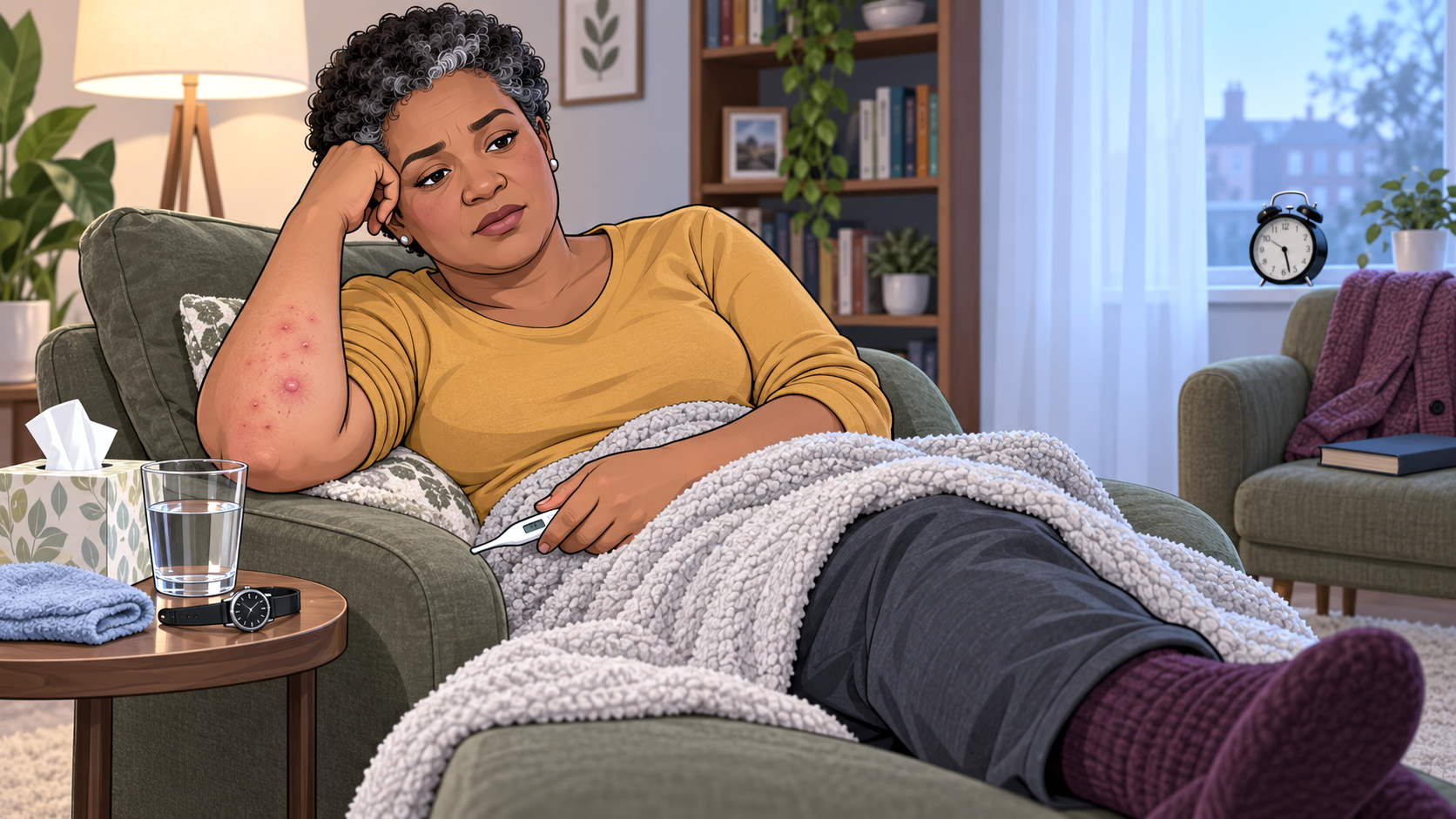
Bed bugs aren’t known to transmit diseases to people, and most bites cause nothing more than itching, irritation, and temporary skin reactions. However, bed bug infestations can affect health in other ways. Severe, prolonged infestations have been linked to anemia, while sleep loss and anxiety are much more commonly reported.
Researchers have also discovered that bed bugs release large amounts of histamine into infested homes, although whether this environmental exposure causes illness in people remains unknown.
Bed Bugs Aren’t Known to Spread Disease
This is the most important distinction. The CDC states that bed bugs aren’t known to spread diseases to people, despite their blood-feeding behavior.
That doesn’t make their bites medically irrelevant. Intense itching can lead to scratching and secondary skin infection, while allergic reactions occasionally occur. Those are consequences of the bite or the body’s reaction to it rather than infections transmitted by the insect.
If those are your concern specifically, bed bug bites can become secondarily infected after the skin is damaged, while allergic reactions to bed bug bites range from larger local reactions to rare anaphylaxis.
Severe Infestations Have Been Linked to Anemia
Bed bugs consume only a small amount of blood individually, but repeated feeding by very large populations can become medically significant.
One striking case involved a 60-year-old man with severe iron-deficiency anemia whose apartment contained hundreds of visible bed bugs and thousands in his mattress and bedding. After other sources of blood loss weren’t identified and the infestation was treated, his hemoglobin returned to normal and the anemia didn’t recur during follow-up. The physicians concluded that ongoing blood loss from the severe bed bug infestation was almost certainly responsible.
Larger-scale research has found an association as well. A study comparing 332 bed bug-infested emergency-department patients with 4,952 matched controls found that 59.5% of the infested patients were anemic compared with 36.9% of controls. Severe anemia occurred in 4.4% versus 0.7%, and blood transfusions were also more common among infested patients.
Those results don’t prove that bed bugs caused the anemia in every patient. The study was observational. Combined with documented case reports, however, they support severe bed bug infestation as a potential contributor to anemia in some circumstances.
Sleep Loss and Anxiety Are More Common Concerns
You don’t need thousands of bed bugs for an infestation to affect your well-being. The CDC specifically lists loss of sleep and anxiety among the effects associated with bed bugs.
The reason isn’t difficult to understand. Repeated bites, uncertainty about whether treatment has worked, disrupted sleeping arrangements, and constant concern about bugs can interfere with normal sleep and create substantial distress.
Persistent insomnia or anxiety shouldn’t be dismissed simply because an insect infestation triggered it. If those symptoms are significantly affecting daily life, discussing them with a healthcare professional is reasonable.
Bed Bugs Also Leave Histamine in Homes
Another possible health issue is still being investigated. Bed bugs excrete histamine in their feces as part of their chemical communication system.
Researchers measuring household dust found far higher histamine concentrations in bed bug-infested homes than in uninfested controls. Levels also remained elevated for at least three months after successful heat treatment.
More recent research found that bed bug-derived histamine showed little degradation over nine months on tested fabric and unfinished wood. Cleaning could substantially reduce it, particularly when the fecal material was physically removed. Laundering was highly effective on the fabrics tested.
What remains unknown is more important than what has been discovered. Researchers have not established what health effects, if any, people experience from inhaling or contacting environmental histamine produced by bed bugs. There is currently no established safe household exposure level either.
For that reason, bed bug histamine should be treated as an emerging environmental contaminant under investigation, not as a proven cause of respiratory illness or other disease.
When Bed Bugs Become a Medical Concern
For most people, an infestation won’t cause anemia or another systemic illness. Medical attention becomes more important when there are symptoms beyond an ordinary itchy skin reaction.
Unexplained fatigue, weakness, dizziness, shortness of breath, or fainting can have many causes and should be medically evaluated rather than attributed to bed bugs without testing. This is especially important when someone is living with an extremely heavy infestation or is unable to address it independently.
Persistent sleep disturbance, significant anxiety, signs of skin infection, or a serious allergic reaction also warrant appropriate medical attention. Knowing when to see a doctor for bed bug bites can help separate routine reactions from symptoms that deserve professional evaluation.
Questions About Getting Sick From Bed Bugs
Can bed bugs transmit diseases through their bites?
Bed bugs aren’t known to transmit diseases to people. Their established health effects come primarily from bite reactions, scratching, sleep disruption, and, in unusual circumstances, other complications associated with severe infestations.
Can bed bugs cause anemia?
Severe and prolonged infestations have been implicated in documented cases of iron-deficiency anemia, and observational research has found anemia more frequently among infested emergency-department patients. This is not considered a normal consequence of a small or recently detected infestation.
Can bed bugs cause anxiety and insomnia?
Yes. Sleep loss and anxiety are recognized effects associated with bed bug infestations. Seek professional help if either becomes persistent or substantially interferes with everyday life.
Is histamine from bed bugs dangerous?
Researchers have shown that bed bug-derived histamine can accumulate and persist in infested homes, but its direct effects on human health haven’t yet been established. Current evidence doesn’t justify attributing respiratory, allergic, or other symptoms to environmental bed bug histamine without further research.
2 thoughts on “Can Bed Bug Bites Actually Make You Sick?”