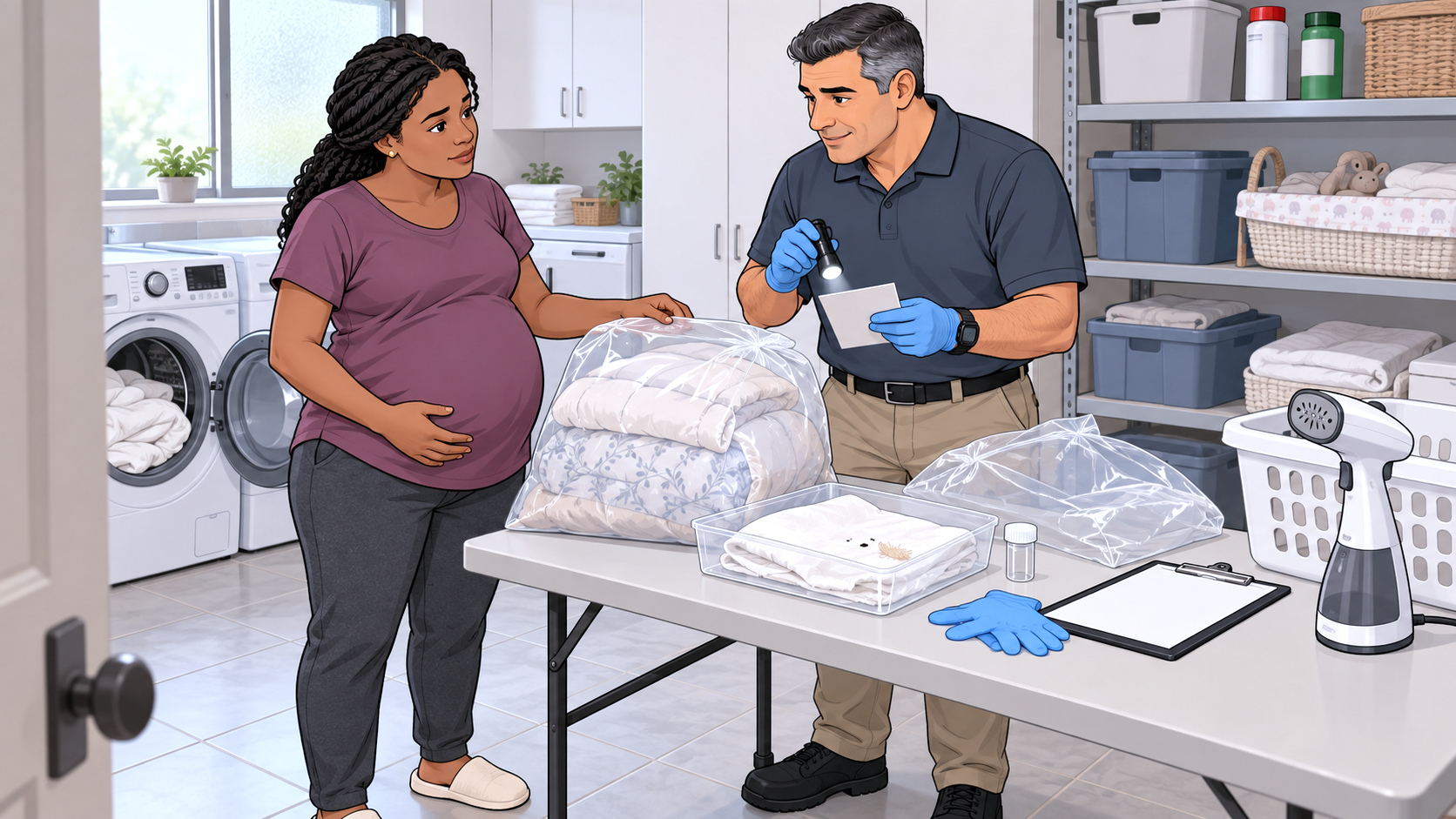
Pregnancy changes the way we would approach a bed bug problem, but not because bed bugs suddenly become a different kind of pest. The bigger consideration is treatment. A desperate attempt to clear an infestation can introduce unnecessary pesticide exposure, so this is a situation where choosing the safest effective control strategy matters more than finding the fastest-looking spray. Bed bugs are not known to transmit disease, and pregnancy does not make their bites a known route of infection to the developing baby. However, bites can cause itching, allergic reactions, loss of sleep, and secondary skin infections from scratching. During pregnancy, pesticide use and medications for bite symptoms deserve additional caution and professional guidance.
That means there are really two problems to handle separately. The infestation needs to be eliminated, while any bite reaction needs appropriate care. Neither problem benefits from panic spraying, homemade pesticide mixtures, or automatically treating every mark on the skin as proof of bed bugs.
Bed Bugs Do Not Transmit a Pregnancy-Specific Infection
The first concern many expectant parents have is whether a bed bug can transmit something dangerous to the pregnancy when it feeds. Bed bugs are blood-feeding insects, but they are not known to transmit disease to people. Their public-health impact comes from other consequences, including itching, sleep loss, allergic reactions, and skin problems caused by scratching.
So finding bed bugs during pregnancy should not be treated like discovering a disease-carrying mosquito or tick. The infestation still deserves attention, but the reason for removing it is different. Our broader guide to whether bed bug bites can make you sick covers the health effects separately.
Pregnancy also does not give a bite mark a unique appearance. Bed bug reactions vary considerably between people, and some people show no physical signs at all. Therefore, unexplained marks during pregnancy should not be diagnosed from appearance alone. If the pest has not been confirmed, start by checking the sleeping area for bed bugs and their physical signs rather than treating the skin marks as identification.
The Bite Is Usually a Skin Problem, Not a Pregnancy Problem
Most bed bug bites require little medical treatment. Keeping the skin clean and avoiding scratching can reduce the chance of secondary infection, while more significant reactions sometimes require medication. Clinical care for bed bug bites can include treatments for itching and inflammation when symptoms warrant them.
Pregnancy adds an important boundary here. Do not assume that an over-the-counter antihistamine, topical steroid, essential oil, or other product is appropriate simply because it is available without a prescription. A pregnant person who needs medication for persistent itching or a significant skin reaction should ask their physician, pharmacist, or other qualified healthcare professional which treatment is appropriate for their pregnancy.
Our guide to treating bed bug bites at home covers ordinary bite care in more detail, but pregnancy is a good reason not to experiment with medications. The same applies when a bite becomes increasingly painful, warm, swollen, or develops other concerning changes. Scratching can damage the skin and contribute to secondary infection, so worsening symptoms deserve medical attention rather than another home remedy.
A severe allergic reaction is a different situation entirely. Bed bug bites can rarely produce serious allergic reactions. Anyone experiencing symptoms that suggest a severe allergic reaction needs urgent medical care rather than pest-control advice.
Pregnancy Is a Good Reason to Avoid the Spray-Everything Approach
A confirmed infestation creates an understandable urge to spray the mattress, floor, furniture, baseboards, and anything else near the bed. We would be especially cautious with that approach during pregnancy. Bed bug control does not become more effective simply because more pesticide reaches more household surfaces.
Any pesticide used against bed bugs should be registered for that purpose and applied only to locations permitted by its label. The label also specifies precautions intended to reduce exposure, including where the product can be applied and whether people need to remain away from a treated area for a specified period. Bed bug pesticide safety instructions should therefore be treated as requirements, not optional suggestions.
Never use an outdoor pesticide inside the home because it happens to kill insects. Likewise, do not apply a pesticide to mattresses, clothing, furniture, or skin unless the product label specifically permits that use. Using bed bug pesticides outside their labeled directions can create serious safety problems without solving the infestation.
Pregnancy is also not the time to improvise with rubbing alcohol, unregistered powders, gases, or other internet treatments. Some of these methods create fire, inhalation, poisoning, or other hazards. The fact that something is sold as a household product does not make it an appropriate bed bug treatment.
You Can Do Quite a Lot Before Reaching for an Insecticide
Bed bug control does not have to begin with a chemical application. In fact, we prefer treating pesticide use as one component of a larger plan rather than the foundation of the entire response. Integrated pest management for bed bugs combines multiple control and monitoring methods instead of depending on pesticides alone.
Start by confirming the infestation and determining where activity is concentrated. Inspect mattress seams, the box spring, bed frame, headboard, and nearby furniture. Bed bugs are excellent at hiding, so a bedroom can be infested even when you have not actually seen a live bed bug.
Vacuuming can physically remove some bed bugs, although it should not be expected to eliminate an infestation by itself. Our guide to using a vacuum against bed bugs explains where that method fits. Mattress and box-spring encasements and bed bug interceptors can also form part of a broader control and monitoring strategy.
Laundry can be useful as well, particularly for bedding and clothing that can safely tolerate the required treatment. However, avoid turning the entire house into bags of belongings without a plan. Moving infested items unnecessarily can complicate control, and throwing furniture away does not eliminate bugs hiding elsewhere.
Heat Sounds Chemical-Free, but It Still Has to Be Done Correctly
Heat is understandably attractive during pregnancy because it can reduce reliance on insecticides. Bed bugs and their eggs can be killed when the insects themselves reach lethal temperatures, but heating a room is very different from heating a shirt in a dryer.
Trying to improvise whole-room heat with household heaters, fireplaces, or other equipment can create serious safety hazards and may fail to heat every hiding place sufficiently. Our guide to professional bed bug heat treatment explains the controlled version of this method, while our article on what temperatures kill bed bugs deals specifically with lethal-temperature questions.
This is one reason “chemical-free” should not automatically be translated into “safe to improvise.” The safest option is the method that controls the infestation without introducing a new household hazard.
A Pest Control Company Needs to Know About the Pregnancy
Do not wait until after treatment to mention that someone in the home is pregnant. Tell the pest management professional before the treatment plan is selected. That gives them the information needed to explain what products or nonchemical methods they intend to use, where they will use them, and what label-directed precautions apply.
A professional treatment may combine inspection, preparation, physical control, monitoring, heat, and appropriately selected pesticides. There is no single pesticide that every bed bug infestation requires. Bed bug pesticides fall into several chemical classes, and resistance can affect treatment performance, which is another reason repeatedly applying one household spray is a poor substitute for a planned treatment. Registered pesticides used for bed bug control vary in how they work and how they may be used.
We would also ask for the exact product names before treatment rather than accepting “we use a safe spray” as the whole explanation. The actual pesticide label contains the instructions that matter. In the United States, the bed bug pesticide product search tool can be used to check registered consumer products, although professionals also have access to products not sold for general consumer use.
The same conversation should establish when the pregnant person can leave, whether any preparation is required, and when the treated area can be reoccupied under the particular product labels and treatment protocol. Do not borrow a reentry time from another pesticide or from an online article. Those instructions depend on what was actually applied.
“Natural” Bed Bug Treatments Still Need Scrutiny During Pregnancy
Natural remedies can sound like the obvious alternative when pesticide exposure is a concern. Unfortunately, the word natural does not tell you whether something is effective against bed bugs or appropriate to inhale, touch, or spread around a sleeping area.
Essential oils are a good example. A bottle of concentrated plant oil is still a biologically active substance, and using it around the home is not automatically risk-free because it came from a plant. More importantly, an infestation should not be allowed to grow while an unproven home treatment takes the place of an effective control plan.
We take the same view of other household remedies. Rubbing alcohol is particularly poor DIY advice because it is flammable, and using it as an unregistered bed bug pesticide can create a fire hazard. Our broader examination of whether home remedies for bed bugs actually work separates useful control methods from remedies that should not become the centerpiece of treatment.
The Weeks After Treatment Still Matter
Removing the initial wave of visible bugs does not prove that an infestation has ended. Bed bugs hide in narrow spaces, and treatment success can depend on preparation, coverage, reaching different life stages, resistance, and continued monitoring.
That makes follow-up particularly valuable when the household is trying to minimize unnecessary repeat pesticide applications. Instead of spraying again simply because you are nervous that a bug might remain, follow the treatment plan and monitor for evidence. Interceptors and repeated inspections can help determine whether activity continues.
Our guide to how to tell whether bed bug treatment worked covers that stage in detail. If live bugs or fresh signs continue to appear, contact the professional handling the infestation rather than automatically adding another pesticide on top of the existing treatment.
Build the Treatment Plan Around Pregnancy From the Beginning
The best time to account for pregnancy is before anyone treats the room. Confirm that the pest is actually a bed bug, tell the pest management professional about the pregnancy, and ask exactly how the proposed treatment works. If pesticides are part of the plan, obtain the product names and follow every label-directed exposure and reentry precaution.
For health questions, keep the medical and pest-control sides separate. A pest professional can explain the infestation and treatment protocol, but questions about medication, pregnancy-specific exposure concerns, or a significant bite reaction belong with a physician, pharmacist, or other qualified healthcare professional. Meanwhile, using several control methods together gives the household a way to attack the infestation without treating pesticide application as the only tool available.
Other Questions Parents Ask About Bed Bugs During Pregnancy
Can a baby be born with bed bugs because the mother had them while pregnant?
No. Bed bugs are external insects that live in the environment rather than parasites that live inside the human body. They do not infest a fetus. A home can remain infested after a baby is born, however, so eliminating an existing infestation before the newborn arrives is a sensible goal.
Should a pregnant person sleep in another room after finding bed bugs?
Moving to another bedroom is not automatically a solution. Bed bugs seek blood meals and can spread within a structure, so changing sleeping locations can complicate an infestation. Before relocating where someone sleeps, discuss the layout and treatment strategy with the professional managing the problem.
Can you stay somewhere else while the house is treated?
Yes, temporary absence may be appropriate or required depending on the treatment. However, clothing, luggage, and other belongings leaving an infested home can potentially transport bed bugs. Prepare anything you take with you carefully rather than moving untreated belongings directly into another residence.
Should you tell your obstetrician about a bed bug infestation?
Mention it when you have a significant skin reaction, need medication for bite symptoms, or have concerns about pesticide exposure during pregnancy. Bring the exact pesticide product information when exposure is part of the concern. That gives the healthcare professional something specific to evaluate instead of the vague description “bed bug spray.”
What should you do if pesticide was already used before you realized you were pregnant?
Do not try to estimate the risk from the words “insecticide” or “bed bug spray” alone. Identify the exact product, active ingredient, amount used, location of application, timing, and how exposure occurred, then contact a healthcare professional or poison-information service for individualized guidance. Different products and exposure circumstances cannot be treated as interchangeable.