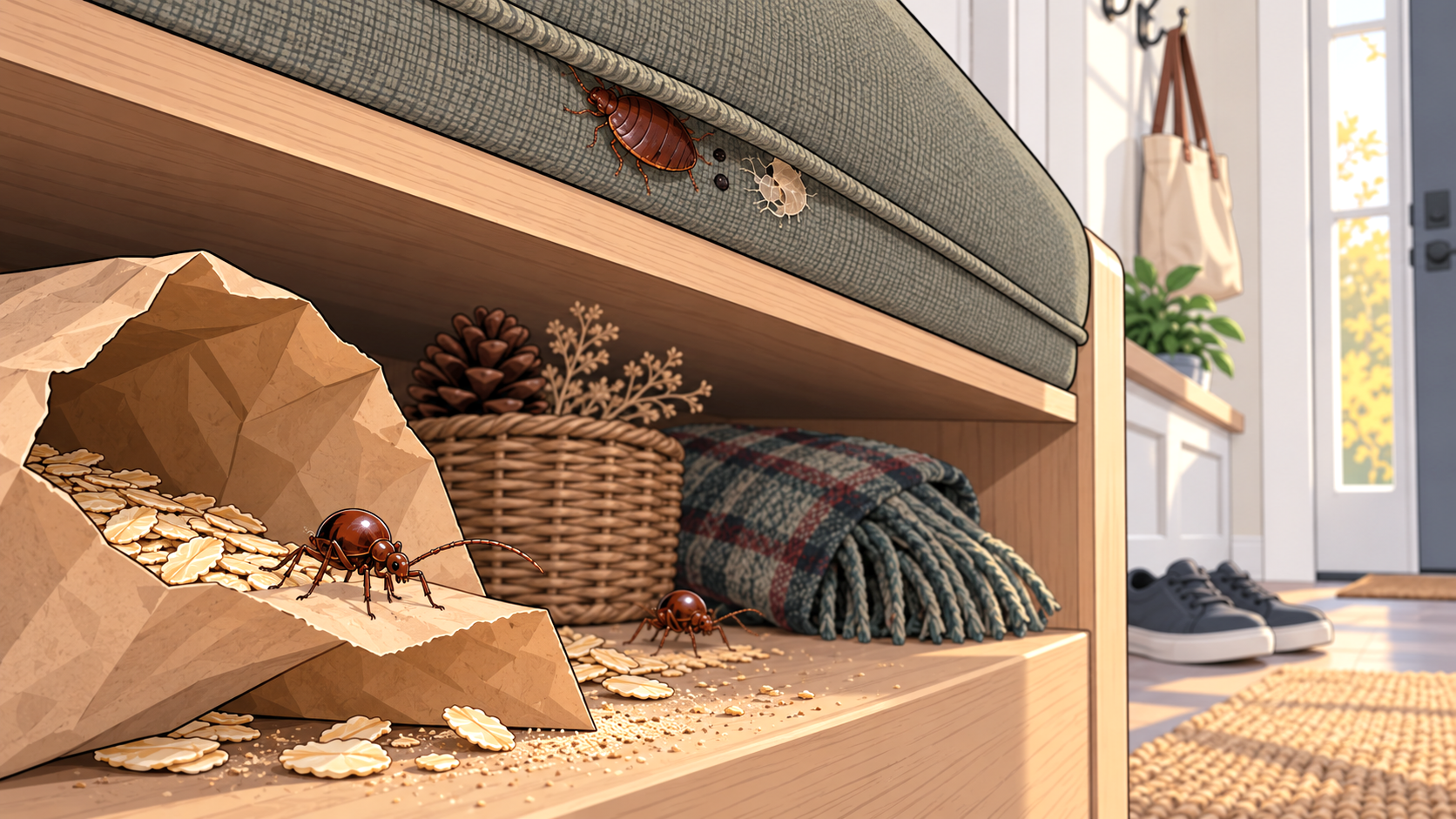
Spider beetles and bed bugs can both be small and reddish-brown, but their body shape, legs, feeding habits, and typical locations make them fairly easy to separate once you know what to examine. Spider beetles are stored-product beetles with rounded bodies and relatively long legs. Bed bugs are flatter, broader insects that feed on blood and usually stay close to places where people sleep or rest.
Spider Beetles Have a Much Rounder Body
Body shape is one of the quickest ways to distinguish the two.
Spider beetles get their name from their spider-like appearance. They typically have a rounded or globular abdomen, narrow thorax, and relatively long legs and antennae. Some species have smooth, shiny bodies, while others have hairs or markings.
Bed bugs have a distinctly different build. An unfed adult is broad, oval, and strongly flattened from top to bottom. After a blood meal, its abdomen expands and becomes longer and more swollen, but it still doesn’t develop the compact, beetle-like shape characteristic of many spider beetles.
If you’re comparing an insect that recently fed, fed and unfed bed bugs can look surprisingly different, so body shape should be considered alongside the other features.
Spider Beetles Have Longer-Looking Legs
The legs provide another useful clue. Spider beetles have relatively long, slender legs that contribute to their spider-like appearance. Bed bugs have six legs too, but their legs look shorter in proportion to their broad, flattened bodies.
The antennae also differ. Spider beetles generally have conspicuous, relatively long antennae, whereas a bed bug’s antennae are shorter in proportion to its body.
Both are insects, despite the spider beetle’s misleading name. A spider beetle therefore has six legs, not the eight legs of an actual spider.
Spider Beetles Have Wing Covers
Spider beetles are true beetles, which means their forewings are modified into hardened covers called elytra. Depending on the species, functional hindwings may be present beneath them, and some spider beetles can fly.
Bed bugs don’t have functional wings and cannot fly. Their bodies also lack the hard pair of wing covers characteristic of beetles. This makes the back of the insect particularly useful when identification from overall color and size remains uncertain.
Spider Beetles Don’t Feed on Blood
Their diets are completely different.
Spider beetles are scavengers and stored-product pests. Depending on the species, they can feed on grains, flour, seeds, spices, dried fruit, animal products, dead insects, rodent droppings, and other dried organic material. Some species can also damage insect collections and other museum specimens.
Bed bugs are blood-feeding insects. They seek humans and other suitable hosts for blood meals rather than feeding on pantry products or dried debris.
Spider beetles therefore don’t bite people for blood the way bed bugs do.
Where You Find Them Can Help Identify Them
A spider beetle repeatedly appearing around stored food points toward a pantry or another source of dry organic material. Check old packages, spilled food, pet food, bird seed, rodent nests, and other undisturbed materials where they could be developing.
Bed bugs are more strongly associated with sleeping and resting areas. Typical hiding places include mattress seams, box springs, bed frames, headboards, upholstered furniture, and nearby cracks and crevices.
Location alone isn’t enough to identify an insect, however. Spider beetles can wander away from their food source, while bed bugs can also be transported into unusual locations.
If the insect was found near a bed, look for the additional physical evidence used to confirm whether you actually have bed bugs.
Getting Rid of Spider Beetles Requires Finding the Food Source
Finding and removing the material supporting the infestation is the most important step in spider beetle control.
Inspect susceptible stored foods and other dry organic materials. Discard infested products, vacuum spilled food and debris from shelves and crevices, and transfer vulnerable foods into tightly sealed containers.
If beetles continue appearing after the pantry has been checked, investigate less obvious sources such as old rodent or bird nesting material, accumulated debris, or forgotten stored products.
That differs substantially from bed bug control because removing pantry food won’t affect a bed bug infestation. Correct identification therefore matters before deciding how to treat the problem.
Questions About Spider Beetles vs Bed Bugs
Can spider beetles bite people?
Spider beetles aren’t blood-feeding parasites and aren’t considered biting pests of people. Their presence usually indicates a stored-food or organic-material source rather than a human host.
Are spider beetles the same size as bed bugs?
Their size ranges can overlap, so size alone isn’t dependable. Body shape, legs, wing covers, and where the insect was found provide more useful clues.
Can spider beetles fly?
Some spider beetle species can fly, while flight ability varies among species. Bed bugs cannot fly.
Can spider beetles infest a bedroom?
They can wander into bedrooms or develop wherever suitable food or organic material exists. Finding one near a bed doesn’t automatically make it a bed bug, so examine the insect itself and look for additional bed bug evidence.