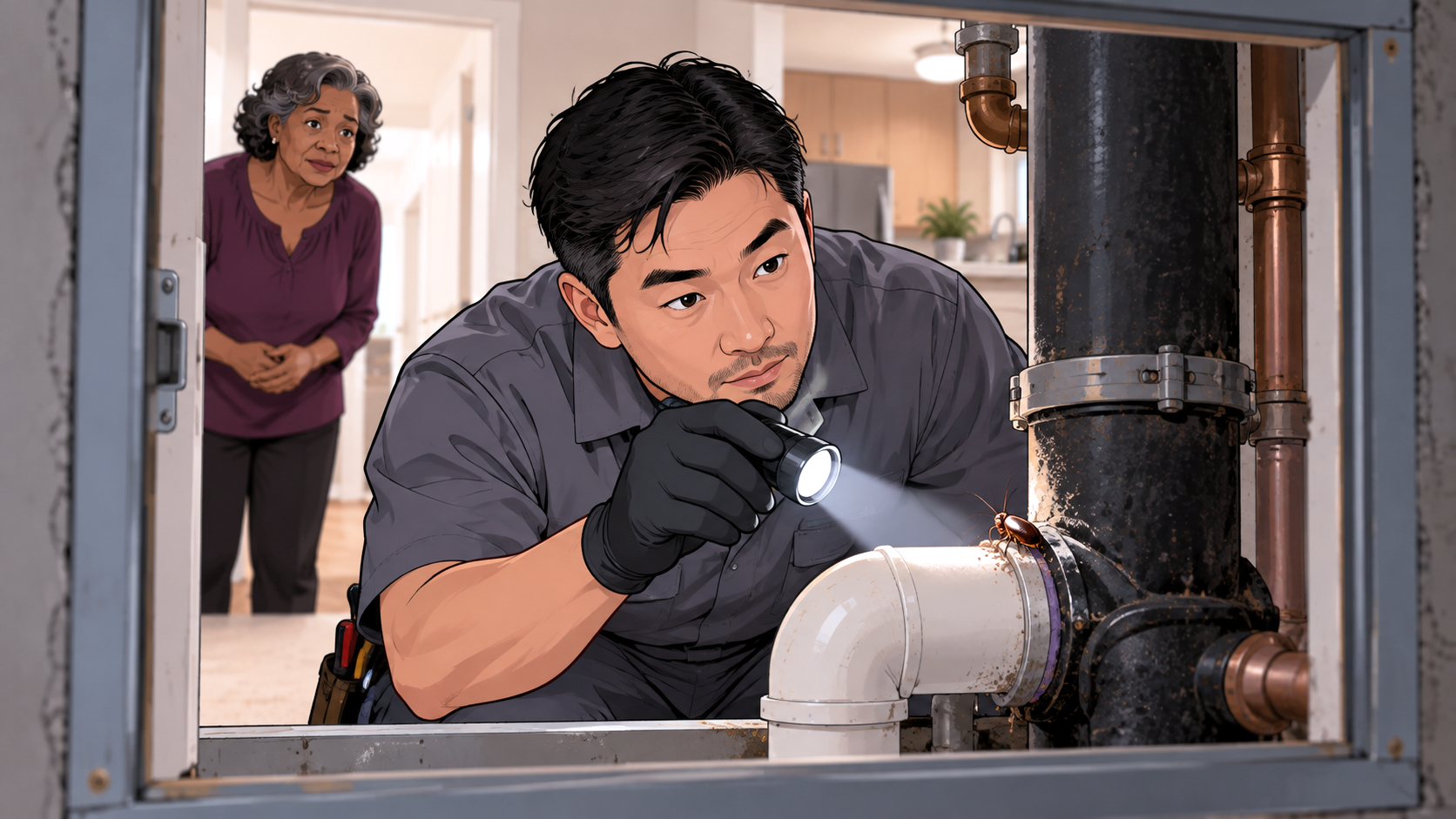
An apartment gives you control over your kitchen, bathroom, storage, and housekeeping, but not over every space a cockroach can occupy. Pipes continue through walls. Utility penetrations connect structural voids. Adjacent units may contain additional harborages. Effective apartment control therefore has two parts: reduce and treat the population inside your unit while making sure a building-level problem is not being managed as though it stops at your front door.
To get rid of cockroaches in an apartment, report the infestation promptly, monitor the unit to locate concentrated activity, remove accessible food and water, reduce harborages, and use properly placed cockroach treatments where needed. Property management may also need to inspect or treat nearby units and repair structural conditions that allow cockroaches to persist or move through the building.
Tell the Landlord or Property Manager Early
Reporting cockroaches is not an admission that the apartment is dirty. Cockroaches can enter with belongings and packaged goods, and they can move within buildings once established. Health Canada specifically notes that cockroach presence does not necessarily indicate unclean conditions. Waiting until sightings become frequent can give an established population more time to reproduce unnoticed.
Send the report in a form you can retain, such as email or the building’s maintenance system, and include useful observations: where cockroaches have appeared, when sightings began, and whether you have seen small nymphs as well as adults. Photographs can help confirm the insect. The cockroach species involved can influence where inspection should concentrate, while the presence of small cockroach nymphs provides information that an isolated adult sighting cannot.
Early reporting also gives building management an opportunity to investigate beyond your apartment when necessary. Multi-family pest management depends on cooperation among residents, management, maintenance staff, and pest professionals, with neighboring apartments sometimes requiring inspection rather than repeatedly treating one unit in isolation.
Map the Activity Inside Your Unit Before Rearranging Everything
Place sticky monitors where cockroaches are likely to travel: beside the refrigerator and stove, beneath the kitchen sink, along cabinet edges, near bathroom plumbing, and anywhere you have repeatedly seen them. Label the traps by location and date so catches can be compared. In a high-rise apartment study, traps beside refrigerators and stoves captured significantly more German cockroaches than traps under kitchen sinks or in bathrooms, illustrating how unevenly an infestation can be distributed even within one home.
Avoid immediately emptying every cabinet into piles or moving infested belongings from room to room. First determine where the strongest activity lies. Fecal spots, shed skins, egg cases, nymphs, and concentrated trap catches can provide additional evidence of an established cockroach infestation. Once the active areas are known, cleaning and treatment can be concentrated where they have a reason to be.
Make Your Apartment a Poor Feeding Site
Apartment sanitation cannot eliminate cockroaches living elsewhere in a building, but it can remove resources available to those inside your unit. Clean grease and food debris beside and beneath appliances, wipe spills promptly, store food in closed containers, remove garbage regularly, and avoid leaving dirty dishes overnight. Cockroaches can exploit a wide range of foods and organic residues, so a kitchen that looks generally tidy can still contain usable food in narrow appliance gaps and cabinet corners.
Reduce unnecessary cardboard and clutter around active areas because both can create protected hiding spaces and make inspection difficult. Water sources also deserve attention. Report leaking pipes or plumbing fixtures that management is responsible for, and dry smaller spills or standing water you can address yourself. Building cockroach programs are more effective when food, water, and nesting opportunities are reduced alongside treatment.
Do Not Turn the Apartment Into a Spray Zone
Repeatedly spraying baseboards, floors, cabinets, and every cockroach that appears can increase pesticide use without producing a coordinated control program. Apartment IPM research using sticky-trap monitoring and gel baits found substantial cockroach suppression while indoor insecticide residue levels decreased. Another public-housing study found that an IPM program produced lower cockroach counts than routine pest-control practices.
If you are treating the unit yourself, use only a product legally registered for cockroaches and for the intended indoor location, and follow its complete label. In Canada, a registered pest-control product carries a PCP registration number, and its directions govern the target pest, permitted location, application method, precautions, and other conditions of use. Building owners and residents also need to respect label requirements for pesticide application and reentry.
Baits can be particularly useful for German cockroaches because small placements can be positioned close to active harborages instead of treating broad exposed surfaces. Do not apply another pesticide over bait or beside it unless the relevant labels permit that combination. The broader cockroach removal framework still applies, but an apartment treatment has to fit whatever professional or building-wide program is already underway.
Give the Pest Professional Access to the Places That Matter
If management schedules professional treatment, follow the preparation instructions you are actually given rather than relying on a generic internet preparation list. Different treatment programs can require different preparation. Clearing a specified cabinet, moving items away from a particular area, securing pets, or leaving the apartment for a stated period should be based on the technician’s instructions and the products being used.
Tell the technician where monitors are catching the most cockroaches and where you have found nymphs, egg cases, or fecal spotting. Do not clean away fresh bait placements after treatment unless instructed to do so. Keeping appointments also matters in multi-unit housing because coordinated pest management becomes harder when infested apartments cannot be inspected or treated. Building-wide IPM studies have achieved large reductions in apartment infestations when affected units received monitoring, targeted treatment, and follow-up visits.
Close Gaps You Are Allowed to Repair, and Report the Rest
Small openings around removable fixtures, cabinets, and other permitted areas may be sealable by the resident, but rental rules determine which alterations you can make yourself. Gaps around plumbing penetrations, damaged walls, loose baseboards, failing seals, and larger building defects may require maintenance. Report them rather than making unauthorized repairs.
Pay particular attention to routes that connect the apartment with structural spaces. Cockroaches in multi-unit buildings have been documented moving between apartments, with one trapping study finding that movement was greatest between adjacent kitchen areas. Plumbing areas can also create misleading sightings because a cockroach beside a sink may have traveled through a wall opening around the pipe rather than directly through the drain. Repeated cockroach activity around a drain or plumbing fixture deserves inspection of the surrounding gaps as well as the opening itself.
Determining whether cockroaches are originating within your unit or elsewhere in the building can require information from neighboring units, common areas, maintenance records, and building inspections that one resident cannot obtain alone. Your immediate control plan does not need to wait for certainty about the original source, but management should know when activity continues despite treatment inside your apartment.
Keep Monitoring After Sightings Drop
Leave monitors in the same useful locations after treatment and record catches. Comparing trap counts gives you a more consistent measure than trying to remember how many cockroaches crossed the floor during the previous week. An empty trap in one room does not prove that another part of the apartment is clear, so concentrate on trends across the locations that previously showed activity.
Continue reporting persistent catches to management, especially when nymphs or multiple life stages remain present. Cockroaches develop through egg, nymph, and adult stages, and follow-up can reveal surviving activity that an initial decline in visible adults would miss. Building-wide research has also found that coordinated IPM can reduce both individual-unit infestations and cockroach dispersal among apartments.
Apartment Cockroach Questions Worth Resolving
Should I throw away my furniture if my apartment has cockroaches?
Usually not automatically. Inspect items before moving or discarding them, particularly appliances, electronics, cardboard storage, and furniture with enclosed voids. Unnecessarily carrying infested belongings through hallways or into another residence can move cockroaches with them.
Can I move to another apartment without taking cockroaches with me?
Yes, but inspect and pack carefully. Cockroaches and egg cases can hitchhike in boxes, bags, appliances, furniture, and other belongings. Use clean packing materials where possible and inspect items from active areas before they enter the new home.
What should I do if the apartment next door is being treated?
Keep monitoring your own unit and report any change in activity to management. Avoid making preventive pesticide applications that conflict with the building’s treatment plan. A coordinated inspection is more informative than assuming neighboring treatment will either solve your problem or force cockroaches into your apartment.
Can I seal the gap under my apartment door?
A properly fitted door sweep can reduce movement through a substantial gap, particularly when the door opens onto a shared hallway, but obtain permission if installation modifies rental property. Door sealing cannot address movement through wall, plumbing, or utility penetrations.