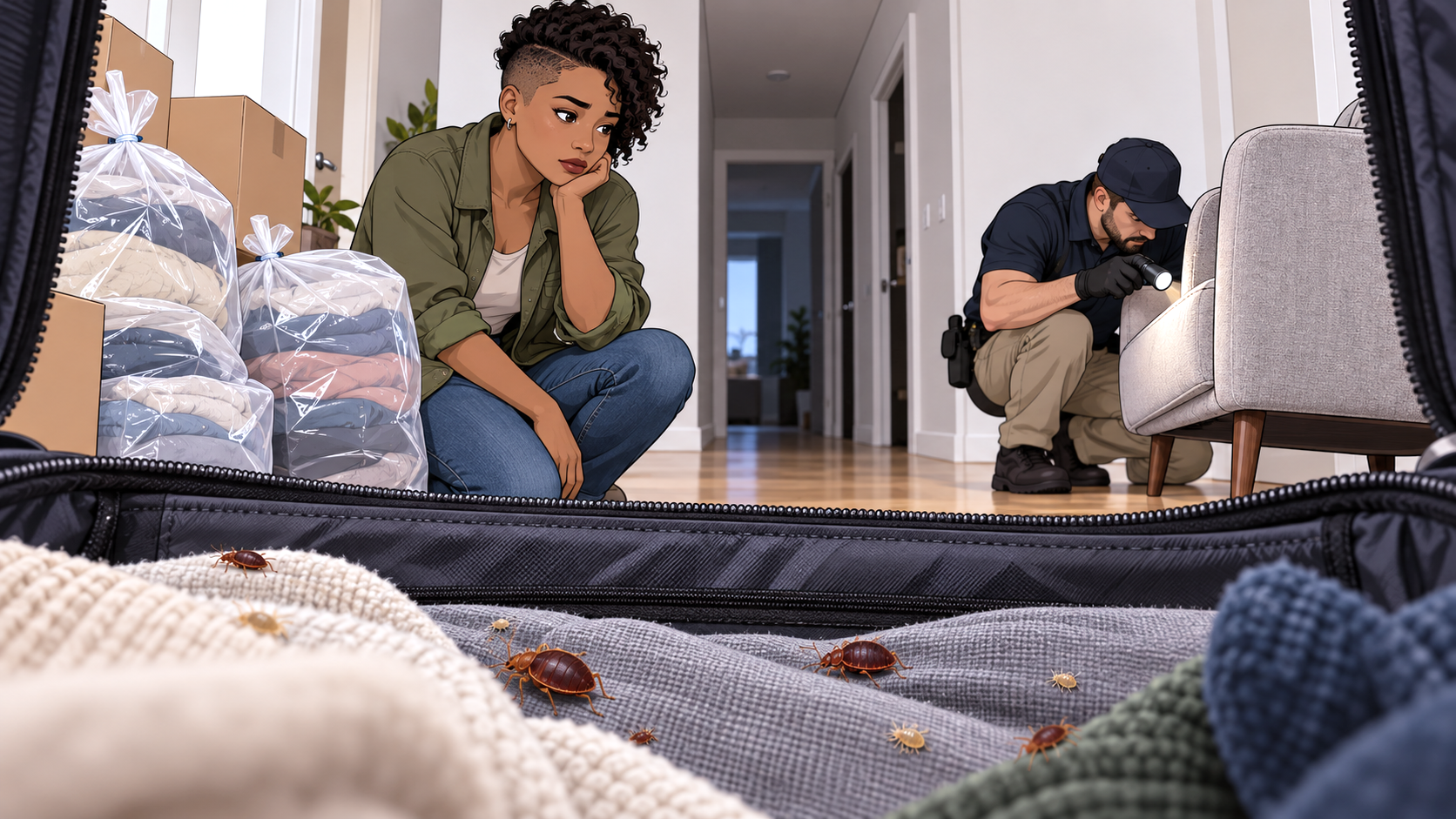
Usually, you should not move out solely because you have bed bugs. Leaving the home does not eliminate the infestation, and moving untreated belongings can carry bed bugs into a hotel, another apartment or a new home. Temporary absence may be required during professional treatment or necessary for personal reasons, but it needs to be managed carefully. A permanent move is especially poor as an extermination strategy. Bed bugs can remain behind without regular access to a person, while insects hidden in possessions may leave with you.
An Empty Home Does Not Starve Bed Bugs Quickly
Leaving for several days or weeks can stop normal feeding opportunities without solving the infestation. Bed bugs tolerate long periods between meals, with survival influenced by temperature, developmental stage and other conditions.
Their persistence has been demonstrated outside laboratory conditions. In a field study involving vacant apartments, unfed bed bugs continued to be recovered for months after occupants left. Adults were found as late as 134 days after host removal, while naturally occurring nymphs and adults were still present when monitoring ended at 155 days. A vacation or temporary stay elsewhere is therefore far too short to function as a dependable starvation treatment.
Vacancy can also change where bugs move. The same apartment study documented extensive movement both with and without a host present, including movement between units. Bed bugs that have lost access to their usual sleeper do not necessarily remain motionless beside an empty bed. Their ability to survive for long periods without feeding removes any practical advantage from trying to wait them out.
Moving Your Possessions Creates a Second Problem
Bed bugs do not normally live permanently on human skin, but they are excellent hitchhikers. A bug concealed in a suitcase seam, folded clothing, bedding, backpack or piece of furniture can be transported without anyone noticing it. Packing an infested home therefore requires more care than packing for an ordinary move. Federal treatment guidance specifically warns against moving possessions from an infested area into an uninfested area. Items that must be transported should be contained, while washable or dryer-safe possessions can be processed as directed and kept isolated afterward.
Do not carry pillows, blankets and bags straight from the infested bedroom into temporary accommodation. Bed bugs can travel on clothing and personal belongings without making clothing their normal habitat. Luggage deserves similar attention because the same hitchhiking behavior that allows someone to bring bed bugs home from a hotel can work in the opposite direction when leaving an infested home.
Health Canada recommends separating belongings in sealable bags while traveling and keeping luggage away from beds and upholstered surfaces because bed bugs readily hide in luggage, clothing and personal items. Those precautions become particularly important when you already know the home you are leaving is infested.
Staying Elsewhere Can Complicate the Treatment Setup
Bed bug control often uses the normal sleeping area as both a treatment focus and a monitoring location. Beds can be isolated, interceptors can be installed beneath suitable legs, and technicians can inspect the harborages surrounding a predictable host location.
Moving out changes that environment. Bed bugs use human-associated cues when seeking a blood meal, so prolonged host absence can alter their activity without reliably eliminating them. Field research found bed bugs moving throughout apartments and as far as nine metres from their previous locations, including in vacant units. Marked insects also dispersed from vacant apartments into neighboring units, although vacancy itself was not consistently associated with higher dispersal.
This does not mean that leaving automatically causes bed bugs to spread. It means vacancy cannot be relied upon to keep them confined or eliminate them. If the property can safely remain occupied, maintaining the sleeping arrangement specified by the pest-control professional can make bed bug movement around the bed easier to monitor.
The narrower decision about continuing to sleep in an infested bed depends on treatment instructions and individual health considerations. Moving out of the entire property introduces additional risks because belongings and alternative accommodation become part of the equation.
Professional Treatment May Require You to Leave Temporarily
Staying in the home between treatments is different from remaining there while certain treatments are actively being performed. Professional heat treatment requires occupants to leave the treatment area, and some pesticide applications have specific re-entry restrictions.
Pesticide labels establish how products can legally and safely be used. Health Canada requires registered pest-control products to be used according to their approved labels, which include directions and safety requirements for application. If the technician tells you to remain outside for a specified period, do not return early.
Professional bed bug heat treatment creates another clear reason for temporary absence because the treatment area is deliberately raised to temperatures unsuitable for normal occupancy. Once the provider confirms that re-entry is permitted, staying elsewhere for additional days does not make the completed heat treatment more effective.
Ask the company before treatment exactly when you must leave, what you can take with you and when you can return. Items carried out during the exclusion period still need to be handled so they do not transport bed bugs to the place where you are staying.
Apartment Residents Need to Involve Building Management
Moving out of one infested apartment does not address bugs elsewhere in the building. Bed bugs can move through multi-unit housing, and field experiments have recovered marked insects in neighboring apartments above, below, beside and across the hallway from the unit where they originated.
Those experiments documented active dispersal between apartments, including movement from occupied and vacant units. Treating only one apartment can therefore leave a route for later reintroduction when connected units remain infested.
Health Canada advises tenants with bed bugs to notify their landlord promptly. Building management may need to coordinate inspections or treatment beyond the affected unit. The possibility of bed bugs spreading between apartments is more relevant to long-term control than whether one resident temporarily sleeps somewhere else.
Lease obligations, landlord responsibilities and relocation rights vary by jurisdiction, so a pest-management decision should not be treated as legal advice about whether a tenant can or must leave.
If You Must Move Permanently, Treat the Move as Part of Bed Bug Control
Sometimes people move for reasons unrelated to pest management, or an infestation coincides with the end of a lease. In that situation, the objective is to prevent the bugs from moving too.
Do not pack untreated possessions into ordinary cardboard boxes and immediately transfer them to the new property. Bed bugs can hide in cardboard folds and among packed belongings. Federal preparation guidance recommends eliminating unnecessary cardboard, processing dryer-safe items with heat and placing cleaned possessions into sealed bags so they remain separated from infested material.
Furniture needs individual assessment. A usable mattress or couch does not automatically need to be discarded, but anything that is thrown away should be contained so bugs cannot escape during transport. Infested furniture requires careful disposal rather than being carried uncovered through hallways or left where another person may take it.
Avoid moving unprocessed possessions into the new residence faster than they can be inspected or treated. Clean items should remain isolated from questionable ones. The new home can also be prepared for early detection with suitable monitors rather than waiting for bites to reveal that a hitchhiker made the journey.
Leaving May Still Be the Right Choice for Personal or Medical Reasons
Pest-control strategy is not the only consideration. Severe allergic reactions, extensive skin problems, significant sleep disruption or other health concerns can make temporary relocation appropriate. Families may also have treatment-specific reasons for arranging accommodation elsewhere.
Bed bug bites are not known to transmit infectious diseases, but they can cause itching, allergic reactions and secondary skin problems after scratching. Clinical guidance recognizes that some people develop more substantial reactions requiring symptomatic medical treatment. Bed bug infestations can also interfere with sleep and contribute to fatigue.
If leaving becomes necessary, tell the pest-control professional before moving belongings. A planned temporary relocation can incorporate containment and treatment of the items that accompany you rather than turning another property into an unintended extension of the infestation.
Questions About Leaving a Home With Bed Bugs
Can you stay with family while your home has bed bugs?
You can, but possessions leaving the infested property need careful handling. Bringing untreated luggage, bedding or clothing into another person’s home can expose that household to bed bugs.
Can you leave only your clothes behind and take nothing with you?
Leaving with minimal belongings reduces the number of potential hiding places being transported, but any clothing you wear or carry still needs appropriate inspection or processing. Follow the pest-control company’s instructions for items required during temporary relocation.
Will bed bugs die if an apartment stays vacant for a month?
A month is not a reliable starvation period. Field research has recovered unfed bed bugs from vacant apartments several months after occupants were gone.
Should you move to a new apartment if neighboring units keep getting bed bugs?
Repeated introductions from other units require building-wide attention, but whether to end a tenancy is a personal and legal decision rather than a pest-control requirement. Document recurring activity, notify management and check the applicable local tenancy rules before making that decision.