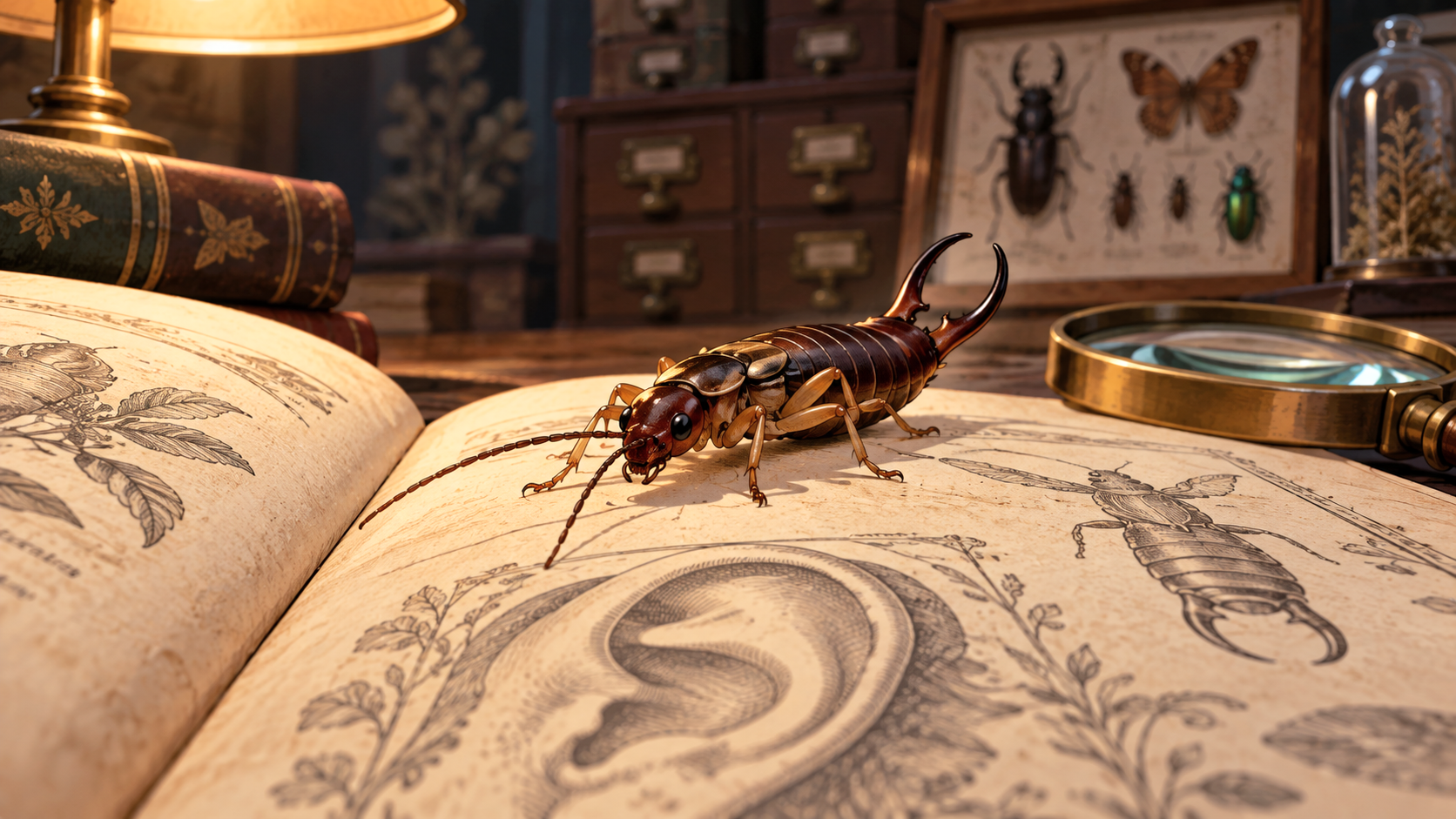
Earwigs are called earwigs because of an old and widespread belief that the insects crawled into people’s ears, particularly while they were sleeping. The name has survived for centuries even though the frightening behavior behind it isn’t characteristic of earwigs. In fact, the word can be traced to the Old English earwicga, combining a word for “ear” with one referring to an insect or crawling creature.
It’s a remarkably successful piece of folklore. Long after the original superstition lost credibility, the name remained, leaving generations of people wondering whether an insect called an earwig really has a special interest in human ears.
Where the Word “Earwig” Comes From
The modern name developed from the Old English word earwicga. Its first element, eare, meant “ear,” while wicga referred to a beetle, worm, or insect. Put together, the name essentially connected the insect directly with the human ear.
The second half of the word doesn’t mean “wig” in the modern sense of artificial hair. That’s an easy assumption to make when looking at the spelling today, but the resemblance is misleading. Wicga was an older word associated with insects and may share Germanic roots connected with movement. The modern word is therefore the result of a much older compound gradually developing into the familiar spelling “earwig.”
What makes the name particularly interesting is that it preserves an idea about the insect rather than describing its most obvious anatomy. Earwigs could easily have ended up with an English name based on their pincers, yet the ear story became the one embedded permanently in the language.
The Old Belief About Earwigs and Human Ears
The superstition went considerably further than simply believing an earwig might accidentally crawl into an ear. People once believed that the insect deliberately entered the ears of sleeping humans and could continue inward toward the brain. That frightening story is the explanation traditionally given for the name, and versions of the association became widespread enough to survive for centuries.
The insect’s habits may have helped the story feel believable. Earwigs are nocturnal and spend daylight hours concealed in narrow, dark spaces. An insect known for disappearing into cracks and crevices could easily acquire unsettling stories about where else it might crawl, especially before its behavior was understood scientifically.
What the folklore got wrong was turning a general tendency to seek sheltered spaces into a supposed attraction to human ears. Earwigs don’t treat ears as normal habitat, and the old idea that they deliberately crawl inside and burrow toward the brain is false. We deal with the actual possibility of an accidental encounter separately in can earwigs go in your ear?.
The Ear Story Wasn’t Limited to English
One of the more interesting parts of the name’s history is that similar ear-related names appeared in other European languages. German has Ohrwurm, literally an “ear worm,” while the traditional French name perce-oreille carries the idea of an “ear piercer.” The resemblance suggests that the association between these insects and human ears wasn’t confined to one peculiar English expression.
That wider linguistic history helps explain why the myth became so persistent. This wasn’t simply a modern misunderstanding created after people forgot what “earwig” originally meant. The connection between the insect and ears was already deeply established in European naming and folklore.
The irony is that modern English also uses “earworm” for a completely different experience, a piece of music that gets stuck in your head. That meaning shouldn’t be confused with the much older insect terminology.
Did People Really Believe Earwigs Could Reach the Brain?
Yes, the historical superstition included the idea that an earwig entering the ear could bore farther into the head. The belief is still mentioned when explaining the origin of the insect’s name because it shows how much more alarming the old story was than simply “a bug might crawl into your ear.”
There is no biological basis for the brain-burrowing story. Earwigs are ordinary insects with chewing mouthparts and rear forceps. They aren’t adapted to burrow through the human ear into the brain, nor is this part of their feeding or reproductive behavior. The related claim that earwigs lay eggs in people’s ears comes from the same general family of myths rather than normal earwig biology.
Why the Myth Is Still So Easy to Believe
The name itself keeps the story alive. Someone encountering the word “earwig” for the first time has an obvious question about what the “ear” part is doing there, and the historical explanation is memorable enough to be repeated. Add an insect with large rear pincers and nighttime habits, and the story sounds just plausible enough to survive without much scrutiny.
Modern encounters can reinforce it too. Earwigs sometimes wander into houses, where they may turn up in bathrooms, basements, bedrooms, or other unexpected places. Finding one indoors can make the old warning suddenly feel more credible, even though wandering into a building and deliberately seeking a sleeping person’s ear are entirely different behaviors.
We think this is a good example of why a pest’s common name shouldn’t be treated as a description of its biology. The name tells you something interesting about what people once believed. It doesn’t tell you what the insect actually intends to do.
Why Didn’t We Just Rename Them?
Common names have a habit of surviving after the beliefs that created them disappear. Once a name becomes established in everyday speech, books, dictionaries, and scientific communication, replacing it isn’t as simple as correcting the original misconception.
“Earwig” had already been part of English for centuries, so the word remained useful even after people understood the insect better. Today, saying “earwig” identifies a familiar group of insects without requiring anyone to believe the folklore hidden inside the word.
The scientific terminology avoids that particular problem. Earwigs belong to the order Dermaptera, while the European earwig is Forficula auricularia. Those names have their own histories, but they aren’t evidence that the old English ear myth was biologically accurate.
A Few More Questions About the Earwig Name
Does “earwig” literally mean a wig for your ear?
No. The modern spelling makes that interpretation tempting, but the “wig” portion comes from the Old English wicga, an old term referring to an insect or crawling creature. The word has nothing to do with the modern meaning of a hairpiece.
How old is the name “earwig”?
Its roots extend back to Old English, making the name far older than modern pest-control terminology. The form has changed over time, but earwicga shows that the association between this insect and ears has been present in English for many centuries.
Is “pincher bug” another name for an earwig?
Yes, “pincher bug” is a common informal name based on the conspicuous forceps at the rear of the insect. Unlike “earwig,” that nickname points directly to something you can actually see on the animal. The structures themselves and their purpose are covered in what earwig pincers are for.
Do earwigs actually want to crawl into your ears?
No. The ear connection survives in the name because of historical folklore, not because human ears are a normal destination for earwigs. Their usual behavior involves seeking dark, protected hiding places in their environment, particularly during the day.
One thought on “Why Are Earwigs Called “Earwigs”? The Story Behind the Name”