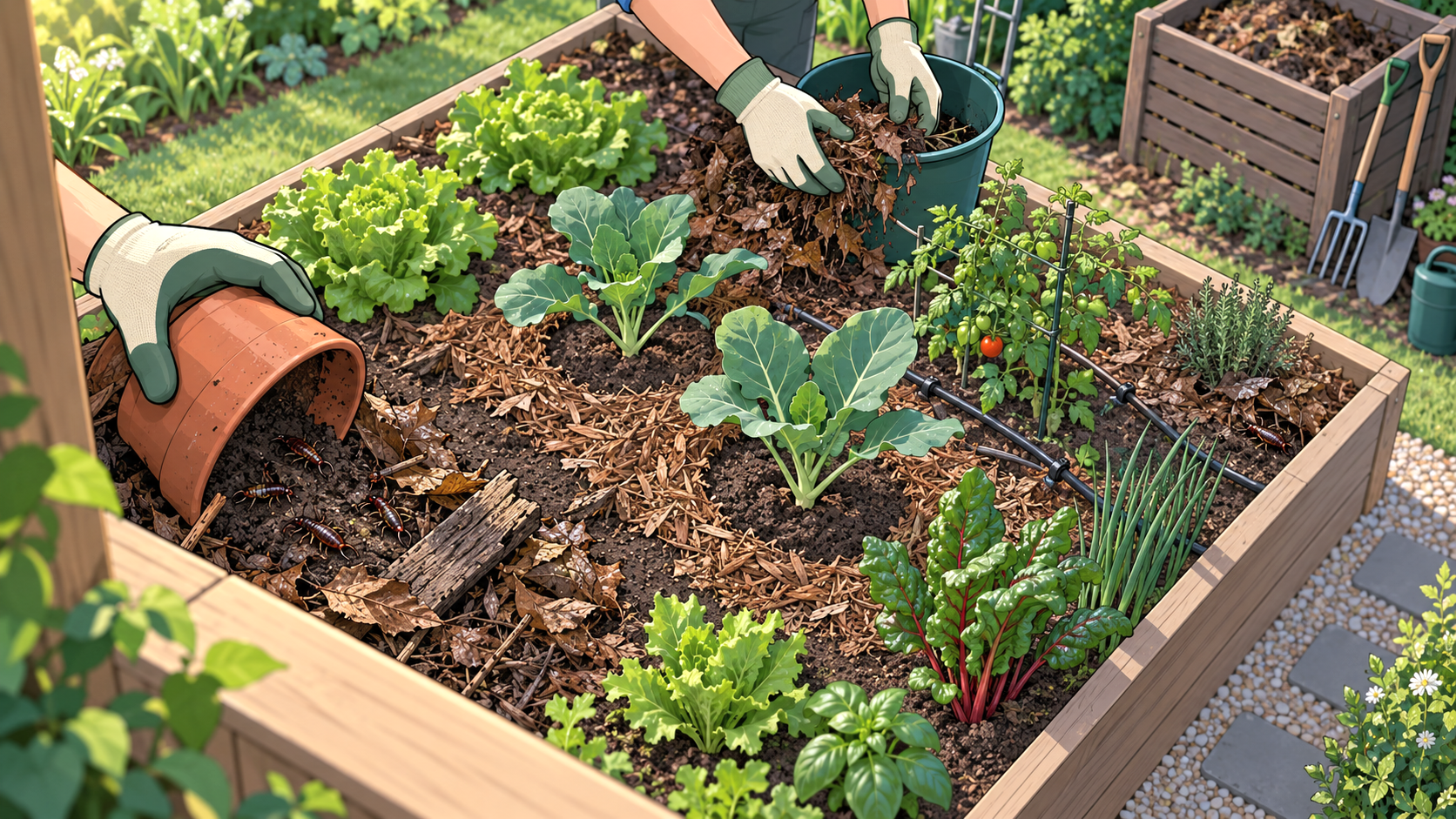
A garden can accidentally give earwigs exactly what they need during the day: moisture, shade, tight hiding spaces, and vulnerable plants within a short nighttime crawl. That makes earwig deterrence less about finding a smell they supposedly hate and more about deciding where in the garden you are willing to give them shelter.
To deter earwigs from a garden, reduce dark, damp hiding places around vulnerable plants, avoid keeping the soil surface unnecessarily wet, and use traps where earwigs are concentrated. The goal is not to make the entire garden hostile to earwigs. It is to make the plants you care about less convenient places for them to hide and feed. That distinction is worth keeping because earwigs are not automatically bad for a garden. They can feed on aphids and other small pests as well as plant material. We would concentrate deterrence around plants experiencing actual damage rather than treating every earwig in the yard as a target.
Make the Wrong Parts of Your Garden Comfortable for Earwigs
Earwigs are active mainly at night and spend daylight hours in dark, cool, moist shelter. Mulch, weeds, dense vegetation, debris, flowerpots, and other covered spaces can provide those conditions. The problem is not that any one of these things exists in a garden. The problem begins when good earwig shelter sits immediately beside a seedling, flower, soft fruit, or another plant being damaged.
This gives you a more selective way to deter them. Start with the plants you actually want to protect and inspect the surrounding area. Move loose boards, unused pots, boxes, piles of leaves, and unnecessary debris elsewhere. Thin excessive weeds and dense ground cover where they create protected daytime refuge around susceptible plants.
We would not turn that advice into a campaign against every piece of mulch. Mulch has legitimate gardening purposes, and removing all of it simply to discourage one insect can create another set of problems. Instead, reduce unnecessarily thick or cluttered shelter in the specific areas where earwig feeding is occurring. Earwigs are often more abundant in heavily irrigated or mulched areas, so those are useful places to inspect first.
Think of it as moving the earwig hotel away from the restaurant. A hiding place becomes much more relevant when an earwig can leave it after dark and immediately reach the plant you are trying to protect.
Change the Moisture Pattern Without Depriving Plants of Water
Moisture is one of the most useful levers for making a problem area less favorable to earwigs, but it is also easy to misuse. Your plants still need appropriate watering. Trying to dry out an entire garden can damage the plants before it solves the insect problem.
The better target is unnecessary surface moisture. Make sure irrigation systems are functioning correctly and drainage is adequate. Where suitable for the plants, watering deeply and less frequently can allow the soil surface to remain drier between irrigation. Drip irrigation can also reduce surface moisture compared with repeatedly wetting a larger area.
Timing and location matter as much as total water. A constantly damp surface beneath dense cover gives earwigs both moisture and daytime protection in the same place. That combination deserves more attention than moist soil by itself.
This is also why we prefer moisture management to vague advice about making a garden “dry.” A healthy garden does not need to become dry. You are trying to remove excess moisture from earwig hiding zones while continuing to give the plants the water they require.
Protect the Plants That Earwigs Actually Damage
Not every plant needs equal protection. Earwigs can damage seedlings, flowers, soft fruit, and corn silks, while established larger plants can often tolerate some feeding. Their mixed diet is one reason we describe them as good or bad for a garden depending on the situation rather than simply labeling them pests.
Before changing the garden around a damaged plant, confirm that earwigs are responsible. Irregular holes can resemble damage caused by other chewing pests. A flashlight inspection after dark is particularly useful because earwigs feed at night. Seeing them actively feeding gives you much stronger evidence than finding a hole the following morning.
This matters most with vulnerable plants. A few damaged leaves on a mature ornamental are a different problem from earwigs repeatedly feeding on newly established seedlings. Our guide to earwigs eating seedlings deals specifically with that vulnerable stage, while earwig damage on dahlias covers a common flower problem.
Once you know which plants are being attacked, concentrate your deterrence there. This keeps the rest of the garden from becoming an unnecessary control project.
Give Earwigs a Hiding Place You Control
Removing hiding places sounds straightforward until you remember that a garden will always contain shade, soil cracks, foliage, and protected spaces. Instead of trying to eliminate every refuge, you can deliberately provide one that functions as a trap.
Rolled newspaper, corrugated cardboard, bamboo tubes, and short sections of hose can become daytime shelters. Place them on the soil near plants experiencing earwig activity before dark. Earwigs can enter these refuges after feeding, allowing you to collect them the following morning. Regular trapping can reduce earwig numbers when you continue checking the traps.
Oil traps provide another option. Low-sided containers containing vegetable oil with an appropriate attractant can catch earwigs moving through the area. The important point for deterrence is placement. Put traps where the damage and nighttime activity are occurring instead of distributing them randomly across the yard.
We particularly like refuge traps for this job because they do two things at once. They remove earwigs, but they also show you where activity is concentrated. A trap that repeatedly fills beside one garden bed gives you useful information about where to focus your moisture and shelter changes. Our DIY earwig trap guide covers the methods in more detail.
Make Fruit Trees Harder to Climb
A different approach works when earwigs are reaching fruit or foliage by climbing a trunk. In that situation, changing the ground around the tree may help, but physically interrupting the climbing route can provide much more targeted protection.
Sticky barriers can keep earwigs from climbing certain fruit trees. The barrier must be installed so insects cannot simply crawl beneath or around it, and branches touching the ground or nearby vegetation can create alternate routes. Crop-specific guidance for apricots, for example, recommends keeping debris away and preventing alternate access into trees.
Do not apply a sticky material directly to bark unless its directions specifically allow that use. Some guidance calls for putting the adhesive on a protective wrap instead. Follow the instructions for the particular barrier product and tree.
This method also illustrates why there is no single best earwig deterrent for an entire garden. An earwig climbing a fruit tree presents a different problem from one hiding under mulch beside lettuce. The useful intervention is the one that interrupts the behavior causing the damage.
Skip the Garden Full of Supposed Earwig-Repellent Plants
Planting mint, lavender, or another strongly scented plant can sound more appealing than moving mulch or checking traps every morning. However, we would not design an earwig deterrence plan around supposed repellent plants.
A living aromatic plant is not the same thing as a tested insect repellent. More importantly, adding vegetation can create additional shade and protected spaces depending on how densely it grows. That works against the basic habitat changes used in established earwig management.
The same caution applies to choosing plants simply because an online list claims earwigs dislike their smell. Our guide to plants that repel earwigs explains why that idea needs more scrutiny.
For a garden you actually care about, physical conditions are a much better foundation. Reduce unnecessary refuge, manage excess surface moisture, protect vulnerable plants, and trap where activity is concentrated. Those measures respond to documented earwig behavior rather than asking a scent to do all the work.
Know When Deterrence Is Enough
One of the stranger things about earwig control is that success does not necessarily mean having no earwigs left. They are omnivores, and their garden diet includes both plant material and other small organisms. In some situations, their predatory feeding can be useful.
For that reason, the better threshold is plant damage. Guidance for vegetable crops recommends managing earwigs when they are causing unacceptable damage rather than controlling them merely because they are present. That is a much more useful standard for a home garden too.
After making habitat changes, inspect susceptible plants and continue checking traps. Look for whether fresh damage is declining. If it is, there is little reason to escalate simply because an occasional earwig remains elsewhere in the garden.
Persistent, unacceptable damage calls for a broader control strategy rather than endless attempts to make the garden less attractive. At that point, our guide to getting rid of earwigs in the garden covers the next level of control. Any pesticide used around edible or ornamental plants must be labeled for the intended pest and treatment site, and the label directions govern how it can be used.
Other Questions About Deterring Earwigs in a Garden
Should I remove flowerpots because earwigs hide under them?
Not necessarily. Flowerpots can provide protected daytime shelter, particularly when the area beneath them stays damp. Moving pots away from a plant being damaged can remove a convenient refuge without requiring you to remove containers from the garden altogether. Pots can also be deliberately checked as part of your monitoring.
Will landscape fabric deter earwigs?
Landscape fabric is not an earwig-specific deterrent. The more useful question is what conditions exist above and around it. Earwig management depends on reducing favorable shelter and excess moisture near vulnerable plants rather than relying on the presence of a particular landscaping material.
Do earwigs mean my garden is being overwatered?
No. Earwigs prefer moist shelter, but their presence alone does not diagnose an irrigation problem. However, persistently wet surfaces, leaking irrigation, or poor drainage can make parts of a garden more favorable to them. Check the actual moisture conditions before changing a watering schedule.
Can I deter earwigs without killing them?
You can make particular areas less favorable by reducing hiding places, managing surface moisture, and interrupting access to vulnerable plants. That does not guarantee earwigs will leave the entire property. It can instead shift the balance so they are less concentrated where their feeding matters.
Will earwigs return after I reduce their numbers?
A garden can continue to provide earwig habitat after a trapping program reduces the population. That is why we would not rely on trapping alone. Maintaining the shelter and moisture changes around vulnerable plants makes the garden less favorable in the places where another increase would matter most.