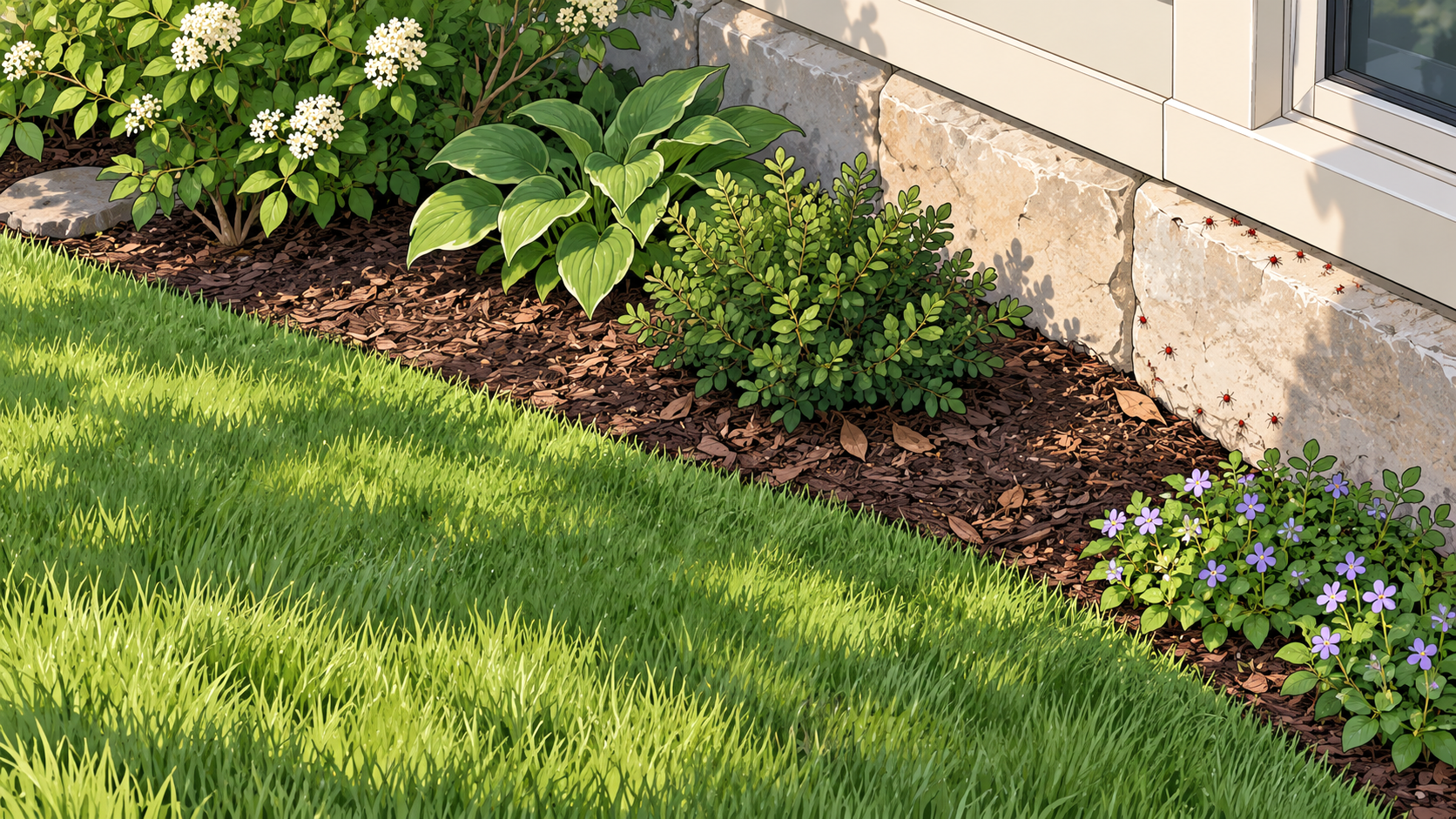
Clover mites are not generally classified as an invasive species in North America. The clover mite, Bryobia praetiosa, is an extremely widespread species found across much of the world, including North America, South America, Europe, Asia, Africa, and Australia. The confusion usually comes from the word “invade.” Clover mites can enter homes in enormous numbers, but an animal invading a building is not automatically an invasive species in the ecological sense.
An Indoor Invader Is Not the Same as an Invasive Species
Invasive species have a more specific meaning than household pests. In the United States, an invasive species is generally understood as a non-native organism whose introduction causes or is likely to cause harm. Canada similarly distinguishes introduced organisms from those that become harmful invasive alien species.
Clover mites are routinely described as occasional invaders because they move from vegetation onto and sometimes into buildings. They may crawl through extremely small openings around windows, doors, and foundations, sometimes appearing indoors by the thousands. That use of “invader” describes where the mites have gone, not their ecological origin. Calling a clover mite an indoor invader and calling a species invasive are two different statements.
Clover Mites Have a Worldwide Distribution
Trying to assign clover mites a simple modern point of origin is difficult because Bryobia praetiosa is now extraordinarily widespread. Its documented distribution includes North and South America, Europe, Asia, Africa, and Australia, and modern taxonomic literature describes it as a worldwide or cosmopolitan species.
That broad range also explains why clover mites are not a problem restricted to one country or continent. They occupy many climates and feed on numerous plants. Their natural habitat includes lawns and other vegetated areas rather than buildings themselves.
The species has also been known to science for a long time. Bryobia praetiosa was described by C. L. Koch in 1836, and it remains the type species of the genus Bryobia. Modern research continues to recognize it as a widely distributed member of the spider mite family Tetranychidae.
Their Taxonomy Makes Origin Claims More Complicated
There is another reason to be cautious with sweeping claims about where clover mites originally came from. Bryobia contains numerous closely related species, and the identity of mites placed under B. praetiosa has not always been straightforward.
Recent taxonomic work recognizes a praetiosa species group and notes that historical identification within the genus can be difficult. Researchers have had to reassess morphological characters and older species classifications as the taxonomy has improved. That makes a neat claim such as “clover mites originated in one particular modern country” much less secure than their worldwide distribution.
Their enormous geographic range is clear. Their exact historical pathway across every continent is not nearly as simple. For homeowners, the more useful identification clues are physical. Clover mites have an unusually long first pair of legs and belong to the arachnid group rather than the insects. Those characteristics help distinguish the actual mite without relying on assumptions about geographic origin.
Why Clover Mites Can Seem Invasive Around a Home
A sudden appearance of hundreds or thousands of tiny mites certainly looks like an invasion. Clover mites can build very large outdoor populations, particularly where surrounding vegetation provides favorable feeding conditions. They consume plant material from grasses, clover and many other hosts.
When those mites leave vegetation, they can move onto sidewalks, walls and foundations before finding their way indoors. Their tendency to become a household nuisance has been documented for decades, and large numbers entering buildings are a characteristic clover mite problem. That behavior makes invading pest a perfectly reasonable description. It does not turn B. praetiosa into an invasive species classification.
Other Questions About Clover Mite Origins
Are clover mites found only in North America?
No. They have been recorded across multiple continents and are considered cosmopolitan in distribution.
Are clover mites an introduced household pest?
Their presence inside a house is better understood as movement from an outdoor population. Clover mites do not establish reproducing indoor populations, so a household infestation is not evidence that they originated inside the building.
Are all Bryobia mites clover mites?
No. Bryobia is a genus containing many species. Bryobia praetiosa is the species commonly called the clover mite, and modern taxonomic work recognizes substantial diversity within the genus.
Does finding clover mites in a new part of a property mean they are spreading as an invasive species?
No. Clover mites routinely move from surrounding vegetation onto buildings. That local movement is normal pest behavior and should not be confused with the geographic spread of an invasive species.