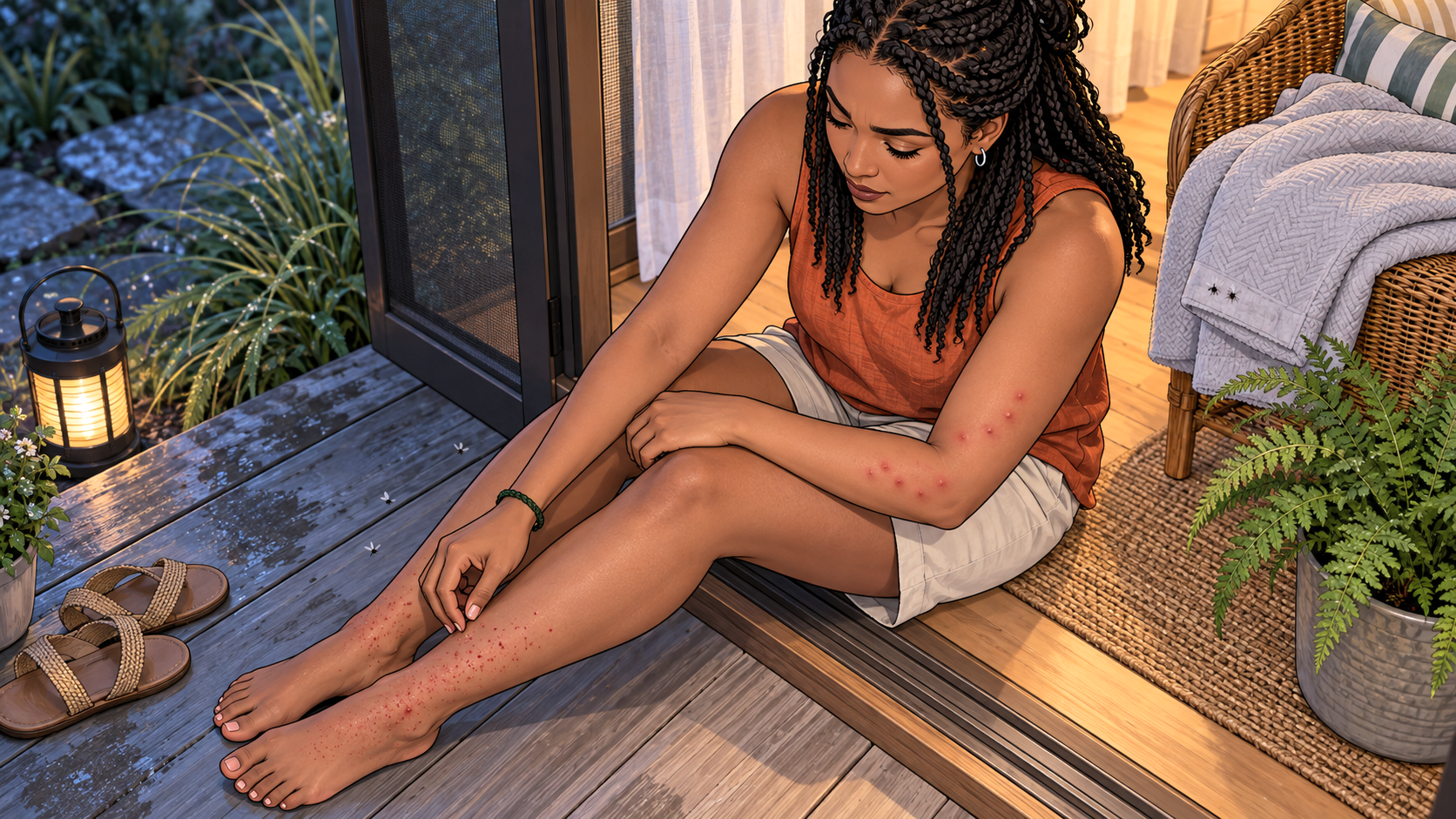
The frustrating thing about bed bug bites vs. no-see-um bites is that the skin may not give you a clean answer. Both can leave intensely itchy marks, both may produce several bites close together, and scratching can quickly blur whatever differences existed at the beginning. There is a difference between them, but the strongest clues usually come from the insect and the exposure rather than the bump. No-see-ums are tiny flying biting midges usually encountered around outdoor breeding habitats. Bed bugs are larger, wingless insects that hide near sleeping or resting areas. The bite reactions can overlap enough that appearance alone is unreliable. So instead of starting with the rash, it helps to follow each pest backward to where the bite could have come from.
One Trail Usually Starts Outdoors
“No-see-um” is a loose common name used for tiny biting midges, especially members of the family Ceratopogonidae. Many of the species that bother people belong to genera such as Culicoides and Leptoconops. Adult biting midges are extremely small flies, often around 1 to 2 millimetres long, which explains why people can feel them biting without getting a good look at the insect.
Their life cycle also keeps much of the problem outdoors. Immature biting midges develop in wet or damp habitats such as standing water, saturated soil, mud, marsh edges, and moist organic material, depending on the species. That is why encounters are especially associated with wet environments and outdoor activity.
A rash that starts after fishing, camping, walking beside wetlands, spending an evening on a beach, gardening near a damp area, or sitting outdoors can therefore fit no-see-um exposure very naturally.
Bed bugs do not need any of those conditions. They can occur in houses, apartments, hotels, shelters, dormitories, and other places where people sleep. Their habitat revolves around access to a blood meal and protected hiding spaces rather than marshes or wet soil.
That single difference changes the investigation immediately. With no-see-ums, we want to know where you spent time. With bed bugs, we want to know what is living near where you slept.
The No-See-Um Usually Leaves Before You Start Investigating
A biting midge can arrive, feed, and fly away. That sounds obvious, but it creates a very different evidence problem from bed bugs. Female biting midges take blood meals, while the males do not have mouthparts adapted for biting people. These flies are so small that many can pass through ordinary screening, which helps explain how someone can experience bites without ever catching the culprit.
Afterward, there may be nothing in the immediate area to inspect. You can search the chair, patio, campsite, or beach towel and find no insect at all.
A bed bug infestation behaves almost opposite to that. Bed bugs cannot fly. They feed and then return to sheltered spaces around sleeping or resting areas. Mattress seams, box springs, frames, headboards, cracks, and nearby furniture can contain live bugs, eggs, shed skins, and fecal spotting. That physical evidence is much more useful than the bite itself when trying to determine whether bed bugs are responsible.
One Insect Is Tiny Enough to Earn Its Name
The name no-see-um exaggerates things slightly. These insects are not literally invisible.
They are simply very small. Biting midges commonly measure about 1 to 2 mm, although size varies among species. Some are small enough to be difficult to notice unless they land on exposed skin or gather in numbers. Their tiny size is one reason the insects are also called punkies, biting gnats, or sand gnats in different regions.
Bed bugs are much easier to see once you actually find one. Adult bed bugs average about 5 mm long, and the larger adults can approach 7 mm. They are broadly oval and flattened when unfed, with a reddish-brown appearance. Even bed bug nymphs are visible, although the youngest stages are small and pale. In other words, bed bugs are visible to the naked eye even though finding them in their hiding places can be difficult.
The insects also move differently. A biting midge is a true fly with functional wings. Bed bugs are wingless and move by crawling. If you catch the insect, this comparison stops being difficult very quickly.
The Moment of the Bite Can Point Toward a Midge
No-see-ums are tiny, but their bites can be surprisingly noticeable.
Biting midges cut or pierce the skin with specialized mouthparts, and some species produce an immediate sharp or painful sensation. The reaction may then develop into an itchy red area or welt. Guidance on biting midges describes painful bites followed by persistent irritated lesions, while another extension resource notes that sensitive people can develop intensely itchy welts or blisters after exposure.
Bed bug feeding is easier to miss in the moment. The insect introduces salivary substances while feeding, and many people do not notice the bite as it occurs. Visible marks may not appear until one or several days later. Some people develop no obvious skin reaction at all.
That gives immediate sensation some value. Feeling numerous tiny, sharp bites while standing outdoors as barely visible flies move around you fits biting midges well. It is not a perfect test, though. People do not notice every midge bite, and an itch appearing later does not tell you exactly when feeding occurred. We would use the sensation as part of the exposure history rather than as the deciding clue.
The Skin Is Where the Two Trails Start Looking Alike
Once the insect is gone, the distinction gets harder.
No-see-um bites can produce small itchy welts, red areas, or sometimes blister-like reactions. Scratching can open the lesions and make the skin look considerably worse than the initial bite. Sensitive people may experience reactions that last longer than expected.
Bed bug bites are similarly variable. Some people develop small itchy marks, others produce larger swollen reactions, and others show little or no visible response. Bed bug marks may occur randomly, in groups, or in a line. They can also resemble mosquito and flea bites closely enough that the inflammatory reaction itself is not considered diagnostic.
This is why a side-by-side image search usually disappoints. One photograph of no-see-um bites can look completely different from another person’s reaction to the same type of insect. The same is true for bed bugs. Skin is showing you how your body reacted. It is not giving you an insect identification label.
Several Bites Close Together Do Not Decide It
Clusters are especially tempting because people strongly associate grouped bites with bed bugs.
Bed bugs can certainly leave several lesions close together, but there is no rule that grouped marks belong to bed bugs. Biting midges can occur in large numbers around favorable habitats, and a person standing in an active area with uncovered arms or legs can receive multiple bites during one period outdoors. Those marks may naturally end up close together simply because several insects had access to the same exposed patch of skin.
The familiar idea that three bites automatically mean bed bugs is especially weak here. Neither pest follows a human counting rule. Instead, ask whether the cluster belongs to an exposure event. Ten new itchy marks after an evening beside a marsh carry different evidence from repeated lesions appearing after several nights in the same bedroom.
The number did not identify the pest. The setting made the number meaningful.
Dawn and Dusk Can Matter, but They Are Not a Universal Clock
Biting midges are often troublesome around particular periods of the day, but species differ.
Some Culicoides species show strong activity around dusk and dawn. Other biting midges have different schedules, including species that bite during daylight. Regional species therefore matter, and it would be misleading to say that every no-see-um bites only at sunset.
Still, the combination of tiny flying insects, an outdoor wet habitat, and biting activity around dawn or dusk can strongly support a midge explanation. Biting midge activity is commonly associated with dusk and a smaller dawn peak in some regions and species.
Bed bugs are also commonly active during the nighttime hours when people sleep. That similarity can create confusion if the only fact you know is that the bites happened “at night.” The more useful distinction is what you were doing at night. Sitting outdoors beside water is one exposure. Sleeping in an infested bed is another.
Clock time matters less than environment.
Repeated Bedroom Bites Should Shift Attention Toward the Bed
No-see-ums can enter buildings, especially because their tiny bodies may pass through ordinary screens. That means an indoor bite does not automatically rule them out.
Repeated bites tied specifically to sleeping in one room deserve a different response, though. Bed bugs tend to live around areas where people sleep, and physical infestation signs can accumulate around mattresses and furniture.
Strip the bed and inspect the mattress seams, box spring, frame, and headboard. Look for insects rather than relying on the rash. Shed exoskeletons, live bed bugs, rusty spotting, and other signs can move the question from speculation toward identification.
If the mattress and surrounding furniture remain clear, keep other biting insects and non-insect skin conditions open as possibilities. A lack of visible bed bugs after one quick inspection does not prove they are absent, but an unexplained rash should not become a bed bug diagnosis by default either.
The Strongest Clue May Be What Happens When You Change Locations
A useful comparison becomes possible when your routine changes.
Imagine the bites appear during a coastal vacation where you spend evenings outdoors, then stop after you leave. That pattern supports an exposure tied to that location. A biting midge problem does not travel home inside your skin.
Now reverse the pattern. New marks appear after you sleep in the same bedroom, disappear while you are away for several nights, and resume after you return. That does not prove bed bugs, but it makes the sleeping environment much more important to investigate.
Travel does complicate the comparison because bed bugs can come from other locations by hitchhiking in luggage, clothing, and other belongings. The point is not to perform a home experiment by repeatedly exposing yourself. It is simply to notice patterns that already occur naturally.
A bite photograph freezes one moment. Location changes can reveal the source.
Treat the Source Question Before Treating Every Bump as Bed Bugs
When the marks could fit either pest, divide the problem into two investigations.
For possible no-see-ums, reconstruct the hours before the reaction. Think about outdoor exposure, wet habitats, very small flying insects, and whether other people in the same location were also being bitten. Fine-mesh screening and suitable insect repellents can be relevant where biting midges are active, but the best prevention depends on the local species and setting.
For possible bed bugs, investigate the room rather than the yard. Search the bed and nearby furniture, preserve any suspicious insects for identification, and monitor for physical signs. Even when you are waking up with bites but finding no bed bugs, the absence of an immediately visible insect does not establish what caused the marks.
We would not begin bed bug treatment simply because an unexplained itchy cluster appeared after sleep. Nor would we dismiss repeated bedroom bites as no-see-ums because no bed bug was visible on top of the sheet.
The source needs evidence of its own.
Other Questions About Bed Bug Bites and No-See-Um Bites
Can no-see-ums bite through clothing?
Biting midges primarily need access to exposed skin. Loose or very thin clothing may not provide the same protection as tightly woven coverage, which is why protective clothing is commonly recommended in areas where biting midges are active. Clothing alone still cannot identify which pest caused an existing rash.
Can no-see-ums live in your bed?
Biting midges do not establish bed-centered infestations like bed bugs. Their immature stages develop in wet or moist environmental habitats rather than mattress seams. A flying midge can enter a bedroom and bite indoors, but that is different from a bed bug population living around the bed.
Can no-see-um bites show up the next day?
Skin reactions vary between people, so the severity and timing of visible irritation can differ. The circumstances of exposure remain more useful than assuming every delayed mark belongs to one insect. When bites repeatedly follow a particular outdoor location, biting midges become more plausible.
Are no-see-ums smaller than baby bed bugs?
Many biting midges are extremely small, commonly around 1 to 2 mm long. Young bed bug nymphs can also be very small, so size becomes less decisive when comparing immature bed bugs. Wings and overall insect anatomy are better clues if you can capture the specimen.
Should I see a doctor for no-see-um or bed bug bites?
Most uncomplicated insect-bite reactions can be managed without emergency care, but medical assessment is appropriate when symptoms become severe, the skin shows signs of infection, or the diagnosis remains uncertain. Significant swelling, widespread allergic symptoms, difficulty breathing, or other serious symptoms require prompt medical attention.