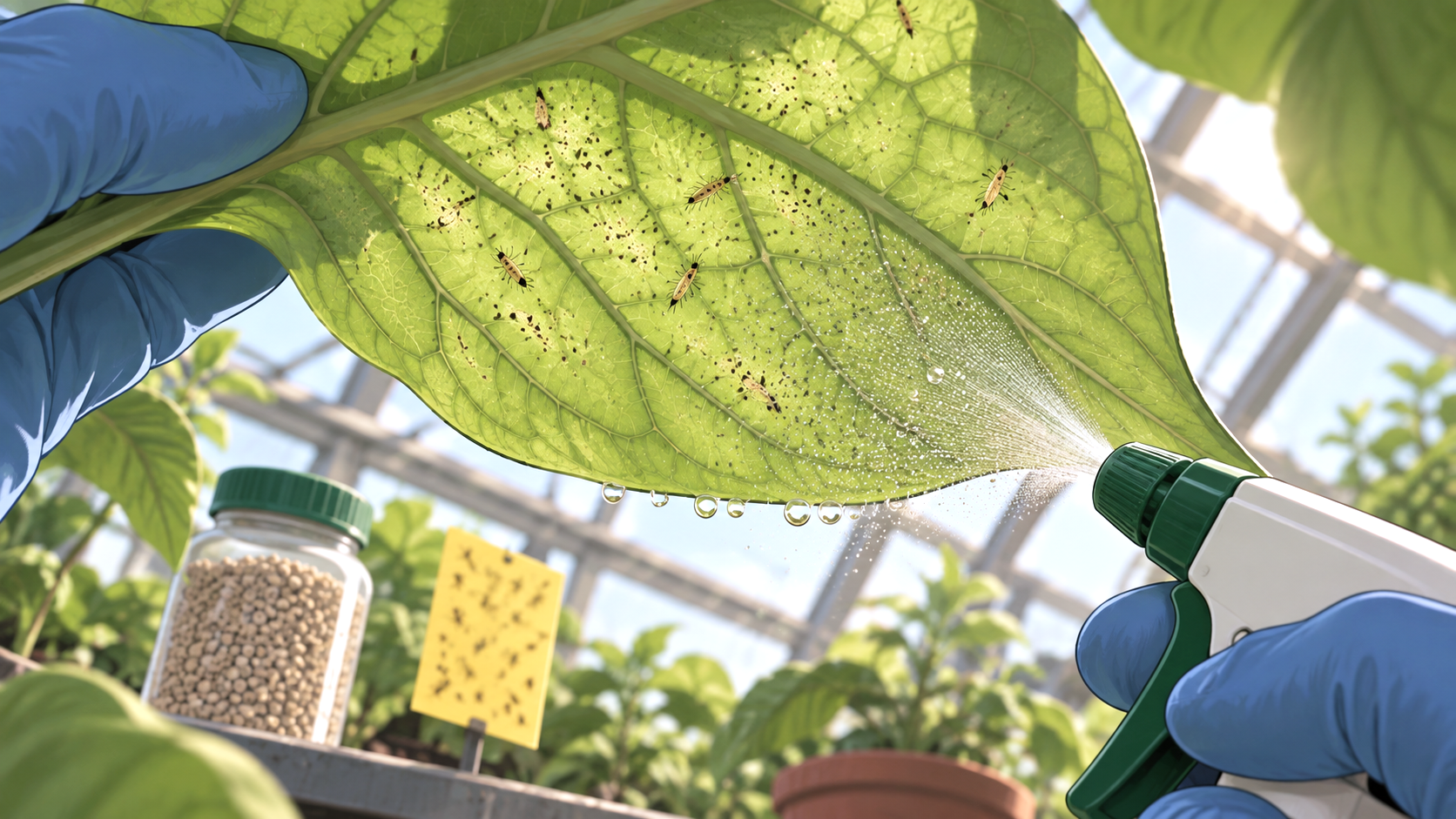
Thrips are unusually difficult to control with insecticides because they feed inside buds, flowers, shoot tips, and other protected plant tissue. Their eggs are also commonly inserted into plant tissue, while prepupal and pupal stages may occur in protected locations. For that reason, the best thrips insecticide needs more than a strong contact effect. Coverage, persistence, where the product can be used, and the thrips species all matter.
For many home-garden situations, spinosad is one of the strongest insecticide options for thrips. It generally provides better control than insecticidal soap, horticultural oil, neem oil, and pyrethrins because it persists longer and has translaminar activity, allowing some of the active ingredient to move into treated leaf tissue.
Spinosad: A Strong Option for Thrips
Spinosad stands out because it works through contact and ingestion while also moving a short distance into sprayed plant tissue. That translaminar activity can help it reach thrips feeding in places that ordinary contact sprays struggle to penetrate. Spinosad is generally more effective against thrips than insecticidal soaps, horticultural oils, neem oil, and pyrethrins, although effectiveness still depends on the species, application, and resistance.
Spinosad is not suitable for every situation. It can harm bees when they are exposed to fresh applications, and repeated reliance on the same mode of action can encourage resistance. When repeated insecticide treatments are necessary, rotating to a different mode of action helps reduce resistance pressure. Always use a spinosad product specifically labeled for the plant, pest, and location you intend to treat.
Insecticidal Soap: Good for Exposed Thrips
Insecticidal soap is useful when thrips are feeding openly on foliage and can be thoroughly sprayed. It works through direct contact and leaves little useful insecticidal residue after drying. That makes coverage particularly important, since thrips hidden inside flowers, buds, and tight new growth can escape treatment.
The main advantage is that insecticidal soap can fit well into a lower-impact pest-management program. However, it usually requires more direct contact than spinosad and may need repeated applications. Our explanation of how insecticidal soap works against thrips covers those limitations in more detail.
Horticultural Oil: Another Contact Option
Narrow-range horticultural oils can control exposed thrips when the spray completely covers them. They are especially relevant when you want a contact treatment with relatively little persistent residue. However, oils share the same basic weakness as insecticidal soap: thrips protected inside plant structures may avoid direct exposure.
Plant sensitivity also matters. Oils should not be applied to stressed plants, and labels can restrict their use with other products such as sulfur. Thorough coverage is necessary for horticultural oil to work, so follow the specific product label closely.
Neem Oil: Useful, but Usually Not the Strongest Choice
Neem oil can suppress thrips, particularly individuals exposed on foliage, but it would not be our first choice when the objective is stronger control of an established infestation. Neem oil is primarily dependent on good coverage and may struggle to reach thrips feeding inside protected plant structures. Neem can still have a place in an integrated treatment program, especially for relatively small infestations. If you are considering it specifically, neem oil’s effectiveness against thrips depends heavily on reaching the insects with the treatment.
What About Pyrethrins and Pyrethroids?
Natural pyrethrins can temporarily control exposed thrips, but they do not solve the problem of protected life stages. Broad-spectrum synthetic pyrethroids are a different matter. They can kill beneficial insects and may contribute to secondary pest problems while providing disappointing control of many thrips populations.
For home landscapes, broad-spectrum pyrethroids are generally not preferred for thrips. Using a more selective product when treatment is genuinely necessary can preserve predators and other natural enemies that contribute to thrips control.
Which Thrips Insecticide Should You Choose?
For many home-garden thrips problems, a spinosad product labeled for the affected plant is a strong option when insecticide treatment is necessary. Insecticidal soap or horticultural oil can make sense for exposed populations where thorough contact is possible. Neem oil can provide suppression but generally has more limitations when thrips are heavily established.
Whichever insecticide you choose, do not depend on spraying alone. Removing heavily infested plant material, washing exposed insects away, and monitoring new growth can improve the results of a broader thrips-control plan. Thrips hidden in protected locations are one reason pesticides alone rarely provide complete control.
Questions About Choosing an Insecticide for Thrips
What insecticide works best on thrips?
Spinosad is a strong option for many home-garden thrips problems because it combines contact and ingestion activity with some movement into treated leaf tissue. The best choice still depends on the plant, thrips species, location, and product label.
Why do thrips come back after spraying?
Some thrips may remain protected inside buds, flowers, plant tissue, or other sheltered locations. Eggs can also survive and produce another generation after the initial treatment.
Should I keep using the same insecticide until the thrips disappear?
Not indefinitely. Repeated use of the same insecticide mode of action can encourage resistance. Follow label restrictions and resistance-management directions when repeat treatments are necessary.