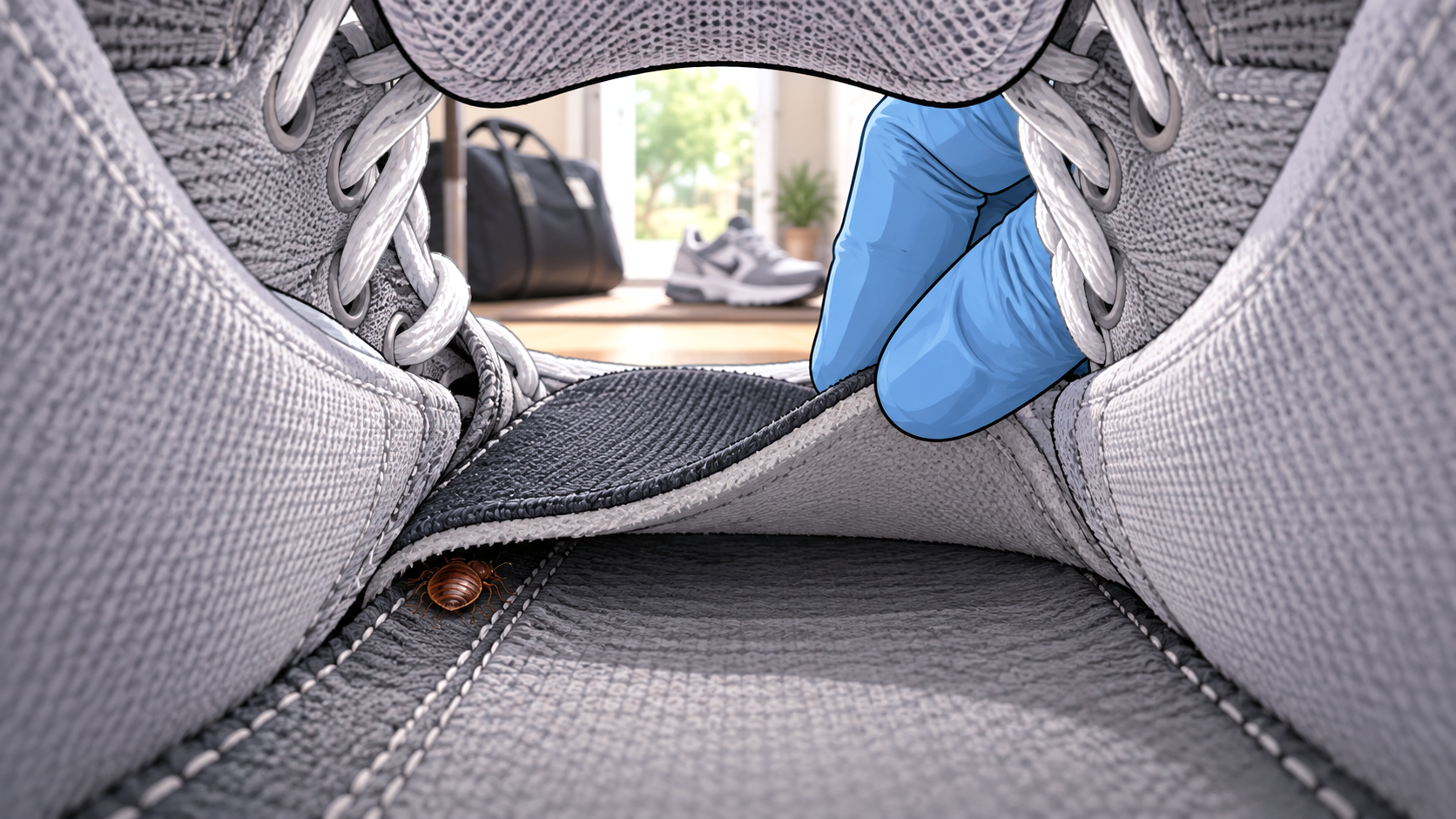
Shoes are not where most people expect to pick up a bed bug, but they can provide a ride. Bed bugs can crawl onto footwear and hide around overlapping material, laces, zippers, folds, and other protected areas. Shoes left near an infested bed or worn inside a heavily infested home deserve more attention than a pair that simply passed through a public building. Bed bugs can hide in shoes and be carried to another location in them. The risk increases when footwear has direct or prolonged exposure to an infested environment. If you suspect exposure, inspect your shoes carefully and contain them until they can be treated appropriately.
Bed Bugs Can Hitchhike on Shoes
Bed bugs do not live on people the way lice do. Their ability to spread between locations depends heavily on hitchhiking with belongings, including clothing, bags, furniture, and sometimes footwear.
Public places can act as transfer points even though an established infestation is unlikely to develop in an office, classroom, or similar non-residential environment. A stray bed bug can still be transported away on someone’s belongings.
Shoes are one possible route. Their construction can provide small protected spaces around laces, overlapping material, zippers, tongues, insoles, and other folds. A bed bug does not need to establish an infestation inside the shoe for this to matter. One insect hiding long enough to be carried home is enough to create a potential introduction. That makes shoes similar to luggage and backpacks that can carry bed bugs. The concern is transportation rather than the object being a preferred habitat.
Heavy Exposure Changes the Risk
Not every encounter with a building where a bed bug has been reported creates the same level of risk.
A single bed bug found in a school or office does not automatically mean the entire building is infested. Bed bugs can be introduced individually on people’s belongings, and a single sighting is not by itself evidence of a breeding infestation.
Compare that with someone entering a home where bed bugs are already established around beds, couches, floors, and personal belongings. The opportunity for a bug to crawl onto footwear is much greater.
People who repeatedly enter known or suspected infested homes have good reason to take additional precautions. Workers in that situation are advised to consider disposable shoe covers when an infestation has been confirmed or is anticipated. The covers should be removed after leaving and sealed for disposal.
We would treat that distinction as the useful part of the shoe question. Simply walking through a public building where a bed bug was once reported is not comparable to spending time inside a heavily infested residence.
Shoes Left Near an Infested Bed Deserve Attention Too
Shoes can encounter bed bugs without ever leaving your home.
Bed bugs usually concentrate around places where people spend long periods resting. Shoes stored beneath an infested bed or beside heavily infested furniture are therefore in a different situation from footwear kept in an entryway far from the sleeping area.
A pair that remains undisturbed under a bed also gives a wandering bug more opportunity to enter a fold or other protected area. If you already have an infestation, keeping shoes and other belongings away from the immediate sleeping area can reduce the number of objects that need to be inspected and treated.
Do not move potentially infested shoes from room to room uncovered. Bed bugs are difficult enough to control without giving them another opportunity to spread through belongings.
Check More Than the Bottom of the Shoe
The sole is worth inspecting after known exposure, but it should not be the only place you look.
Examine overlapping pieces of material, laces, zippers, the tongue, folds around the opening, and any other small recesses. Footwear used in an infested home should be checked carefully before it is brought back into your living space.
If you suspect your shoes were exposed while traveling or visiting an infested location, containment buys you time to deal with them properly. Put the shoes in a sealable bag rather than carrying them loose through the house. After a known exposure, keeping worn shoes sealed until you are ready to inspect or treat them reduces the chance of a hitchhiking bug escaping elsewhere.
The same containment principle is useful for other belongings. If several items were exposed together, treating the shoes while immediately unpacking everything else defeats much of the purpose.
Some Shoes Can Be Treated in a Dryer
Shoes do not automatically need a completely different treatment from clothing. Some footwear can tolerate dryer heat, although you should check the manufacturer’s care instructions first.
For suitable shoes, one approach is to hang them inside the dryer by their laces so they are exposed to heat without tumbling. This can be useful for footwear that might otherwise be damaged by repeatedly striking the dryer drum.
Heat-sensitive shoes are different. Leather, adhesives, foam, decorative materials, and other components may be damaged by high temperatures, so a method that is appropriate for one pair should not automatically be used on another.
Clothing is generally easier to manage because many garments can tolerate dryer treatment. We cover that separately when looking at whether washing clothes gets rid of bed bugs.
Freezing Shoes Requires the Right Conditions
Freezing is another option for items that cannot be laundered, but simply leaving shoes outside on a cold night is not a dependable treatment.
Temperature and exposure time both matter. Guidance for workers exposed to infested homes recommends that delicate items be sealed in a bag and kept in a freezer for four days.
A household freezer also needs to maintain a sufficiently low temperature for cold treatment to work. Outdoor temperatures fluctuate too much to assume that winter weather will produce the same result, which is one reason cold weather should not be treated as an automatic bed bug treatment.
If the footwear is expensive or particularly sensitive to heat or cold, professional treatment may be preferable to risking damage with a DIY method.
Don’t Spray Your Shoes Just Because You Suspect Exposure
A suspected hitchhiker is not a reason to grab a household insecticide and soak your footwear.
Pesticides should only be applied where the product label specifically allows their use. Shoes come into prolonged contact with skin and may be worn by children or other people who are particularly vulnerable to unnecessary pesticide exposure.
Inspection, containment, and an appropriate nonchemical treatment are better starting points for a pair of shoes that may have encountered bed bugs. If the shoes are part of a larger infestation, they need to be handled as one part of the overall control plan rather than treated in isolation.
Other Questions About Bed Bugs and Shoes
Can bed bugs lay eggs inside shoes?
A female bed bug can lay eggs in protected cracks and crevices, so footwear with suitable concealed spaces cannot be ruled out. Shoes are still better understood as potential hiding and transport sites than as a primary bed bug habitat.
Should you throw away shoes after finding a bed bug on them?
Usually not. Footwear that can be safely inspected and treated does not automatically need to be discarded just because a bed bug was found on it.
Can bed bugs stay on shoes while you’re wearing them?
A bed bug can be carried on footwear, but shoes being actively worn are more exposed to movement and disturbance than belongings left undisturbed. The greater concern is a bug concealed in a protected part of the shoe long enough to be transported elsewhere.
Should every pair of shoes be treated after a trip?
No. Routine travel does not mean every pair of shoes has been exposed to bed bugs. Treatment makes more sense when there is a specific reason to suspect exposure, such as discovering bed bugs in your accommodation or entering a known infested environment.