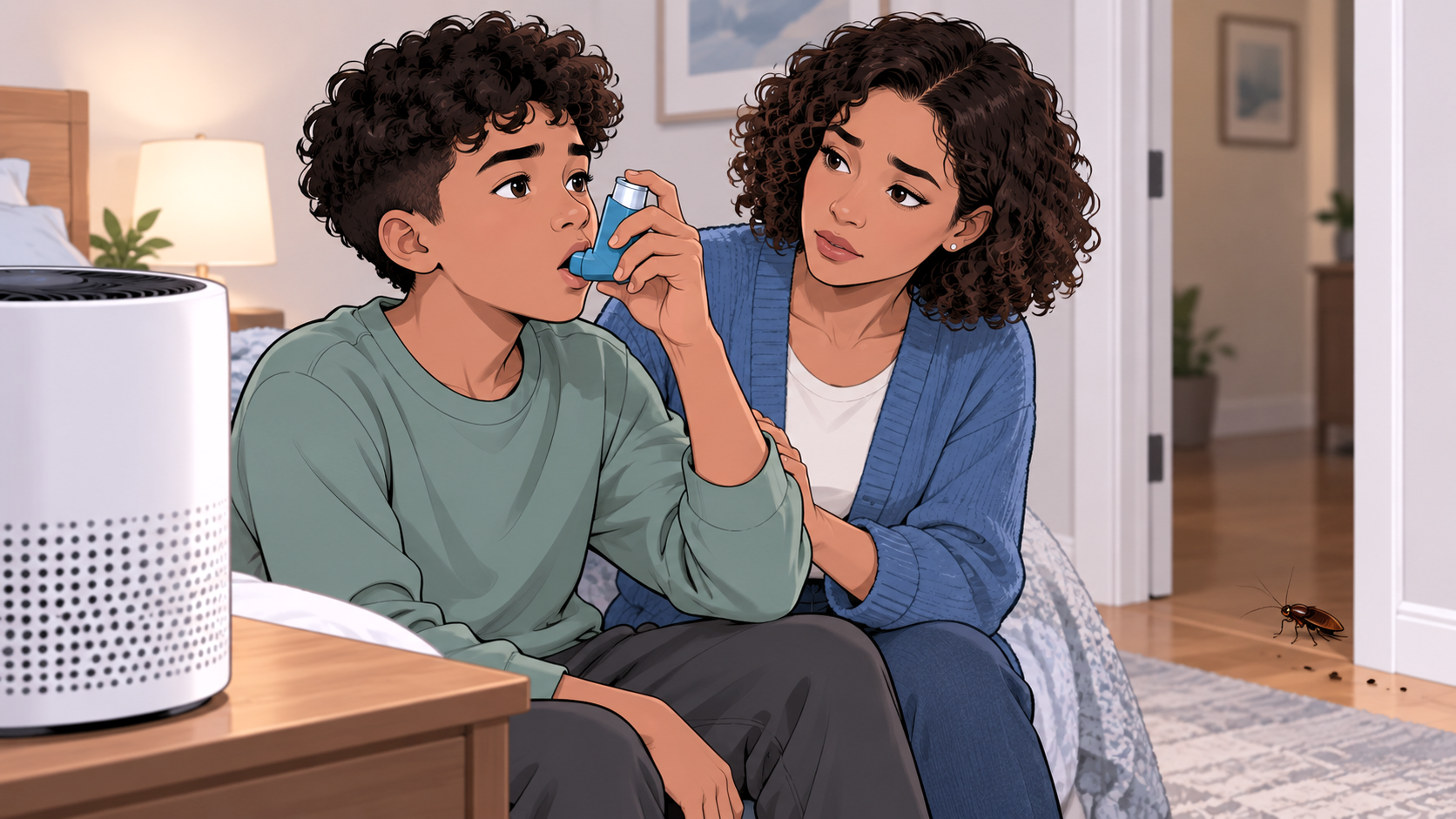
The cockroach itself does not have to touch you for an allergic reaction to occur. Proteins originating from an infestation can become part of household dust, where exposure may continue even when no live insect is visible. Cockroach allergens can cause allergic reactions and can trigger or worsen asthma in people who are sensitized to them. Important allergens occur in cockroach feces, saliva, secretions, shed material, and body debris. Exposure does not affect everyone equally, and the presence of cockroaches alone does not prove that they caused a person’s symptoms.
The Allergen Is Material From the Cockroach
An indoor infestation produces more than live insects. Cockroach feces, saliva, secretions, cast skins, body fragments, and other debris contain proteins capable of acting as allergens. Several have been identified, including Bla g 1 and Bla g 2 from German cockroaches and Per a 1 from American cockroaches. Studies of indoor exposure have found these cockroach allergens in settled household dust, including dust collected from kitchens, bedrooms, schools, and other occupied spaces.
The debris can remain after an individual cockroach has disappeared or died. Much of the allergen is associated with relatively large particles that tend to settle rather than remain continuously suspended in air, although activity that disturbs contaminated dust can temporarily make particles airborne. A visible accumulation of cockroach fecal material can therefore represent more than evidence of pest activity when someone in the home has a relevant allergy.
Exposure and Allergy Are Not the Same Thing
A person can live in a building containing cockroach allergen without being allergic to it. Allergy requires sensitization, an immune response in which the body recognizes particular proteins as allergens. Research has found a relationship between greater environmental exposure and cockroach allergen sensitization, but susceptibility varies among individuals and populations.
Once sensitized, a person can develop symptoms when exposed again. Indoor allergens may cause nasal congestion, sneezing, runny nose, itchy eyes, and other allergic symptoms, while allergic asthma can flare after exposure to a relevant indoor allergen. Symptoms by themselves cannot identify cockroaches as the cause because dust mites, pets, molds, pollen, and other allergens can produce overlapping reactions. Medical evaluation and allergy testing may be needed when identifying a trigger would affect treatment or environmental decisions.
Cockroach Allergy Has a Particularly Important Relationship With Asthma
Cockroach sensitization has been repeatedly associated with asthma, especially in studies of children living in urban environments. The strongest health effects occur when a person is both sensitized and exposed. Reviews of the evidence have linked this combination with wheezing, poorer asthma control, healthcare use, and other measures of asthma morbidity.
Children have been studied extensively, but cockroach allergy is not exclusively a childhood issue. The relationship also varies among communities, buildings, and individuals, so percentages reported from heavily affected inner-city populations should not be applied to every household. The National Institute of Environmental Health Sciences describes cockroaches as a source of indoor allergens associated with increased asthma severity, which supports taking established infestations seriously when a resident has asthma without assuming that every person exposed will develop the disease.
An Empty Trap Does Not Mean the Allergen Is Gone
Pest activity and allergen exposure do not decline at exactly the same rate. Removing live cockroaches stops them from producing new feces, shed material, and other debris, but existing allergens can remain in dust. Studies evaluating cockroach remediation have found that substantial allergen reduction can be difficult to achieve and maintain, particularly when infestation control is incomplete.
This gives cleanup a separate role from eliminating the population. Areas with clear signs of cockroach activity can contain reservoirs of debris in cracks, cabinets, beneath appliances, and along room edges. Cleaning those areas after controlling the infestation reduces material already deposited, while preventing reinfestation limits new allergen production.
Reducing Exposure Requires More Than Spraying Visible Cockroaches
A useful allergen-reduction strategy starts by reducing the cockroach population and the resources that sustain it. Food should be stored securely, crumbs and spills removed, garbage managed, water leaks repaired, and openings used by cockroaches sealed. These measures address the same food, moisture, and shelter conditions that can explain why cockroaches remain inside a house.
Integrated approaches can produce meaningful reductions. Current reviews report that cockroach-focused integrated pest management can substantially reduce indoor allergen exposure, while allergy specialists recommend controlling cockroaches alongside repairing leaks, blocking entry points, protecting food, and cleaning floors. Simply spraying insects as they appear leaves hidden populations, environmental reservoirs, and access to food or water unresolved.
People with asthma should also avoid unnecessary exposure to pesticide sprays, fumes, or strong odors that could irritate sensitive airways. Any pesticide used indoors must be applied strictly according to its label, and nonchemical measures should remain part of the control plan.
Questions About Cockroach Allergies
Can you be allergic to cockroaches without ever touching one?
Yes. Direct contact is unnecessary because allergenic proteins can occur in dust and debris within an infested environment. Exposure may happen through inhalation or contact with contaminated material.
Can cockroach allergy cause year-round symptoms?
It can contribute to perennial indoor allergy symptoms when exposure persists throughout the year. Similar symptoms can come from other indoor allergens, so their timing alone cannot establish the cause.
Are German cockroaches more relevant to allergies than other species?
German cockroaches are a major source of the extensively studied Bla g allergens and frequently establish indoor infestations. American cockroaches also produce important allergens. Identifying which cockroach species is present can help establish the nature of the infestation, but allergy diagnosis depends on the person’s sensitization rather than species identification alone.
Can cockroach allergen remain in a bedroom if the infestation was mainly elsewhere?
Yes. Cockroach allergens have been detected outside the immediate areas where insects are most frequently seen, and contaminated dust can occur in bedrooms and other living spaces. A cockroach appearing away from the kitchen should therefore be evaluated alongside evidence from the rest of the home rather than treated as the only indicator of exposure.