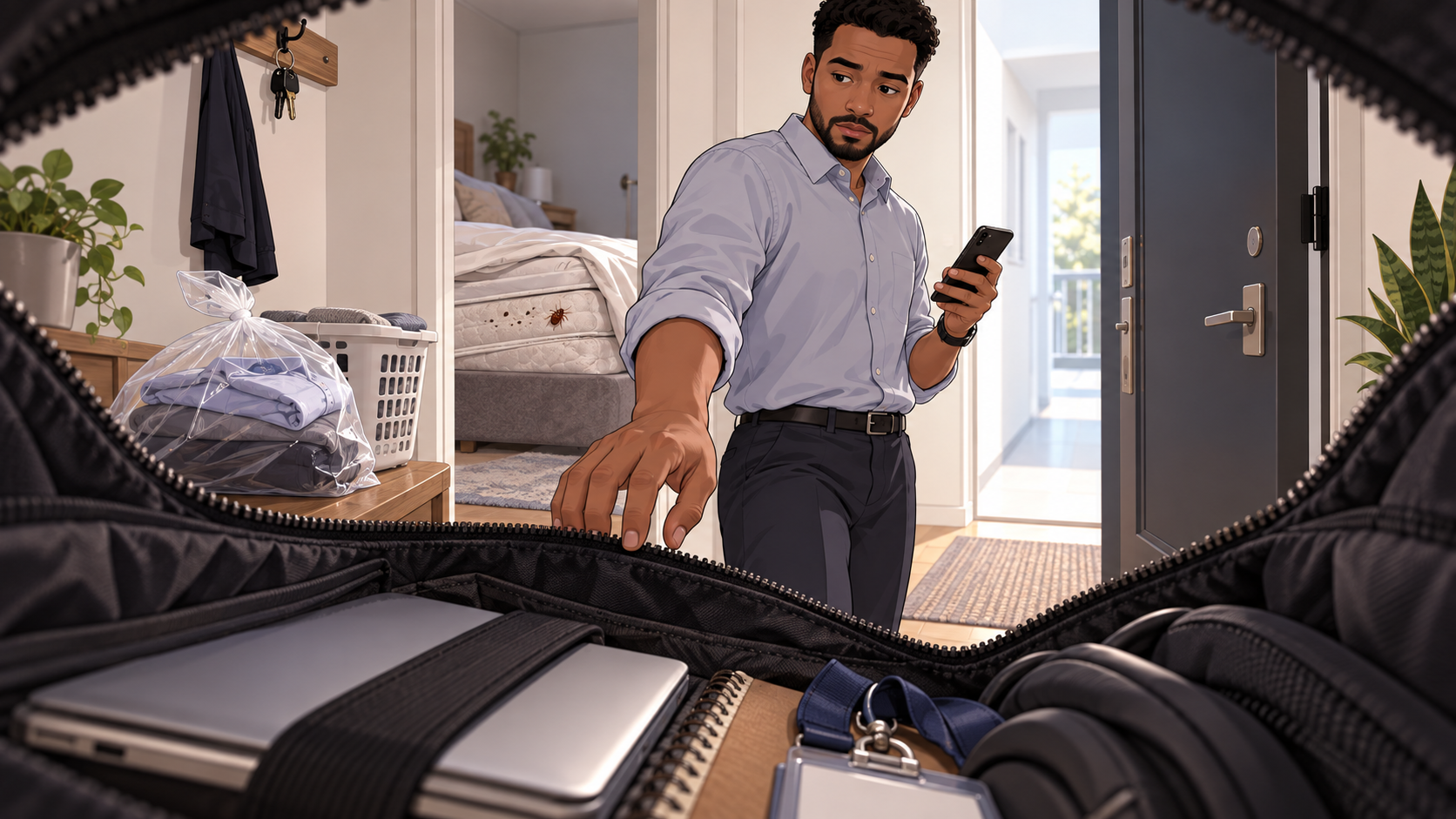
In the United States, having bed bugs at home does not generally give an employee an automatic legal right to stay home from work. Bed bugs are not known to transmit disease, and a home infestation by itself is not ordinarily a qualifying reason for federally protected medical leave. Your employer’s policies, state or local employment laws, union agreement, and any separate medical condition can change the situation.
An employer may generally still require you to report to work when you have bed bugs at home. However, you should tell your employer if there is a realistic risk of carrying bed bugs into the workplace and follow any precautions they require. Sick leave or other protected leave may apply if you separately have a qualifying medical condition, but the infestation itself does not automatically create that protection.
Do You Have to Tell Your Employer You Have Bed Bugs?
There is no general federal rule requiring every employee with bed bugs at home to disclose the infestation to an employer. However, disclosure can be sensible when your job or personal belongings create a realistic risk of bringing bugs into the workplace, particularly in settings where coats, bags, upholstered furniture, sleeping areas, or residents’ belongings are frequently handled.
Bed bugs are effective hitchhikers and can travel on clothing, bags, bedding, furniture, and other possessions. A workplace is unlikely to develop an established infestation compared with a home, but it can serve as a transfer point. Workplace guidance therefore recommends separating an affected employee’s belongings when someone has bed bugs at home rather than assuming that the employee must automatically be excluded from work.
Your employer may also have its own reporting policy. Healthcare, residential care, hospitality, shelters, childcare, and similar workplaces may have specific pest-management procedures because employees regularly enter living spaces or work around vulnerable residents.
Can Your Employer Require You to Come to Work?
Generally, yes, unless another law, employment agreement, workplace policy, or approved leave applies. Federal medical-leave law does not provide leave simply because an employee needs time to deal with a household pest infestation. The Family and Medical Leave Act provides eligible workers with job-protected leave for specified family and medical reasons, including qualifying serious health conditions.
Bed bug exposure can cause itching, allergic reactions, secondary skin infections from scratching, and other health effects, but bed bugs have not been shown to transmit disease. If you develop a medical condition serious enough to meet applicable leave requirements, the medical condition rather than the mere presence of bed bugs may potentially qualify you for protected leave. Eligibility would still depend on the law and your individual circumstances.
Company sick leave, vacation time, personal leave, remote-work arrangements, or state and local leave laws may provide options even when federal FMLA does not. Ask HR or your supervisor what policy applies rather than assuming that having an exterminator scheduled automatically entitles you to miss a shift.
How Can You Avoid Taking Bed Bugs to Work?
Having bed bugs at home does not mean bugs are permanently living on your body. The more realistic concern is accidentally transporting one in a bag, coat, clothing, shoes, or another possession. Keep work items away from infested sleeping areas and minimize what you carry between home and work.
Clothing that can tolerate heat can be processed according to appropriate bed bug control procedures and then stored in a clean, sealed container until needed. During home treatment, the EPA recommends putting suitable clothing and bedding through a hot dryer for 30 minutes and storing cleaned items in sealed bags. If you use shared laundry facilities, transport potentially infested items in sealed bags and use a fresh bag for cleaned items.
At work, keep your coat, bag, and other belongings separate if your employer provides an appropriate location. The EPA specifically recommends separating personal belongings when bed bugs are a workplace concern. These precautions are more useful than spraying yourself, your clothing, or your workspace with pesticides.
Meanwhile, deal with the source. A structured bed bug treatment plan reduces the period during which you risk transporting bugs elsewhere.
What If Your Employer Sends You Home Because of Bed Bugs?
Whether you must be paid for time away depends on how you are paid, why you were sent home, how long you performed work that day, and applicable federal, state, or local wage laws. There is no single bed-bug-specific pay rule covering every employee.
Ask the employer whether you are being placed on paid leave, unpaid leave, sick leave, remote work, or another status, and request any return-to-work requirements in writing. An employer concerned about workplace introduction may choose precautions such as isolating belongings or arranging inspection rather than excluding the employee entirely.
If a bed bug is subsequently discovered at work, that also does not prove that a particular employee brought it there. A single bug can represent an isolated introduction rather than an established infestation. Repeated sightings should be investigated through appropriate workplace pest management rather than employee blame. Employees dealing with an existing workplace problem also have separate rights when bed bugs are found at work.
Other Questions About Going to Work With Bed Bugs at Home
Can you carry bed bugs to work on your clothes?
Yes. Bed bugs can occasionally hitchhike on clothing and other possessions, although they do not normally live on people like body lice.
Should you call in sick because you have bed bugs?
Having bed bugs does not automatically make you medically unable to work or create protected sick leave. Follow your employer’s absence policy and any applicable state or local leave rules.
Can your employer require proof that your home was treated?
Whether an employer can impose a particular return-to-work requirement depends on the workplace, applicable employment laws, and the circumstances. Ask for any requirement in writing if you are being excluded from work.
What should you do with your work clothes during an infestation?
Process suitable clothing with heat and keep cleaned work clothes isolated from infested belongings. Following measures designed to prevent bed bugs from getting into another home can reduce opportunities for hitchhiking bugs to reach another location.