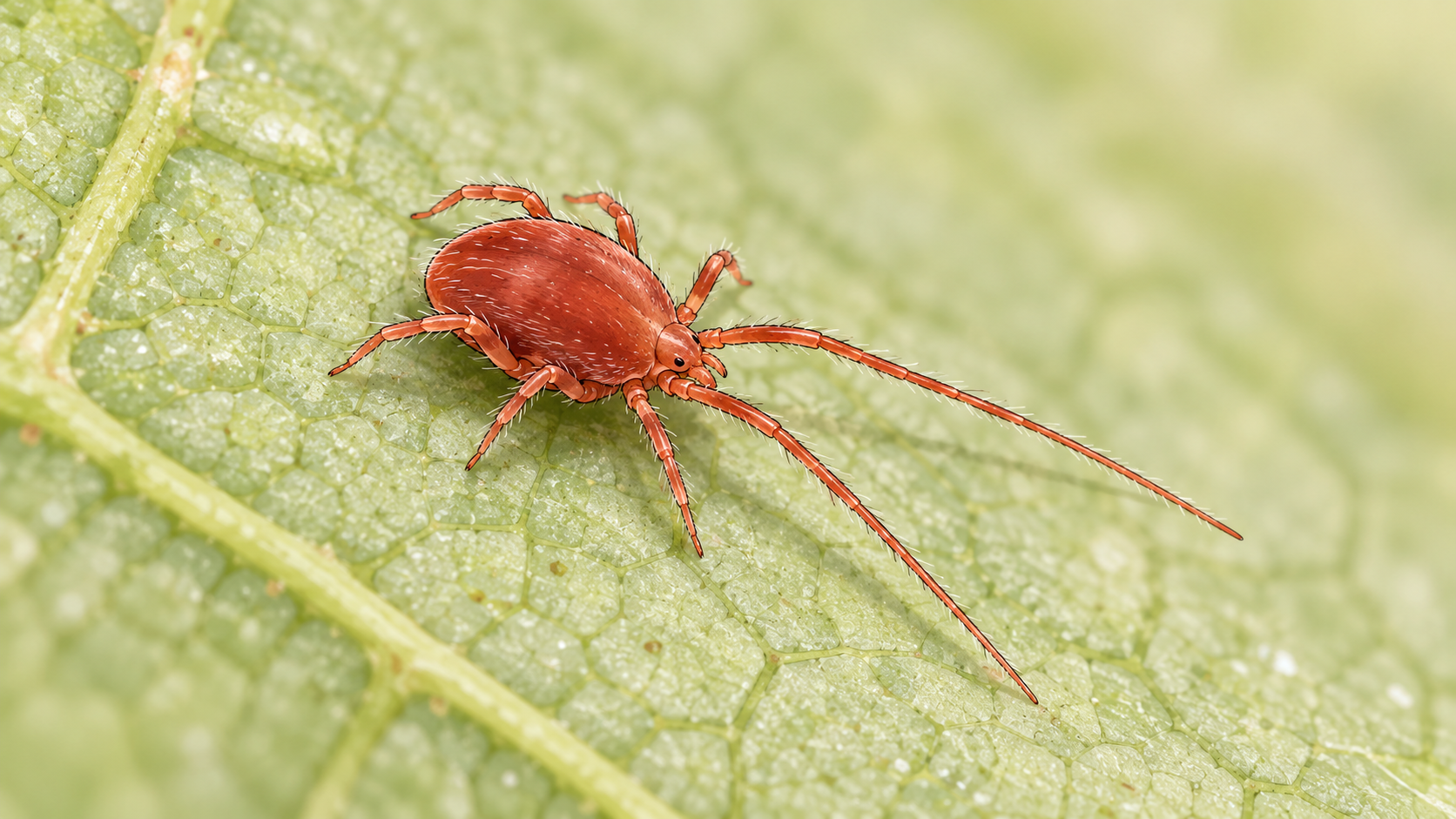
Clover mites are tiny, rounded to oval mites with eight legs and an unusually long front pair of legs. Adults are about 0.75 mm long, so they usually look like […]
What Attracts Clover Mites?
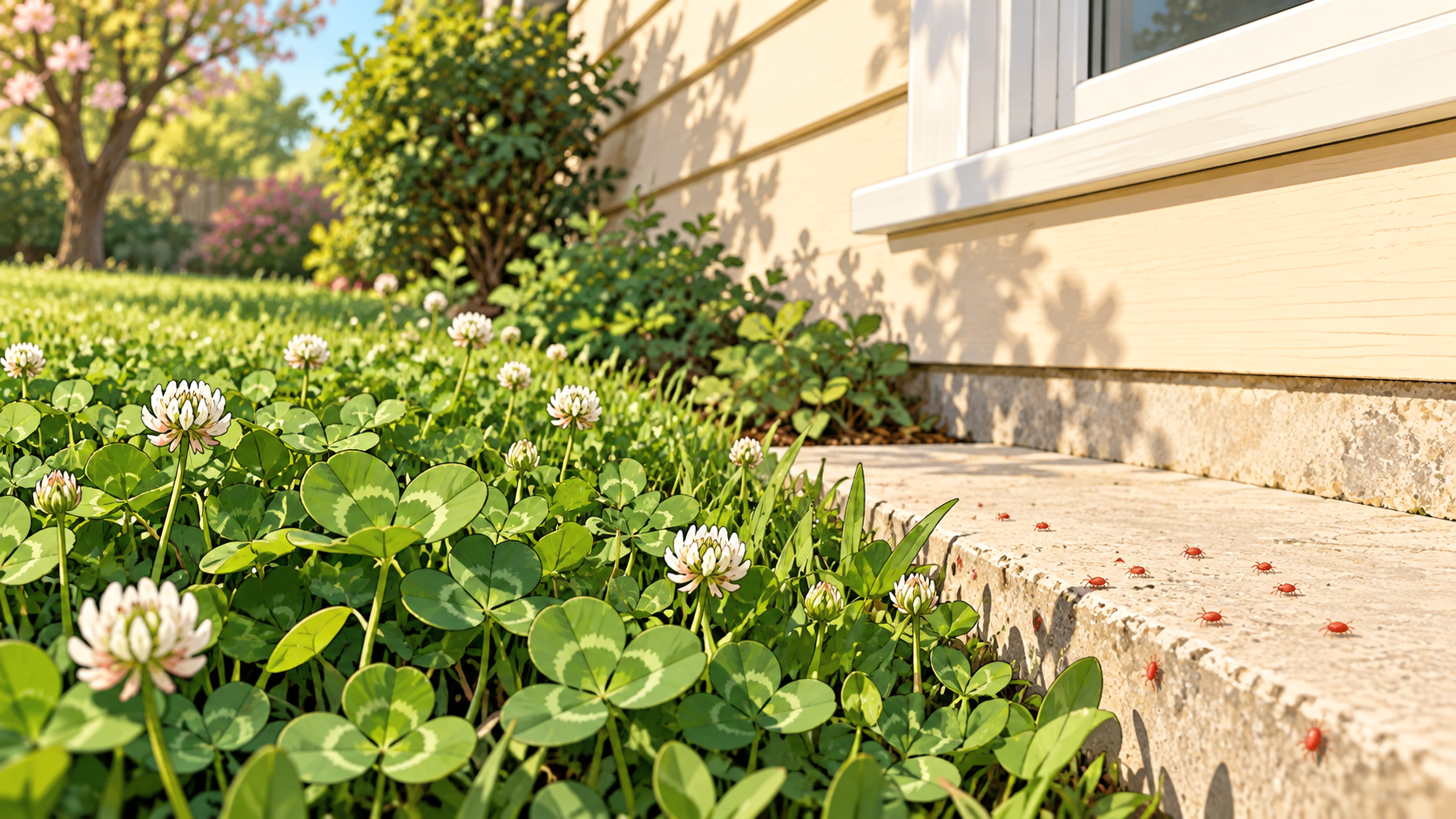
Clover mites are most strongly associated with lush, well-fertilized lawns, dense vegetation close to buildings, and warm, sunny exterior surfaces. Newly established lawns can also support unusually large populations. Moisture […]
Can Clover Mites Live in Carpet?
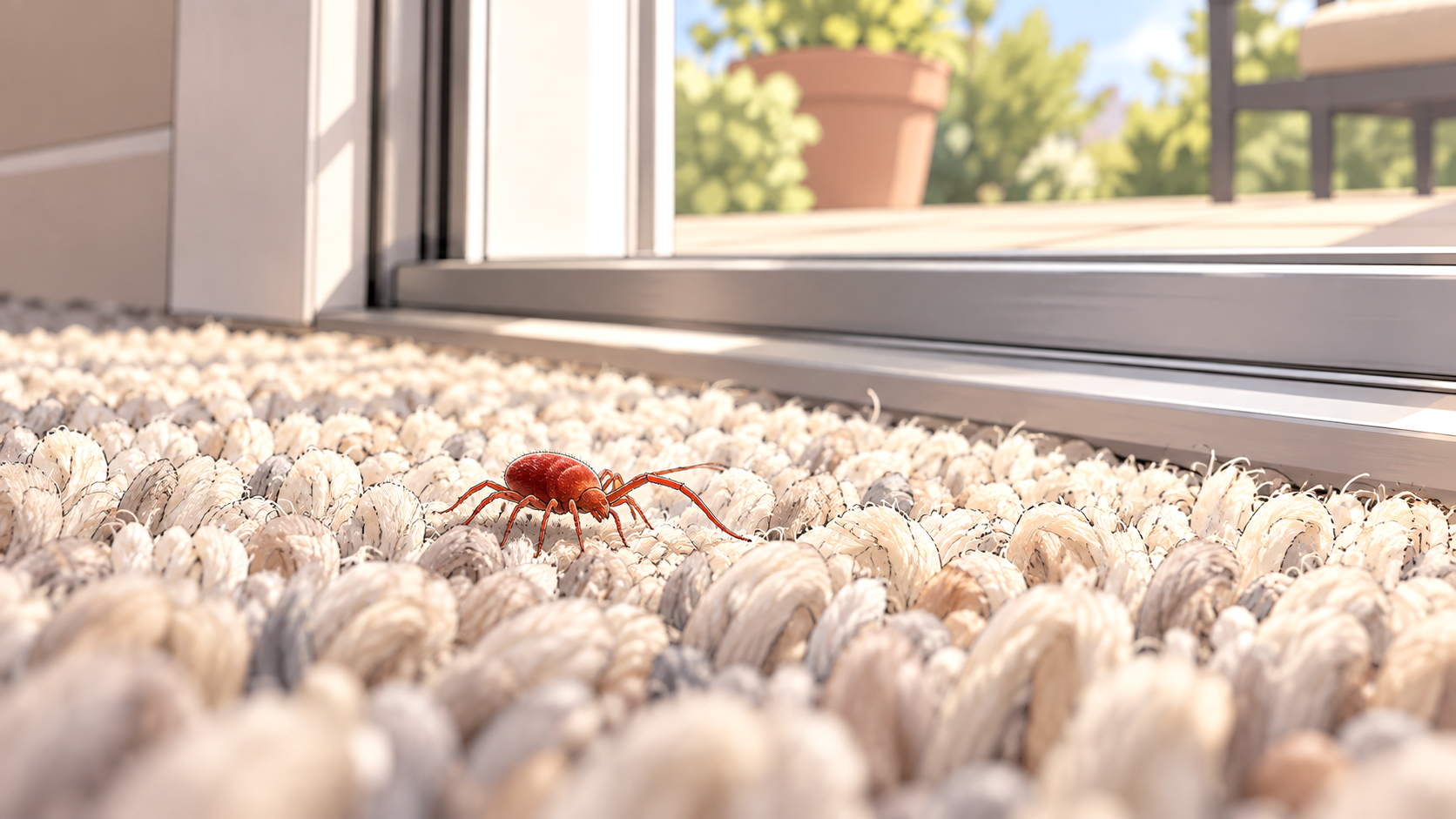
A clover mite can crawl through carpet fibers, disappear into the pile, and turn up again later. It cannot make a living there. Carpet supplies no food for clover mites, […]
Does Diatomaceous Earth Kill Clover Mites?
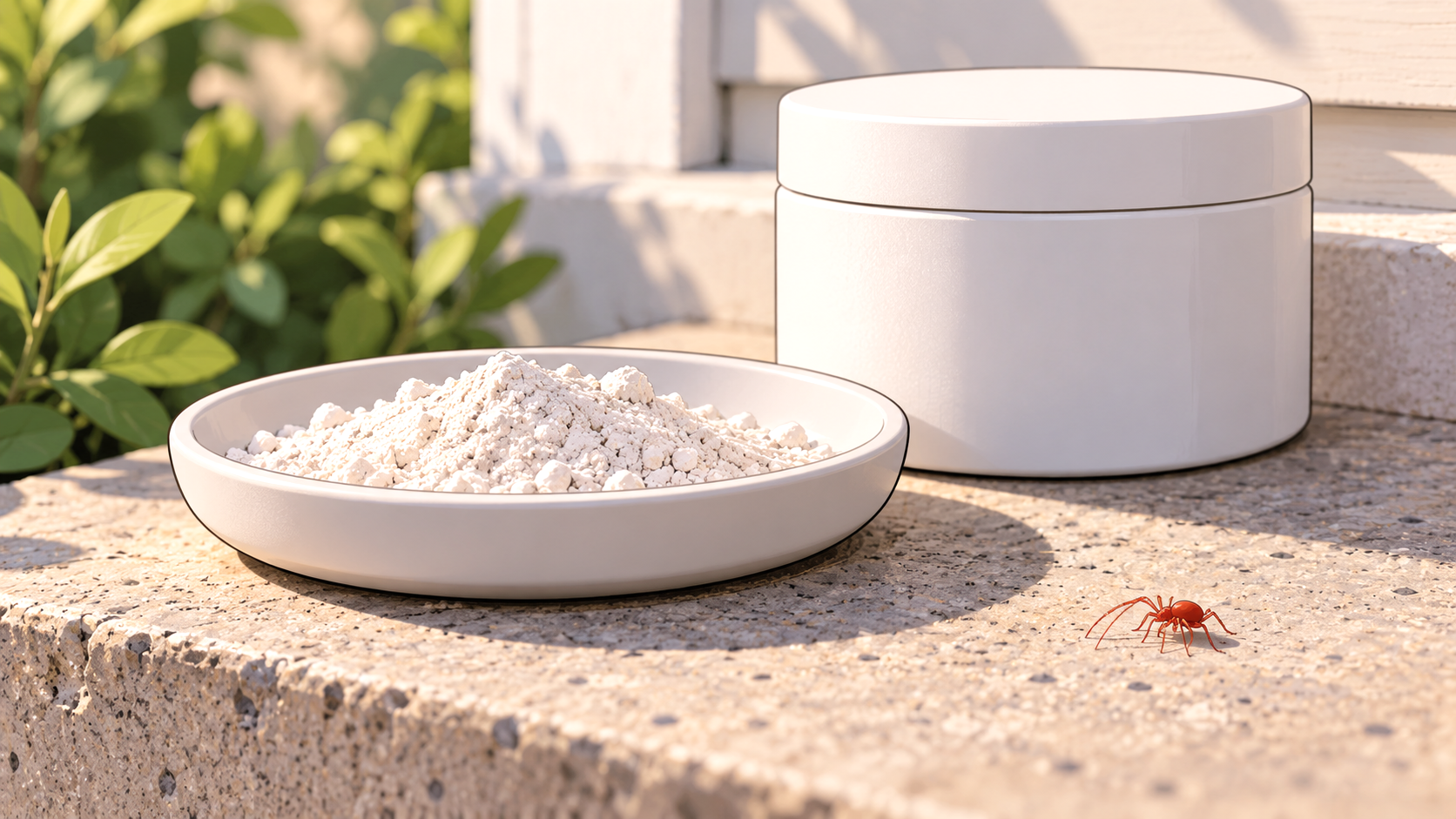
Diatomaceous earth can kill clover mites when they contact an appropriately labeled pesticide-grade product, but it is not a fast or complete solution for a large outdoor population. Diatomaceous earth […]
Why Are Clover Mites in My Basement?
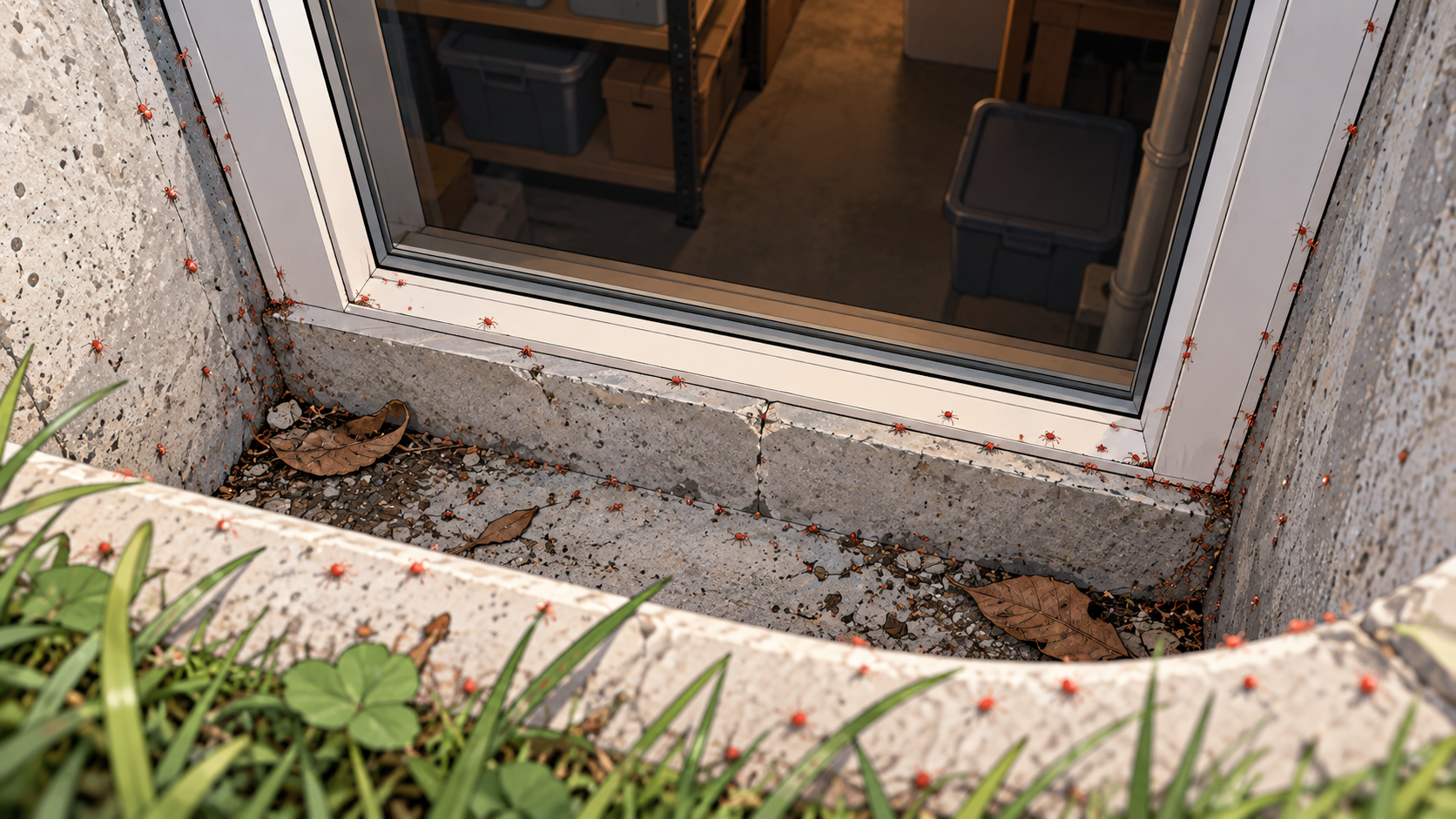
Clover mites commonly show up in basements because basements sit beside the foundation-level cracks and windows the mites can reach from outside. Their tiny bodies allow them to pass through […]
Does Boric Acid Kill Clover Mites?
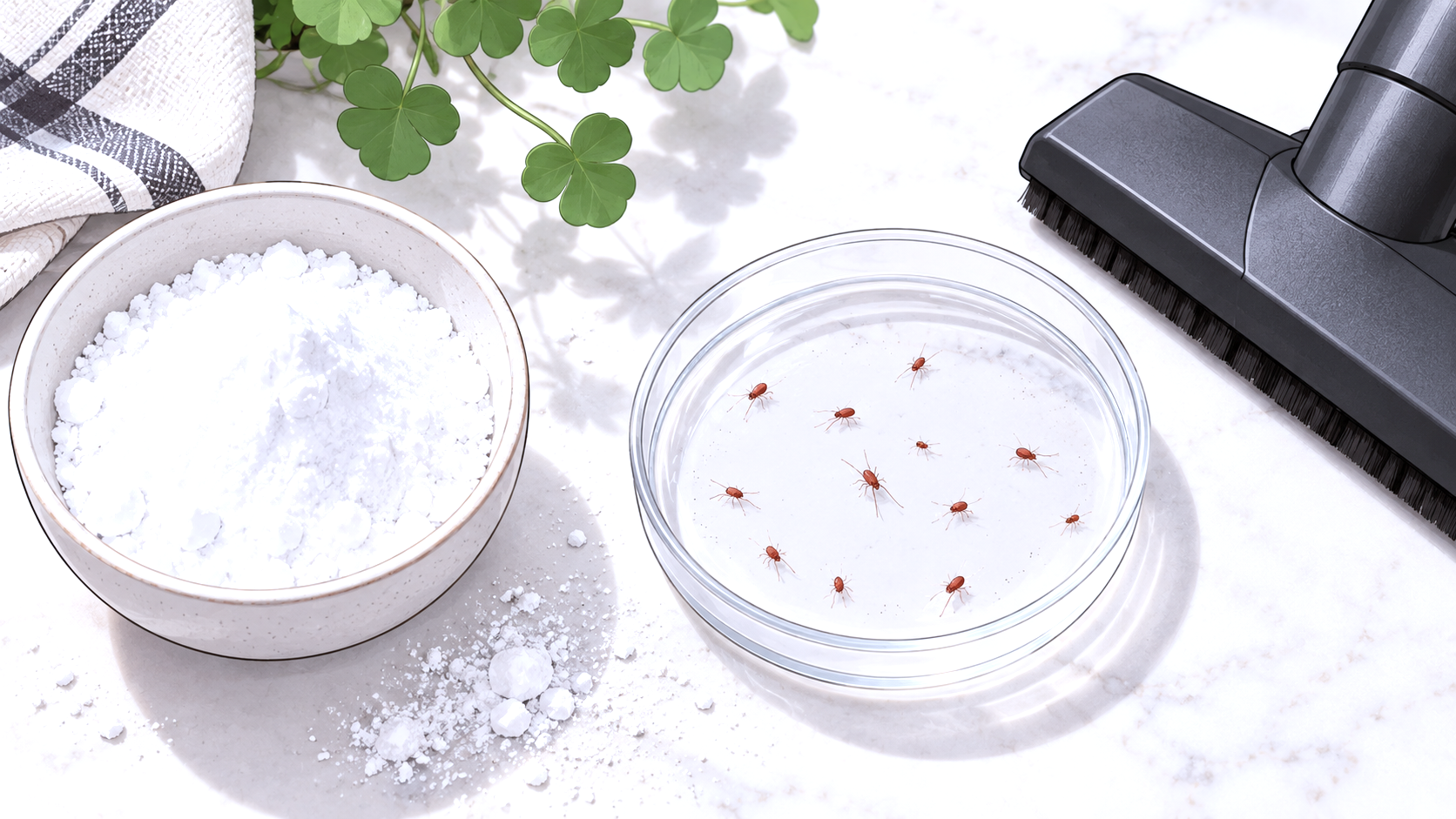
Boric acid has pesticidal activity against mites, but we would not use loose boric acid powder as a DIY treatment for clover mites unless the specific pesticide product is labeled […]
Clover Mites vs. Bird Mites
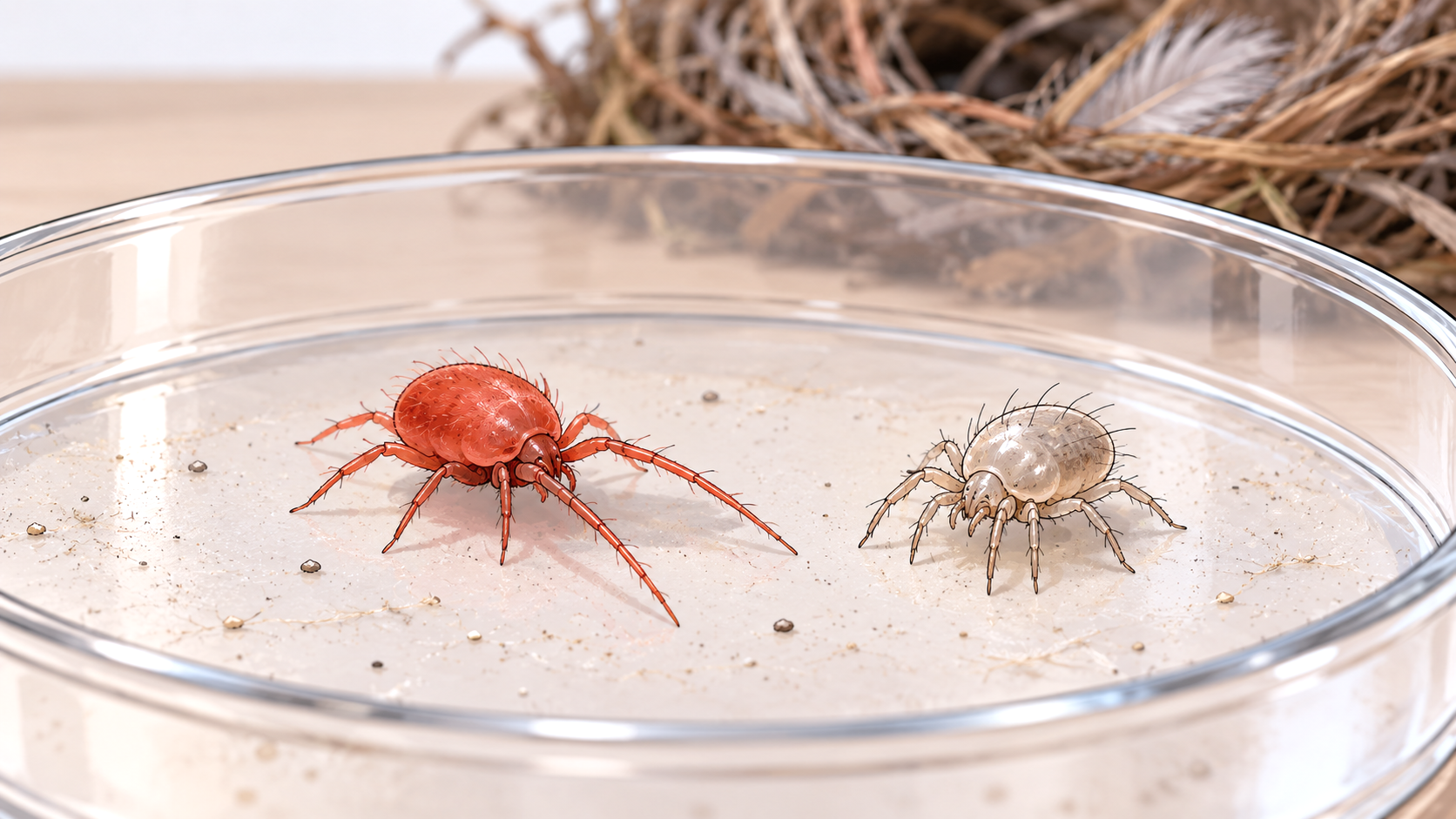
Where the mites are coming from can identify them faster than color. Tiny mites pouring from an old nest beneath the eaves point toward bird mites. Tiny red mites moving […]
Does Bifenthrin Kill Clover Mites?
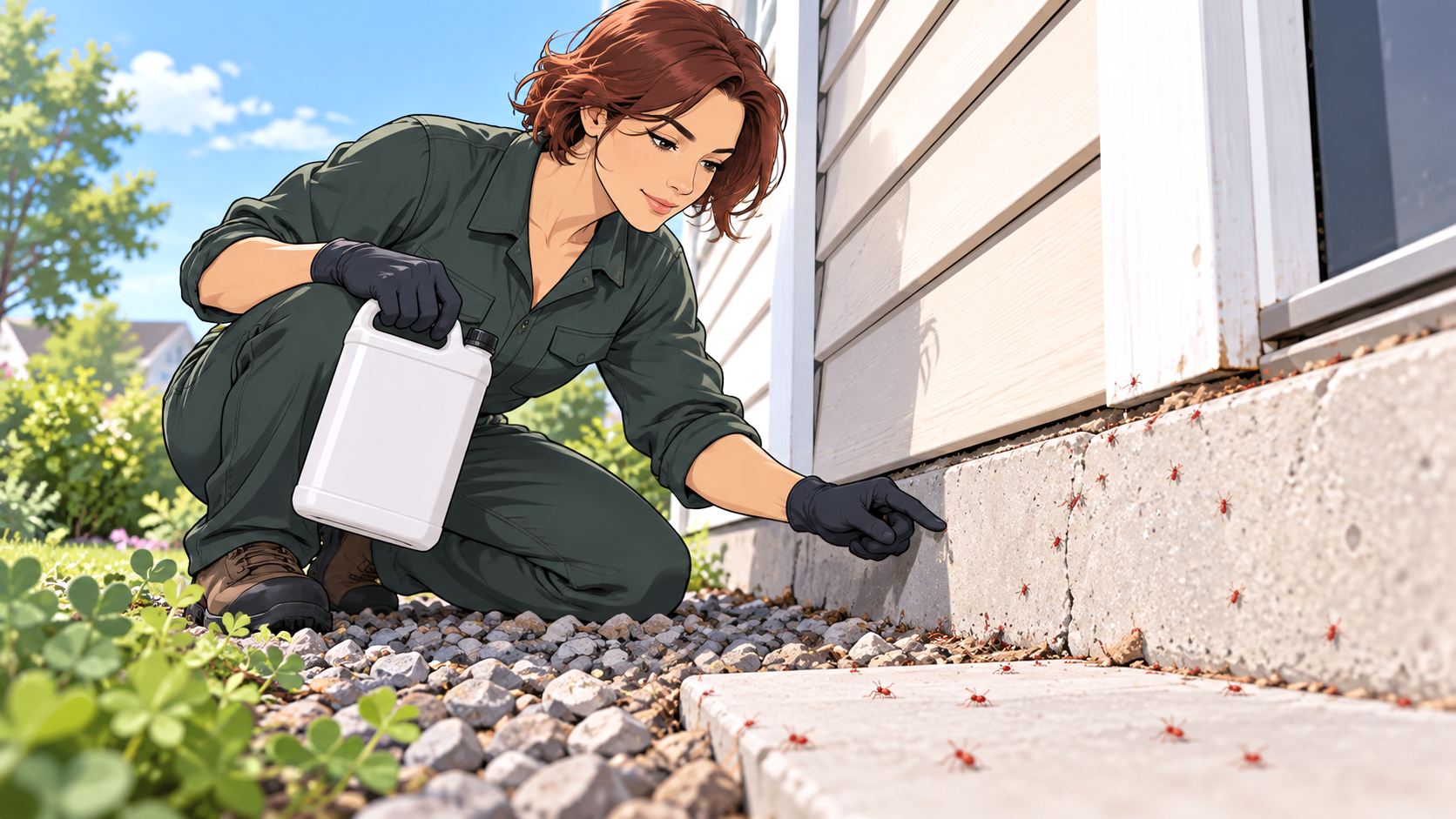
Bifenthrin kills clover mites, and unlike many household substances promoted for this purpose, current pesticide labels specifically include clover mites as a target pest. Bifenthrin is a synthetic pyrethroid that […]
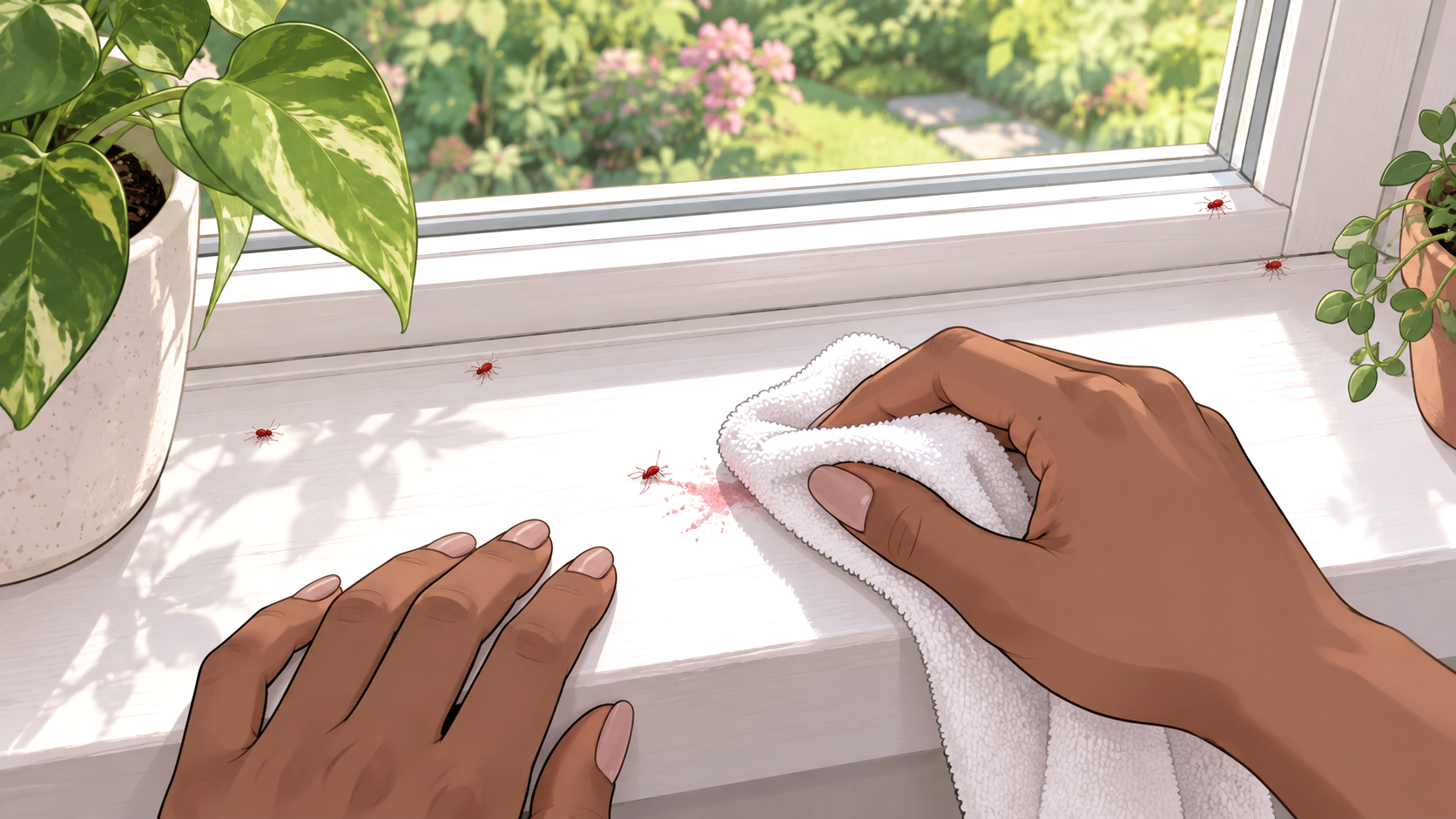
How to Remove Clover Mite Stains
Clover mite stains should be treated gently rather than attacked with the strongest cleaner available. Start by lifting any loose mite material without rubbing, then clean the remaining mark with […]
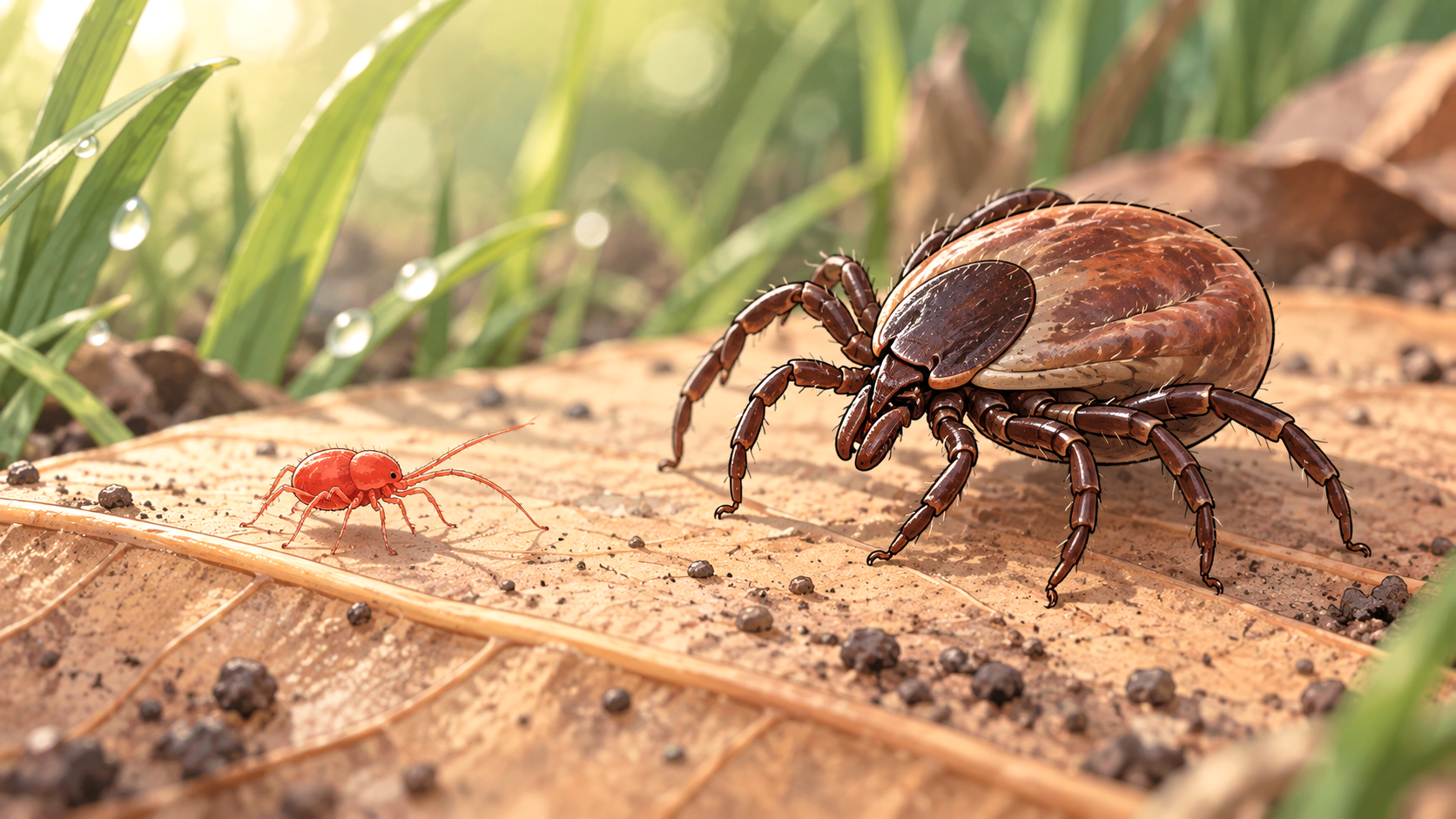
Clover Mites vs. Ticks
Clover mites and ticks both have eight legs after the larval stage, but their similarities become thin after that. Clover mites are tiny plant feeders that frequently wander onto buildings. […]