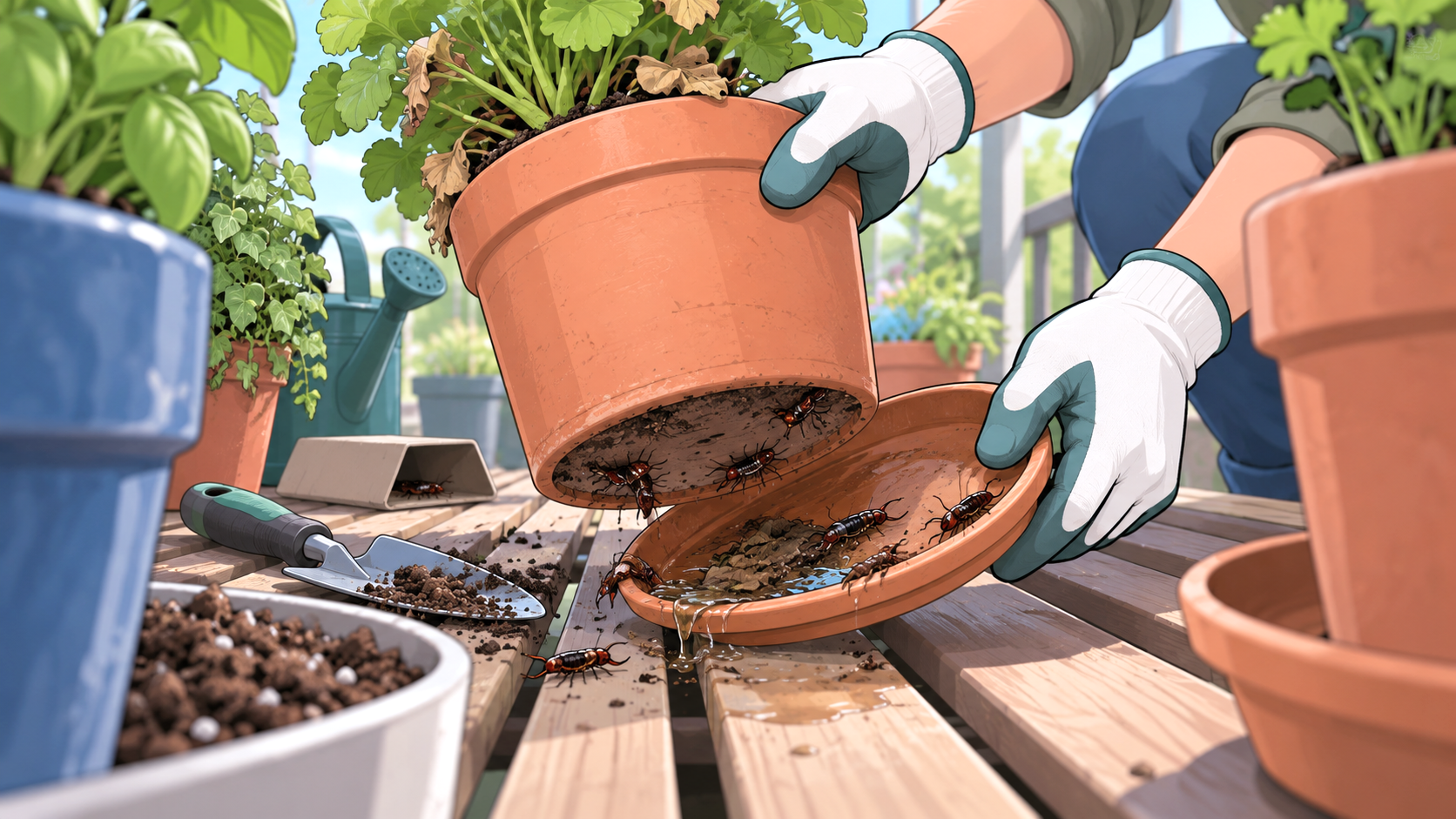
A flowerpot can accidentally provide earwigs with an excellent daytime hiding place. There is shade beneath the container, narrow gaps around the rim and drainage area, plant debris on the soil surface, and regular access to moisture. That combination means finding an earwig around a pot does not automatically mean it is living among the roots or destroying the plant.
To get rid of earwigs in potted plants, first check where they are actually hiding and confirm whether they are feeding on the plant. Remove earwigs and unnecessary debris, clean beneath pots and saucers, avoid keeping the potting mix constantly wet, and use traps nearby when activity continues. Treat the plant itself only when confirmed feeding damage justifies it.
That last point matters because earwigs are not exclusively plant eaters. They also consume decaying organic material and prey on small invertebrates. In a container garden, therefore, the goal is not automatically to kill every earwig you see. It is to stop the pot from becoming a refuge and protect the plant when the insects are actually causing damage.
Start by Finding Where the Earwigs Are Hiding
Before disturbing the plant, lift the pot.
Earwigs are regularly found underneath potted plants and other objects, which makes the bottom of the container one of the first places worth checking. Look beneath the pot, inside the saucer, around drainage openings and underneath any removable outer decorative container. Then examine the soil surface beneath loose leaves, pieces of bark or other material that creates covered spaces.
The distinction between being under the pot and being in the potting mix is useful. Seeing several earwigs scatter when you lift a container tells you they were using that protected space. It does not prove the potting soil itself is infested.
Check again after dark if you are trying to determine whether the plant is being eaten. Earwigs hide during the day and become active at night, so a flashlight inspection can confirm whether they are actually feeding on the plant. This is far more useful than blaming them solely because they happened to be nearby.
Do Not Repot the Plant Just Because You Found Earwigs
Throwing away all the potting mix feels like the cleanest solution, but it can be an unnecessary response to a problem occurring around the container rather than throughout it.
Start with the less disruptive approach. Move the pot away from its normal position and remove visible earwigs. Clear dead leaves and other loose plant material from the soil surface when that material is simply accumulating as debris. Wash and dry a dirty saucer before replacing it, and clean the surface where the pot normally sits.
We would reserve repotting for situations where the plant itself needs repotting or there is another horticultural reason to replace the growing medium. Earwig control alone does not automatically require stripping healthy roots out of their potting mix.
This is one of the easiest ways to turn a small pest problem into a plant-care problem. Repotting disturbs the root system, while leaving the original damp, sheltered location unchanged can simply recreate the same conditions around the new pot.
Change the Moisture Pattern Without Drying Out the Plant
Earwigs favor protected places with moisture, and heavily irrigated areas can support greater numbers. However, that does not mean an earwig problem should be solved by deliberately depriving a potted plant of the water it needs.
Instead, look for unnecessary moisture.
Empty standing water from saucers when the plant is not supposed to sit in it. Make sure the container can drain properly, and follow the watering requirements of the plant rather than maintaining constantly soggy conditions for no horticultural reason. If several outdoor pots sit directly on perpetually damp ground, raising the containers where appropriate can also remove some of the sheltered contact area beneath them.
The surrounding setup matters too. Earwig management includes reducing unnecessary hiding places and excess moisture rather than simply attacking the insects wherever they appear. A pot surrounded by wet leaves, weeds and garden debris can remain an attractive refuge even after every visible earwig has been removed.
This is also why our broader guide to what attracts earwigs is useful when the same containers keep attracting them.
Make Sure Earwigs Are Actually Damaging the Plant
Earwigs can chew leaves, buds, flowers and other plant material. Typical feeding can leave irregular holes and chewed edges, and seedlings or flowering plants can suffer substantial injury when earwig numbers are high. Yet damaged leaves by themselves are not enough to identify the culprit.
Slug feeding can look similar, although slugs leave slime and earwigs do not. Other garden pests can also produce chewing damage. A nighttime inspection is therefore particularly valuable when a potted plant suddenly develops holes.
This distinction can prevent unnecessary treatment. An earwig hiding beneath a large, established plant may be feeding on decaying material or other small organisms rather than causing the leaf damage you noticed. Earwigs can even act as predators of pests such as aphids and mites, which is why control is recommended when damage becomes unacceptable, not simply because an earwig exists near a plant.
Tender seedlings deserve more attention because they can tolerate far less feeding than established plants. We cover that vulnerability separately in our guide to keeping earwigs off seedlings and vegetable plants.
Trap Earwigs Beside the Pots Instead of Chasing Them Through the Soil
When earwigs keep appearing around outdoor containers, their daytime hiding behavior becomes useful.
Rolled corrugated cardboard or newspaper can provide an artificial refuge. Put the trap close to the affected pots in the evening, then check it after the earwigs have had an opportunity to shelter inside. Earwigs collected in refuge traps can be disposed of rather than allowed to return to the pots. This method is particularly useful because it can both confirm activity and reduce the number of insects around the plants.
Oil traps are another established option. Low-sided containers containing vegetable oil with an odorous attractant can capture earwigs where they are active. These traps belong around the affected container-growing area rather than buried inside a small flowerpot where they could interfere with normal plant care.
Persistent trapping can reduce earwig populations to tolerable levels, although a heavily populated garden may continue supplying new insects. Our DIY earwig trap guide goes deeper into the available designs, while the soy sauce and oil earwig trap covers that specific variation.
Indoor Potted Plants Need a Slightly Different Approach
An earwig appearing in an indoor plant does not necessarily mean it originated inside the house. A container that spent time outdoors can carry hidden insects inside when it is moved, particularly because flowerpots themselves can provide shelter.
Take the affected plant to an appropriate area where you can inspect it without releasing earwigs elsewhere indoors. Check beneath the container, the saucer, the outside of the pot and loose material on the soil surface. Remove visible insects and vacuum any that escaped around the original plant location.
Then consider where the plant came from. A recently purchased plant or one brought indoors from a patio has a much more obvious opportunity to transport outdoor organisms than a pot that has remained in the same indoor location for years. Other explanations may deserve investigation when earwigs repeatedly appear around multiple indoor plants.
European earwigs that wander into buildings do not reproduce indoors, so repeated household sightings should not automatically be interpreted as a hidden indoor breeding population. Our guide to earwigs in houseplants focuses specifically on what their presence indoors can mean.
Be Careful With Pesticides Around Potted Plants
A pesticide should not become the automatic next step because trapping took a little longer than expected. For outdoor earwig management, insecticides are rarely needed when habitat changes and persistent trapping bring the population down.
When confirmed earwig feeding is causing unacceptable damage and you decide to use a pesticide, the product label controls what you can do with it. Check that the product is labeled for the pest and for the type of plant and site you intend to treat. This becomes especially important with herbs, vegetables and other edible container plants because a product that can be used on an ornamental plant is not automatically appropriate for food crops.
Avoid improvising with household chemicals simply because the pot is small. Bleach, rubbing alcohol, vinegar and similar products are not interchangeable with a pesticide labeled for plant use, and applying an unsuitable substance to potting soil or foliage can create a plant problem without addressing why earwigs were using the container.
For a wider look at nonchemical management, our guide to getting rid of earwigs naturally covers methods beyond this container-specific situation.
Stop the Pot From Becoming the Same Refuge Again
Once the immediate activity drops, return your attention to the space around the container. This is where a lasting fix differs from simply removing today’s earwigs.
Do not let dead foliage and unnecessary debris accumulate around pots. Move containers occasionally when the setup allows it and check underneath them. Correct persistent standing water, and avoid creating permanently damp shelter around the base of the pots. Outdoor container gardens with many closely packed pots deserve particular attention because every undisturbed contact point can offer another protected space.
At the same time, avoid overcorrecting. Mulch, proper irrigation and sheltered positioning can all serve legitimate horticultural purposes. The objective is not to make the growing environment hostile to the plant. It is to remove excess shelter and moisture that serve no useful purpose while trapping earwigs when their numbers are causing trouble.
That balance is more useful than treating every earwig as an emergency. In a potted plant, the insect’s location, the condition of the plant and the amount of actual feeding damage should determine what you do next.
Other Questions About Earwigs in Potted Plants
Can earwigs enter a pot through the drainage holes?
Earwigs can crawl into tight, protected spaces, so drainage openings can provide access when they are large enough. Finding an earwig near a drainage hole does not prove it has established itself throughout the potting mix, however. Inspect the underside of the container and the saucer before assuming the soil needs replacing.
Should I throw away a plant that has earwigs?
No. Earwig activity alone is not a reason to discard an otherwise healthy plant. Remove the insects, clean up unnecessary hiding material and determine whether feeding damage is actually occurring before making a decision about the plant.
Can I bring a potted plant indoors after finding earwigs around it?
Inspect the pot carefully first. Check beneath the rim, around the base, in the saucer and among loose material on the soil surface, then remove any insects you find. This reduces the chance of carrying a hidden earwig indoors with the container.
Why are earwigs hiding under my flowerpots but not eating the plants?
The pot itself can provide the dark, protected daytime shelter earwigs seek. Because earwigs have a broad diet that includes decaying organic material and small invertebrates as well as living plants, sheltering beside a plant does not prove they are feeding on it.
Will earwigs eventually leave a potted plant on their own?
They may move between shelters as conditions change, but a container that continues providing a suitable refuge can continue attracting earwigs from the surrounding area. When repeated activity is a problem, removing unnecessary shelter and using traps nearby gives you more control than waiting for the insects to disappear.
2 thoughts on “How to Get Rid of Earwigs in Potted Plants”