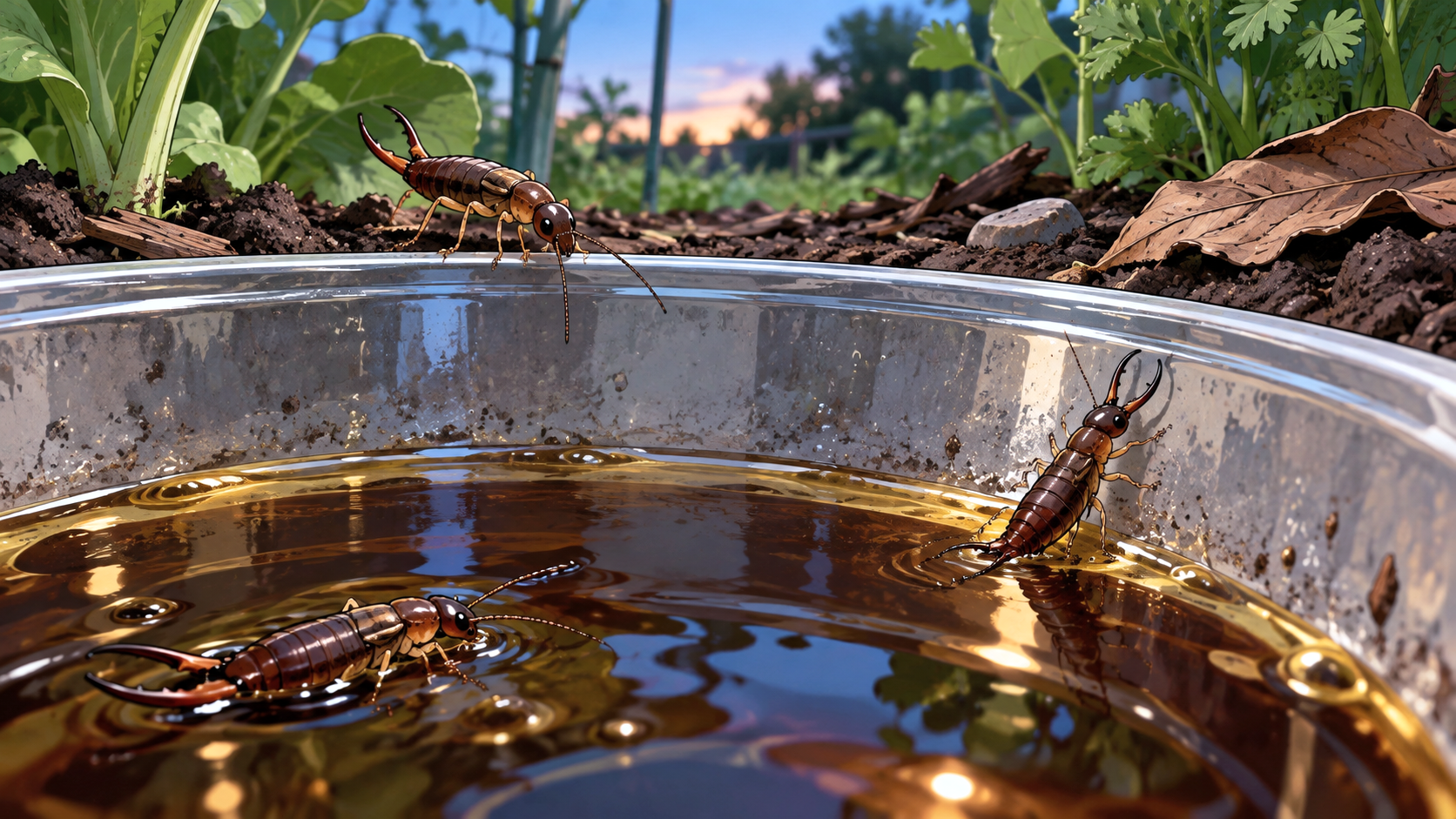
The soy sauce and oil earwig trap has become one of those garden remedies that sounds almost too homemade to be taken seriously. A small container goes into the soil, soy sauce and cooking oil go inside, and earwigs supposedly crawl in overnight. Unlike many kitchen-cupboard pest remedies, this one is based on a trapping method that actually has support.
The important detail is that soy sauce is not what makes the basic trap work. The trap is a baited pitfall. Earwigs enter a low container containing an attractive liquid or odor, then become trapped in the oil. Soy sauce can be used as part of the bait, but established earwig guidance also uses fish oil, bacon grease or vegetable oil without soy sauce.
Does the Soy Sauce and Oil Earwig Trap Actually Work?
Yes, a soy sauce and cooking oil mixture can be used to trap earwigs. Soy sauce mixed with cooking oil is included among recommended earwig trap options for problem areas around fruit and garden plants.
There is an important distinction, though. The evidence for oil traps is broader than the evidence for one exact soy sauce recipe. Earwigs are attracted to containers containing strong-smelling materials, and established trapping recommendations commonly use fish oil, bacon grease or vegetable oil combined with a small amount of one of those attractants. A low-sided can containing vegetable oil and fish oil or bacon grease is a standard example.
Soy sauce is therefore better understood as one bait option within a proven trap design, not as a special earwig poison.
That distinction is the part we think gets lost when this trap circulates online. You do not need to believe that soy sauce has some unusual insecticidal property for the method to make sense.
How the Soy Sauce and Oil Earwig Trap Works
The trap takes advantage of earwig movement at ground level. European earwigs primarily disperse by crawling, become active at night and seek protected shelter during the day. A container positioned where they are already active can intercept them during their nighttime movement.
The bait helps make the container attractive. Once an earwig enters an oil trap, the oil provides the trapping component. In agricultural earwig guidance, earwigs attracted by fish oil or bacon grease fall into vegetable oil and suffocate.
This explains why the container matters just as much as the ingredients. Pouring soy sauce and oil onto the soil would not create the same trapping system. The liquid needs to remain inside a container that earwigs can enter and from which they cannot readily escape.
It also explains why the soy sauce should not get all the credit. The same basic trap works with other attractive materials. Our broader guide to DIY earwig traps covers refuge traps and alternative oil traps separately.
How to Make a Soy Sauce and Oil Earwig Trap
Start with a small, sturdy container that can sit partly in the ground. A used plastic food container works well because it is easy to position and dispose of or clean afterward. Shallow metal food cans are another established choice for oil-based earwig traps.
Add cooking oil and soy sauce to the container. There is no need to chase an internet recipe claiming that an exact household ratio is required. The research-based guidance supporting soy sauce and cooking oil does not establish one universal ratio that must be followed for the trap to function.
Place the container in an area where earwigs are already active. In garden beds, position it close to damaged plants or other known hot spots. Depending on the container design, it can be set into the soil so earwigs can readily reach the openings or edge. Covered plastic traps can instead have entrance holes near the upper portion of the container.
A lid can be useful for a plastic-container design because it helps keep rainfall and irrigation water out. One documented earwig trap design uses a lidded container with entrance holes and vegetable oil combined with a strong-smelling bait.
Check the trap regularly, remove captured earwigs and refresh the contents when needed. When trapping an active population, repeated maintenance matters more than making a large quantity of bait at once.
Where You Put the Trap Matters More Than Adding Extra Soy Sauce
A baited trap sitting where earwigs rarely travel has little opportunity to catch anything.
Instead, look for the area where plant damage and earwig activity overlap. Earwigs can hide around mulch, groundcover, debris and other protected places, then emerge after dark. You can narrow down their feeding locations by inspecting affected plants at night with a flashlight.
Once you find an active area, place traps close to it. This is much more deliberate than scattering containers throughout the yard and assuming a stronger-smelling mixture will compensate for poor placement.
Research-based oil-trap instructions follow the same logic. Containers are placed at soil level near areas where earwigs are active, then checked regularly. Multiple traps can be used when the problem covers more than one part of a garden.
This is also why finding out what attracts earwigs around your property can be more useful than endlessly adjusting a trap recipe.
Soy Sauce Is Optional
Leaving soy sauce out does not mean abandoning the method.
A tuna or cat-food can with about half an inch of oil is an established earwig trap. Fish oil is particularly attractive, while vegetable oil with a small amount of bacon grease is another documented combination. Daily use of these traps can reduce earwig populations when trapping is warranted.
That gives you several practical options. If soy sauce is already in the kitchen, a soy sauce and cooking oil trap is reasonable. If you have tuna fish oil or bacon grease instead, those have stronger representation in university and Integrated Pest Management guidance.
We would not buy soy sauce specifically for earwig control when other documented oil traps can be assembled from materials already available. The container, suitable attractant, placement and repeated trapping are more important than treating one household ingredient as indispensable.
Do Not Use the Trap Just Because You Found One Earwig
Catching earwigs is easy enough that it can become disconnected from the reason for trapping them in the first place.
Earwigs are omnivores. In addition to plant material, they consume insects and decaying organic matter. Consequently, their presence in a garden does not automatically mean they need to be removed. Our guide to whether earwigs are good or bad for a garden explains why the answer depends on what they are doing around your plants.
Trapping becomes more useful when earwigs are numerous and are clearly damaging vulnerable plants. Irregular feeding on seedlings, flowers, soft fruits and other tender plant material can justify reducing their numbers. However, similar plant damage can come from other garden pests, so nighttime observation can help confirm the culprit.
Once damage is confirmed, oil traps offer a targeted option without immediately moving to an insecticide. In many garden situations, regular trapping combined with reducing hiding places and excess surface moisture can make insecticide treatment unnecessary.
Treat the Trap as a Local Control Tool
A soy sauce and oil trap works on the earwigs that encounter it. It does not change the conditions that allowed a large number of earwigs to accumulate around a garden bed.
That matters when catches remain high night after night. Earwigs favor protected areas, and garden debris, dense groundcover and other refuge sites can provide places to hide during daylight. Excess surface moisture can also make an area more favorable.
Rather than responding by making an increasingly large or concentrated soy sauce mixture, use the trap catches as information. Repeated catches tell you that earwigs are active around that location. You can then examine the surrounding area for shelter and moisture conditions that are helping sustain the problem.
For continuing plant damage, combine trapping with the broader measures in our guide to getting rid of earwigs in the garden. If the problem is earwigs repeatedly entering a building instead, trapping a garden population is not a substitute for keeping earwigs out of the house.
Other Questions About Soy Sauce Earwig Traps
Can I use only soy sauce without oil?
The established soy sauce variation combines soy sauce with cooking oil, while the broader body of earwig trapping guidance relies heavily on oil-based traps. We would keep the oil rather than turning the method into a soy-sauce-only experiment.
Can I use olive oil in an earwig trap?
University guidance generally describes vegetable oil, cooking oil, fish oil or strong-smelling grease rather than identifying olive oil as necessary. There is no advantage in using a more expensive cooking oil when ordinary vegetable oil fits the established trap design.
Will a soy sauce and oil trap catch pests other than earwigs?
It can. An accessible ground-level pitfall is not selective for earwigs, so other small invertebrates may enter. A container design with entrance holes rather than a completely open top can reduce accidental entry by some larger non-target animals, but it does not make the trap earwig-specific.
Should I put a soy sauce earwig trap inside the house?
This trap is better suited to outdoor areas where earwigs are active. Earwigs that wander indoors can generally be swept or vacuumed up, while recurring entry calls for attention to exterior gaps, moisture and nearby shelter rather than maintaining baited oil containers around living spaces.
Will adding more soy sauce make the trap more effective?
There is no established dose-response rule showing that increasing the amount of soy sauce produces a better earwig trap. Good placement and regular maintenance are more defensible ways to improve trapping than continually increasing the concentration of one bait ingredient.
4 thoughts on “The Soy Sauce and Oil Earwig Trap Explained”