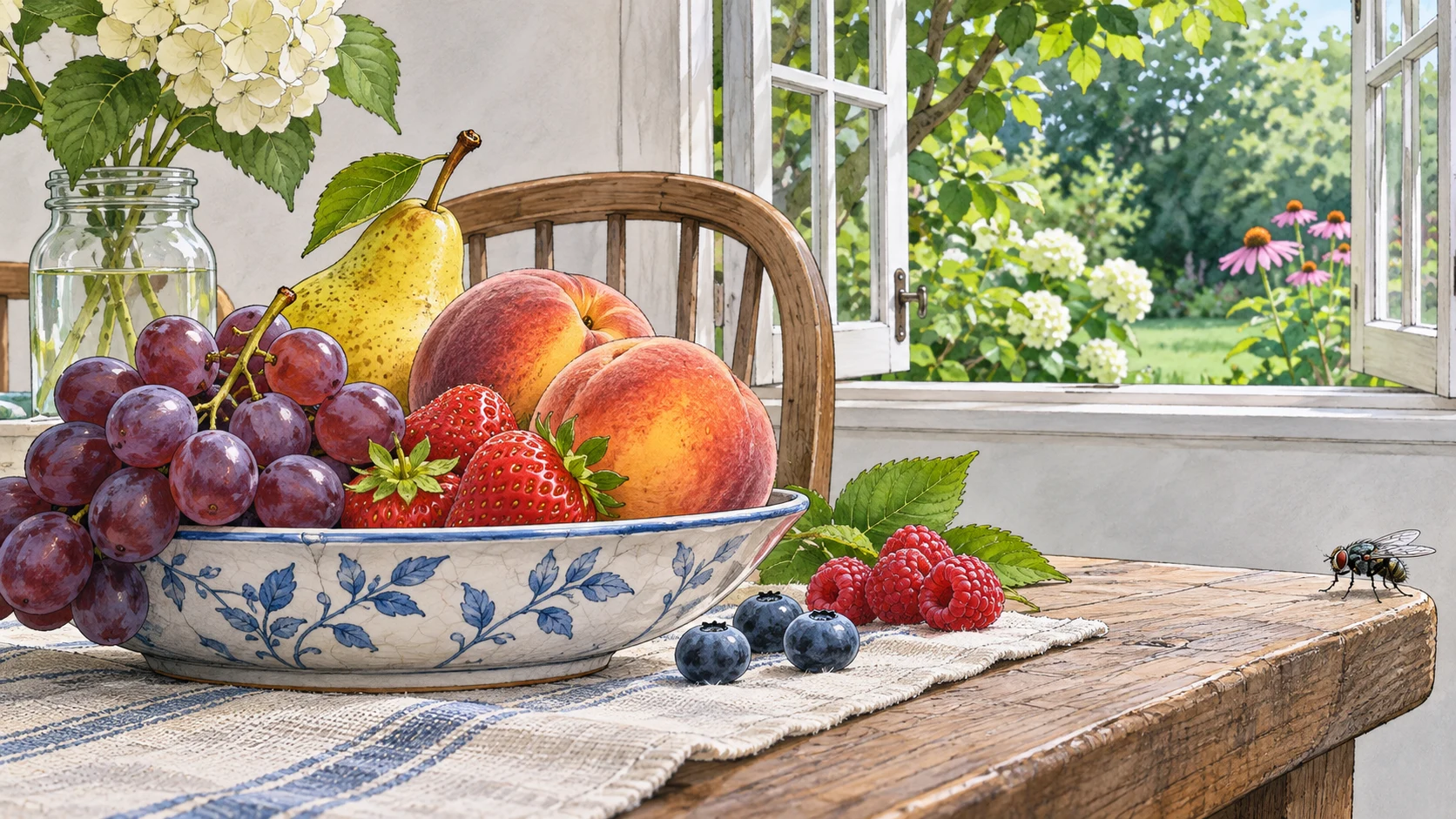
You may keep your kitchen clean and still find house flies hovering around your back door, landing on outdoor furniture, or slipping inside when someone enters. The reason is often something outside the house rather than anything sitting on your kitchen counter.
House flies are primarily attracted to food odors, garbage, animal waste, and other organic materials they can feed on or use for reproduction. When those materials are close to a building, adult flies may gather nearby. Open doors and windows then give them opportunities to enter.
Not every fly visiting your property is looking for a place to lay eggs. Some are searching for food, others are moving between outdoor locations, and some simply enter through an available opening.
Understanding which conditions attract house flies helps explain why they repeatedly visit certain properties, even when the interior is reasonably clean.
Food Odors Are One of the Main Attractions for House Flies
House flies, Musca domestica, rely heavily on chemical cues to locate potential food sources. Their antennae contain sensory structures that detect airborne chemicals, allowing them to respond to odors associated with food and decomposing organic matter.
An uncovered garbage container, food waste left outdoors, or decomposing material in a yard can release odors that attract flies from the surrounding area.
The strength of an odor is not the only consideration. Its chemical composition, the distance from the source, airflow, and the fly’s physiological condition can influence whether the insect responds.
House flies are not attracted to every smell that humans consider unpleasant. Some food-related odors may be attractive even when people barely notice them, while a strong household fragrance does not necessarily provide a meaningful food cue.
Once a fly reaches a promising location, it may use additional sensory information to decide whether to land and feed. House flies have taste receptors on their feet and mouthparts, so contact with a surface can help them evaluate potential food.
This explains why a fly may investigate a countertop, outdoor table, or garbage lid even when no substantial food is visible.
Garbage Containers Can Attract Flies Before They Become Overflowing
Household garbage is one of the most important attractions around residential properties.
Food scraps begin changing as microorganisms break down organic material. The resulting odors can attract adult house flies, particularly when waste contains moist food residue or decomposing material.
A trash container does not have to be visibly overflowing to become attractive. Small amounts of food residue inside the container, liquids collecting at the bottom, and waste bags that leak can all contribute.
The location of the container also affects fly activity around the home. Garbage kept immediately beside an exterior door can bring flies close to an entrance that people use throughout the day.
House flies are associated with garbage because it can provide both food for adults and suitable material for larvae. Those functions are related but not identical. Adult flies may investigate a container without laying eggs there, and not every garbage container contains developing maggots.
Regular waste handling, clean containers, and tightly closed lids reduce the conditions that make garbage attractive. Keeping outdoor waste containers away from frequently used entrances where practical also reduces the chance of flies gathering directly beside the house.
These measures are consistent with the University of California’s recommendations for reducing house fly activity around buildings.
Exposed Food Can Bring House Flies Toward Your Home
House flies feed on a wide range of organic substances, including human food. They are especially noticeable around exposed meals, food scraps, and residues left on eating surfaces.
Outdoor dining creates an obvious opportunity. A plate of food on a patio table, an uncovered serving dish, or scraps left after a barbecue can attract flies already active nearby.
Their mouthparts are adapted for taking up liquids rather than biting or chewing solid food. House flies can liquefy some solid materials with saliva or regurgitated fluids before consuming them.
This feeding behavior allows them to investigate many foods that do not initially appear liquid.
Sweet foods can attract house flies, but sugar is not their only interest. Meat juices, sauces, dairy residues, and other accessible foods may also provide feeding opportunities.
An open container of sugary food may attract flies, yet it would be misleading to suggest that sugar alone explains most house fly activity around a home. Garbage and animal waste can be much more significant outdoor attractions.
Food access also differs from a breeding opportunity. A fly landing on a sandwich is looking for food, but that does not mean the sandwich is a likely site for successful larval development.
Pet Waste and Animal Manure Are Major Outdoor Attractions
Pet waste is easy to overlook when considering what attracts flies to a property.
Dog feces, livestock manure, and contaminated animal bedding can attract adult house flies. These materials may provide feeding opportunities and, under suitable conditions, places for females to deposit eggs.
House flies are particularly associated with animal environments because their larvae can develop in manure and other moist organic waste.
A household does not need to keep livestock for animal waste to become relevant. Dog waste left in a backyard, an outdoor animal enclosure, or waste accumulating around a neighboring property can contribute to local fly activity.
Fresh and aging waste may differ in how attractive they are to flies, depending on moisture, microbial activity, and other conditions. Dry material that cannot support larval development is not equivalent to a moist accumulation of manure.
The University of Minnesota Extension’s information on flies identifies human and animal waste, garbage, and decaying material as major attractions for common filth-associated flies.
Removing pet waste regularly reduces the amount of material available to attract adults and support further development.
Rotting Fruit, Vegetables, and Yard Waste Can Also Draw Flies
Organic material does not have to come from a garbage bag or animal enclosure.
Fallen fruit, discarded vegetables, damp grass clippings, and decomposing plant material may attract house flies when conditions are suitable.
A fruit tree dropping produce onto the ground can create an accumulation of soft, decaying material. Similarly, a pile of wet grass clippings or discarded vegetables may provide the moisture and organic matter that house flies investigate.
However, ordinary vegetation should not be treated as an automatic fly attractant. A healthy lawn, dry leaves, or fresh garden plants do not offer the same conditions as decomposing organic waste.
Compost also varies considerably. A properly managed compost system differs from an exposed accumulation of rotting kitchen scraps. Moisture, composition, and the condition of the material influence whether house flies find it attractive.
The practical concern is decomposing material that remains accessible, particularly when it accumulates near patios, exterior doors, or other areas where people spend time.
Why Flies Gather Around Outdoor Eating Areas
Patios, decks, and backyard dining spaces often combine several things that interest house flies.
Food is temporarily exposed, drinks may spill, and used plates can contain residues. Garbage containers may also be nearby, particularly during outdoor gatherings.
A fly does not have to originate from your yard to investigate these opportunities. Adult house flies are mobile and can travel between properties while searching for food and suitable places to reproduce.
A clean patio may therefore receive visitors from surrounding areas, especially when outdoor fly activity is already high.
After eating outdoors, leftover food and discarded packaging can continue attracting flies if they remain accessible. A small amount of residue on a table may be enough to encourage a nearby adult to investigate, even though it would not support a new generation of flies.
Keeping food covered when it is not being served, removing scraps promptly, and managing nearby garbage are straightforward ways to make an outdoor eating area less attractive.
Open Doors and Windows Make an Attractive Property Easier to Enter
A house may have several outdoor attractions without having many flies indoors. Access determines whether adult flies can move from the surrounding property into the building.
An open exterior door provides an obvious route. A damaged screen or an unscreened window can create another.
Consider a garbage container positioned beside a frequently used back entrance. Flies investigating the waste are already close to the doorway. Each time the door opens, some may enter.
The garbage attracts the flies to the area, while the opening allows them to reach the interior.
These are separate factors. An open door does not necessarily attract a fly from a distance in the same way that a food odor can, but it creates an opportunity for a fly already nearby.
Building airflow may also influence entry. Air movement through openings can carry odors outward or affect the movement of insects near doors and windows.
The Cornell Integrated Pest Management information on non-biting flies identifies open doors, damaged screens, and improperly fitted windows as common ways flies enter buildings.
For understanding attraction, the important point is that a fly-friendly outdoor environment and an accessible entrance can reinforce one another.
Are House Flies Attracted to Light and Warmth Around a House?
Light and temperature can influence where house flies move and rest, but they should not be confused with the food-related odors that draw flies toward waste and organic material.
House flies are active during daylight and respond to visual cues. Bright windows and illuminated areas can influence their movement, particularly after they have entered a building.
Warm conditions can also increase their activity within suitable temperature ranges. Sun-warmed surfaces may offer resting locations, although excessive heat can cause flies to move elsewhere.
A warm exterior wall or bright window does not necessarily attract house flies for the same reasons as decomposing garbage.
For a homeowner, this means seeing flies resting on a sunny wall does not prove that the wall contains food or breeding material. They may simply be using it as a resting surface.
Likewise, flies collecting at a bright window inside the house may have entered through another opening before moving toward daylight.
Light and warmth can affect fly behavior, but accessible food, waste, and odors remain central considerations when explaining why house flies visit a property.
Does Moisture Attract House Flies?
Moisture can contribute to attractive conditions, especially when combined with organic material.
House fly larvae require suitable moist material for development. Decomposing waste that retains moisture can therefore offer more than a dry, exposed surface.
Adult flies may also visit damp organic residues or other materials that provide accessible liquids.
However, moisture alone does not explain every house fly sighting. A puddle of clean water is not equivalent to decomposing garbage or manure, and house flies should not be confused with mosquitoes, which have a different relationship with standing water.
A leaking garbage bag containing food waste is more relevant to house fly attraction than an otherwise clean wet sidewalk.
The combination of moisture, organic material, and microbial decomposition often creates conditions that interest house flies.
Can Your Neighbors’ Property Attract Flies to Your Home?
Yes. House flies do not recognize property boundaries.
Garbage storage areas, animal enclosures, manure, and other suitable organic materials on nearby properties can contribute to fly activity across a neighborhood.
Adult flies can disperse from their development sites, sometimes traveling considerable distances. The presence of house flies in your yard therefore does not establish that your property contains the material that attracted or produced them.
A neighboring waste container or animal facility may contribute to local fly numbers even when your own outdoor areas are well maintained.
The same applies to shared garbage facilities at apartment buildings and other multi-unit properties. A communal waste area can bring flies into the surroundings of several residences.
You can reduce attractions on your own property, but that does not guarantee that outdoor house flies will disappear when significant sources remain nearby.
Which Household Conditions Are Most Likely to Attract House Flies?
Some household conditions provide strong food-related cues, while others mainly make it easier for flies to enter or remain near a building.
| Condition | Why it matters |
|---|---|
| Uncovered food waste | Releases food-related odors and provides feeding opportunities |
| Dirty outdoor garbage containers | Residues and decomposing material can attract adults |
| Pet feces and animal manure | Can provide food and suitable larval development material |
| Fallen, rotting produce | Creates accessible decomposing organic matter |
| Damp piles of organic waste | May provide suitable conditions for feeding or egg laying |
| Exposed outdoor meals | Gives visiting adult flies access to human food |
| Open doors and unscreened windows | Allow nearby flies to enter the building |
| Sunny walls and bright windows | May influence resting and movement rather than food attraction |
A property may have several of these conditions at once. Their combined effects can make fly activity more noticeable, particularly when adult house flies are abundant in the surrounding area.
Reducing What Attracts House Flies Without Treating the Entire Property
The most useful approach is to make ordinary household activities less inviting to flies.
Keep food waste contained, avoid allowing garbage residue to accumulate, and remove pet waste regularly. Outdoor meals should not remain exposed longer than necessary, and food scraps should be cleared away afterward.
Pay particular attention to the area around exterior entrances. A garbage container immediately beside a frequently opened door brings an attractive material and an entry opportunity together.
Moving waste storage farther from the entrance, where practical, can reduce that overlap.
There is no need to treat every fly resting on a wall as evidence of a problem with that surface. House flies can visit clean properties, and some outdoor activity is unavoidable.
In most residential situations, reducing access to organic waste and limiting easy entry are more sensible starting points than applying insecticides to areas where adult flies happen to land.
Common Questions About What Attracts House Flies
Does a dirty house attract more house flies?
Accessible food waste, decomposing organic matter, and poorly maintained garbage can attract house flies. However, flies can also enter clean houses from outdoor sources. General household cleanliness is less informative than whether suitable food or waste is actually accessible.
Are house flies attracted to sweet smells?
House flies can respond to sweet foods and some food-related odors, but they are not exclusively attracted to sugar. Their feeding interests also include other accessible foods, garbage, and animal waste.
Do house flies come inside because they smell food?
Food odors may draw flies toward a building or an open entrance. Once nearby, an accessible door or window allows them to enter. Some flies also enter without an obvious indoor food source.
Will removing garbage stop house flies from visiting my home?
Removing accessible garbage and food residues can reduce important attractions, but it cannot eliminate flies produced elsewhere. Neighboring waste sources, animal activity, and other outdoor conditions may continue contributing to local fly numbers.
Making Your Property Less Appealing to House Flies
House flies are drawn toward places where food and suitable organic material are accessible. Garbage, animal waste, exposed meals, and decomposing vegetation can all bring them close to a home.
A doorway or open window then provides an opportunity for those visiting flies to enter. Light and temperature may influence where adults move or rest, but neither should be mistaken for the food and waste cues that often attract them to residential surroundings.
The most useful changes are usually ordinary ones: keep food waste contained, remove animal waste, prevent organic debris from accumulating, and avoid placing attractive materials directly beside busy entrances.
You cannot control every house fly in the surrounding neighborhood. You can, however, reduce the reasons for them to gather around your own property.
One thought on “What Attracts House Flies to Your Home?”