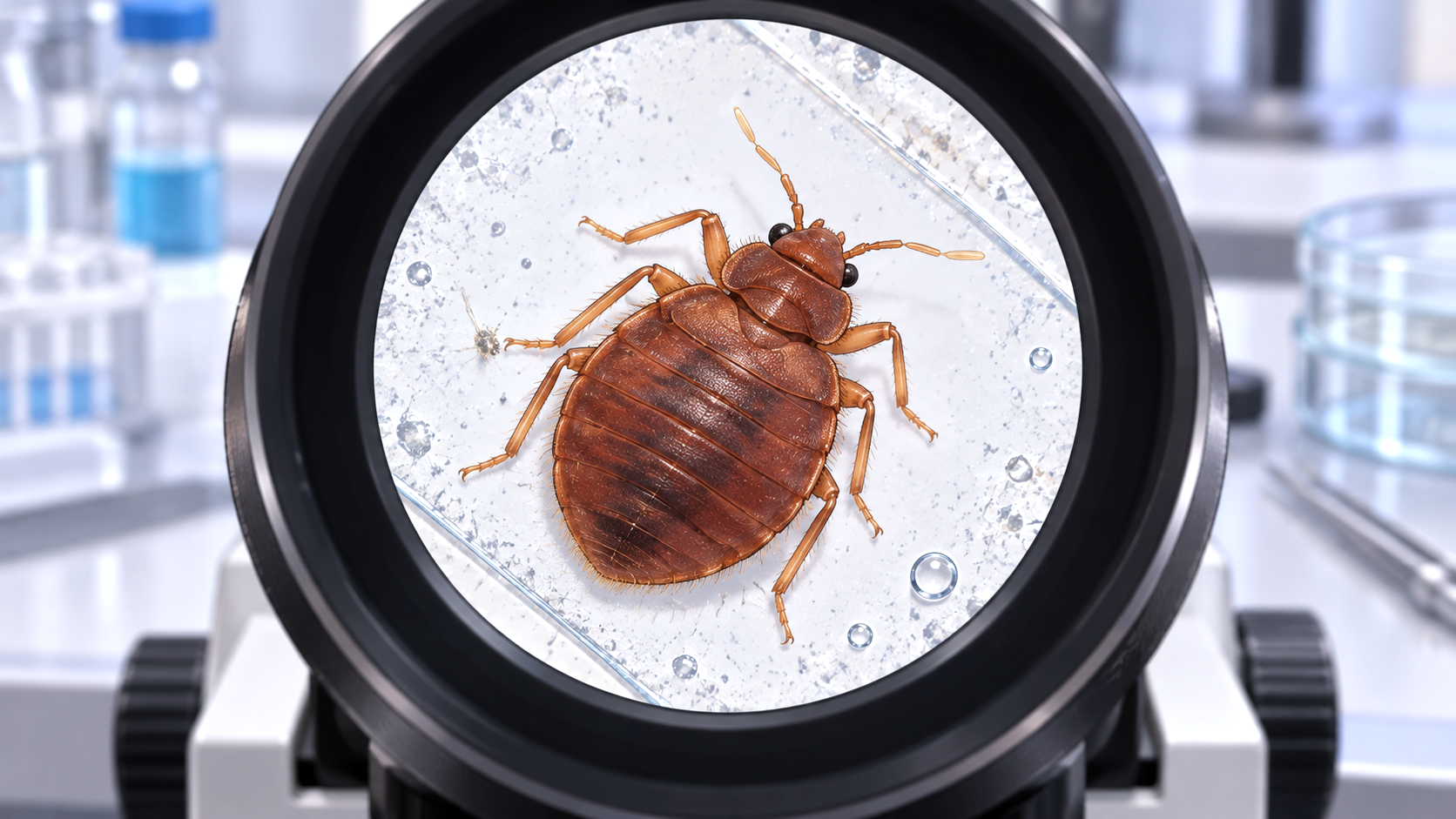
The scientific name most commonly meant by bed bug is Cimex lectularius. However, humans are regularly infested by two closely related species: the common bed bug, Cimex lectularius, and the tropical bed bug, Cimex hemipterus. Both belong to the genus Cimex and the family Cimicidae.
Cimex lectularius Is the Common Bed Bug
Cimex lectularius is the species generally referred to as the common bed bug. The Integrated Taxonomic Information System recognizes Cimex lectularius Linnaeus, 1758 as a valid species, while the CDC identifies it as one of the two Cimex species normally responsible for human infestations. Its distribution is cosmopolitan, which means it occurs across much of the world rather than being restricted to a particular climatic region.
The name consists of two parts. Cimex is the genus and lectularius is the specific name. The International Code of Zoological Nomenclature requires a species name to combine a capitalized genus with a lowercase specific name. Both words are conventionally italicized, so Cimex Lectularius, cimex lectularius, and Cimex lectularius without the usual italic formatting are not the standard zoological presentation.
The species has the flattened, oval form associated with the familiar appearance of adult bed bugs, but its scientific name describes its taxonomic identity rather than a particular life stage. Eggs, nymphs, males, and females of the common bed bug are all Cimex lectularius.
The Tropical Bed Bug Is Cimex hemipterus
The other major species associated with people is Cimex hemipterus, commonly called the tropical bed bug. The CDC’s bed bug identification and life-cycle reference lists both C. lectularius and C. hemipterus as the two species usually implicated in human infestations. Cimex hemipterus occurs primarily in tropical and subtropical regions, while C. lectularius has a broader global distribution.
The NCBI taxonomy record identifies Cimex hemipterus Fabricius, 1803 as a distinct species within the same genus. Both species are blood feeders, and their immature stages progress through the same general pattern of egg followed by five nymphal stages before adulthood. The broader bed bug life cycle therefore applies to both without making them the same species.
Geography can make one species more likely than the other, but range alone does not identify an individual specimen. The worldwide pattern of where bed bugs are most common reflects human movement, climate, housing, insecticide resistance, and other factors rather than a simple boundary between the two species.
Bed Bugs Belong to the Family Cimicidae
The taxonomic placement of the common bed bug can be shortened to:
Kingdom: Animalia
Phylum: Arthropoda
Class: Insecta
Order: Hemiptera
Family: Cimicidae
Genus: Cimex
Species: Cimex lectularius
ITIS places Cimex lectularius in the order Hemiptera, the group known as the true bugs, and recognizes Cimicidae as the bed bug family. Members of this family are specialized blood-feeding insects, although not every cimicid normally feeds on humans. Some related Cimex species primarily use bats or birds and only occasionally encounter people.
The order Hemiptera is relevant anatomically because bed bugs possess piercing-sucking mouthparts rather than chewing mouthparts. Their diet consists of blood taken from warm-blooded hosts, which is consistent with the specialized feeding structures found in Cimicidae. The broader biological traits that define what bed bugs are should not be confused with the narrower scientific-name question, since “bed bug” is a common name applied to more than one species.
Why the Name Is Sometimes Written C. lectularius
After a scientific name has been written in full once, the genus can be abbreviated. The International Commission on Zoological Nomenclature recommends that a species be written fully on first mention and permits later abbreviations such as the first letter of the genus followed by the complete specific name. Accordingly:
Cimex lectularius becomes C. lectularius.
Likewise, Cimex hemipterus can be shortened to C. hemipterus when the genus is already clear. The abbreviation does not represent a different species.
The author and year may also appear after the species name in taxonomic writing. The common bed bug can be given as Cimex lectularius Linnaeus, 1758, reflecting its formal naming by Carl Linnaeus. The NCBI taxonomy record likewise lists Cimex lectularius Linnaeus, 1758. For ordinary pest-control writing, the author and date are unnecessary; Cimex lectularius is sufficient.