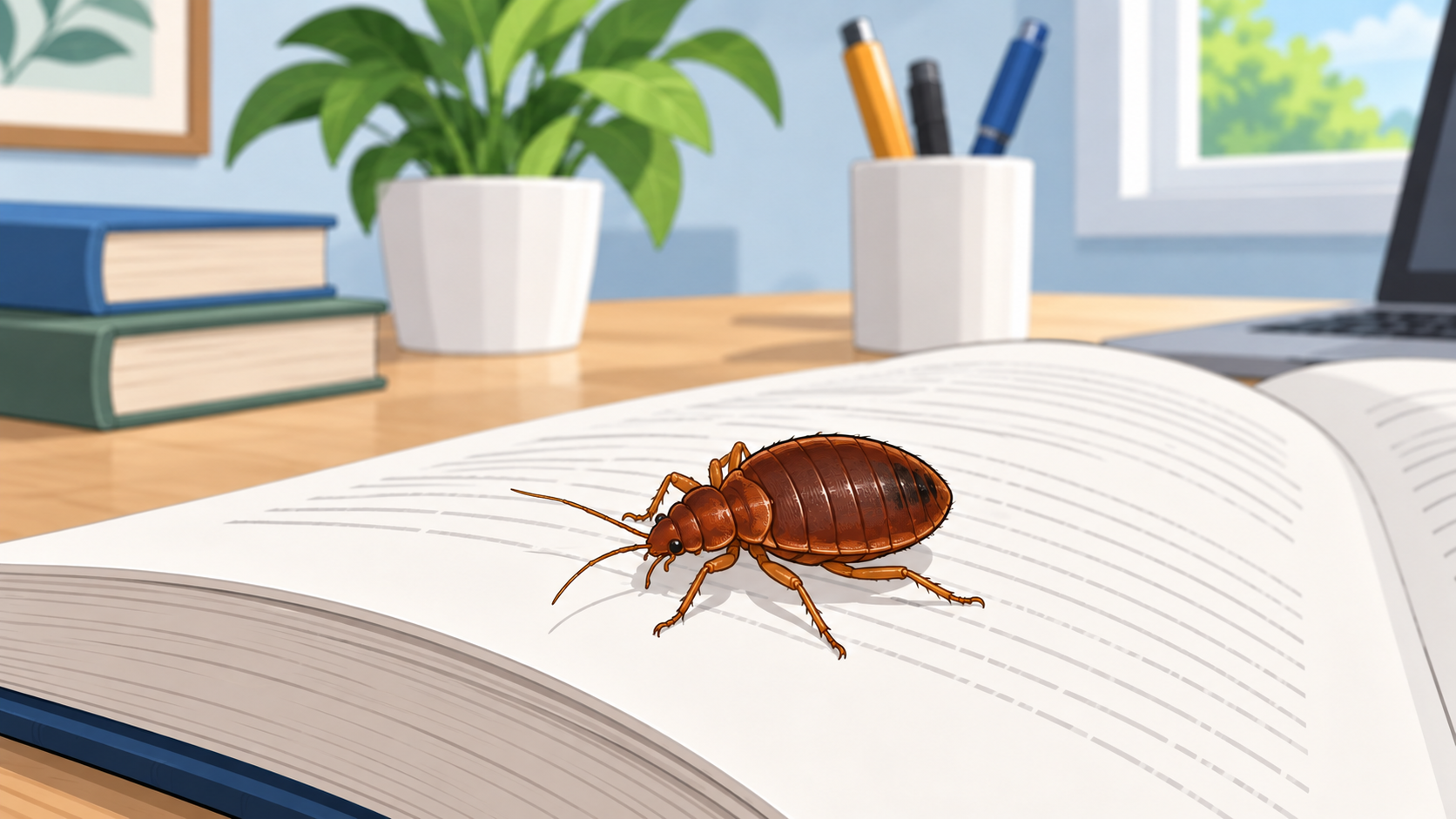
A bed bug is a small, flat, reddish-brown insect in the genus Cimex that survives entirely on blood, with humans being its usual host inside homes. The species responsible for almost every infestation in the US is Cimex lectularius, better known as the common bed bug. Adults are roughly the size and color of an apple seed. They can’t fly or jump, and despite how alarming an infestation can feel, bed bugs aren’t known to spread disease.
That last point surprises a lot of people. When someone finds unexplained bites or discovers a bug near the bed, disease is often one of the first concerns. In practice, the bigger problems with bed bugs are usually the itching, lost sleep, stress, expense, and sheer difficulty of getting an established infestation under control. That’s why correctly identifying what you’re dealing with before you start buying treatments is so important.
What a Bed Bug Actually Looks Like
An adult bed bug measures roughly 5 to 7 millimeters long and has an oval body that’s flattened from top to bottom. That thin profile is part of what makes these insects so difficult to find; they can squeeze into surprisingly narrow cracks around a bed or piece of furniture. Before feeding, an adult is usually a dull mahogany brown. After taking a blood meal, its body becomes fuller and slightly elongated and takes on a darker reddish appearance. This change is one reason photos of bed bugs online can look surprisingly different even when they’re showing the same species. Adults have six legs, no wings, and short four-segmented antennae.
Nymphs are immature bed bugs, and they pass through five nymphal stages before becoming adults. Each stage resembles a smaller and generally paler version of an adult. Newly hatched nymphs are tiny and nearly translucent, which makes them particularly easy to overlook during an inspection. If you want to see how their appearance changes as they develop, we’ve laid out the different stages in what a bed bug actually looks like at every life stage and compared their real size with familiar objects in how big a bed bug really is next to common objects.
Where They Hide and What Draws Them In
Bed bugs don’t show up because a home is dirty. That’s one of the most persistent myths surrounding these pests. What they’re interested in is access to a host. A warm person breathing out carbon dioxide gives them what they need, whether that person is sleeping in a spotless hotel room, sitting on an infested couch, living in a college dorm, or bringing home luggage that picked up a hitchhiking bug somewhere else. Clutter doesn’t cause bed bugs either, although it can make an existing infestation considerably harder to find and treat by giving the bugs more protected places to hide.
Once they’re established, bed bugs usually stay fairly close to places where people regularly sleep or remain still for long periods. That’s why mattress seams, box springs, bed-frame joints, headboards, baseboards, and folds in upholstered furniture are some of the first areas worth inspecting. Temperature and access to blood also affect how quickly a population develops. Cooler and drier conditions slow things down, while a warm room with a reliable host can allow an egg to develop into a reproducing adult in a little over a month, according to Penn State Extension’s entomology program. A female can lay several hundred eggs during her lifetime, so an infestation that’s ignored for months can become much harder to contain.
Early Signs Before You See the Bug Itself
A live bed bug isn’t always the first thing people find. Quite often, the evidence around the bed shows up first. Small dark or rust-colored spots on sheets or mattress seams, pale shed skins, and live bugs tucked into seams and crevices are all things we would pay attention to during an inspection. Heavier infestations can also produce a noticeable musty odor. Bites may appear in lines or clusters on exposed skin, but bites alone are a poor way to diagnose a bed bug problem because people’s reactions vary enormously. Some people develop obvious itchy welts while others can be bitten repeatedly and show little or no visible reaction.
That’s why we wouldn’t identify an infestation from someone’s skin alone. The room needs to be inspected for physical evidence. If you’re trying to work out whether the signs you’re seeing actually point to bed bugs, we’ve broken them down in the early warning signs worth checking for before you assume the worst, along with a more complete inspection walkthrough in how to actually check a mattress and room for bed bugs.
The Two Bugs That Get Mistaken for Them Constantly
Two look-alikes are especially easy to mistake for bed bugs, and getting the identification wrong can mean spending money treating a pest you don’t actually have.
The first is the bat bug, which is a close relative of the common bed bug and can look almost identical without magnification. Colorado State University’s extension entomology program notes that one reliable distinction involves the hairs behind the head: they’re longer than the width of the eye on a bat bug and shorter on a true bed bug. That’s not a distinction most people are going to make confidently with the naked eye, so context becomes important. Finding bed-bug-like insects in a home that also has bats roosting in an attic or wall void should immediately put bat bugs on the list of possibilities. We go through the differences more closely in bat bugs versus bed bugs and why the difference actually matters for treatment.
The second common mix-up is the carpet beetle, particularly its larvae. Carpet beetle larvae are small, brownish or tan, and noticeably bristly. They don’t bite people and don’t feed on blood. Their shed hairs can irritate the skin, however, which can leave someone convinced they’re being bitten by something in the room. They also feed on materials such as wool, fur, and other natural fibers rather than staying close to a human host for blood meals. If you’re finding small holes or damage in natural-fiber clothing alongside the skin irritation, carpet beetles deserve a closer look. The treatment is completely different, so identification matters. We’ve covered the comparison in carpet beetle or bed bug, and how to tell which one is actually in your bed.
Are Bed Bugs Actually Dangerous?
Bed bugs are disturbing pests to discover, but the health risk is often misunderstood. The CDC states plainly that bed bugs are not known to spread disease to people. The EPA classifies them as a public health pest, but that doesn’t mean they’re known disease vectors. Infestations can still have a significant effect on people’s wellbeing through bites, loss of sleep, anxiety, and the financial burden of treatment. Researchers have detected numerous pathogens in bed bugs under laboratory conditions, but that isn’t the same as demonstrating transmission to humans. A large case-control study of emergency room patients also found no meaningful association between bed bug exposure and infectious disease.
That doesn’t mean the bites should simply be ignored. Reactions vary from no visible response at all to itchy, raised welts, and some people can experience more significant allergic reactions that warrant medical attention. Constant scratching can also break the skin and create an opportunity for a secondary bacterial infection. In those cases, the infection results from damaged skin rather than the bed bug transmitting a disease. For many households, though, the most disruptive effects are the sleepless nights, anxiety, repeated cleaning and inspection, and potentially substantial cost of eliminating the infestation.
The Mistake That Makes Infestations Worse
One mistake we would avoid is reaching immediately for a store-bought fogger or “bug bomb.” The National Pesticide Information Center is direct about this. Total-release foggers aren’t well suited to bed bug control because the pesticide disperses through open areas while bed bugs spend much of their time protected inside seams, cracks, joints, and voids. The treatment has to reach the pest, and that’s exactly where foggers struggle.
The evidence backs that up. A 2012 study in the Journal of Economic Entomology tested three popular over-the-counter foggers against field-collected bed bugs and found very little mortality, particularly when the insects had access to shelter. That’s a major problem because shelter is exactly what bed bugs have inside a real home. Instead of solving the infestation, poorly chosen treatments can make an already difficult situation harder to manage. If you’re considering using one, read whether bed bug bombs and foggers actually work before you buy one first.
Getting Rid of Them: What Treatment Actually Looks Like
A small infestation caught early and still concentrated around one sleeping area gives you far more options than an infestation that has had months to spread. Thorough laundering and drying with heat where appropriate, careful vacuuming, mattress encasements, detailed inspection, and targeted use of products specifically labeled for bed bugs can all form part of a control strategy. Any pesticide needs to be used exactly according to its label, including restrictions on where and how it can be applied.
Once bed bugs have spread beyond the original bed or piece of furniture, DIY treatment becomes much harder. The challenge isn’t simply killing adults you can see. You also have nymphs, eggs, and bugs tucked away in protected areas that are easy to miss. Leaving even part of the infestation untreated can allow the population to build again, which is why repeated inspection and follow-up treatment are often necessary.
Professional treatment generally runs somewhere in the range of $300 to $900 per room for a chemical approach, often requiring two to three visits spaced a couple of weeks apart to deal with bugs that survive or emerge between treatments. Heat treatment generally costs more and works by bringing the treatment area to temperatures capable of killing bed bugs across their life stages, including eggs. A moderate whole-home infestation can cost somewhere around $1,000 to $4,000 depending on the size of the property, severity of the infestation, treatment method, and local market. Those numbers should be treated as rough planning figures rather than quotes. We go deeper into the costs in how much a bed bug exterminator really costs and why quotes vary so much and explain the treatment options in how to get rid of bed bugs, DIY steps and when to stop and call someone.
What Attracts Them Back, and How to Keep Them Out
Preventing bed bugs is largely about reducing the opportunities they have to hitchhike into your home and making an infestation easier to spot if one does get in. Secondhand furniture deserves particular attention. We wouldn’t bring a used mattress, couch, upholstered chair, or similar item indoors without checking seams, folds, joints, and hidden surfaces first. When traveling, keeping luggage away from hotel beds and upholstered furniture and checking the mattress seams and headboard before settling in can also reduce the chance of bringing an unwanted passenger home.
A bed-bug-rated mattress and box-spring encasement won’t make your home immune to bed bugs, but it can eliminate some hiding areas and make future inspections considerably easier. And remember that cleanliness isn’t what determines whether bed bugs choose a room. Their main attraction is access to a host, particularly the warmth and carbon dioxide associated with a person resting nearby. We explain that in more detail in what actually attracts bed bugs to a room in the first place.
What You Can Do Right Now
If you’re reading this because you already suspect bed bugs, don’t start spraying random products around the room and don’t wait weeks hoping the problem disappears. Start with an inspection. Pull the sheets back and use a flashlight to check the mattress seams, piping around the edges, box spring, bed-frame joints, and other narrow hiding places around the bed. You’re looking for live bugs as well as dark spotting, shed skins, eggs, and other physical evidence.
If you find something suspicious, avoid unnecessarily moving infested furniture through the house, since that can spread bugs to new areas. Wash and dry appropriate bedding and clothing using the highest heat the fabric safely allows, and determine how far the infestation has spread before deciding how to treat it. If you can’t confidently identify what you’ve found or the activity extends beyond a small, localized area, a professional inspection can save you from spending money treating the wrong pest or underestimating the size of the infestation.
Frequently Asked Questions
How can I tell a bed bug bite from a mosquito or flea bite?
There’s no bite pattern that’s 100 percent reliable on its own because different people react differently. Bed bug bites can appear in a loose line or cluster on exposed skin, while flea bites are commonly noticed around the ankles and lower legs and mosquito bites may be more randomly distributed. Those patterns can provide clues, but they aren’t reliable enough to diagnose an infestation. Physical evidence from an inspection is much more useful than trying to identify the pest from bites alone.
Can one bed bug turn into a full infestation?
Potentially, yes. A fertilized female can continue laying eggs, and under favorable conditions with regular access to blood, the population can grow surprisingly quickly. Finding a single bed bug therefore shouldn’t automatically be dismissed as an isolated incident. It doesn’t prove that you have a large infestation either, but it’s enough reason to carry out a thorough inspection and look for additional bugs, eggs, shed skins, or spotting.
Do bed bugs mean my home is dirty?
No. Bed bugs are looking for access to a host, not dirt or grime, so they can establish themselves in clean homes just as easily as untidy ones. Clutter can make an infestation harder to inspect and treat because it creates additional hiding places, but it isn’t what caused the bed bugs to arrive in the first place.
3 thoughts on “What Are Bed Bugs Exactly?”