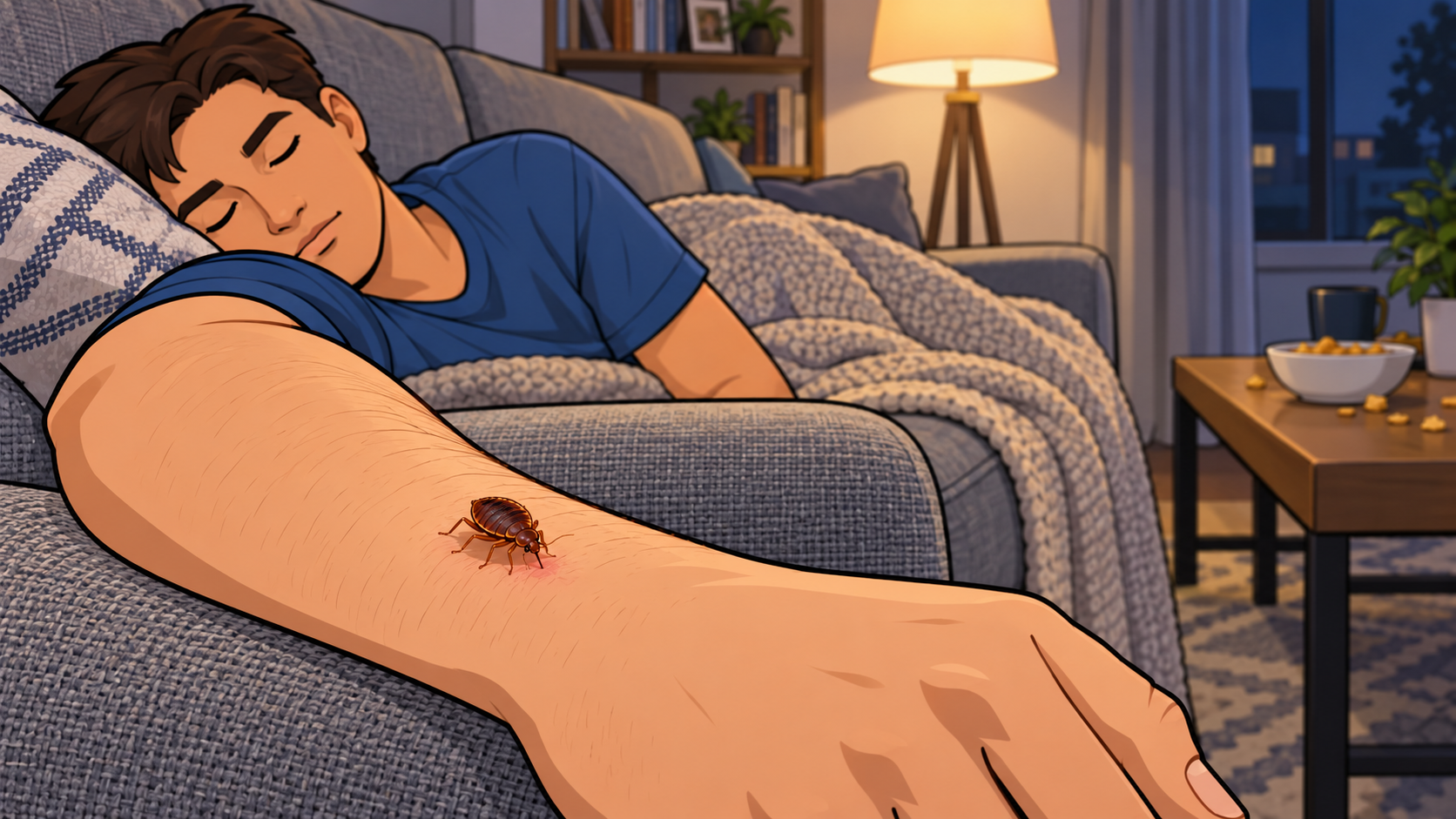
Bed bugs eat blood exclusively. Humans are their primary host, although bed bugs can also feed on other warm-blooded animals, including dogs, cats, birds, and rodents. They don’t eat plant matter, other insects, crumbs, skin cells, or household debris. Blood is the food source that supports their development, survival, and reproduction.
Claims that bed bugs prefer a particular human blood type are common online, but blood type isn’t a useful way to predict who they’ll feed on. Bed bugs locate hosts using cues they can detect before feeding, particularly carbon dioxide and heat. That’s a much more useful explanation for their feeding behavior than trying to work out whether someone has the “right” blood type.
Blood, and Only Blood
Bed bugs are obligate hematophages, which means they depend on blood for food. That dependence begins when the first-stage nymph takes its first meal and continues throughout adulthood. Blood from warm-blooded hosts is their food source, with no household substitute they can switch to when a host disappears.
That makes an empty home different from an empty kitchen. Removing people doesn’t leave bed bugs searching the pantry, carpet, or garbage for something else to eat. Instead, they have to survive without another meal until a suitable host becomes available. Their ability to do that can be surprisingly long compared with their normal feeding schedule, which we cover separately in how long bed bugs can live without feeding.
How Much Blood Does a Bed Bug Drink?
The amount of blood involved in a single feeding is tiny. In an artificial-feeding study of adult male bed bugs, fully engorged males consumed an average of about 3.92 microliters of blood. The insect’s appearance changes much more dramatically than that small volume might suggest because its abdomen expands as it feeds.
Feeding itself usually lasts minutes rather than hours. Published guidance places a complete meal within a range of several minutes, with adult bed bugs commonly taking about 10 to 15 minutes to engorge. Once finished, the bug leaves the host rather than remaining attached. That behavior is important because bed bugs aren’t parasites that normally live on the human body between meals.
Bed Bugs Can Feed on Animals Too
Humans are the main host associated with common bed bug infestations, but other animals can provide blood meals. How readily bed bugs use those alternatives is more complicated than simply asking whether another warm-blooded animal is nearby.
One study of bed bugs from homes with house mouse infestations found no mouse blood in the bed bugs examined from those homes. However, feline blood was detected in bed bugs from another dwelling. The useful takeaway isn’t that bed bugs always choose cats but reject mice. It’s that the mere presence of another animal doesn’t tell you whether bed bugs are actually feeding on it.
Pets therefore shouldn’t be ignored during an infestation. A dog or cat can be bitten even though bed bugs don’t normally live permanently on the animal the way fleas can. We’ve covered that distinction in whether bed bugs can live on dogs or cats. The separate question of whether animals can move bed bugs between places is covered in whether pets and other animals can carry bed bugs.
How Bed Bugs Find Someone to Feed On
Blood only becomes relevant once a bed bug reaches the host. Before that happens, the insect has to locate someone, and carbon dioxide plays an important role in getting a hungry bed bug moving. Experiments on bed bug host-seeking behavior found that increased carbon dioxide stimulated hungry bugs to leave their harborages and begin searching.
Heat provides another host-associated cue once a bed bug gets closer. Together, these signals help explain why a sleeping person is such an accessible food source. Someone remains in roughly the same place for hours while continuously producing body heat and exhaling carbon dioxide. We’ve gone deeper into the temperature side of that behavior in how bed bugs respond to heat.
After feeding, bed bugs move away from the host and return toward shelter. Their host-seeking and hiding behavior also follows a daily activity pattern, which is why the timing of an inspection can affect what you actually see. That pattern is covered separately in when bed bugs are most active.
How Often Bed Bugs Feed
With regular access to a host, adult bed bugs typically feed every few days. A technical guide covering bed bug biology gives a feeding interval of about three to five days under favorable conditions. That doesn’t mean every bed bug in an infestation feeds together on the same schedule. Individual bugs may be at different points between meals.
Nymphs have an additional reason they need blood. Each of their five immature stages requires a blood meal before the nymph can molt and continue developing. The nymph repeats that process as it grows until the fifth nymphal stage molts into an adult. We break down those stages and their timing in the bed bug life cycle.
Don’t Use a Few Bite-Free Nights as an All-Clear
The three-to-five-day feeding interval is useful for understanding normal behavior, but it isn’t a countdown to starvation. Bed bugs can survive considerably longer between meals. As a result, a few nights without new bites don’t show that an infestation has disappeared.
Bites are also a poor monitoring tool on their own. People don’t all react visibly to bed bug bites, so the absence of new marks on your skin doesn’t necessarily mean feeding has stopped. Physical evidence around the sleeping area gives you much more to work with. If you’re checking whether activity is continuing, inspect the places bed bugs actually hide rather than using your skin as the only indicator.
For a longer period without activity, the same principle still applies. Normal feeding frequency and maximum survival without food are two different questions. Our guide to how long bed bugs can survive without feeding covers the second one in detail.
Other Questions About What Bed Bugs Eat
Can bed bugs feed on birds?
Yes. Bed bugs can feed on birds as well as mammals. However, finding bugs around birds doesn’t automatically establish that you’re dealing with the common bed bug, because closely related cimicid species also use birds and bats as hosts. Identification matters before assuming every bed bug-like insect near a bird roost is Cimex lectularius.
Do baby bed bugs eat something different from adults?
No. Newly hatched bed bug nymphs also feed on blood. They don’t begin life on a different food and switch to blood later. Their first blood meal is particularly important because a nymph must feed before it can molt into the next developmental stage.
Will food crumbs attract bed bugs?
No. Food crumbs don’t provide a meal for bed bugs. That separates them from household pests such as cockroaches and many ants, which can exploit human food and organic debris. Cleaning crumbs is worthwhile for plenty of reasons, but removing them doesn’t remove the food source keeping a bed bug infestation alive.
Can bed bugs feed on a person who is awake?
Yes. Sleeping makes a person an easier, stationary host, but bed bugs aren’t biologically restricted to feeding on sleeping people. Their feeding behavior depends on finding an accessible host, not on the host being unconscious.
What Their Blood-Only Diet Means for an Infestation
Don’t spend time removing ordinary food, deep-cleaning the kitchen, or changing your diet in an attempt to starve bed bugs. None of those steps removes what they’re feeding on. Instead, concentrate on confirming the infestation and finding where the bugs are hiding around sleeping and resting areas. A careful bed bug inspection will tell you far more about whether they’re still present than trying to interpret a few nights without bites.
6 thoughts on “What Do Bed Bugs Eat?”