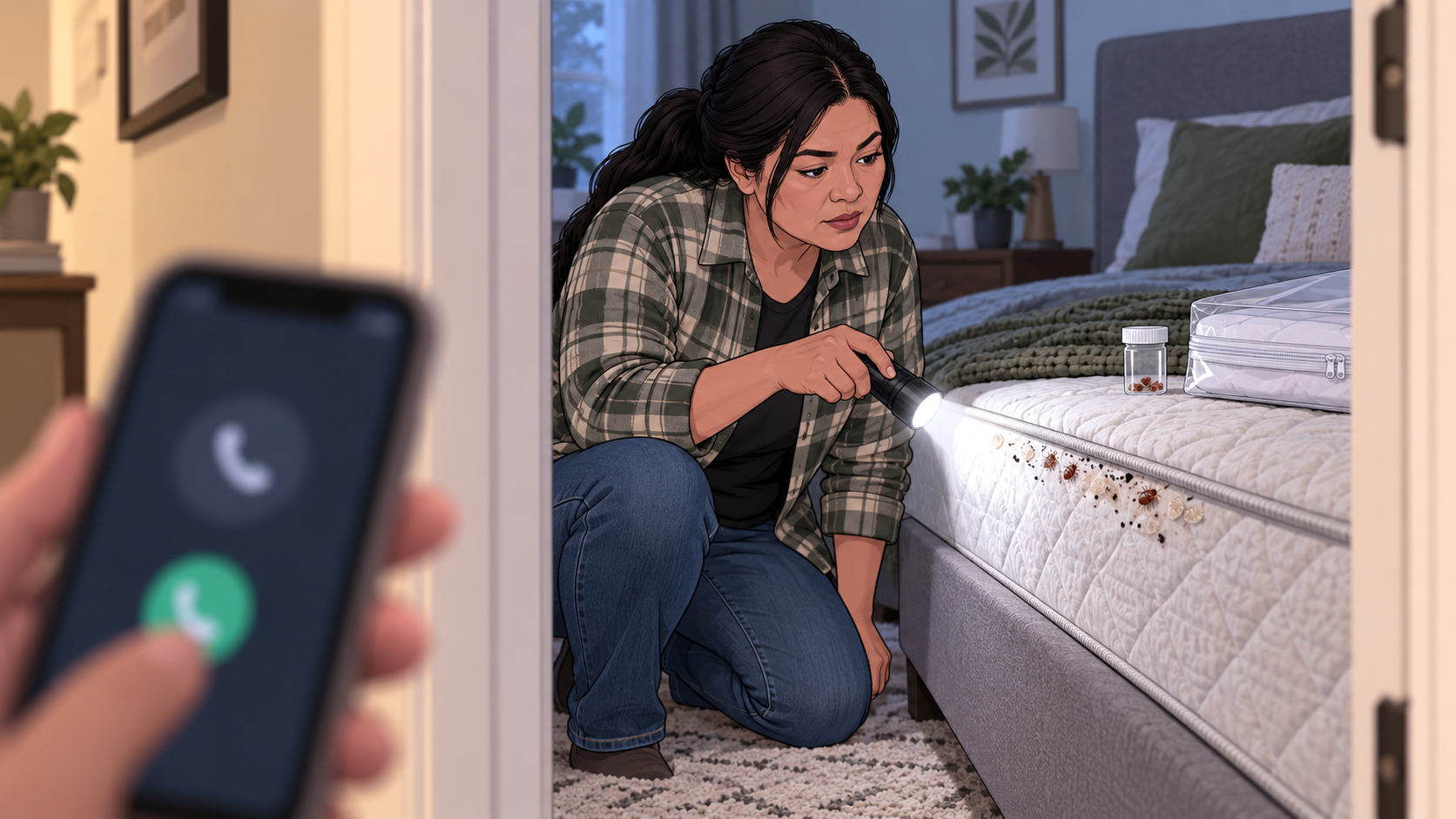
You do not need to wait until bed bugs are everywhere before calling an exterminator. In fact, professional help is usually more useful early, once you have confirmed bed bugs or have strong physical evidence of an infestation. Bed bugs are difficult to eliminate because they hide in small spaces, reproduce over time, and often require several control methods rather than a single spray.
Call a bed bug exterminator once bed bugs are confirmed, especially if you are finding multiple bugs, seeing evidence in several locations, living in multi-unit housing, or continuing to find activity after DIY measures. Early professional involvement can limit spread and make the infestation easier to manage.
Call Once You Have Confirmed Bed Bugs
Finding a live bed bug, confirmed eggs, characteristic shed skins, or other convincing physical evidence is enough reason to consider professional treatment. You do not need to wait for a particular number of insects. The EPA recommends getting a pest management professional involved as soon as possible, noting that time spent unsuccessfully treating the problem yourself can allow an infestation to spread.
Before paying for treatment, however, make sure you actually have bed bugs. Carpet beetles, fleas, cockroach nymphs and other small insects can be mistaken for them. Compare the specimen with reliable bed bug identification features, or have it professionally identified if you are uncertain.
Bites alone are weaker evidence. An itchy cluster of marks does not establish that bed bugs are responsible, so unexplained bites without other bed bug signs should prompt a careful inspection before treatment begins.
Don’t Wait for a Small Infestation to Become Severe
A common mistake is assuming that a few bed bugs are not worth professional attention. An early infestation may actually be the best time to intervene because the insects may still be concentrated around a limited number of hiding places.
Even finding one bed bug deserves investigation. One insect could be an isolated hitchhiker, but it could also be the first bug you happened to notice in an established population. Check the mattress, box spring, bed frame, headboard and nearby furniture for additional insects, eggs, shed skins and fecal spotting.
If you repeatedly find bugs or discover signs of a severe infestation, professional treatment becomes considerably more important. Established populations may occupy furniture, baseboards, cracks, wall voids and locations farther from the bed, making complete DIY treatment increasingly difficult.
Call If Your DIY Treatment Isn’t Working
Some people attempt DIY bed bug control before hiring anyone. If you choose that route, continued activity is the clearest sign that the approach has not eliminated the infestation. Finding live bed bugs after repeated control attempts, seeing new evidence, or noticing activity spreading into additional rooms are all reasons to change course rather than continually repeating the same treatment.
Effective bed bug management usually combines several methods. The EPA’s integrated pest management approach can include inspection, monitoring, vacuuming, heat, encasements and carefully selected pesticides where appropriate. Professionals can also access equipment and treatment options that are difficult for homeowners to reproduce correctly.
Repeatedly spraying whatever insecticide is available is not a substitute for this approach. The EPA warns against repeated or unsafe pesticide use, including dangerous DIY heating methods and relying on treatments that fail to reach bed bugs inside cracks and crevices.
Apartment Bed Bugs Should Be Reported Quickly
Professional involvement is particularly important in apartments, condominiums and other multi-unit buildings because the problem may extend beyond one residence. Bed bugs can move between units, and treating one apartment without investigating surrounding units can leave a source of continuing activity.
If you find bed bugs in an apartment, notify the landlord or property manager promptly rather than independently treating the unit without telling anyone. Health Canada specifically advises tenants with bed bugs to inform their landlord immediately.
Professional inspection can determine whether neighboring units also require attention. This matters because bed bugs can spread between apartments, and coordinated treatment is more appropriate than treating interconnected units as completely separate problems.
Call Sooner If Bed Bugs Have Spread Beyond the Bed
A few bugs concentrated around one sleeping area present a different treatment challenge from an infestation appearing throughout a home. Finding bed bugs in multiple bedrooms, couches, chairs, baseboards, closets or other rooms suggests that the treatment area may be larger than initially assumed.
At that point, locating every important harboring area becomes difficult without a systematic inspection. A professional may inspect furniture, dismantle components when necessary, determine the extent of the infestation and develop a treatment plan. Health Canada notes that licensed pest-control professionals can use combinations of insecticides, steam, heat and other control methods.
Professional treatment does not necessarily mean everything in the home must be sprayed or discarded. Furniture and belongings can often remain when they can be successfully inspected and treated.
What Should a Bed Bug Exterminator Actually Do?
Do not choose a company simply because it promises to spray the house. Bed bug treatment should begin with an inspection and a clear explanation of the proposed control strategy. The EPA recommends hiring someone with specific bed bug experience who uses integrated pest management and provides follow-up monitoring.
Ask how the company confirms the infestation, which rooms will be inspected, what treatment methods will be used, how you should prepare for bed bug extermination, and what happens if activity continues. Very few infestations are controlled with only one professional visit, according to the EPA’s guidance for hiring a pest management professional.
The treatment itself may involve several approaches depending on the property and infestation. Understanding how professional exterminators treat bed bugs can help you distinguish a comprehensive plan from a company offering little more than a one-time pesticide application.
When You May Not Need an Exterminator Yet
You do not necessarily need to schedule treatment because you woke up with an unexplained bite, saw a tiny unidentified insect, or recently visited somewhere that had bed bugs. First determine whether there is actual evidence in your home.
Conduct a thorough bed bug inspection and consider using bed bug monitors around sleeping areas when the evidence is uncertain. If you find a suspicious specimen, identification may resolve the question before you spend money treating the wrong pest.
Once bed bugs are confirmed, however, delaying solely to see how bad the infestation becomes offers little advantage. Health Canada strongly recommends hiring a licensed professional because bed bugs are particularly difficult to eliminate.
Safety note: If pesticides are used, follow the product label exactly and use only products legally registered for the intended bed bug treatment. Do not use homemade pesticide mixtures, agricultural products indoors, excessive foggers, or improvised whole-room heating methods. Professional applicators should follow applicable licensing and pesticide requirements.
Other Questions About Calling a Bed Bug Exterminator
Should you call an exterminator after finding one bed bug?
At minimum, one confirmed bed bug warrants a thorough inspection. Professional inspection is particularly reasonable if you cannot determine whether it was an isolated hitchhiker or part of an infestation.
How bad do bed bugs have to be before calling a professional?
There is no minimum infestation size. Calling early can be preferable to waiting until bed bugs have multiplied or spread into additional rooms.
Can you try DIY treatment before calling an exterminator?
You can attempt DIY control, but bed bugs are difficult to eliminate completely. If bugs continue appearing, the infestation spreads, or you cannot inspect and treat all affected areas reliably, professional help is appropriate.
Will one exterminator visit get rid of bed bugs?
Do not assume so. The EPA advises homeowners to prepare for multiple visits because very few infestations are controlled with a single treatment. Follow-up inspection and monitoring are important parts of confirming that treatment worked.
One thought on “When Should You Actually Call an Exterminator for Bed Bugs?”