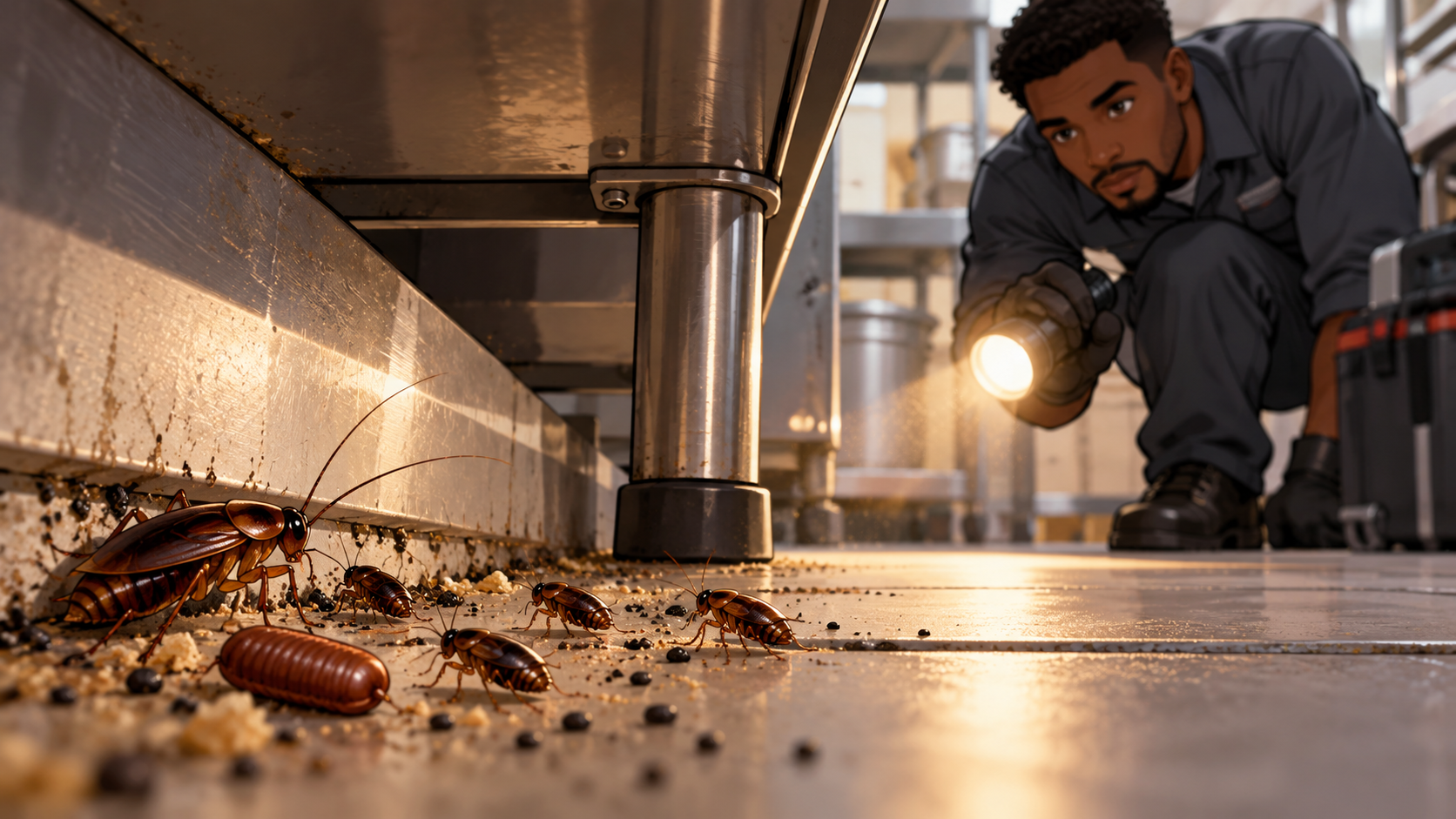
Call an exterminator for cockroaches when a properly carried out DIY treatment is not producing a sustained decline, cockroaches are established in several areas, their main harborages cannot be reached, or a multi-unit building keeps supplying new activity. Professional help also makes sense when safely applying and monitoring pesticides has become difficult in your household.
You do not need to call an exterminator because one cockroach crossed the kitchen floor, nor do you need to spend months experimenting before asking for help. The useful dividing line is whether the infestation can still be located, treated, and monitored effectively with the access and methods available to you.
Give DIY Treatment a Fair Test Before Declaring It a Failure
DIY control can work. Research in occupied housing has produced major reductions with assessment-based programs built around monitoring and targeted gel bait, and a recent study found that residents given appropriate tools and instruction could significantly reduce German cockroach populations. The relevant question is therefore not whether a homeowner is capable of controlling cockroaches, but whether your particular attempt has been systematic enough to judge.
A fair attempt starts with knowing where activity is concentrated, reducing accessible food and water, using an appropriate treatment correctly, and measuring what happens afterward. Sticky monitors can provide repeatable cockroach counts rather than leaving you to judge progress from occasional sightings. Professional IPM research similarly uses trap counts to assess infestation levels and guide subsequent treatment.
If catches are falling substantially, continuing the existing plan can be reasonable even though a few cockroaches remain. If equivalent monitoring periods show little improvement despite correct treatment, adding random products is less useful than finding out why the population persists. Resistance, missed harborages, competing food, poor placement, immigration from another unit, or an incorrectly identified source can each change what needs to happen next.
Several Infested Areas Make DIY Control Harder to Manage
One concentrated pocket of German cockroaches around a refrigerator is easier to map than repeated activity in the kitchen, bathroom, bedrooms, and living areas. Wider distribution creates more harborages to locate, more treatment points to maintain, and more opportunities to overlook part of the population.
Professionals have an advantage when inspection itself has become the obstacle. Effective cockroach IPM is assessment-driven rather than a routine application of pesticide. A community-wide program that combined monitoring with targeted chemical and nonchemical measures produced more than 98% reductions in average trap counts over 12 months in two housing complexes. The treatments changed according to monitoring results rather than assuming every apartment required the same amount of pesticide.
Distribution should be judged from evidence rather than the number of rooms where you happened to see an insect. Cockroaches spend much of their time concealed, so the full set of infestation signs and monitor catches provide a better picture of how widely activity is spread.
Inaccessible Harborages Can Put the Infestation Beyond Ordinary DIY Reach
A treatment can only affect cockroaches that encounter it. Populations established deep inside cabinetry, appliance spaces, service penetrations, wall voids, or other inaccessible structural areas may remain difficult to assess and treat without specialized access or equipment.
This becomes especially frustrating when you keep treating the places where cockroaches appear rather than the places supporting them. Finding insects around a dishwasher, refrigerator, coffee maker, or other equipment can involve cockroach harborages associated with appliances, where heat, darkness, food debris, moisture, and narrow spaces can coincide. Dismantling electrical appliances or placing pesticides inside equipment without label authorization creates risks that are not justified by DIY treatment.
Professional service becomes more worthwhile when reaching the infestation safely requires inspection beyond readily accessible household spaces. The goal is not simply access to stronger chemicals. It is better access to the places that need assessment and the ability to select a legal treatment for those locations.
Daytime Cockroaches Need Context Before You Call Anyone
A cockroach appearing during daylight can raise concern, but a single daytime sighting does not measure an infestation by itself. German cockroaches are predominantly nocturnal, and daytime cockroach activity can occur for several reasons. Treat the sighting as a reason to inspect and monitor rather than as an automatic threshold for professional service.
Daytime activity becomes more significant when it occurs repeatedly alongside other evidence: multiple trap catches, numerous nymphs, egg cases, droppings, or cockroaches appearing across several locations. If you are starting from one isolated encounter, first determine what finding a single cockroach actually indicates before assuming the home contains a severe infestation.
The decision changes once monitoring confirms sustained activity. At that point you have evidence to judge whether a focused DIY response is reducing the population or whether the scale and distribution warrant outside help.
Apartment Infestations Often Stop Being a One-Unit Problem
Multi-unit housing can create a threshold that has little to do with your skill at DIY treatment. German cockroaches can move between apartments, and building-wide research has found infestations spatially associated with one another. After building-wide IPM, investigators observed reduced infestation and reduced dispersal between apartment units.
A renter can keep a kitchen clean, maintain bait, and monitor carefully while cockroaches continue entering from adjoining spaces. Persistent captures near shared walls, plumbing penetrations, utility lines, hallways, or neighboring units can justify involving property management rather than escalating pesticide use inside your apartment. Determining whether cockroaches are originating in your unit or elsewhere in the building changes the scale at which control needs to occur.
Professional involvement is particularly valuable when multiple units require inspection and coordinated treatment. Research in multifamily housing shows that successful programs can operate at the building or community level, with repeated monitoring identifying which apartments need additional attention. Treating only the most vocal resident’s unit leaves connected infestations untouched.
Resistance Can Turn Repeated Product Switching Into a Dead End
German cockroaches have developed resistance to numerous insecticide classes. Field research has documented broad resistance across populations and shown that resistance can evolve rapidly enough to complicate management programs. In one field investigation, researchers found resistance to multiple active ingredients spanning several insecticide classes.
Repeatedly buying a different aerosol because the previous one failed can therefore become an expensive cycle without identifying whether resistance is involved. Brand changes are especially misleading when two products use the same active ingredient or insecticide class. Resistance is not the only explanation for failure, since poor placement and inaccessible harborages can produce the same frustrating result.
If you have already used appropriate cockroach baits or gels correctly and monitoring shows no meaningful population decline, professional assessment can be more rational than continuing uncontrolled product rotation. A pest-management company may have access to different formulations and treatment strategies, but the more important advantage is the opportunity to reassess why the previous approach failed.
Health and Household Constraints Can Lower the Threshold for Professional Help
Cockroach control becomes a different decision when someone in the home has asthma or another reason to minimize unnecessary pesticide exposure. Cockroach allergens can aggravate asthma, while some pesticide application methods can create additional respiratory concerns. Current CDC asthma guidance recommends removing food and water sources, sealing entry points, and avoiding sprays and foggers that can trigger asthma attacks.
Professional help does not automatically mean more pesticide. Integrated pest management combines inspection, prevention, monitoring, sanitation, exclusion, and appropriately selected treatments. The CDC describes IPM as a science-based approach that aims to reduce pests using effective methods while addressing the conditions supporting them. Housing studies have also shown that cockroach IPM can reduce populations while lowering indoor insecticide residues. One apartment study measured a 74% reduction in mean insecticide residue concentration after 12 months of IPM.
Children, pets, aquariums, inaccessible treatment areas, or difficulty following pesticide restrictions can similarly change what is practical. Households with animals need cockroach treatments that account for pet exposure rather than simply choosing the most aggressive product available.
What to Ask Before Hiring a Cockroach Exterminator
Do not judge a company solely by whether it promises to spray the entire house. Ask how the technician determines infestation level, whether monitors are used, what cockroach species they believe is present, which treatment methods they expect to use, and how follow-up decisions are made. A credible plan should change when inspection findings change.
Ask what preparation is actually necessary and what you must do afterward. Extensive preparation is not automatically evidence of better service. Assessment-based research has achieved greater than 90% population reductions without requiring residents to prepare or clean before treatment, because treatment quantity was determined from measured infestation levels.
Also establish what happens if activity continues. Follow-up matters because cockroach control is a process rather than a single dramatic application. Whether professional treatment ultimately succeeds is a separate question from deciding when to hire someone, just as cockroach extermination pricing is a separate consideration once you have decided that outside help is warranted.
Questions to Settle Before You Make the Call
Should you call an exterminator before trying anything yourself?
You can when the infestation is already widespread, treatment locations are inaccessible, safe pesticide use is difficult, or a multi-unit building clearly requires coordinated action. A small localized problem with measurable activity can reasonably receive a carefully planned DIY attempt first.
Should you call the landlord or an exterminator if you rent?
Check your lease and local requirements, then report the infestation promptly when property management is responsible for pest service or building conditions may be contributing. Coordinating through management is especially important when adjoining units may need inspection.
Does seeing cockroach egg cases mean you need a professional immediately?
Not automatically. An ootheca confirms reproductive evidence, but the decision still depends on infestation extent, species, location, and treatment response. Knowing what cockroach egg cases look like can help distinguish genuine evidence from unrelated debris before escalating treatment.
Can you hire a professional while continuing your own pesticides?
Tell the company exactly what you have already applied and where. Adding sprays, powders, or other products without coordination can interfere with the treatment plan or create unnecessary exposure. Once professional treatment begins, follow the technician’s instructions and the labels of any products involved rather than maintaining a separate pesticide routine.