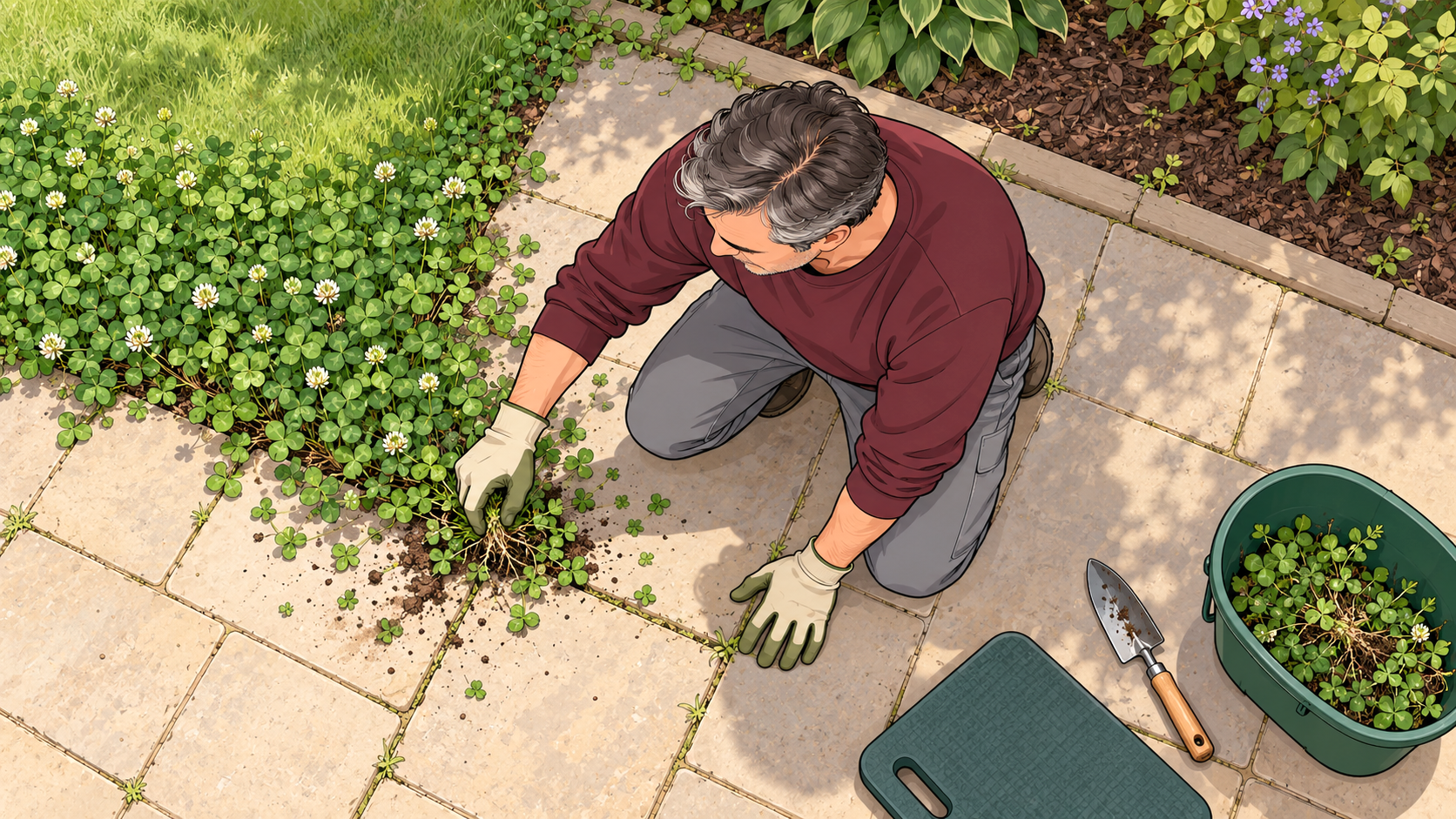
Clover mites scattered across a patio rarely call for treating the entire slab. Remove the mites already there without crushing them, clear the joints and edges where they collect, then inspect the vegetation touching or bordering the patio. Concrete, pavers, and stone are travel surfaces rather than food sources, so repeatedly spraying the middle of the patio can miss the area supplying the mites.
A vacuum is particularly useful for a small patio infestation because clover mites leave rusty red marks when crushed. Use a crevice attachment along expansion joints, underneath movable planters, beside thresholds, and anywhere mites are clustered. On weather-resistant surfaces, a stream of water can also dislodge them, provided the runoff can be directed safely away from doors and other places where the mites could simply relocate.
Work From the Patio Edge Inward
After removing the visible mites, follow the patio perimeter instead of immediately reaching for a pesticide. Clover mites normally feed on grass, clover, weeds, and other vegetation, and populations can become especially numerous around vigorously growing, fertilized turf. A patio bordered tightly by lawn or dense groundcover gives mites a very short journey onto the hardscape. Pots containing live plants deserve inspection as well, particularly when most of the activity is concentrated around one group of containers.
Trim vegetation that lies directly across the patio edge and clear accumulated plant material from joints where appropriate. If the patio meets the foundation, inspect that junction carefully because clover mites use protected cracks and crevices around structures for egg laying and shelter. Their eggs have been documented in cracks in concrete and other protected structural spaces, so sweeping the open slab while ignoring a heavily occupied perimeter can leave the most relevant part untouched. The separate explanation of why clover mites appear on concrete covers their relationship with hard surfaces in more detail.
A Patio Beside the House Can Become a Route Indoors
A patio door changes the priority. Mites moving across the slab may continue through small gaps around a threshold, frame, or nearby window, especially when outdoor populations are high. Caulk or otherwise seal appropriate exterior gaps and replace damaged weatherstripping rather than relying on repeated cleanup at the doorway. Physical exclusion is particularly worthwhile because clover mites that enter buildings become nuisance pests rather than establishing a normal indoor population.
Pay attention to where the mites consistently appear. A concentration beside one door calls for work at that entry point; mites arriving along the full landscaped edge point back toward the vegetation. If they have already crossed into living spaces, use the indoor clover mite removal steps there. Recurring entry around the building is addressed separately in our guide to preventing clover mites from getting indoors.
Be Careful With Pesticides on the Slab
Broadcast pesticide treatment across an impervious patio is often the wrong approach. EPA requirements for many outdoor residential insecticides restrict applications on patios, sidewalks, and other impervious horizontal surfaces to spot or crack-and-crevice treatments. Product labels differ, so the actual label must permit the treatment site, application method, and target pest before a pesticide is used.
Runoff deserves extra attention on a patio because liquids can travel quickly across hard surfaces toward drains, gutters, soil, or nearby water. EPA guidance recommends applying pesticides only to the intended treatment area and preventing pesticide runoff into storm drains and surface water. Granules accidentally scattered onto pavement may likewise need to be swept back onto the labeled treatment area rather than left on the hardscape. If mites are originating throughout the surrounding landscape, move to the broader outdoor clover mite control strategy instead of expanding a patio treatment beyond its purpose.
Patio Questions
Can you pressure-wash clover mites off a patio?
A pressure washer can physically remove mites, but its force is usually unnecessary for the mites themselves and may damage joints, coatings, mortar, or nearby plants depending on the patio. Ordinary sweeping, vacuuming, or appropriately directed water provides more control over where the mites and runoff go.
Should you move patio furniture while cleaning?
Yes, when mites are disappearing beneath furniture legs, storage boxes, planters, or other movable objects. Moving those items exposes sheltered edges that an ordinary surface sweep can miss.
What if clover mites return immediately after the patio is cleaned?
Trace the direction from which the new mites are arriving. A continuous stream from adjoining turf or planting beds indicates that cleaning the slab is removing the arrivals without addressing the outdoor population supplying them.
Can clover mites damage patio furniture?
They do not feed on furniture, but crushing them against light-colored cushions or hard surfaces can leave reddish staining. Their effect on fabrics is covered separately under clover mite staining on clothing and fabric.