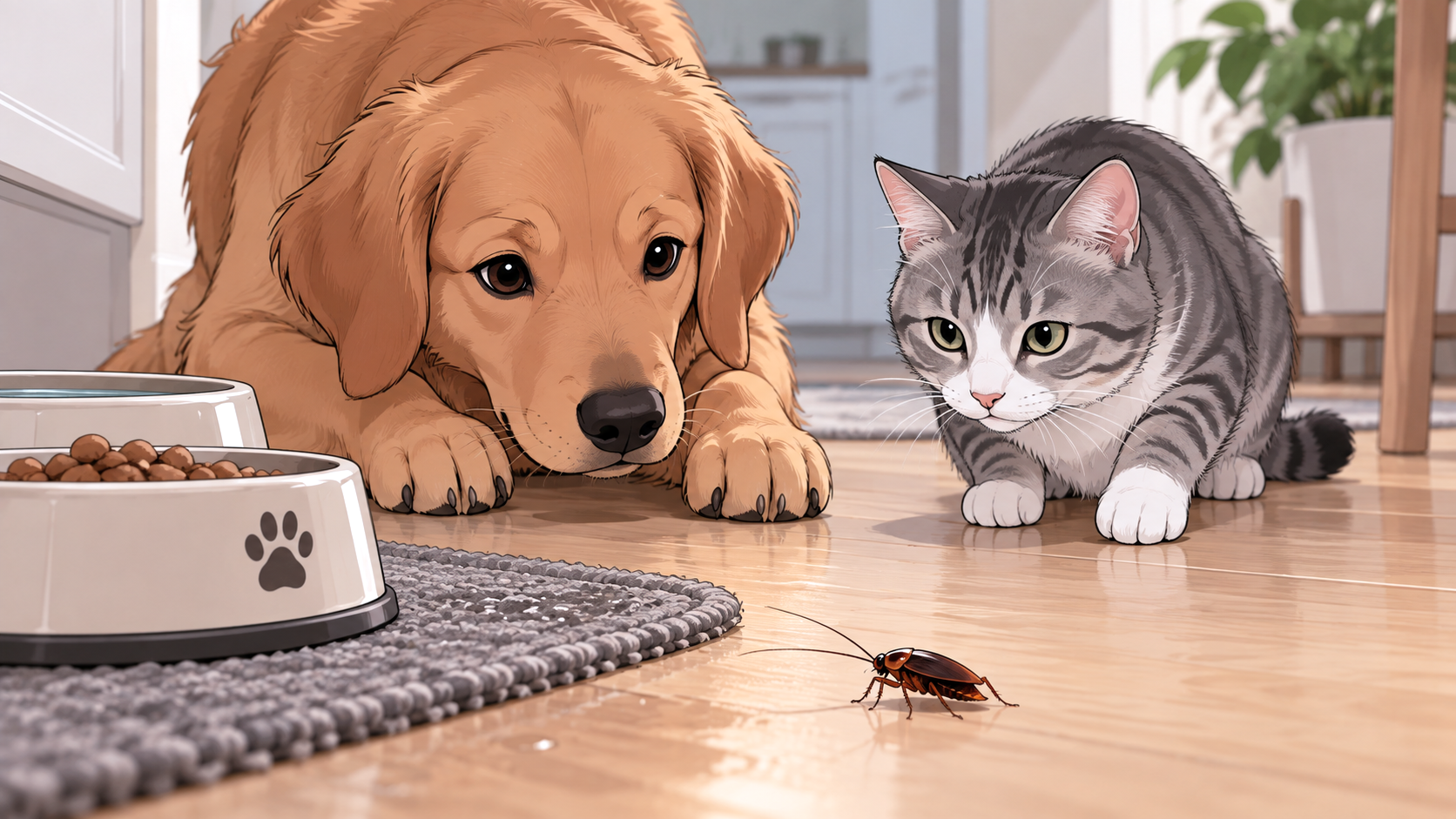
A cat batting a cockroach across the floor or a dog swallowing one before you can intervene is usually more alarming to the owner than to the animal. Cockroaches are not venomous, do not normally attack pets, and are not adapted to feed on dogs or cats. There is, however, one well-documented veterinary risk that makes repeated cockroach hunting worth preventing.
Cockroaches are not normally dangerous to dogs or cats, and eating an occasional cockroach does not automatically mean a pet will become ill. However, cockroaches can serve as intermediate hosts for certain stomach worms that infect dogs and cats when an infected insect is eaten. A persistent infestation also increases opportunities for pets to encounter contaminated insects and debris.
The Clearest Veterinary Risk Comes From Eating an Infected Cockroach
Cockroaches can participate in the life cycle of Physaloptera, a group of parasitic stomach worms found in dogs and cats. The parasite does not simply pass from any cockroach to any pet. An insect must first become an infected intermediate host. A dog or cat can then acquire the parasite by eating that infected cockroach, cricket, beetle, or another host carrying the larvae. Once ingested, the larvae can develop into adult worms in the stomach.
The resulting infection may produce no obvious illness in some animals, while others develop gastritis and chronic or intermittent vomiting. Reduced appetite, dark feces, dehydration, weight loss, and anemia can occur in more significant cases. Veterinary parasite guidance specifically advises considering Physaloptera infection in dogs or cats with chronic vomiting and a history of eating insects or prey. Diagnosis can be difficult because the eggs are not reliably detected by routine fecal flotation, so repeated unexplained vomiting after frequent insect hunting warrants veterinary assessment rather than an assumption that the pet simply has an upset stomach.
Eating a Cockroach Does Not Equal Getting a Parasite
The existence of the Physaloptera life cycle should not turn every swallowed cockroach into an emergency. Only an insect carrying infective larvae can transmit these stomach worms. Exposure also varies geographically and with a pet’s habits, and veterinary guidance notes that infections appear more common in animals with outdoor access and a history of consuming insects or other prey.
A pet that catches cockroaches repeatedly has more opportunities for exposure than one that accidentally eats a single insect. Preventing access to an established indoor population is therefore sensible, especially for animals that actively hunt anything moving across the floor. Evidence that cockroaches are reproducing indoors deserves more attention than an isolated intruder because it creates continuing contact opportunities. Nymphs can be particularly easy for a hunting cat to encounter, and knowing what baby cockroaches look like helps distinguish them from other small insects around pet bowls and feeding areas.
Cockroaches Can Carry Microorganisms, but Pet Infection Is a Separate Claim
Cockroaches collected from homes, healthcare facilities, food environments, and other contaminated settings have carried bacteria, fungi, parasites, and other microorganisms. Their bodies and digestive tracts can acquire organisms from sewage, waste, food residues, and animal excreta, allowing microbes to be transported mechanically between environments. Research has also documented helminth parasites associated with cockroaches and experimental transport of several protozoan parasites.
Those findings should not be stretched into the claim that a dog or cat is likely to become infected whenever it touches or eats a cockroach. Detecting a microorganism on an insect establishes carriage, not a proven transmission event to a particular pet. Even the broader evidence that cockroaches carry disease-associated organisms does not identify the cause of vomiting, diarrhea, or another symptom in an individual animal. Veterinary evaluation is the appropriate route when a pet is genuinely unwell.
Pet Bowls Can Feed the Infestation in the Other Direction
The relationship between pets and cockroaches also works in reverse. Dry kibble, wet food, crumbs around a feeding station, and water left accessible overnight can provide resources to cockroaches. Their opportunistic feeding habits allow them to exploit many foods available in a household, including pet food.
A cockroach population repeatedly visiting a feeding station can also leave fecal material or other debris nearby. Store bulk pet food in secure containers, clean spills around bowls, and avoid leaving uneaten wet food exposed longer than necessary. If insects repeatedly appear around the same area, cockroach droppings and other infestation evidence can help establish whether the feeding station has become part of their regular foraging area.
A Cockroach Is Not Normally a Threat to a Pet’s Skin
Cockroaches have chewing mouthparts, but dogs and cats are not normal prey or hosts. The extraordinary conditions associated with documented cockroach bites on living humans do not provide a sound basis for treating ordinary cockroach contact as a biting hazard to pets. A dog or cat with a new sore, rash, swelling, or persistent itching needs its own explanation rather than having the symptom assigned to a cockroach simply because one was nearby.
Cockroach allergy has also been studied far more extensively in humans than in household pets. Human evidence should not be automatically transferred to dogs and cats without veterinary support for the individual case. If a pet develops respiratory, gastrointestinal, or skin symptoms, the symptom pattern and veterinary examination are more informative than the coincidental presence of a household pest.
Questions About Pets and Cockroaches
My cat just ate a cockroach. Should I panic?
Eating one cockroach does not mean the cat will develop a parasitic infection. Watch the animal normally and contact a veterinarian if concerning symptoms develop. A known history of repeatedly eating insects becomes more relevant if chronic vomiting later occurs.
Can dogs get Physaloptera from something other than cockroaches?
Yes. Cockroaches are only one possible intermediate host. Crickets and beetles can also carry infective larvae, and dogs or cats may acquire the parasite by eating vertebrate prey that previously consumed an infected insect.
Can a cockroach transmit toxoplasmosis to a cat?
Laboratory studies have demonstrated that cockroaches can mechanically transport infectious Toxoplasma gondii oocysts, including after exposure to contaminated fecal material. That establishes a biologically possible transport pathway, not evidence that household cockroaches are a common source of feline toxoplasmosis. Cats acquire T. gondii through several established routes, particularly ingestion of infected prey or raw meat and exposure to infectious oocysts.
Should I be more concerned if cockroaches keep appearing beside my pet’s food?
Repeated activity around a feeding station means the insects have access to an area containing food or water. The reason cockroaches remain inside a house often includes resources that can be corrected, so clean the feeding area, secure stored food, remove leftovers appropriately, and determine whether a larger population is present.