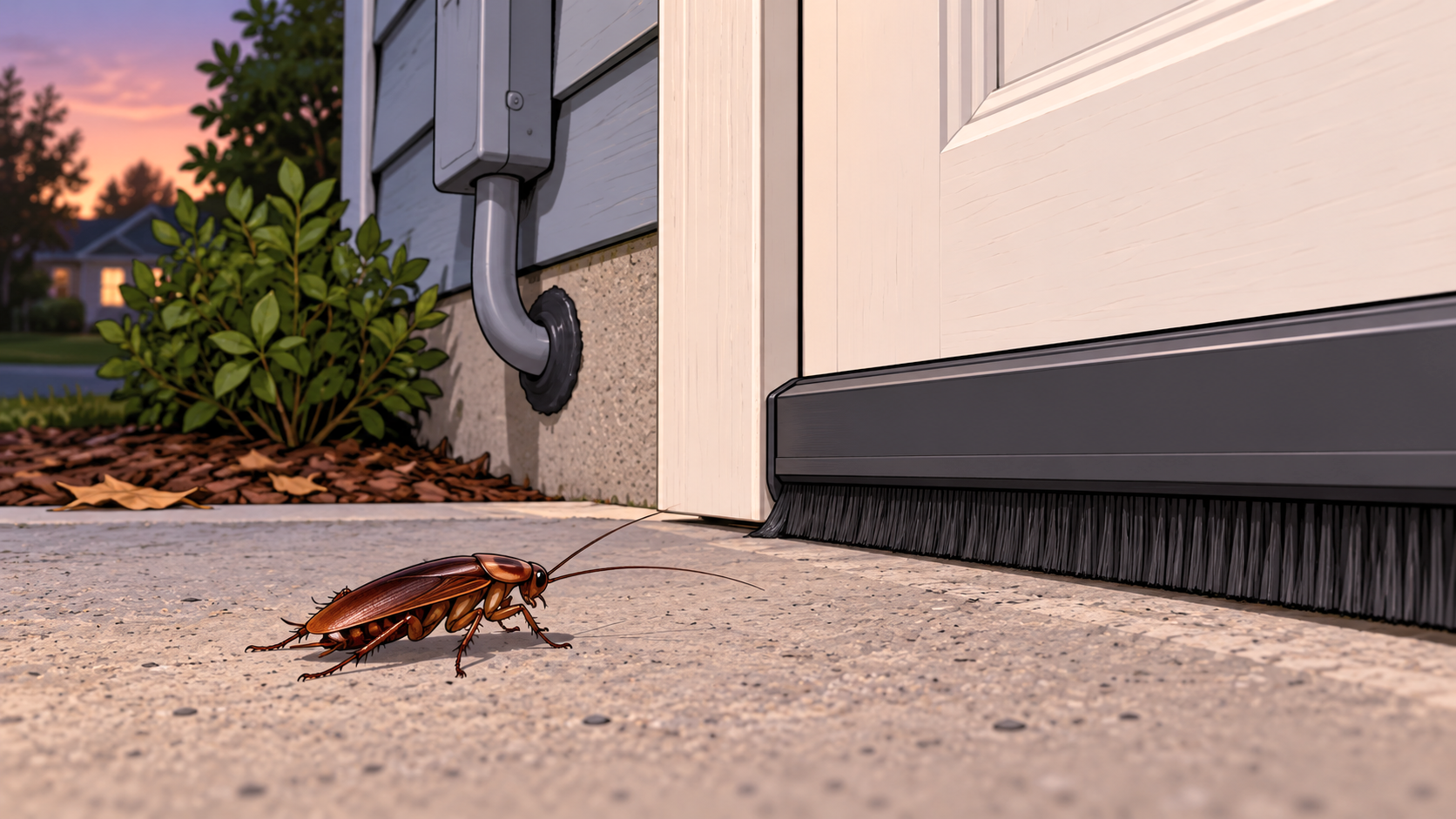
Cockroaches do not have one universal route into a house. A large outdoor species may slip beneath a poorly sealed exterior door, while a German cockroach may arrive concealed in a carton or used appliance. Others exploit openings around pipes, vents, windows, or utility lines. Good prevention starts by closing the routes that fit your home rather than treating the entire perimeter as though every gap carries the same risk.
To keep cockroaches out of your house, seal openings around doors, windows, pipes and utility penetrations, maintain screens and door sweeps, reduce moisture and shelter around the structure, and inspect boxes, used appliances and other items before bringing them indoors. Inside, limit accessible food, water and clutter so an introduced cockroach has fewer resources.
Stop the Routes That Connect Outdoors to Indoors
Walk around the exterior and look at the building as a series of junctions rather than one solid wall. Exterior doors, window frames, vents, utility cables, plumbing penetrations, foundation joints, siding transitions, and places where different construction materials meet can leave openings. Cockroaches can flatten their bodies considerably, so small gaps deserve attention. EPA prevention guidance recommends closing pest entryways with caulk, screens and weatherstripping, while housing guidance also calls for repairing exterior holes, damaged screens, poorly closing doors, and openings around utility systems.
Use materials suited to the opening rather than filling every gap with the same product. Caulk may suit narrow stationary joints, while damaged screens should be repaired or replaced. An exterior door that leaves daylight visible beneath it may need an appropriately fitted sweep or threshold repair. Ventilation openings should not simply be sealed shut when they are designed to move air. Proper screening can preserve their function while limiting pest access.
The type of cockroach likely to occur around the property can help determine how much attention the exterior deserves. Not every species commonly encountered outdoors behaves like the German cockroach, which is strongly associated with indoor environments. Preventing an outdoor cockroach from wandering inside and preventing a hitchhiking indoor pest from becoming established are related but different jobs.
Inspect Pipes and Utility Penetrations, Not Just the Drain Opening
Kitchen and bathroom plumbing creates multiple possible pathways. A pipe may pass through a cabinet floor with a large unfinished opening around it, or supply lines may disappear into a wall through gaps that connect with hidden spaces. Health Canada recommends sealing cracks, crevices and pipe openings, and EPA housing guidance similarly recommends closing openings around plumbing, wires, conduits, ducts, and other building services.
A sink or floor drain deserves attention when it provides a genuine route, but proximity alone does not establish where a cockroach entered. An insect found in the sink cabinet could have traveled around the plumbing rather than through the water-filled trap in the drain. Persistent cockroach sightings around drains and plumbing are more useful when the entire plumbing area is inspected instead of treating the drain opening as the automatic source.
Keep rarely used drains maintained appropriately so plumbing traps do not simply dry out unnoticed, and use suitable covers or screens where the plumbing design and local requirements permit them. Do not block drains, vents, overflow openings, or other plumbing components that need to remain functional.
Some Cockroaches Come Through the Door Inside Your Belongings
A perfectly fitted door sweep cannot stop a cockroach already concealed inside something you carry across the threshold. Cockroaches and egg cases can hitchhike in shipping cartons, food items, bottles, and used furniture. EPA prevention guidance likewise recommends checking boxes and bags before bringing them indoors.
Used appliances deserve particular attention because motors, insulation, seams, cavities, and enclosed components can provide protected spaces. Inspect secondhand microwaves, small kitchen appliances, refrigerators, electronics, furniture, and similar items before they reach their permanent indoor location. Do not dismantle electrical equipment unless it can be done safely and according to the manufacturer’s instructions.
Shipping cartons also deserve proportionate attention rather than panic. Receiving a cardboard box does not mean it contains cockroaches, but leaving large quantities of packaging piled indoors creates unnecessary shelter if an insect does arrive. Cockroaches can use cardboard for refuge even though the separate question of whether cockroaches consume paper and cardboard involves their diet rather than the physical hiding spaces the material provides.
Keep the Exterior From Becoming a Convenient Staging Area
Conditions immediately beside the building can influence how frequently outdoor cockroaches reach the structure. Leaf litter, accumulated organic debris, damp materials, dense ground cover, poorly managed garbage, and other protected areas can provide shelter close to exterior openings. California IPM guidance recommends modifying outdoor habitat and entry conditions as part of cockroach management rather than relying exclusively on insecticides.
Correct persistent moisture where practical. Repair exterior leaks, avoid unnecessary standing water, and investigate drainage conditions that keep the foundation area continually wet. Moisture is particularly relevant because cockroaches need access to water, although species differ in their preferred environments and tolerance of dry conditions.
Garbage containers should close properly and be managed so spilled food and residue do not accumulate around them. Firewood, stored materials, and debris should not be allowed to create undisturbed shelter directly against exterior walls. These changes do not create an invisible barrier around the house, but they reduce the number of favorable hiding and feeding sites immediately beside possible entrances.
Make an Accidental Arrival Less Likely to Settle In
Exclusion cannot guarantee that no cockroach will ever cross the threshold. A visitor’s bag, grocery carton, delivery, used appliance, or other object can bypass the building envelope entirely. Indoor conditions determine whether such an introduction encounters abundant resources.
Store food appropriately, clean spills, manage garbage, remove accumulated food debris beneath appliances, and avoid allowing unnecessary clutter to build around kitchens and other moisture-rich areas. Cockroaches can feed on many forms of food and organic residue, so prevention should account for grease, crumbs, pet food, and overlooked residues rather than concentrating only on uncovered human food. EPA pest-prevention guidance similarly recommends removing food, water and hiding places before relying on pesticide control.
Repair indoor leaks and persistent condensation as part of ordinary maintenance. A dripping pipe beneath a sink can provide both moisture and a protected location, especially when the cabinet is crowded enough to remain undisturbed. Keeping these areas accessible also makes an unexpected cockroach easier to notice before a hidden population develops.
Prevention Does Not Require Routine Indoor Spraying
An uninfested house does not need to be continuously coated with insecticide to remain cockroach-free. Physical exclusion, inspection of incoming objects, sanitation, moisture correction, and maintenance directly address the routes and resources that allow cockroaches to enter and establish. EPA guidance places preventive measures before pesticide use and recommends using pest-control products according to an identified need.
If cockroaches are already reproducing indoors, prevention alone is no longer the whole task. Nymphs, egg cases, repeated catches, fecal spotting, or regular sightings can indicate an established cockroach infestation, at which point the cockroach removal process needs to address the population already present rather than simply closing future entry routes.
Questions About Keeping Cockroaches Outside
Should I seal every crack I can find?
Seal openings that pests can use while preserving required ventilation, drainage, expansion joints, and other building functions. Some gaps require a particular construction material or professional repair rather than indiscriminate caulking.
Can cockroaches enter when I leave a window open?
Yes, particularly where outdoor cockroach species occur. Intact, properly fitted insect screens reduce that route while still allowing the window to be used for ventilation.
Can groceries bring cockroaches into a clean house?
A cockroach can occasionally hitchhike with food packaging, cartons, bags, or other transported goods. Inspect anything suspicious and avoid storing unnecessary packaging for long periods, but an ordinary grocery trip should not be treated as though infestation is inevitable.
Do porch lights attract cockroaches to a house?
Some flying or outdoor cockroach species are attracted to lights, while major indoor pest species do not all behave the same way. A cockroach repeatedly appearing near an illuminated entrance should be identified before lighting is assumed to be the primary reason it reaches the house.