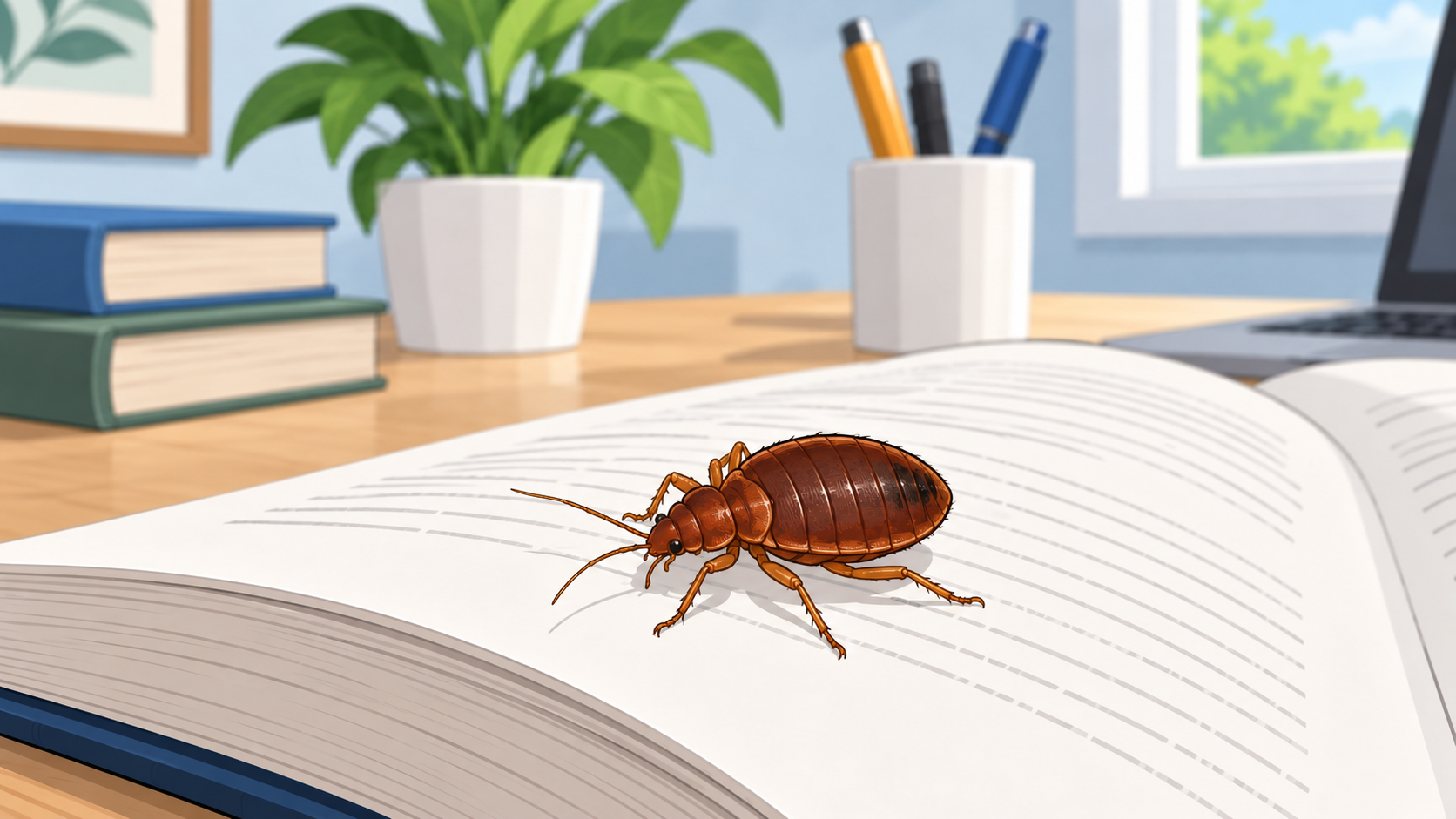
Bed bugs are small, wingless insects that feed on the blood of humans and other warm-blooded animals. The common bed bug, Cimex lectularius, is responsible for most household infestations in North America and much of Europe. Adults are reddish brown, roughly the size of an apple seed, and flat enough to disappear into narrow gaps around beds and furniture. They cannot fly or jump, and although their bites can cause considerable discomfort, bed bugs are not known to transmit diseases to humans.
An infestation can occur in a spotless home just as readily as in a cluttered one. Bed bugs depend on access to blood rather than dirt or discarded food, and they usually reach new locations by traveling unnoticed in belongings or moving between connected spaces. Identifying the insect and finding physical evidence of its activity are more reliable starting points than assuming that unexplained skin irritation must be caused by bed bugs.
What Makes a Bed Bug Different From Other Household Insects?
The common bed bug belongs to the family Cimicidae, a group of insects adapted to feeding on the blood of birds and mammals. Unlike mosquitoes, bed bugs have no functional wings, and unlike fleas, they cannot jump. They reach their hosts by crawling, using sensory cues such as warmth and carbon dioxide to help locate a blood meal.
An unfed adult measures approximately 5–7 millimeters long and has a broad, flattened abdomen. After feeding, its body becomes swollen, more elongated, and darker reddish brown. Six legs, two antennae, a small head, and a segmented abdomen remain recognizable features, regardless of whether the insect has recently fed.
The appearance of bed bugs at different developmental stages changes considerably. Newly hatched nymphs are much smaller and paler than adults, sometimes appearing nearly translucent before their first blood meal. Bed bugs develop through five nymphal stages, shedding their outer coverings as they grow.
Their development from egg to adult depends on temperature, access to blood, and other environmental conditions. A warm, occupied room can support relatively rapid development, whereas cooler conditions and interrupted feeding can slow the process substantially.
How Bed Bugs Reach a Home
Bed bugs cannot detect a house from outdoors and deliberately travel long distances toward it. New infestations usually begin when an insect is transported into a building or moves from an existing infestation nearby.
Luggage, backpacks, upholstered furniture, and other belongings can carry bed bugs that have concealed themselves in seams or folds. In apartments and other connected buildings, insects may also travel through structural openings between units. The movement of bed bugs between adjoining apartments can complicate an infestation because treating only one affected room may not address every source of activity.
Cleanliness does not determine whether the insects can establish themselves. Their presence has been recorded in hotels, residences, and other occupied buildings regardless of sanitation standards. Clutter can make them more difficult to discover by increasing the number of sheltered spaces available, but it is not a prerequisite for infestation.
Once inside, they respond to the heat and carbon dioxide associated with potential hosts. These cues help them locate a feeding opportunity; they do not explain how the insects originally entered the building.
Why Mattress Seams and Furniture Joints Become Hiding Places
Bed bugs typically spend much more time concealed than feeding. They gather in protected locations called harborages, often close to places where people sleep or remain stationary for extended periods.
Mattress piping, box-spring structures, headboard joints, screw holes, furniture seams, and gaps around baseboards can all provide shelter. These spaces protect the insects from disturbance while allowing them to reach a host when feeding.
The clustering of bed bugs inside existing cracks and crevices also explains why a room can contain an infestation without insects being obvious on exposed surfaces. Bed bugs do not construct nests from gathered materials. Instead, multiple individuals may occupy the same sheltered location, accumulating eggs, shed skins, and fecal deposits over time.
Their activity is often greatest when hosts are resting, particularly at night, although bed bugs can feed during daylight when circumstances favor it. The location of a reliable host is more important than a strict schedule.
Evidence That Bed Bugs Are Actually Present
Unexplained bites are often the reason people begin inspecting a bedroom, but the skin alone cannot confirm which insect caused them. Some people develop itchy welts, others experience delayed reactions, and some show no visible marks after feeding.
Physical evidence offers a more dependable basis for identification. The early signs of bed bugs can include dark fecal spots near hiding places, pale discarded exoskeletons, small whitish eggs, and live insects in mattress seams or furniture joints.
Not every mark on bedding has the same origin. Dark spots may be deposits of digested blood, whereas reddish smears can sometimes result from crushing recently fed insects. The appearance of bed bug stains on sheets varies with the surface and the material responsible.
The most useful inspection concentrates on places where multiple kinds of evidence might occur together. Check mattress edges and piping, then examine the box spring, bed frame, headboard, and nearby furniture. A flashlight helps illuminate sheltered joints, but insects may remain concealed even when the exposed mattress looks clean.
Other Insects That Can Be Mistaken for Bed Bugs
Finding a small brown insect near a bed does not automatically establish that it is a bed bug. Several unrelated insects share enough superficial features to create confusion.
Bat bugs are among the hardest to distinguish because they belong to the same insect family and closely resemble common bed bugs. Their body shapes and coloring overlap, while certain differences in hairs around the head and pronotum generally require magnification. An insect found in a building with an active or former bat roost may warrant specialist identification.
Carpet beetle larvae create a different kind of confusion. They are elongated, conspicuously hairy, and associated with natural fibers rather than blood feeding. Their irritating hairs can sometimes contribute to skin reactions, even though carpet beetles do not bite people. The physical differences between carpet beetles and bed bugs are usually apparent when an intact insect or larva can be examined closely.
Identification should precede treatment because these pests have different feeding habits, habitats, and management requirements.
Can Bed Bugs Harm Your Health?
Bed bugs are considered public health pests because of their effects on human wellbeing, not because they are established vectors of infectious disease.
Their bites can produce irritation, itching, and occasionally more significant allergic reactions. Repeated scratching may damage the skin and contribute to secondary bacterial infection. Persistent infestations can also interfere with sleep and cause anxiety, especially when occupants repeatedly encounter insects or struggle to determine whether treatment has succeeded.
The health effects associated with bed bug exposure vary considerably between individuals. One household member may have pronounced reactions while another shows little visible evidence of being bitten.
A large case-control investigation involving emergency department patients did not establish an association between bed bug exposure and the infectious diseases examined. Although pathogens have been detected in bed bugs under experimental conditions, detection does not establish transmission to humans.
Severe swelling, breathing difficulty, or other signs of a serious allergic reaction require prompt medical attention. Persistent or worsening skin lesions also deserve medical assessment rather than assuming every reaction is an ordinary insect bite.
Why Bed Bug Treatment Requires More Than Spraying
The most difficult part of eliminating bed bugs is reaching insects concealed throughout a room, including those in small furniture openings and other protected spaces. A product may kill insects exposed directly to it while leaving others untouched.
Total-release foggers illustrate the limitation. In controlled testing, three commercially available foggers produced poor bed bug control, particularly when insects could shelter from the dispersed pesticide. Their widespread release of insecticide also creates avoidable exposure and safety concerns when used improperly.
Effective control usually involves a combination of inspection, monitoring, appropriate physical methods, and carefully selected treatments. Laundering suitable fabrics, using a sufficiently hot clothes dryer, carefully vacuuming accessible areas, and installing properly fitted bed bug encasements can contribute to an overall program.
Pesticide resistance can complicate chemical treatment. Certain bed bug populations have developed substantial resistance to widely used pyrethroids, meaning that the same active ingredient may perform differently against separate infestations.
The integrated approach to bed bug management emphasizes coordinated measures rather than relying on one spray or household remedy. Any pesticide used must be authorized for the intended application and applied according to its current label.
Professional assistance becomes particularly important when activity is widespread, multiple rooms are affected, or earlier treatment has failed. The cost of professional bed bug treatment depends on the size of the affected area, treatment method, local market, and necessary follow-up, so a single national price cannot accurately represent every infestation.
Keeping Bed Bugs From Arriving Unnoticed
Prevention depends primarily on reducing accidental transport and recognizing suspicious evidence before insects have time to establish themselves.
Secondhand mattresses, upholstered furniture, and other items with concealed seams deserve careful inspection before entering a home. During travel, examining the bed area and keeping luggage away from potentially infested furniture can reduce exposure. A quick visual inspection cannot guarantee that a location is bed bug-free, but it may reveal obvious warning signs.
The inspection of hotel rooms before unpacking should concentrate on mattress seams, headboards, and nearby furniture rather than treating every mark on a sheet as evidence of infestation.
At home, mattress and box-spring encasements designed for bed bugs can reduce accessible hiding spaces and simplify future monitoring. They do not prevent insects from entering a property or eliminate bugs concealed elsewhere.
If a suspected bed bug is discovered, preserve the specimen for identification when possible and inspect the immediate surroundings before moving belongings between rooms. Confirming the insect and understanding the extent of activity prevents unnecessary treatment of unrelated pests.
4 thoughts on “What Are Bed Bugs Exactly? Identification, Habits, and What to Do About Them”