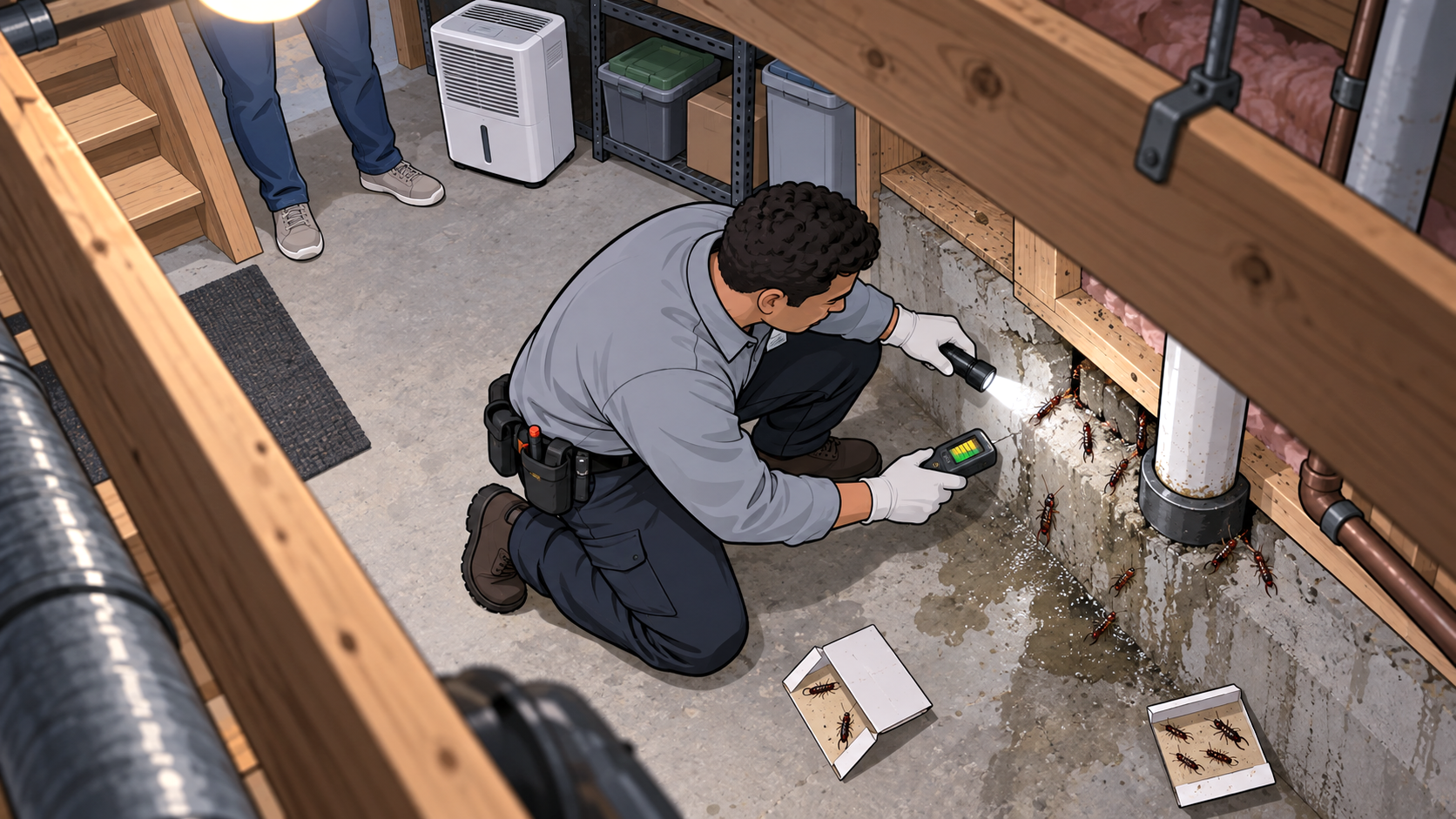
Finding one earwig in the bathroom does not mean you need an exterminator. The decision changes when earwigs keep appearing in significant numbers, you cannot stop them from entering, they are causing unacceptable plant damage, or the source is difficult to locate and correct. For occasional indoor earwigs, removal and exclusion are usually enough.
A Few Earwigs Indoors Usually Do Not Require an Exterminator
Earwigs have an unfortunate appearance for a pest that is often little more than an indoor nuisance. Their rear pincers look intimidating, and finding several in a basement or bathroom can make the problem seem more serious than it is.
However, earwigs that wander indoors do not reproduce inside the home. Individual earwigs also do not live long indoors. During periods of activity, more can continue entering from outside, which can create the impression that an indoor population is growing.
That distinction should guide the decision about professional treatment. One or two occasional earwigs can usually be vacuumed or swept up. Then look for the route they may have used to enter. Gaps around doors, windows, siding, foundations, faucets, and vents are all worth checking.
If the insects disappear after basic removal and exclusion, paying for professional pest control would usually add little value.
Call an Exterminator When Earwigs Keep Coming Back in Large Numbers
Repeated indoor activity is a stronger reason to consider professional help. Earwigs can enter buildings in large numbers, particularly during periods when outdoor conditions drive them toward more suitable shelter.
The important word here is repeated. Finding ten earwigs on one unusual day is different from removing them continually and seeing new ones appear. The second situation suggests that the route into the building or the conditions supporting earwigs around it have not been corrected.
Before calling an exterminator, check whether the pattern matches the signs you have an earwig infestation. Also pay attention to where you find them. Consistent sightings around one exterior door, basement window, or foundation area can make the source easier to address yourself.
Professional help becomes more useful when the activity persists despite those efforts. At that point, the value of the service is not simply having someone kill the earwigs you can see. A proper inspection may help identify where the insects are coming from and which changes are needed to stop continued entry.
Call a Professional When You Cannot Find How Earwigs Are Getting Inside
Earwig control around a house is heavily tied to exclusion. Small gaps around doors, windows, and vents can provide access, so sealing entry points is an important part of managing indoor earwigs.
Sometimes the route is obvious. A damaged door sweep with earwigs appearing beside it gives you somewhere sensible to start. Other situations are harder to diagnose because insects appear in several parts of the building without an obvious entry point.
This is where we think a professional inspection starts earning its cost. Continuing to kill individual earwigs indoors does nothing to correct an exterior access problem. Likewise, repeatedly spraying the room where you find them can focus treatment on the wrong side of the problem.
In fact, indoor pesticide treatment is not recommended simply to prevent earwigs from entering. Removing the insects, reducing favorable conditions outside, and blocking access address the problem more directly. Taking steps to keep earwigs out of the house can therefore be more useful than repeatedly treating indoor stragglers.
Persistent Moisture and Outdoor Harborage Can Make the Problem Harder to Solve
A house can have its cracks sealed and still sit beside an excellent earwig habitat. Earwigs hide during the day in dark, tight, moist places. Mulch, leaf litter, boards, dense vegetation, wood piles, and other sheltered materials around a building can give them places to congregate.
Moisture deserves particular attention. Reducing excess landscape moisture and improving drainage are recommended parts of earwig management. Gutters, irrigation, drainage, and vegetation around the structure can therefore matter as much as what is happening inside.
You do not automatically need an exterminator because your yard has mulch or damp areas. Instead, professional help becomes more reasonable when you have already corrected obvious conditions and earwig numbers remain unacceptable.
This is also why we would avoid treating professional pest control as the first step for every earwig sighting. A technician can treat pests, but treatment cannot substitute for fixing a downspout that continually dumps water beside the foundation or a doorway with an obvious gap underneath it.
Serious Garden Damage Can Also Justify Professional Earwig Control
Earwigs are not always pests in gardens. They are omnivores and can feed on other insects, including some plant pests. Therefore, merely finding earwigs among your plants is not enough reason to eliminate them.
The threshold changes when they are actually causing unacceptable damage. Earwigs can chew foliage, flowers, seedlings, soft fruit, and other susceptible plant material. When you are unsure whether they are responsible, nighttime inspection can help because earwigs are primarily active after dark.
For lower populations, trapping and habitat management may be enough. Low earwig populations can be tolerated, while pesticide applications may become appropriate for large populations that are causing damage.
The useful distinction is between seeing the insect and establishing that it is causing a problem. We would not pay for professional treatment simply because earwigs are present in a garden. If repeated trapping and habitat changes fail while valuable plants continue to suffer confirmed earwig damage, professional pest management becomes much easier to justify.
Understanding whether earwigs are good or bad for your garden also helps explain why automatically eliminating every earwig can sometimes be counterproductive.
Call an Exterminator If DIY Earwig Control Keeps Failing
A reasonable DIY attempt should address more than the earwigs currently visible. It can include removing indoor insects, reducing outdoor hiding places, correcting excess moisture, monitoring activity, and sealing accessible entry points.
Traps can also help you judge whether the population is changing. Rolled corrugated cardboard, newspaper, and baited traps are established methods for monitoring and reducing earwig numbers. Several DIY earwig traps can be used as part of that approach.
If those measures noticeably reduce sightings, there may be no reason to escalate. On the other hand, continued heavy activity after the obvious causes have been addressed suggests that another source or access point remains.
This is the stage where we would stop repeating the same DIY routine. More applications of something that has already failed are not automatically a stronger treatment plan. A professional can inspect the property as a whole and determine whether another control measure is appropriate.
Make Sure the Insect Is Actually an Earwig Before Paying for Treatment
Misidentification is an underrated reason to get professional help. A pest-control plan is only useful when it targets the insect actually present.
True earwigs are particularly recognizable because of the pair of forceps-like appendages at the rear of the abdomen. Still, several elongated household arthropods can cause confusion at a glance. Comparing the insect with bugs that look like earwigs can help narrow down an uncertain identification.
Correct identification matters more when you are about to spend money. We would rather have an unidentified insect properly examined than pay for an earwig service based entirely on a blurry photo or a description of a “long brown bug.”
Professional pest-control companies can also help when you lack the time or ability to investigate and manage a pest problem yourself. When hiring one, identify the pest and compare multiple companies rather than accepting the first treatment proposal without understanding what it addresses.
What to Do Before You Book an Earwig Exterminator
Spend a little time documenting the problem first. Note where the earwigs appear, whether sightings happen repeatedly, and whether activity seems concentrated around a particular side of the house. Outdoors, look for damp hiding areas and inspect susceptible plants at night when necessary.
Next, deal with accessible entry points and obvious habitat problems. Vacuum indoor earwigs, repair straightforward gaps, move unnecessary debris away from the structure, and correct avoidable moisture where possible. These steps can solve a minor problem without professional treatment and provide useful information if you eventually need an inspection.
When the problem remains persistent, contact more than one pest-control company. We recommend asking what the service includes and what the technician believes is driving the activity. A company should be able to explain more than how it plans to kill the insects present that day.
Professional treatment is not free, either. Checking typical earwig extermination costs can help you understand what you may pay and which factors can change the quote before deciding whether the scale of the problem warrants the expense.
Other Questions About Calling an Exterminator for Earwigs
Should I call an exterminator after finding an earwig in my bed?
A single earwig in a bed does not by itself establish a larger pest problem. Remove it and inspect the surrounding room and likely entry areas. If sightings continue, investigate how the insects are getting indoors rather than assuming the bed itself is infested.
Can a pest-control company identify an insect before treating it?
Yes. Correct identification is a basic part of effective pest management, and it should happen before a control strategy is selected. If you cannot confidently identify what you are finding, asking for identification before agreeing to treatment is sensible.
Do landlords or tenants call pest control for earwigs in a rental?
That depends on the lease and applicable local housing rules. Because those obligations vary by jurisdiction, document the sightings and notify the landlord or property manager according to the procedures in your lease rather than assuming responsibility automatically falls on one party.
Should I call an exterminator if earwigs return every summer?
Recurring seasonal activity can point to conditions around the building that continue to favor earwigs or allow them indoors. A professional inspection may be worthwhile when exclusion and habitat changes have not brought the recurring problem to an acceptable level.
Should I hire the cheapest earwig exterminator?
Price should not be the only comparison. Ask what the inspection and treatment cover, whether follow-up is included, and whether the proposed service addresses entry points and outdoor conditions. A lower quote has little value if it only treats the insects currently visible while the source remains unchanged.
One thought on “When Should You Call an Exterminator for Earwigs?”