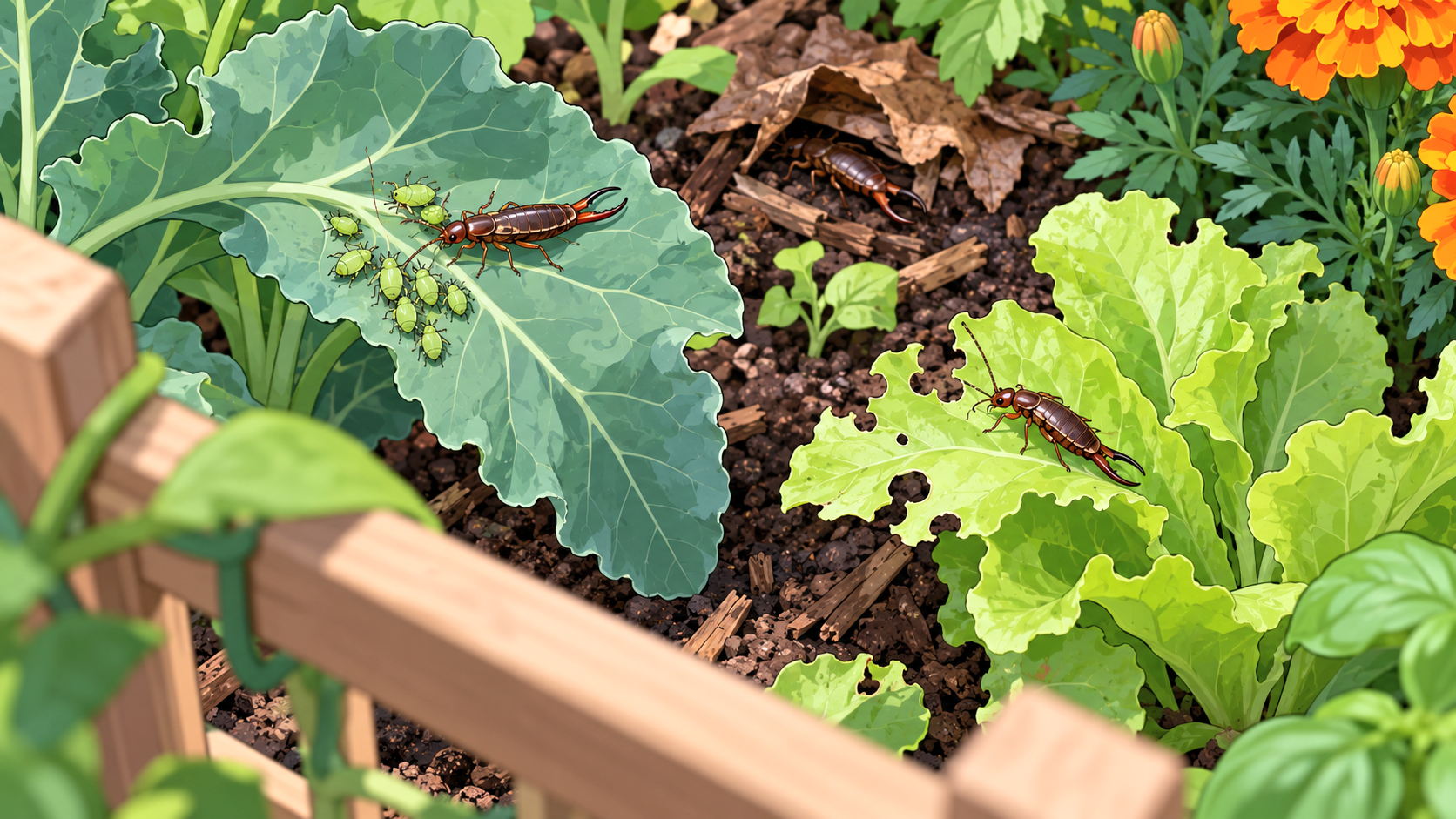
Finding earwigs beneath a flowerpot does not automatically mean something in the garden needs saving. The same insect that chews a hole through a dahlia petal can spend another night eating aphids. That makes earwigs unusually difficult to label as either garden pests or beneficial insects.
Earwigs can be both good and bad for your garden. They are beneficial when they eat aphids, insect eggs and other small pests or consume decaying organic material. However, large numbers can damage seedlings, flowers, soft fruit and sweet corn. Whether they deserve control depends on what they are actually doing to your plants.
The Case for Leaving Some Earwigs Alone
The European earwig, Forficula auricularia, has a remarkably broad diet. It feeds on living and dead material, including plants, fungi, insects and other small organisms. That flexibility is what gives it such a mixed reputation in gardens.
The beneficial side is easy to overlook because chewed leaves are more noticeable than missing aphids. Earwigs are important predators of aphids under some circumstances. They also consume other soft-bodied insects, mites and insect eggs. Their diet therefore overlaps with organisms gardeners may already want removed.
Earwigs also feed on decaying plant material. That scavenging role means every earwig underneath mulch is not necessarily chewing the healthy plant above it. Our guide to what earwigs eat in the garden goes deeper into that unusually varied diet.
This is why we would not treat the mere presence of earwigs as evidence of a garden problem. In a mature landscape with little visible plant injury, removing an insect that is currently feeding on aphids may accomplish the opposite of what you intended.
The Verdict Changes Around Seedlings, Flowers and Soft Fruit
The beneficial label has limits. Earwigs do not distinguish between something you consider a pest and something you planted yesterday.
Young plants are particularly vulnerable. Earwigs can remove portions of leaves and stems from seedlings, and large numbers can seriously damage young plants. A mature plant may tolerate some leaf feeding that a tiny seedling cannot afford. That difference matters more than simply counting how many earwigs you see.
Flowers can also take noticeable damage. Dahlias, zinnias and marigolds are among the plants on which earwig feeding can become troublesome. Petals and leaves may develop irregular holes or ragged edges. If dahlias are the plants being hit, our guide to earwig damage on dahlias covers that problem specifically.
Soft fruit presents another weak point. Strawberries, raspberries, blackberries and apricots can be damaged, while hard fruit such as apples is not normally harmed. Earwigs can also hide within damaged or split fruit, making them particularly unwelcome near harvest.
Sweet corn has its own problem. Feeding on the silks can interfere with pollination and lead to poor kernel development. A gardener finding them around corn therefore has a stronger reason to pay attention than someone finding the same number beneath shrubs. We cover that crop-specific situation separately in our guide to earwigs in corn.
A Chewed Leaf Is Not Enough to Convict an Earwig
This is where gardeners can easily make the wrong call.
Earwig feeding often leaves irregular holes and chewed edges, but those signs are not exclusive to earwigs. Caterpillars, slugs and other chewing pests can leave superficially similar damage. Killing earwigs because they happened to be hiding beneath the affected plant can therefore mean targeting the wrong animal.
The timing of the inspection makes a big difference. Earwigs feed primarily at night and hide during daylight. Rather than relying on the damage alone, inspect the affected plants after dark with a flashlight. Finding earwigs actively feeding provides much stronger evidence than discovering one underneath a nearby board the following afternoon.
There are useful clues when comparing possible culprits. Slugs leave slime trails, while earwigs do not. Caterpillar damage may be accompanied by webbing, droppings or pupae. Still, seeing the feeding activity itself is the cleaner answer whenever possible.
This is one reason earwig nocturnal behavior matters practically. Knowing when the insect feeds turns a vague suspicion into something you can actually check.
Your Plants Matter More Than the Earwig Count
We think the most useful way to judge earwigs is to stop asking whether the insect is universally beneficial and instead ask what is at risk in that particular garden.
A yard dominated by lawn, trees, native plants and established woody ornamentals is unlikely to suffer concerning earwig damage. In that setting, earwigs may spend much of their time scavenging or preying on other invertebrates without creating a problem worth managing.
Now put the same insects beside newly emerged vegetables, strawberries and a bed of dahlias. The calculation changes because the plants are more vulnerable to the type of feeding earwigs can cause.
Even within a single fruit tree, the balance can shift. Earwigs can prey on aphids in trees, yet they can also damage susceptible fruit. In mature apricot trees, foliage feeding is generally of little concern, while feeding on young trees or fruit can matter much more.
That is a better framework than trying to decide whether earwigs deserve a permanent “good bug” or “bad bug” label. Their value depends on what they are eating and how much damage the plant can tolerate.
Sometimes the Best Earwig Control Is No Control
An insect existing in a garden is not the same thing as an insect causing unacceptable damage.
When plants are healthy and you cannot find meaningful earwig injury, there may be little reason to intervene. Earwigs themselves are part of the garden food web. They consume smaller organisms and are in turn eaten by animals such as birds and toads. Our guide to the natural predators that eat earwigs explains that side of their ecology.
Unnecessary broad-spectrum insecticide use can create another problem because it may affect beneficial organisms that help suppress other pests. This becomes particularly relevant where earwigs themselves are functioning as predators. In citrus, for example, some broad-spectrum treatments that reduce earwig numbers can also affect natural enemies needed for other pests.
We would therefore start with the plant, not the insect. Look for actual injury, determine whether the earwigs are responsible and consider how vulnerable that particular plant is before deciding that control is necessary.
When Earwigs Cross the Line From Helpful to Harmful
The balance has clearly shifted when active feeding is damaging plants you are trying to protect. Missing portions of young seedlings, damaged flowers, holes in soft fruit or feeding on corn silks are much better reasons to act than finding earwigs hiding harmlessly under mulch.
Start by confirming the culprit after dark. Then reduce the conditions that allow excessive numbers to shelter beside vulnerable plants. Earwigs favor dark, moist daytime hiding places, so boards, plant debris, dense weeds and some mulched areas can provide convenient refuge. Excess moisture can make those habitats even more favorable.
For a localized problem, trapping can reduce numbers without treating the entire garden. Rolled newspaper, bamboo tubes and similar shelters can collect earwigs overnight and be emptied into soapy water the following morning. That approach is particularly sensible when you want to protect a vulnerable patch rather than eliminate every earwig outdoors.
Persistent plant damage deserves a more targeted plan, which we cover in how to get rid of earwigs in the garden. The goal should be protecting the plants that need protection, not trying to make an outdoor space completely earwig-free.
Other Questions About Earwigs in the Garden
Should I kill every earwig I find in my garden?
No. Finding an earwig outdoors does not by itself justify control. The better reason to intervene is confirmed, unacceptable plant damage. An earwig feeding on other insects or decaying material may be contributing something useful instead.
Why are there so many earwigs under my mulch?
Mulch can create the dark, protected and moist conditions earwigs use as daytime shelter. Other objects touching the soil can do the same thing. If numbers become troublesome, understanding what attracts earwigs around a property can help you identify the conditions supporting them.
Are earwigs good for compost?
Earwigs can consume decaying plant material and other small organisms found around decomposing organic matter. Their presence around a compost pile is therefore consistent with their normal feeding habits and does not automatically indicate a problem.
Do earwigs pollinate flowers?
Earwigs should not be treated as garden pollinators simply because they are found inside flowers. Their presence there may involve feeding or daytime shelter, and they can damage the petals of some flowering plants.
Can earwigs kill garden plants?
Large numbers can severely damage young seedlings and flowering plants. Established plants can tolerate more feeding, so the same amount of earwig activity does not carry the same consequence for every plant. Newly planted or particularly vulnerable plants deserve closer monitoring.
4 thoughts on “Are Earwigs Good or Bad for Your Garden?”