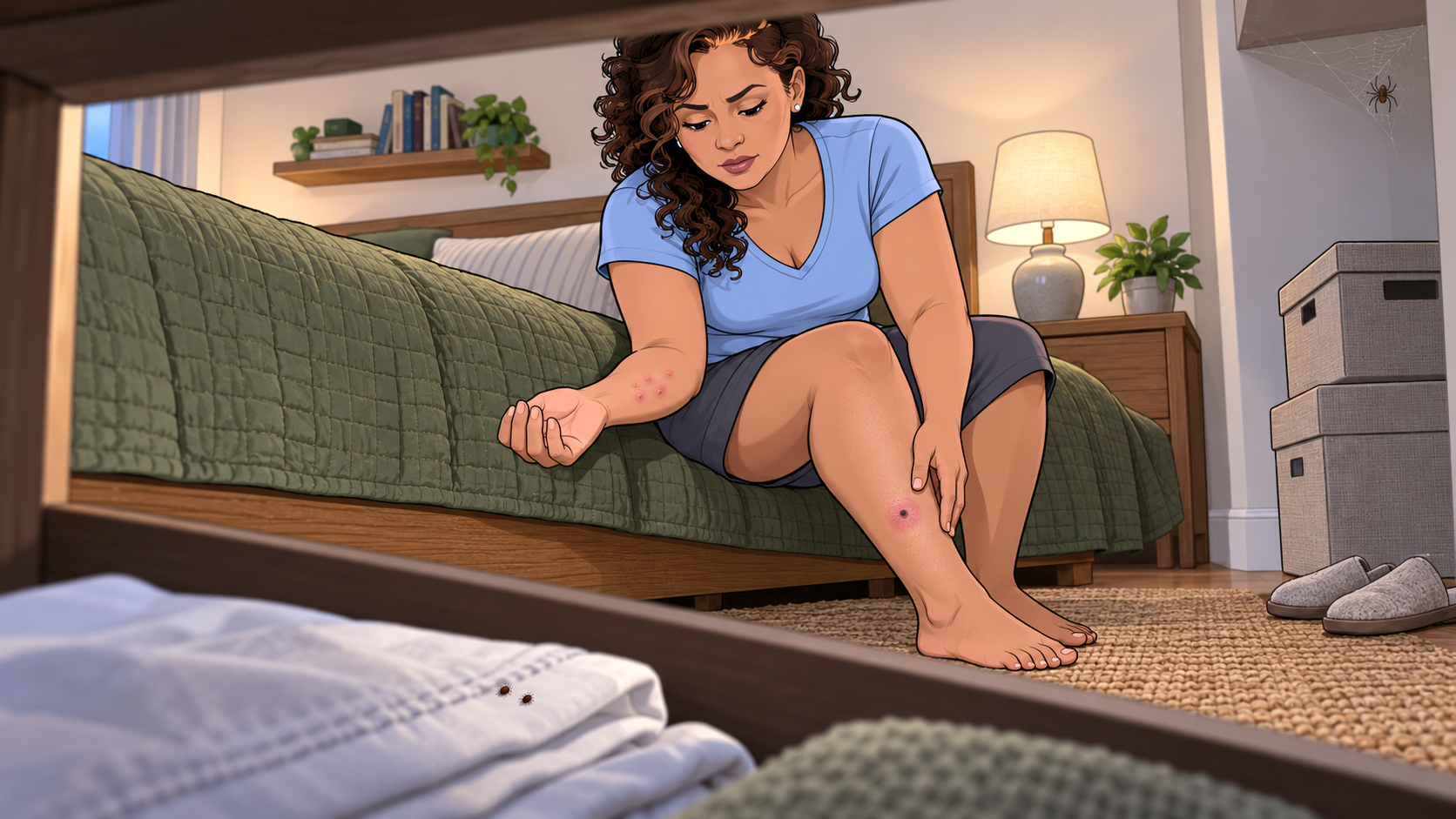
A skin lesion blamed on a spider often turns out not to be a spider bite at all. In one prospective study of 182 emergency-department patients who believed they had been bitten by a spider, only seven, or 3.8%, ultimately received a clinical diagnosis of spider bite. Most were diagnosed with skin or soft-tissue infections instead.
That doesn’t mean an unexplained mark is automatically a bed bug bite. Bed bug bites and spider bites cannot reliably be distinguished from appearance alone. Bed bug bites are often itchy and may occur in clusters or lines, while medically important spider bites can produce pain, cramping, blistering, or tissue injury depending on the species. The strongest evidence for bed bugs is finding the insects or other signs of an infestation.
A worsening wound shouldn’t be diagnosed at home as either one based solely on how it looks.
Suspected Spider Bites Are Frequently Something Else
The numbers behind spider-bite misdiagnosis are unusually striking. A prospective study published in the Journal of Emergency Medicine enrolled 182 emergency-department patients who reported that their condition had been caused by a spider bite. Only seven were ultimately diagnosed with spider bites, while 156, or 85.7%, received diagnoses of skin or soft-tissue infection.
That study doesn’t mean 85.7% of all suspected spider bites are infections everywhere, nor did it prove that all those infections were MRSA. It does show how unreliable self-diagnosis can be when someone finds an unexplained painful, swollen, or damaged area of skin and assumes a spider was responsible.
Brown recluse bites have been particularly prone to overdiagnosis. A review in American Family Physician notes that many conditions can produce lesions mistaken for brown recluse bites, including infections, vascular disorders, trauma, and other causes of ulcerating wounds. There is no routine laboratory test that can retrospectively prove a brown recluse caused an unexplained lesion.
The practical lesson isn’t to replace every suspected spider bite with a bed bug diagnosis. It’s to avoid assigning either cause from the wound alone.
Bed Bug Bites Aren’t Diagnosed by Appearance Alone Either
Bed bug bites have their own identification problem. They can appear as small, swollen, itchy marks and may occur randomly, in groups, or in a line. Those patterns can raise suspicion, but none is exclusive to bed bugs.
The CDC states that the inflammatory reaction itself isn’t diagnostic for bed bugs. Confirmation is better achieved by finding and identifying adult or immature bed bugs around the area where the person sleeps.
That makes the bedroom more useful diagnostically than trying to interpret every detail of the skin. Check mattress seams, the box spring, bed frame, headboard, nearby furniture, and cracks around the sleeping area for live bugs, shed exoskeletons, eggs, or characteristic spotting. Our guide to telling whether you have bed bugs covers those physical signs in detail.
If you only have skin lesions and no environmental evidence, it is reasonable to describe them as suspected bites rather than treating their appearance as confirmation. The range of possible reactions is shown more closely in what bed bug bites look like.
Bed Bug Bites Often Itch, While Dangerous Spider Bites Can Behave Very Differently
A typical bed bug bite is associated more strongly with itching than pain. The CDC describes the usual reaction as a slightly swollen area that may be itchy and irritating. Some people develop no visible marks at all, while others experience larger or more significant allergic reactions.
Spider bites cover a much broader range because thousands of spider species exist and their effects aren’t interchangeable. Most suspected bites never come with a positively identified spider, which makes dramatic skin changes especially poor evidence for deciding which species was responsible.
Black widow envenomation has a more characteristic systemic pattern. Poison Control notes that black widow bites are usually painful immediately, with pain spreading away from the bite and muscle cramps potentially developing within 15 to 60 minutes. Nausea, vomiting, sweating, and elevated blood pressure can also occur.
Brown recluse bites behave differently. Poison Control notes that a brown recluse bite may initially go unnoticed, after which pain, inflammation, blistering, and, in some cases, tissue necrosis can develop. Serious systemic illness is uncommon but possible.
Neither description should be used as a home diagnostic checklist. A painful or worsening skin lesion has other possible causes and deserves medical evaluation when symptoms become concerning.
Geography Matters When Brown Recluse Is Suspected
Brown recluse spiders aren’t distributed evenly across North America. Their established range is concentrated in portions of the central and southern United States.
That makes location relevant when someone attributes an unexplained lesion to a brown recluse. Medical literature has repeatedly documented diagnoses being made in places where the spider isn’t established, one reason experts caution against diagnosing brown recluse envenomation without supporting evidence.
Geography still doesn’t diagnose the wound. Living within the spider’s established range makes exposure biologically possible, while living far outside it makes that particular explanation less plausible. Confirmation is strongest when the spider is reliably associated with the bite and correctly identified.
Black widows have a broader distribution, but the same basic principle applies: an unexplained mark shouldn’t become a spider bite merely because spiders occur in the region.
A Single Bite Versus Several Bites Isn’t Proof
Bed bug bites often occur in groups because an infested sleeping area may expose a person repeatedly. CDC travel guidance notes that bed bug bites often appear as clusters of discrete itchy papules on exposed skin. Older medical literature also describes clustered reactions from repeated feeding.
Still, the familiar line or cluster pattern isn’t diagnostic. Bed bug bites can occur individually, and other arthropods and skin conditions can produce multiple marks.
The reverse is also important. A single unexplained lesion doesn’t prove a spider bite. Unless a spider was actually associated with the event, the number of marks is only one piece of context.
We’d give more weight to physical evidence. Live bed bugs, nymphs, eggs, shed skins, or characteristic fecal spotting around the sleeping area provide much stronger evidence of bed bug exposure than whether three marks happen to form a line.
A Worsening Lesion Could Be an Infection, Not a Spider Bite
The emergency-department study matters most when a supposed “bite” starts becoming increasingly painful, swollen, warm, draining, or otherwise worse.
Skin and soft-tissue infections can resemble lesions people attribute to spiders. Scratching insect bites can also damage the skin and create an opportunity for secondary bacterial infection. CDC guidance notes that scratched arthropod bites can become secondarily infected, commonly involving Staphylococcus or Streptococcus bacteria.
Don’t assume a worsening wound is simply venom “working its way out.” Likewise, don’t assume that finding bed bugs means every unusual skin lesion must have been caused by them.
If an apparent bite develops increasing pain, warmth, swelling, spreading redness or discoloration, pus, or other signs of infection, medical assessment is more useful than trying to identify the culprit from photographs online. We’ve covered infected bed bug bites separately.
Questions About Spider Bites vs. Bed Bug Bites
Does seeing a spider near the bite prove it caused the wound?
No. A spider being somewhere in the room doesn’t establish that it bit you. Strong confirmation of a medically significant spider bite requires the spider to be reliably associated with the event and correctly identified.
Can doctors test whether a spider bit you?
There is no routine clinical laboratory test that confirms a brown recluse bite after the event. Doctors evaluate the symptoms, history, possible exposure, geographic plausibility, and alternative diagnoses. Identification becomes much stronger when the spider responsible was actually seen and correctly identified.
Are bed bug bites easier to confirm than spider bites?
The skin reaction itself isn’t necessarily easier to diagnose. The advantage is environmental evidence. An inspection may reveal bed bugs, nymphs, eggs, shed skins, or fecal spotting around the sleeping area, providing evidence of an infestation independent of the marks on your skin.
Should you photograph a spider you think bit you?
Yes, if you can do so without handling or provoking it. A clear photograph or safely contained specimen may help with identification. Don’t deliberately catch a potentially dangerous spider if doing so creates another opportunity to be bitten.
When should you seek medical care for a suspected spider or bed bug bite?
Seek medical advice for a rapidly worsening lesion, significant pain or swelling, signs of infection, extensive blistering, or systemic symptoms. Trouble breathing, severe swelling, fainting, or other signs of a severe allergic reaction require emergency care. Significant muscle cramping or other systemic symptoms following a suspected black widow bite also warrant prompt medical attention.