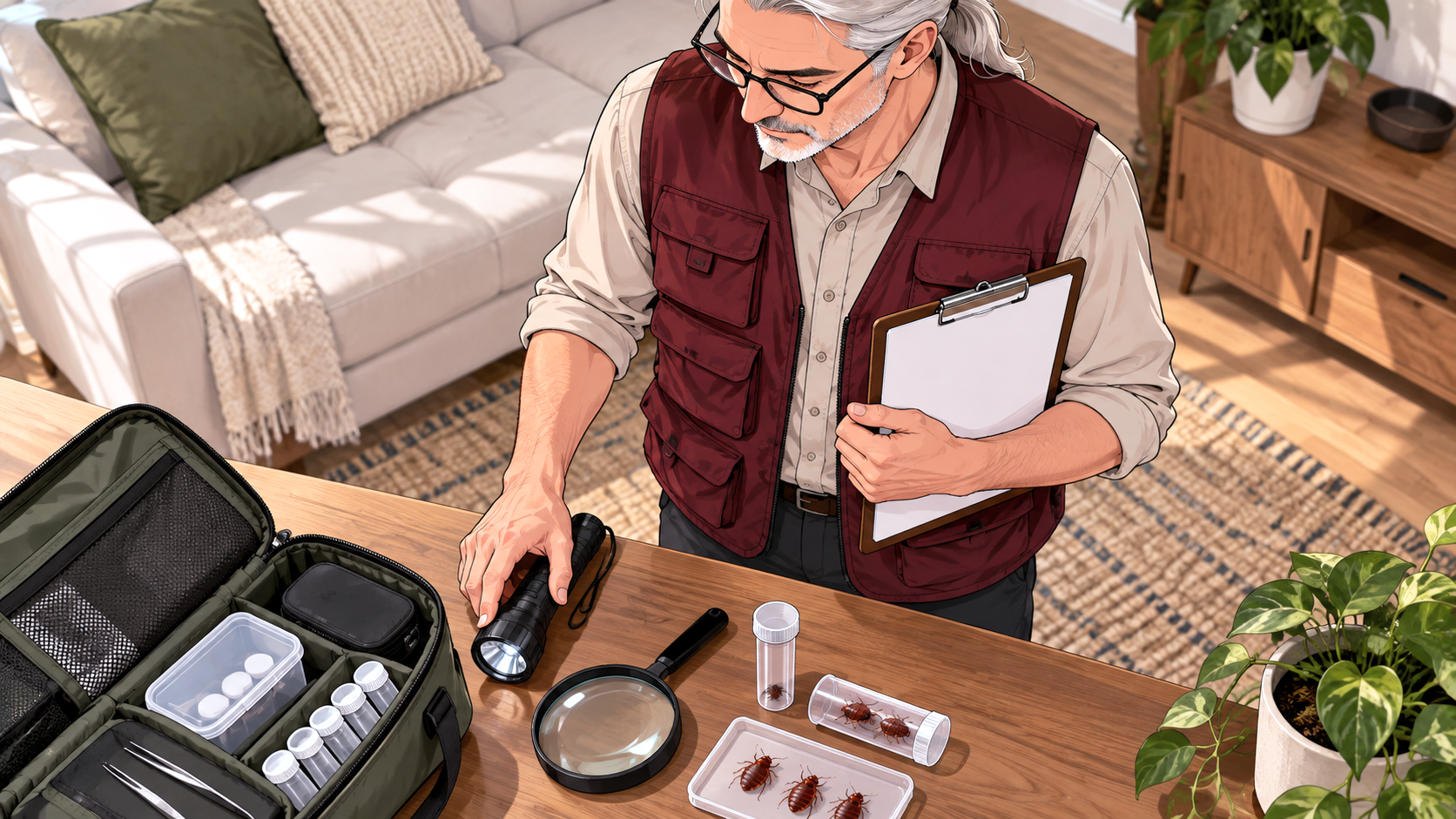
A professional visual bed bug inspection commonly costs about $65 to $200, although some companies provide the initial inspection at no charge. A canine scent inspection is considerably more expensive, often around $300 to $600. Property size, inspection method, number of rooms, travel distance, and whether the fee is credited toward treatment all affect what you actually pay.
Typical Bed Bug Inspection Prices
Current national pricing data places a dedicated visual bed bug inspection at roughly $65 to $200. Broader professional pest inspections often fall higher, with 2026 data showing an average around $200 and a typical range of approximately $125 to $450 depending on inspection type and property size. A bed bug assessment in a small apartment can consequently cost less than a detailed inspection of a multi-story house, commercial building, or several connected units.
| Inspection Type | Typical Cost |
|---|---|
| Basic visual bed bug inspection | $65–$200 |
| Inspection offered as part of a treatment estimate | Sometimes free |
| Canine bed bug inspection | $300–$600 |
| Large or complex property inspection | Often quoted individually |
| Follow-up inspection | Free to several hundred dollars, depending on contract |
Those figures are useful for budgeting rather than setting an expected local price. A company may charge by property, room, technician time, or service area, while another may absorb the inspection into the total cost of professional bed bug extermination.
A Free Inspection May Be a Sales Inspection Rather Than a Separate Diagnostic Service
Paying nothing for an initial inspection is not unusual. Terminix currently advertises a free initial bed bug inspection that includes examination of mattresses, box springs, furniture, bed frames, outlets, baseboards, and other likely harborages before a treatment estimate is prepared. Other companies charge for the visit, and Orkin states that its residential inspections are priced according to the individual pest problem rather than offered universally for free.
The important comparison is what the inspection includes. A no-cost visit that only confirms an obvious infestation before producing a treatment quote serves a different purpose from a paid diagnostic inspection requested because no live bugs have been found. When identification is uncertain, the technician should examine the evidence rather than infer infestation from bites alone. A careful professional assessment should look for the same physical evidence used to determine whether a home actually has bed bugs, including live insects, eggs, cast skins, fecal spotting, and characteristic harborages.
Ask before booking whether the inspection charge is refundable or credited toward treatment. A $150 inspection that reduces a later treatment bill by $150 has a different effective cost from a fee charged separately.
Larger Homes Cost More When the Inspector Has More Places to Examine
Square footage influences the price indirectly through inspection time. Bed bugs are commonly concentrated around sleeping and resting areas, but an inspector may need to examine additional bedrooms, couches, upholstered chairs, adjoining rooms, and other locations when evidence suggests the infestation has spread. Multi-unit housing can require inspection of neighboring units because bed bugs can move between apartments, making a single-bedroom examination inadequate in some buildings.
Furniture design also changes the workload. Platform beds, complicated headboards, upholstered frames, reclining couches, clutter, and tightly packed belongings create more seams and voids than a sparsely furnished room. EPA advises hiring a professional who is experienced with bed bugs and expects that the technician may need to inspect furniture closely and disassemble parts where necessary. A thorough inspection of those structures naturally takes longer than checking an exposed mattress.
If you are paying by the hour or room, ask exactly which spaces the quote covers. A less expensive bedroom-only inspection is poor value when suspicious evidence is already present on a living-room couch or in another sleeping area.
Canine Inspections Cost More and Accuracy Depends Heavily on the Team
A trained scent dog can search a large area faster than a person can dismantle and visually inspect every potential harborage, which explains the premium price. Consumer cost data puts a canine bed bug inspection around $300 to $600. Dogs are especially attractive for hotels, offices, large homes, multi-unit properties, and suspected low-level infestations where visual evidence is difficult to locate.
Canine inspection is not automatically more accurate merely because a dog is involved. Controlled research found trained dogs capable of locating live bugs and viable eggs with very high accuracy under experimental and hotel-room conditions, including 98% accuracy in one controlled hotel-room experiment. Field performance has been far more variable. An evaluation of 11 canine teams in naturally infested apartments recorded an average detection rate of only 44% and an average false-positive rate of 15%, with large differences among teams and between inspection days.
For an expensive canine inspection, ask how alerts are confirmed. Finding a live insect, egg, or other physical evidence at the alerted location provides stronger grounds for treatment than relying on an unverified dog response. Other bed bug detection tools may also be useful when evidence is sparse and immediate treatment is not warranted.
A Proper Inspection Should Produce More Than a Yes-or-No Answer
A useful inspection establishes whether bed bugs are present, where activity has been found, how far it appears to extend, and what those findings mean for treatment. Terminix describes its professional inspection as extending beyond mattresses to box springs, headboards, frames, upholstered furniture, outlets, baseboards, picture frames, and carpet edges, followed by findings and recommended next steps.
The resulting treatment quote should reflect those findings rather than simply the property’s total square footage. A few bugs concentrated around one bed represent a different service problem from a severe infestation spread through multiple rooms. Inspection therefore has financial value beyond confirming the pest: it defines the treatment area and can prevent paying to treat rooms that do not require it or, conversely, underestimating activity that extends beyond the original bedroom.
EPA recommends integrated bed bug management that includes inspection and continued monitoring rather than assuming one treatment visit establishes eradication. Monitoring devices can help verify whether bugs remain, particularly when initial numbers are low.
Follow-Up Inspection Fees Depend on the Treatment Contract
Some treatment packages include follow-up inspections automatically, while others charge separately after the warranty period or after a specified number of visits. A company may also perform follow-up monitoring as part of its treatment guarantee rather than calling it a separate inspection.
Before accepting a quote, ask how many post-treatment visits are included, when they occur, whether additional inspection is free if activity returns, and what happens if the technician finds surviving bed bugs. EPA notes that very few infestations are controlled with only one professional visit, so a cheap initial inspection can become less attractive if every subsequent check carries another charge.
Follow-up assessment is particularly useful because bed bugs can temporarily become difficult to find after treatment. The absence of bites alone does not confirm eradication; determining whether bed bug treatment worked depends on continued inspection and monitoring for live bugs or new physical evidence.
Questions About Bed Bug Inspection Costs
Can you inspect for bed bugs yourself for free?
Yes. A flashlight, thin inspection tool, and careful examination of mattress seams, box springs, bed frames, headboards, and nearby furniture can reveal obvious infestations. A structured room-by-room bed bug inspection is most useful when you know which signs and harborages to prioritize. Professional inspection becomes more valuable when evidence is ambiguous, activity is very light, or treatment decisions involve substantial expense.
Should you pay for an inspection if you already found a live bed bug?
Professional inspection can still be useful because identifying one confirmed bug does not reveal how widely the infestation has spread. The inspection can define which rooms and furnishings require treatment before a larger remediation quote is prepared.
Do landlords normally pay for apartment inspections?
Responsibility depends on local law, the lease, building circumstances, and how the infestation arose. In multi-unit housing, determining whether the tenant or landlord pays for bed bug treatment can involve rules that differ substantially by jurisdiction.
Can an inspection find bed bugs when there are no bites?
Yes. Some people show little or no visible reaction after feeding, so professionals rely on insects and physical evidence rather than skin symptoms alone. Low-level infestations may require monitoring if the first inspection is inconclusive.
Is a canine inspection worth $300 to $600?
It can be worthwhile for a large property, commercial facility, or difficult low-level infestation where searching every potential hiding place manually would be slow. For a small bedroom with obvious physical evidence, a canine inspection may add little value relative to its cost.