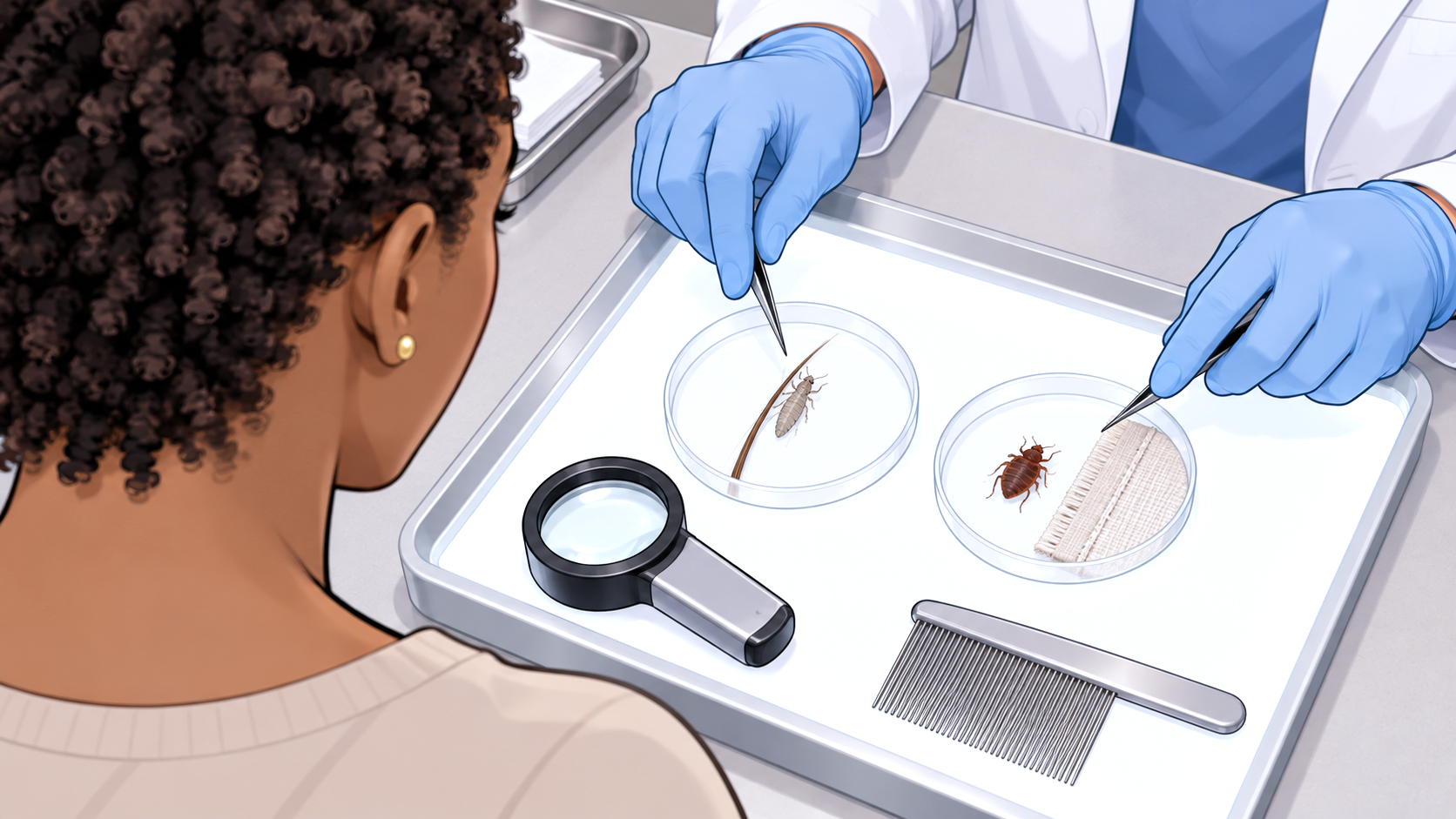
Lice and bed bugs both feed on human blood, but finding out where the insect actually lives is much more useful than trying to identify the problem from bites alone. Head lice normally remain on the scalp and hair. Body lice live mainly in clothing and bedding. Bed bugs hide in the environment around places where people sleep or rest.
Lice and bed bugs are different insects with different hiding places. Adult body lice are about 2.3 to 3.6 mm long and live primarily in clothing and bedding, while adult bed bugs can reach about 7 mm and usually hide around beds, furniture, cracks, and crevices. Body lice can also transmit several serious infections. Bed bugs are not known to transmit disease to people.
Of the human lice, body lice create the closest comparison with bed bugs because neither normally spends all of its time living directly on the person’s skin.
Head Lice and Body Lice Don’t Live in the Same Places
“Lice” covers more than one human parasite, and separating them immediately makes this comparison easier.
Head lice, Pediculus humanus capitis, live on the scalp and among the hair, where females attach their eggs to hair shafts. They spread primarily through direct hair-to-hair contact. Head lice can occasionally be transferred through recently used clothing or belongings, but this is much less common than direct contact.
Body lice have a different lifestyle. They live and lay their eggs primarily on clothing and bedding used by an infested person, particularly around seams, and crawl onto the skin to take blood meals. The CDC recommends examining clothing seams for crawling body lice and eggs when confirming an infestation.
That makes body lice much easier to confuse conceptually with bed bugs than head lice.
Bed bugs also leave the host after feeding, but their hiding places are usually part of the surrounding environment. They commonly occupy mattress seams, box springs, bed frames, headboards, furniture, and nearby cracks and crevices rather than depending on clothing seams.
Body Lice Are Smaller Than Adult Bed Bugs
Size can help once you have an actual specimen.
Adult body lice measure approximately 2.3 to 3.6 mm long, roughly the size of a sesame seed. They have six legs and range from tan to grayish white.
Bed bugs have a broader size range because nymphs begin very small and increase in size through successive molts. According to the CDC’s bed bug identification information, bed bugs range from approximately 1 to 7 mm depending on life stage.
That means size alone cannot separate every bed bug from every body louse. An adult bed bug can be noticeably larger than an adult body louse, while young bed bug nymphs overlap with lice in size.
Where the insect was found is therefore particularly valuable. Multiple insects or eggs concentrated along clothing seams point in a very different direction from bugs repeatedly found in mattress seams, a headboard, or cracks around a bed.
Their Bites Aren’t Reliable Enough for Identification
It is tempting to diagnose the problem by looking at the skin, but bites are one of the weaker ways to distinguish these pests.
Body lice cause itching and a rash, and prolonged heavy infestations can produce thickened or darkened skin, particularly around the waist, groin, and upper thighs. Bed bug bites can also cause itchy red marks, but reactions vary substantially between people.
Even bed bug bites themselves can appear randomly or in a line, and some people develop no visible marks at all.
For that reason, we would not identify body lice simply because bites occur beneath clothing or identify bed bugs because several marks appear on exposed skin. Bite location can contribute to the overall picture, but finding the insect, eggs, or other physical evidence is much stronger evidence.
If you’re finding unexplained marks without locating an insect, waking up with bites but finding no bed bugs is a separate identification problem rather than proof that either pest is responsible.
Body Lice Can Transmit Disease, While Bed Bugs Aren’t Known To
This is the most important health difference between them. Body lice can transmit epidemic typhus, Bartonella quintana infection, and louse-borne relapsing fever. These infections are particularly associated with circumstances where body lice can persist, including crowding and limited access to bathing and clean clothing.
The risk also varies geographically. For example, CDC reports that louse-borne relapsing fever currently occurs primarily in parts of Africa and that risk in the United States is extremely low without relevant travel.
Bed bugs are different. They are not known to transmit diseases to people, although their bites can cause itching, sleep loss, secondary skin infection from scratching, and, rarely, allergic reactions.
So a suspected body-louse infestation carries a disease consideration that an ordinary bed bug infestation does not.
They Also Spread Differently
Body lice spread mainly through direct contact with an infested person or through contact with infested clothing, beds, bedding, or linens. Because the insects depend heavily on clothing, sharing infested garments or bedding can transfer them.
Bed bugs are frequently transported in objects instead. Their flattened bodies allow them to hide in the seams and folds of luggage, bags, folded clothes, bedding, and furniture, which can then carry them into another home or room.
That does not mean clothing cannot transport bed bugs. It can. The difference is that clothing is a normal habitat for body lice, whereas bed bugs generally live in the surrounding sleeping environment and may use clothing or luggage as hiding places and transportation.
The current sitemap page on whether bed bugs can live on clothes and travel with you covers that distinction in more detail.
Body Lice and Bed Bugs Require Different Responses
Body lice are unusual among household pest problems because improving access to bathing, clean clothes, and laundering is central to control.
CDC recommends bathing and changing into clean clothing regularly, then washing infested clothes, bedding, and towels in water of at least 130°F and machine drying them on high heat. Items that cannot be washed can be dry-cleaned or sealed in a plastic bag for two weeks. Pediculicides are sometimes used, but CDC notes they generally are not necessary when appropriate hygiene and laundering are maintained.
Bed bugs require a different approach because washing clothing does not remove insects hidden in the bed frame, furniture, baseboards, or other harborages. Finding them calls for inspection of the surrounding sleeping environment and an appropriate bed bug control strategy.
If you’re unsure which pest you’re dealing with, start by checking for the physical signs of bed bugs rather than choosing treatment based on bites alone.
Questions About Lice and Bed Bugs
Can you have body lice even if you don’t see anything on your skin?
Yes. Body lice normally live in clothing and bedding and move onto the skin to feed. Checking clothing seams for adults and eggs can therefore be more useful than looking only at the body.
How long can body lice live away from a person?
Adult body lice need frequent blood meals and generally die within one to two days when they cannot feed. Their eggs are a separate consideration, which is why laundering or isolating infested clothing and bedding remains important.
Can head lice live in your bed like bed bugs?
No, not in the same sense. Head lice are adapted to living on the scalp and hair and die within about two days if they fall from a person and cannot feed. Recently used bedding can occasionally contain a displaced head louse, but a mattress is not its normal habitat.
Should you call an exterminator for body lice?
Body lice are primarily addressed through personal hygiene, clean clothing, and laundering rather than conventional structural pest treatment. If you find suspected body lice or are concerned about infection, CDC recommends consulting a healthcare provider when the diagnosis is uncertain.
One thought on “Lice vs. Bed Bugs: How to Tell What’s Actually Biting You”