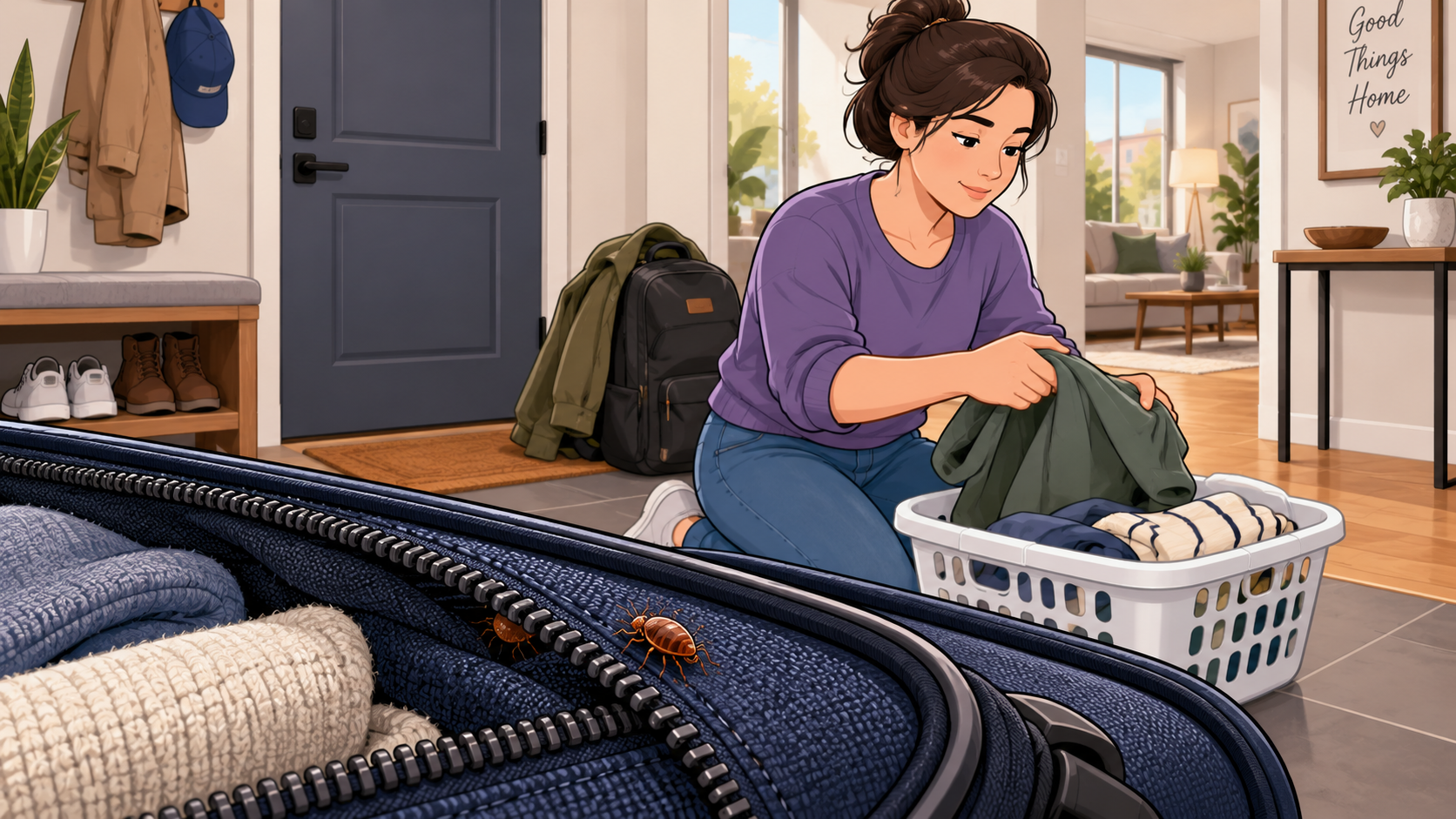
Bed bugs do not show up because a home is dirty, smells a certain way, or contains a particular food. Unlike pests that enter a building looking for crumbs, garbage, moisture, or stored food, bed bugs usually arrive by being carried in on belongings or infested furniture. In multi-unit housing, they can also move from an infested apartment into neighboring units. That distinction matters because what attracts a bed bug to a person is different from what brings bed bugs into a home. Once they are nearby, bed bugs use host cues such as heat and carbon dioxide while seeking a blood meal. That does not mean a warm house attracts infestations from outside.
A Dirty Home Does Not Attract Bed Bugs
Bed bugs are blood-feeding parasites, not scavengers looking for household waste. They can infest clean homes, cluttered homes, hotels, apartments, dormitories, shelters, and other places where people spend time.
Poor housekeeping therefore does not explain why an infestation started. Bed bugs may be found wherever people live regardless of cleanliness.
Clutter matters for a different reason. Once bed bugs are present, additional objects, cracks, and concealed spaces can make inspection and control more difficult. Reducing clutter can therefore help with treatment without implying that clutter attracted the original infestation. The same distinction applies to cardboard. A cardboard box does not summon bed bugs into a home. If bed bugs are already present, however, folds and gaps in stored belongings can provide additional places to hide.
Travel and Belongings Give Bed Bugs a Ride Home
Bed bugs are effective hitchhikers. They can be transported in luggage, clothing, bags, bedding, furniture, and other personal possessions.
Travel creates opportunities for that transfer because belongings move between bedrooms, hotels, vehicles, and homes. A bed bug concealed in a suitcase seam can be transported without the traveler realizing it, then emerge after the luggage reaches another location.
This is also why bed bugs do not have to live on your body to come home with you. They can hitchhike on clothing and personal belongings without behaving like parasites that remain on a person.
If travel is the suspected source, prevention is much more useful when it focuses on luggage and belongings rather than spraying the house in advance. Inspecting accommodation and managing what comes home with you can reduce the opportunity for a hidden bed bug to make the trip home.
Used Furniture Can Carry an Infestation Straight Indoors
A discarded mattress, bed frame, couch, or other piece of furniture can contain bed bugs even when the outside looks perfectly usable.
That makes curbside furniture a particularly avoidable introduction route. Used furniture is a recognized source of bed bugs, and furniture abandoned at the curb should not be picked up and brought home.
The risk is not limited to mattresses. Bed bugs can occupy upholstered furniture, drawers, tables, and even electronics when those objects have been kept in an infested area.
Secondhand does not automatically mean infested, either. The sensible distinction is between an item whose history can be checked and inspected carefully and an abandoned piece of furniture with an unknown history. A free couch becomes expensive very quickly if it introduces bed bugs.
Apartments Have an Entry Route Detached Houses Don’t
A resident in an apartment can acquire bed bugs without bringing an infested suitcase or piece of furniture through the front door.
Bed bugs are capable of moving between units. In one high-rise study, 53% of apartments adjacent to infested units were also infested, and researchers detected bed bugs dispersing through apartment entry doors. Travel, infested furniture, visitors, and other passive transfer routes were observed in the same building.
Experimental tracking has also found bed bugs moving into apartments neighboring infested units. That makes neighboring infestations particularly important in multi-unit housing.
For the question of what brought bed bugs into your home, the important point is simple: in an apartment building, your own belongings are not the only possible route in.
An Infestation Can Return Without Being a Completely New Infestation
Recurring bed bugs in an apartment building can be difficult to interpret. They may represent survivors from the original infestation, movement from another unit, or an entirely new introduction.
A year-long genetic study illustrates how mixed those routes can become. Researchers analyzed 123 bed bugs collected from 23 units in one apartment building and found that 16 of 21 infestations with usable genetic data were genetically similar. The pattern was consistent with persistence after treatment, reintroduction from within the building or a common source, and subsequent local spread. Up to five infestations represented new genotypes that could have been separate introductions.
That is one reason successful treatment of an individual apartment does not permanently protect it from bed bugs. A treated unit can be exposed again.
For residents of multi-unit buildings, prevention therefore includes early reporting and coordination beyond the affected apartment. Repeatedly treating one unit while an infestation persists elsewhere in the building can leave the route back open.
Heat and Carbon Dioxide Matter After Bed Bugs Are Nearby
Bed bugs respond to cues associated with a potential host. That biology sometimes gets turned into the misleading claim that body heat, carbon dioxide, or even a particular blood type is what “attracted bed bugs to the house.”
These are separate stages of the problem.
A bed bug carried home in luggage has already entered the home before host-seeking cues become relevant. Once it emerges and searches for a blood meal, cues associated with a nearby person can help guide its movement.
So attraction to body heat does not mean keeping your house cooler prevents introductions. Likewise, what bed bugs eat helps explain why they seek nearby hosts after arrival, not why one house was selected from outside.
That difference is easy to miss, but it changes the prevention strategy completely.
Prevention Starts With the Routes Bed Bugs Actually Use
You cannot make a home inherently unattractive to bed bugs with a scent, cleaner, temperature setting, or housekeeping routine. Prevention works better when it targets opportunities for introduction.
Inspect sleeping areas when traveling and keep luggage away from beds and upholstered furniture until the room has been checked. After returning from a location where bed bugs were found or strongly suspected, contain potentially exposed belongings rather than carrying them throughout the house. Inspecting luggage and personal items before unpacking can catch a hitchhiker before it has a chance to disappear into the home.
Be equally cautious with used furniture, especially discarded mattresses, bed frames, and upholstered pieces. In apartments, report a confirmed infestation promptly so management can consider the surrounding units rather than treating the problem as if every apartment were isolated.
Those habits address how infestations actually begin. Trying to make the home smell less attractive to a bed bug does not.
Questions About What Attracts Bed Bugs to Your Home
Can a visitor bring bed bugs into your house?
Yes. Bed bugs can hitchhike on bags, clothing, and other belongings, so a visitor coming from an infested environment can accidentally transport one. That does not mean bed bugs routinely remain on people’s bodies.
Does having pets make a house more attractive to bed bugs?
Pets are not required for a bed bug infestation. Bed bugs primarily feed on humans when humans are available, and a household without pets can become infested just as readily through an introduction.
Can bed bugs enter from a neighboring house?
The well-documented concern is movement within multi-unit buildings where apartments share walls, hallways, utilities, and other structural connections. Separate detached houses do not provide the same direct pathways.
Can a completely empty home still have bed bugs?
Yes. An empty property can contain bed bugs left behind by previous occupants. Their presence does not prove that the current resident recently introduced them.
2 thoughts on “What Attracts Bed Bugs to Your Home in the First Place?”