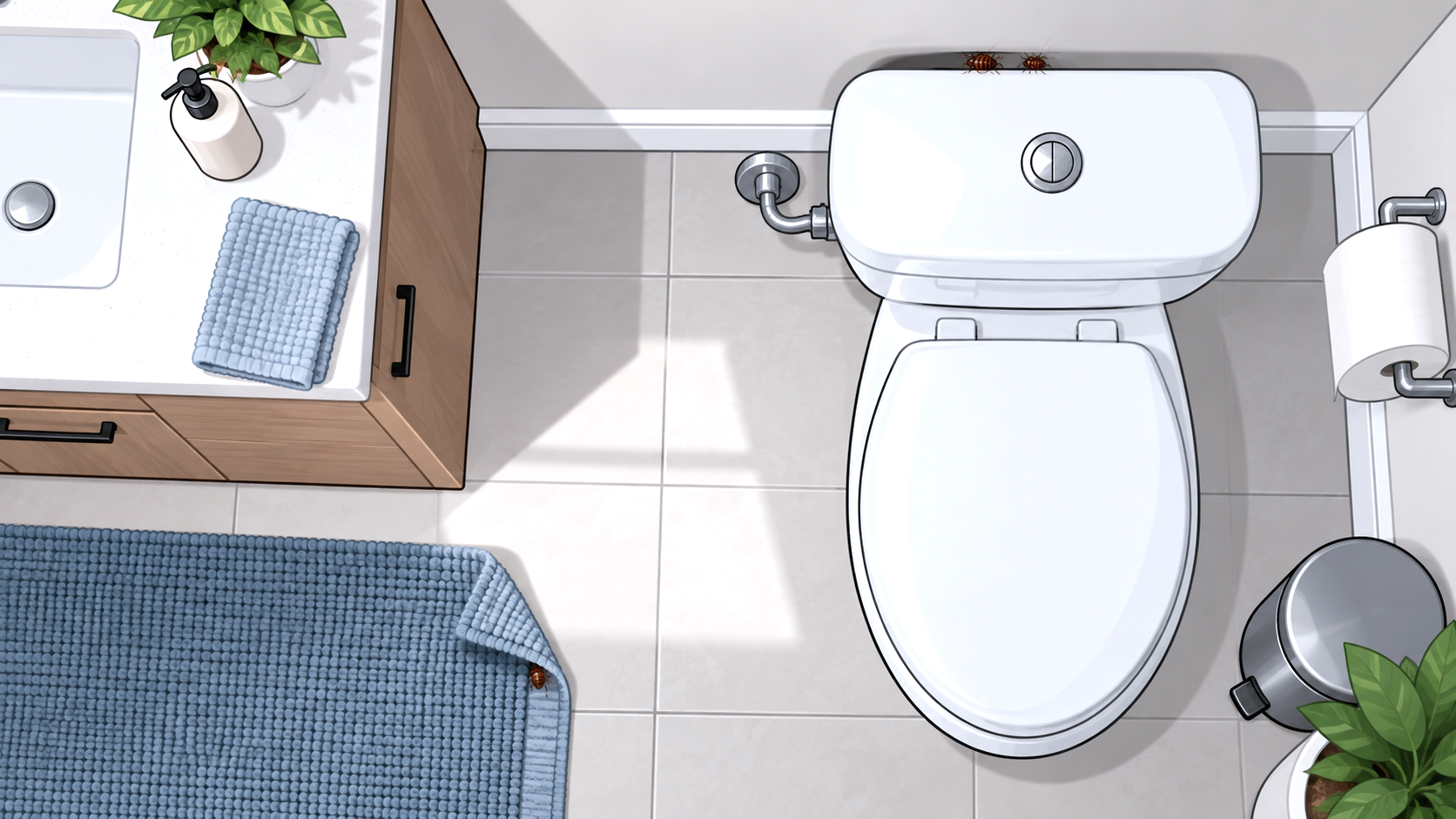
A bed bug on the bathroom floor looks out of place, and in one sense it is. Bathrooms lack the main thing that makes bedrooms attractive to bed bugs: a person staying in one place long enough to provide a reliable blood meal. Still, finding one there is entirely possible even though bathrooms are not their preferred living area since bed bugs usually stay near places where people sleep or rest. A bug in the bathroom may have wandered from another room, moved through a wall void, or arrived on clothing or another item. A toilet itself is an unlikely harborage. The bathroom therefore deserves inspection when a bed bug turns up there, but the search should not stop at the toilet or sink. The more useful question is how the insect reached that room and whether the actual infestation is somewhere else.
Bed Bugs Can Live in a Bathroom, but It Is Usually a Poor Location for Them
Bed bugs are blood-feeding insects. They usually establish themselves close to places where people remain still for extended periods, especially beds and other sleeping or resting areas. Their normal hiding pattern around sleeping areas includes mattress seams, bed frames, nearby furniture, cracks, flooring edges, and other protected spaces.
A bathroom provides plenty of cracks, but usually not a dependable host. You might spend a few minutes using the toilet, showering, or getting ready, then leave. That is very different from lying in a bed for several hours. For a closer look at what actually draws these insects toward particular areas, our guide to what attracts bed bugs covers the cues involved.
Bathrooms are not excluded from an infestation, however. Bed bugs can occur outside bedrooms, and documented infestations include bathrooms, living rooms, and laundry rooms. Bed bugs can occur in bathrooms and other rooms, particularly when they move beyond their usual hiding areas.
A Bed Bug Beside the Toilet Does Not Mean It Lives in the Toilet
Seeing a bed bug beside the toilet creates a tempting explanation: it must have come out of the toilet or drain. That conclusion skips several much more plausible routes into the room.
Bed bugs crawl. They are also small and flat enough to enter remarkably narrow spaces. In an infested building, they may hide around baseboards, wall plates, furniture, flooring edges, and other cracks. Bed bugs can occupy very small cracks and crevices, so a bathroom wall can provide hiding or travel spaces without the insect living anywhere inside the toilet.
The toilet bowl itself is especially unconvincing as a normal bed bug home. It offers no useful protected harborage comparable with a mattress seam, furniture joint, or wall crack. The water also does not provide bed bugs with food because they feed on blood, not sewage, organic debris, or material inside plumbing.
So if you find one crawling across the toilet seat, tank, or nearby tile, treat the location as where you noticed the bug rather than proof of where it was living.
Your Plumbing May Point to a Route Without Being the Source
Bathrooms contain numerous openings into walls. Water-supply lines, drain penetrations, electrical openings, gaps around cabinets, and baseboard cracks can connect the finished room with hidden spaces in the building.
That becomes particularly relevant in apartments and other multi-unit buildings. Bed bugs can move between neighboring rooms and apartments, including through cracks and conduits associated with electrical wiring or plumbing. Movement through cracks and plumbing or electrical conduits can occur between units. Our separate guide explains more about how bed bugs can spread between apartments.
This can produce a confusing situation. You may see the insect in your bathroom even though the larger concentration is behind a wall, in an adjacent unit, or elsewhere in your own home. In that case, spraying around the toilet would focus on the place where the bug emerged rather than the area supporting the infestation.
The Bathroom May Be Between Two Places Bed Bugs Actually Want
Imagine a bedroom sharing a wall with a bathroom. Bed bugs are established around the bed, while cracks around the baseboard or plumbing penetrate the adjoining wall. A wandering insect does not need to understand that the next room is a bathroom. It simply needs a route through the structure.
Bed bugs are mobile enough to appear throughout a home. Monitoring devices can even be placed in bathrooms, kitchens, and hallways when investigators need to detect their movement outside the immediate sleeping area. Bed bug monitoring can extend into bathrooms and hallways.
This possibility becomes more important when bed bugs are already present elsewhere. Our guide to how bed bugs move from room to room covers that spread more directly.
One bathroom sighting, however, does not tell you the route. The bug could have walked there, arrived on an object, or been transported on clothing. Bed bugs are effective hitchhikers and can reach new locations on clothing, luggage, furniture, bedding, boxes, and other belongings. Bed bugs commonly spread by hitchhiking on belongings.
Humidity Is Not a Good Explanation for Why a Bed Bug Is There
Bathrooms immediately make people think of moisture-loving pests. That instinct works better for some household arthropods than it does for bed bugs.
Bed bugs do not infest homes because a bathroom is damp or because a pipe leaks. They are parasites that require blood meals, and their normal distribution inside a home reflects access to hosts and suitable hiding places. They locate hosts using cues that include warmth and carbon dioxide. Bed bug host-seeking behavior centers on access to a blood meal.
That means installing a dehumidifier or fixing condensation may be worthwhile for completely different reasons, but neither addresses the defining requirement of a bed bug infestation. Our article on whether dehumidifiers work against bed bugs looks specifically at that idea.
A tiny insect repeatedly appearing around a damp shower or sink may also deserve a fresh identification. Not every small bathroom bug is a bed bug, and the bathroom supports plenty of other insects and arthropods. Compare a captured specimen with the features in our guide to what bed bugs actually look like before building an infestation theory around the room where you found it.
Check the Bathroom, Then Follow the Search Toward Where People Rest
Once you have confirmed that the insect is a bed bug, inspect the immediate bathroom area without assuming it contains the main infestation. Check protected cracks around baseboards, cabinetry, wall penetrations, and nearby wall plates. Bed bugs can hide behind electrical outlets and other wall plates, which makes structural edges more relevant than the open porcelain surfaces of a sink or toilet. Careful bed bug inspections include wall plates and tight hiding areas.
Then widen the search according to the layout of the home. A bedroom sharing the bathroom wall deserves particular attention. Inspect mattress seams, the box spring, bed frame, headboard, nearby furniture, floor edges, and cracks. Our step-by-step bed bug inspection guide can help organize that search.
Look for more than moving insects. Shed skins, eggs, fecal spotting, and live bugs can help confirm where activity is concentrated. If the bathroom specimen is the only bug you have found, the broader pattern of early bed bug infestation signs becomes more useful than repeatedly checking the toilet.
Avoid carrying bathroom rugs, hampers, clothing, or other movable objects into unaffected rooms while investigating. Moving belongings out of an infested area can spread bed bugs rather than contain them. Bed bug preparation guidance warns against moving items into uninfested areas.
Do Not Pour Pesticides or Household Chemicals Down the Toilet
A bed bug sighting near a drain is not a reason to pour insecticide, bleach, alcohol, or another chemical into the plumbing. The drain has not been established as the source simply because the insect appeared nearby.
Bed bug control works better when the pest is correctly identified, its hiding areas are located, and the entire infestation is addressed. Even pesticide foggers are unsuitable as a stand-alone solution because insecticide may fail to reach the cracks and crevices where bed bugs hide. Effective bed bug control requires reaching their actual hiding areas.
A confirmed bathroom sighting should therefore change the scope of your inspection, not your plumbing routine. When bed bugs keep appearing in several rooms, or when the source cannot be located, our guide to when to call an exterminator for bed bugs covers when professional inspection becomes more useful.
Other Questions About Bed Bugs in Bathrooms
Can bed bugs hide in a bathroom cabinet?
Yes. A cabinet can contain joints, cracks, screw holes, stored objects, and protected gaps that provide temporary hiding places. However, finding bed bugs there should still prompt an inspection beyond the cabinet, especially when a bedroom or other frequently occupied room is nearby.
Can bed bugs be carried into the bathroom on your clothes?
Yes. Bed bugs do not normally live on people like lice, but they can hitchhike on clothing and belongings. Bed bugs may travel on clothing without living on the wearer. That creates a straightforward way for an individual bug to appear somewhere that does not contain an established harborage.
Could a bed bug survive in an empty bathroom?
A bed bug does not need to feed every day, so the absence of a person from a bathroom does not make immediate survival impossible. However, an empty bathroom still lacks the reliable host access that makes sleeping and resting areas much better locations for an infestation.
Does finding a bed bug in the bathtub mean it came through the drain?
No. The bathtub tells you where the insect was found, not how it arrived. A bed bug could crawl into the tub from another part of the bathroom and then struggle to leave the smooth surface. Investigate nearby cracks, walls, adjoining rooms, and possible hitchhiking routes before blaming the drain.
Should you inspect the laundry hamper after finding a bed bug in the bathroom?
Yes, especially when clothing or linens regularly collect there. Bed bugs and their eggs can hide in laundry containers and hampers, so these items belong in a broader inspection of the room. Laundry containers can provide bed bug hiding places. Avoid carrying a suspect hamper through the home before you have checked it.