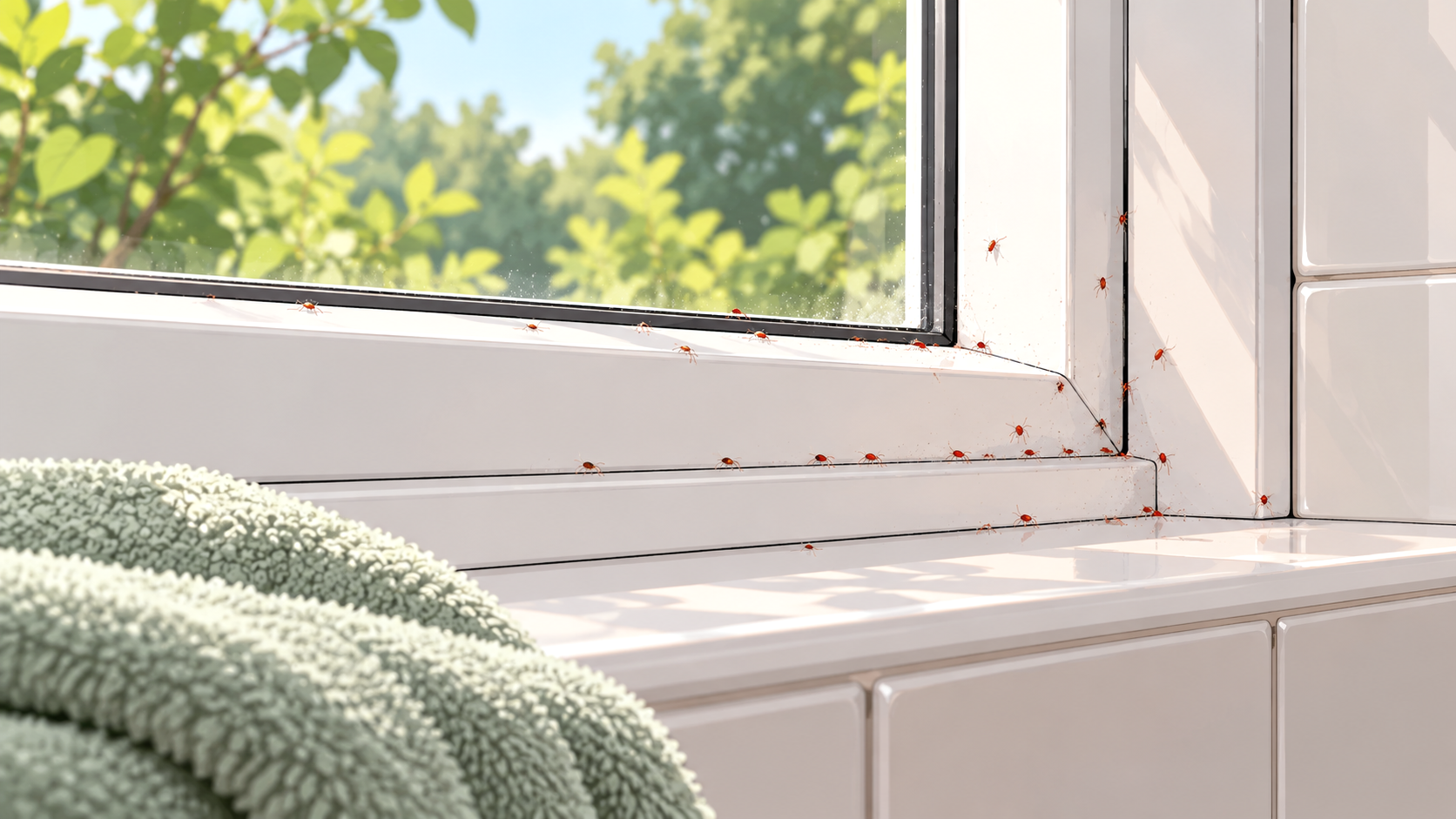
Clover mites can appear in bathrooms because humid air may allow wandering mites to lose water more slowly than they would in a dry room. That can make them remain visible there longer, especially around windows and other cool surfaces. However, a humid bathroom does not provide the food or habitat clover mites need for a lasting population. Their presence is temporary, even when several mites keep turning up around the sink, tub, or window.
Humidity Can Affect How Long Clover Mites Survive
Tiny mites lose water to their surroundings, and humidity influences that process. Laboratory research on Bryobia praetiosa has examined both humidity responses and water loss across different relative humidities.
That makes a humid bathroom potentially more tolerable than a very dry room. It does not make moisture an indoor food source, nor does it mean clover mites seek bathrooms in the same way that strongly moisture-dependent pests do. This distinction matters because clover mites eventually die from dehydration after entering buildings. A bathroom that slows that process can make the mites seem unusually persistent even though they are not established there.
A Damp Bathroom Cannot Support a Clover Mite Population
Clover mites need living plants for food. Their normal diet consists of grasses and other vegetation, so water around a sink, shower, drain, or bathtub cannot sustain them. They also cannot maintain a reproducing population indoors. Humidity does not change that biological limitation.
This is useful when mites repeatedly appear near plumbing fixtures. They are not feeding in the drain, breeding beneath the bathtub, or living on bathroom mold. Seeing them near water does not establish water as their source.
Bathroom Conditions Can Make Other Mites More Likely
A bathroom full of tiny moving specks should not automatically be diagnosed as a clover mite problem. Humid indoor spaces support several other small arthropods, and some are far better adapted to persistent indoor moisture.
Identification is particularly important when the organisms remain present for long periods without any obvious connection to outdoor clover mite activity. True clover mites have an exceptionally long first pair of legs, which can resemble antennae when viewed without magnification.
Color is less dependable because clover mites can vary from reddish to brownish or greenish shades. A hand lens or close photograph is more useful than assuming every tiny red bathroom mite is Bryobia praetiosa. Persistent moisture also makes alternatives such as psocids worth considering. These tiny insects are specifically associated with humid bathrooms and other damp indoor areas. If the organism does not match clover mite anatomy, the moisture problem may be much more important than it initially appeared.
Drying the Bathroom Helps, but It Is Not a Complete Clover Mite Fix
Running an exhaust fan, repairing leaks, and reducing persistent condensation are sensible ways to keep a bathroom dry. They may also make the room less hospitable to mites that have already wandered inside.
We would not expect a dehumidifier or exhaust fan alone to solve a genuine clover mite problem, though. These mites normally spend most of their lives outdoors on plants, so changing bathroom humidity does not eliminate the population responsible for the sightings.
For mites already present, vacuuming is preferable to crushing them. Clover mites can leave a reddish stain on surfaces when smashed, and physical removal is recommended for mites found indoors.
If they continue appearing after the bathroom has been dried and visible mites removed, the pattern deserves a closer inspection rather than progressively stronger indoor treatments. Recurring clover mite problems usually involve factors beyond the room where the mites happen to be noticed.
Other Questions About Clover Mites in Bathrooms
Do clover mites come from bathroom drains?
No. Clover mites are plant-feeding arachnids, not drain-dwelling pests. Finding one beside a sink or bathtub does not mean it emerged through the drain.
Can clover mites live in a shower?
A shower can provide temporary humidity, but it does not provide their normal food or a suitable long-term habitat.
Does bathroom mold attract clover mites?
No established clover mite diet depends on mold. Their food comes from living plants, so mold points toward other moisture-related organisms rather than explaining a clover mite population.
Should repeated bathroom sightings make me question the identification?
Yes, particularly if the organisms persist continuously. Compare them with the basic characteristics of clover mites before assuming bathroom moisture explains the problem.