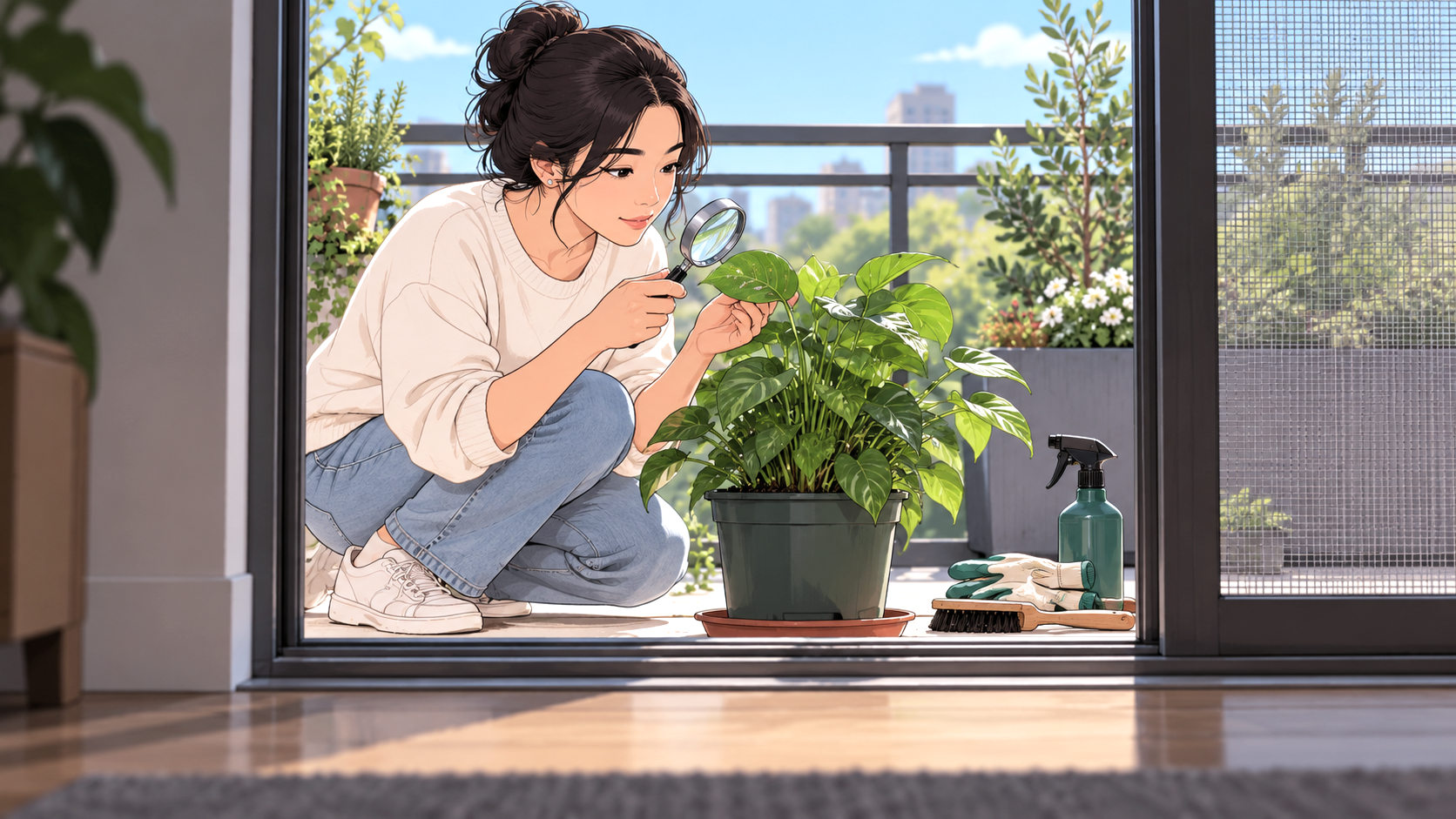
Thrips can enter a home in several ways, but plants and fresh plant material are among the most important routes. A newly purchased houseplant can carry hidden adults, immature thrips, or eggs, while cut flowers and plants that have spent time outdoors can bring them inside as well. Adult thrips can also enter through windows and doors because they are extremely small and capable of flight. Preventing an indoor problem therefore comes down to inspecting what you bring inside, separating new plants from your existing collection, and catching any thrips that slip through before they spread.
To prevent thrips from getting into the house, inspect new plants before buying them, quarantine them before adding them to your collection, check outdoor plants before bringing them back inside, and inspect cut flowers. Keep window and door screens in good condition and regularly check your houseplants so an unnoticed introduction does not become an established infestation.
Inspect New Houseplants Before Bringing Them Home
A new houseplant can introduce thrips directly into an established collection, so prevention should begin before the plant reaches your home. Examine the tops and undersides of leaves, flowers, buds, stems, and developing new growth before buying it. Houseplants should be carefully inspected for insects and other pest problems before they are introduced indoors. Look for the insects themselves as well as silvery or discolored feeding marks, distorted new leaves, damaged flowers, and tiny dark fecal spots. Knowing what thrips look like is useful because their slender bodies can be difficult to notice without close inspection. If you suspect thrips but cannot see them clearly, hold white paper beneath the foliage or flowers and gently tap the plant. Dislodging thrips onto a light-colored surface makes the tiny insects easier to spot. If a plant shows clear evidence of an active infestation, choosing a different plant is much easier than bringing the problem home and trying to control it later.
Quarantine New Plants Before Adding Them to Your Collection
Even a careful inspection can miss thrips because the insects can hide inside flowers and tight new growth, while the eggs of many plant-feeding species are inserted into plant tissue. Keep newly purchased plants away from established houseplants while you monitor them for pests. Recommendations vary on the exact quarantine period, with guidance ranging from one to two weeks of isolation to at least three weeks. The important part is not simply counting days but inspecting the plant repeatedly during that period. Look underneath leaves, inside flowers, around growing points, and at newly expanding foliage for living thrips or fresh feeding damage. Keep the quarantined plant physically separated rather than placing it a few inches from the rest of the collection because adult thrips can fly between plants. If thrips appear during quarantine, continue isolating the plant until the infestation has been dealt with.
Check Outdoor Plants Before Bringing Them Back Inside
Houseplants that spend spring or summer outdoors can pick up thrips before returning inside. Inspect them while they are still outside, checking both sides of the leaves, flowers, buds, stems, new growth, pot rims, saucers, and the exterior of the containers. Remove dead foliage and spent flowers and clean plant debris from around the pots. Plants that have been outdoors should be carefully inspected for pests before being returned indoors, and continued monitoring afterward can reveal insects missed during the first inspection. Do this before cold weather forces you to move every plant inside at once so you have time to isolate or deal with any suspicious plants. If possible, keep returning plants separate from your permanent indoor collection initially and inspect their new growth over the following weeks.
Check Cut Flowers Before Bringing Them Indoors
Cut flowers can also carry thrips because the insects commonly hide and feed within blossoms. Flowers cut from your garden can be inspected outdoors before entering the house, while purchased bouquets can be checked before they are placed beside houseplants. Gently tapping or shaking individual flowers over white paper can reveal tiny thrips concealed between petals. Finding a single insect does not mean a bouquet will automatically create a houseplant infestation, but heavily infested flowers placed beside susceptible plants give thrips an opportunity to move onto living hosts. If numerous thrips are present, disposing of the affected flowers is a simple way to remove that potential source.
Keep Window and Door Screens in Good Condition
Plants are not the only way thrips can enter a house. Adults can fly and may be carried by air currents, allowing them to enter through open windows and doors. Repair torn screens, loose edges, and obvious gaps around openings to reduce insect entry. Ordinary household screens cannot guarantee complete exclusion because thrips are exceptionally small. Commercial growers sometimes use fine insect-exclusion screening to reduce thrips entry, although finer mesh can also reduce airflow. Extremely fine greenhouse-style screening is unlikely to be necessary for most homes, but keeping ordinary screens intact removes easy entry points for thrips and many other insects.
Monitor Houseplants for Thrips That Get Through
No practical prevention method can guarantee that a thrips will never enter your house, which makes early detection important. Examine houseplants regularly while watering, pruning, or cleaning them, paying particular attention to flowers, tender new growth, and leaf undersides. Watch for early signs of a thrips infestation, including fresh silvery feeding scars, distorted growth, damaged flowers, living insects, and dark fecal spots. Blue or yellow sticky cards placed near valuable plant collections can also help detect flying adults, although they are monitoring tools rather than complete prevention or control methods. Finding one thrips should prompt a careful inspection rather than immediate treatment of every plant. If repeated inspections reveal more thrips or fresh plant damage, isolate the affected plant quickly before the population has more opportunity to spread.
Keep Thrips Out by Controlling What Comes Inside
The simplest prevention routine is to treat every incoming plant as a possible route for pests until you have inspected it. Check plants before purchasing them, quarantine new additions, inspect plants returning from outdoors, and look through cut flowers before placing them near your houseplants. Maintain window and door screens to reduce insects entering independently from outside, then continue inspecting your collection so any thrips that slip through are discovered early. These measures cannot guarantee that a single thrips will never enter your home, but they can greatly reduce the chance that a hidden introduction develops into a larger indoor problem. If you do begin finding them repeatedly, locating the source early makes getting rid of thrips inside the house considerably easier.
Questions About Preventing Thrips From Getting Into the House
Can thrips get through window screens?
Yes. Thrips are extremely small, so ordinary screening may not exclude every individual. Keeping screens intact still reduces easy insect entry, while finer insect-exclusion mesh can provide greater protection where outdoor thrips are a persistent problem.
Can new houseplants bring thrips indoors?
Yes. Thrips can arrive on new plants as adults, immature insects, or protected eggs. Careful inspection followed by quarantine reduces the chance that an unnoticed population will spread to established houseplants.
Can cut flowers bring thrips into the house?
Yes. Thrips can hide inside flowers and may be carried indoors with bouquets or freshly cut garden flowers. Inspecting blossoms before placing them near houseplants reduces this risk.
Should I spray healthy plants to prevent thrips?
Routine pesticide treatment of healthy plants is generally unnecessary when thrips have not been detected. Inspection, quarantine, exclusion, and early detection provide a more targeted approach to prevention.