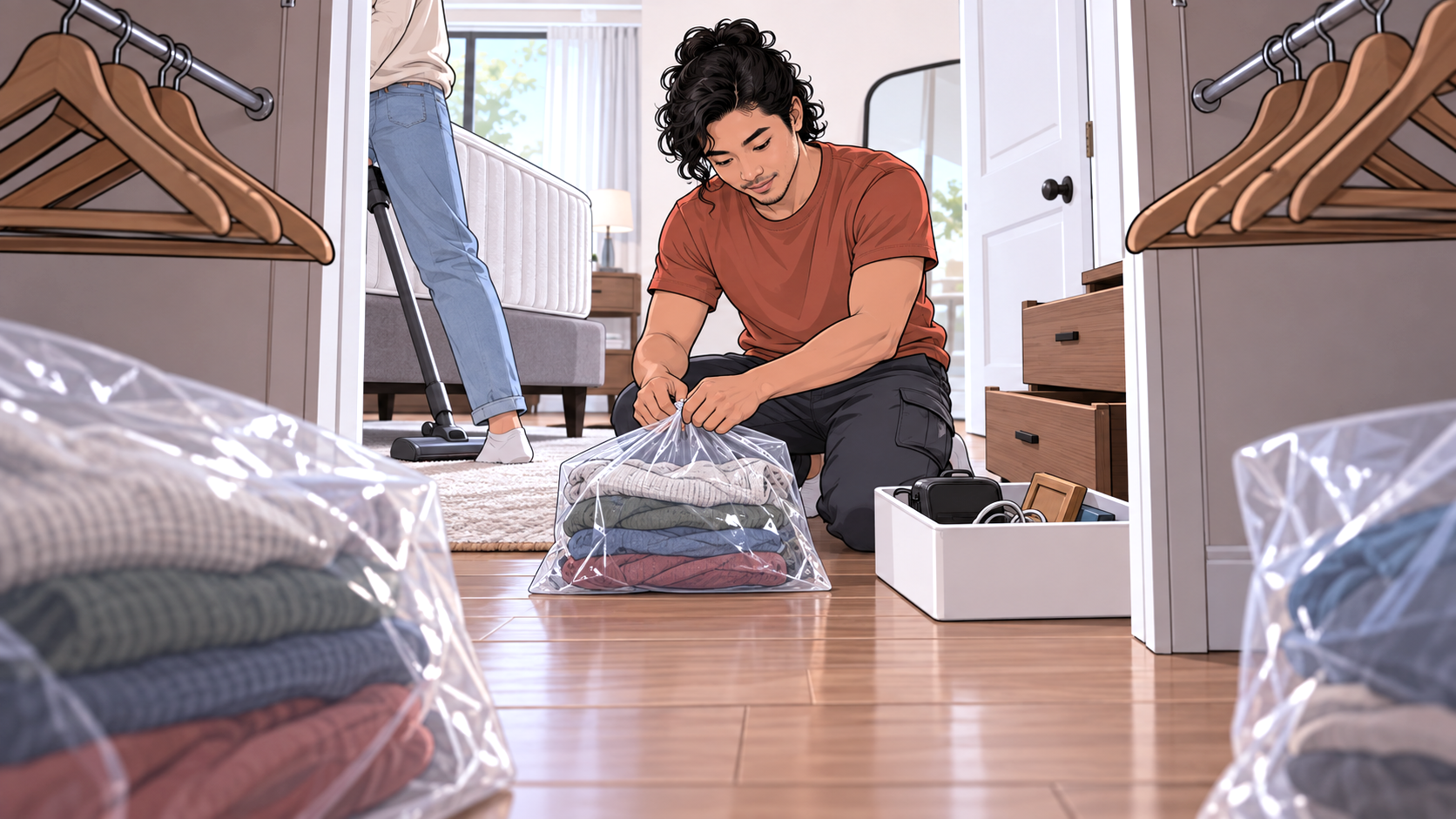
Preparing for bed bug extermination is about giving the technician access to hiding places while preventing bed bugs from being moved into clean rooms or belongings. The exact preparation depends on whether your treatment uses pesticides, steam, heat, or a combination, so the exterminator’s instructions should always take priority over a generic checklist.
Before bed bug extermination, reduce clutter without moving it into unaffected rooms, process washable fabrics as instructed, seal cleaned items, vacuum accessible areas, and create access around beds, furniture, walls, and closets. Do not throw everything away or relocate belongings randomly, because that can spread bed bugs and interfere with treatment.
Start With the Exterminator’s Preparation Instructions
Ask for written preparation instructions as soon as the treatment is scheduled. Different professional bed bug treatments require different preparation. A company performing conventional pesticide treatment may want clothing and bedding processed and sealed beforehand, while a heat-treatment company may need many belongings left in place so they can be heated.
Preparation is not simply cleaning the house. It is part of the treatment plan. In multi-unit housing, typical preparation can include organizing and bagging belongings, laundering clothing and bedding, and moving furniture away from walls, but the technician should tell you exactly what applies to your unit.
Don’t Move Belongings Into Other Rooms
One of the most important rules is to avoid carrying potentially infested belongings from an affected room into an unaffected one. Bed bugs can hide inside clothing, bags, boxes, books, furniture, and other objects. Moving those items around the home can expand the infestation just before treatment begins.
When clutter must be removed, place items directly into sealed bags or containers and follow the treatment company’s instructions about where they should go. Reducing clutter without spreading bed bugs makes harborages easier to reach while keeping potentially infested objects contained.
Do not temporarily move your possessions to a friend’s house, storage unit, car, workplace, or another apartment unless they have been inspected or treated appropriately. That can move bed bugs to another location and potentially bring them back afterward.
Process Bedding and Clothing Without Mixing Clean and Infested Items
Sheets, pillowcases, blankets, clothing, towels, curtains, and other dryer-safe fabrics may need to be processed before treatment. High dryer heat is particularly useful because 30 minutes on high heat can kill bed bugs and their eggs on items that can safely tolerate those conditions. Washing by itself is less reliable.
Move potentially infested laundry in sealed bags rather than carrying loose piles through the house. Once items have been processed, put them into clean sealed bags or containers so bed bugs cannot get back into them before treatment is complete. Clearly separating untreated belongings from processed ones prevents you from accidentally undoing the work.
Not everything needs to go through a washing machine. Some items may be dryer-safe without washing, while delicate clothing may require another approach. Follow care labels and the exterminator’s instructions rather than damaging belongings unnecessarily.
Reduce Clutter, but Don’t Empty the Entire House
Bed bugs can hide in piles of clothing, cardboard boxes, papers, bags, and objects stored beneath beds. Reducing clutter exposes more of the room and gives the technician better access to baseboards, furniture, floors, and other harborages.
Remove genuine trash and unnecessary items, but do not respond by throwing away everything you own. Furniture, mattresses, and many household possessions can often be treated. Unnecessary disposal can also spread bed bugs through hallways or common areas if infested objects are carried out without containment.
If something genuinely must be discarded because it cannot be treated, follow safe procedures for disposing of bed bug-infested items so someone else does not unknowingly take the item home.
Give the Technician Access to Beds and Furniture
The exterminator needs to reach the places bed bugs actually use. Remove items stored beneath beds when instructed and provide access around bed frames, headboards, nightstands, couches, chairs, closets, and baseboards. Furniture may need to be moved away from walls so technicians can inspect and treat behind it.
Do not dismantle complicated furniture unless the company asks you to. Technicians may need to examine joints, screw holes, upholstery, box springs, and internal furniture components themselves. Simply creating enough working space can be more useful than taking everything apart beforehand.
Beds are especially important because infestations frequently concentrate near sleeping areas. Knowing the typical signs of bed bugs on a mattress can also help you tell the technician exactly where you have seen activity.
Vacuum the Areas the Company Wants Cleaned
Vacuuming can remove visible bed bugs, shed skins, eggs, and debris while making later inspection easier. Pay attention to floors, mattress and box-spring surfaces, bed frames, upholstered furniture, baseboards, and accessible cracks when those areas are included in your preparation instructions.
Contain the vacuum contents immediately afterward. Disposable vacuum bags should be sealed inside another bag and taken to an outdoor trash container. Bagless vacuum contents also need careful containment so captured insects are not released back into the home.
Vacuuming reduces the population but does not replace professional treatment because insects can remain inside inaccessible harborages. Vacuuming alone cannot reliably eliminate bed bugs.
Prepare Differently for Heat Treatment
Whole-room heat changes the preparation process. The treatment company may want furniture, clothing, and many belongings to remain inside because those items need to reach lethal temperatures along with the room. Removing them unnecessarily could preserve bed bugs outside the treatment zone and allow them to return afterward.
At the same time, certain heat-sensitive or hazardous objects may need to be removed or specially handled. The exact list varies by provider and equipment, so use the company’s instructions rather than a generic internet list. Effective professional heat treatment depends on controlled temperatures and airflow reaching the places where bugs and eggs are hiding.
Do not preheat the home yourself with space heaters, fireplaces, ovens, or other improvised equipment. Household heating methods cannot reproduce professional treatment and can create serious fire hazards.
Keep Sleeping in the Same Room Unless Told Otherwise
Moving into another bedroom or sleeping on the couch may seem like an easy way to escape the bugs, but it can encourage the infestation to spread to another sleeping location. After treatment begins, continuing to use the same bedroom is generally preferable unless your pest-control professional instructs you otherwise.
The exterminator may also isolate the bed by moving it away from the wall and installing bed bug interceptor cups beneath the legs. These devices can help detect surviving activity during follow-up.
Plan for People and Pets to Leave When Required
Ask exactly who must leave, when they must leave, and when everyone can return. Re-entry requirements depend on the treatment method and products being used. Children, adults, pets, and anyone with specific needs should be accounted for before treatment day rather than after technicians arrive.
Do not assume that a previous pest treatment had the same requirements. If pesticides are being applied, re-entry and safety instructions depend on the actual products and their labels. Heat treatment also requires occupants and pets to leave while potentially dangerous temperatures are maintained.
Arrange transportation and somewhere to stay for the required period, and take only the belongings the company says are safe to remove.
Don’t Add Your Own Treatment Before the Exterminator Arrives
Avoid spraying random pesticides, using bug bombs, scattering powders, or applying homemade mixtures shortly before professional treatment. Uncoordinated treatments can expose occupants unnecessarily, interfere with the professional plan, and potentially cause bed bugs to move into harder-to-reach areas.
Bed bug control works best when chemical and non-chemical methods are coordinated. Tell the technician about any pesticide, dust, spray, fogger, or other treatment you have already used so they know what has been applied and where.
What to Have Ready on Treatment Day
Before the technician arrives, make sure the requested rooms are accessible, processed belongings remain sealed, loose items are contained, and furniture can be reached as instructed. Tell the technician where you have found live bugs, eggs, shed skins, fecal spots, or other early signs of bed bugs. Those details can help focus the inspection.
Also confirm what happens afterward. Ask when you may return, which bags can be opened, whether furniture should remain where it is, what cleaning should be avoided, and when the next inspection or treatment is scheduled. Preparation should support the entire treatment process, not end when the exterminator walks through the door.
Other Questions About Preparing for Bed Bug Extermination
Do you have to wash every piece of clothing before bed bug treatment?
Not necessarily. What must be processed depends on the infestation and treatment method. Follow the exterminator’s instructions rather than automatically laundering your entire wardrobe.
Should you empty drawers before bed bug treatment?
Only when instructed. Some treatment plans require drawers or closets to be emptied for access, while heat-treatment providers may prefer certain belongings to remain in the treatment area.
Do you need to throw away your mattress before extermination?
Usually not. Many mattresses can be treated and protected with a suitable bed bug mattress encasement. Dispose of a mattress only when treatment is impractical or your pest-control professional advises it.
Can you stay home during bed bug treatment?
That depends on the treatment. Professional heat requires occupants to leave during heating, while pesticide treatments have product-specific re-entry requirements. Follow the company’s instructions for your particular service.
Should you clean immediately after the exterminator leaves?
Do not automatically wash, vacuum, or wipe treated surfaces. Cleaning too soon can remove residual products that are intended to remain in place. Ask the technician which areas can be cleaned and when.
4 thoughts on “How to Prepare Your Home for Bed Bug Extermination”