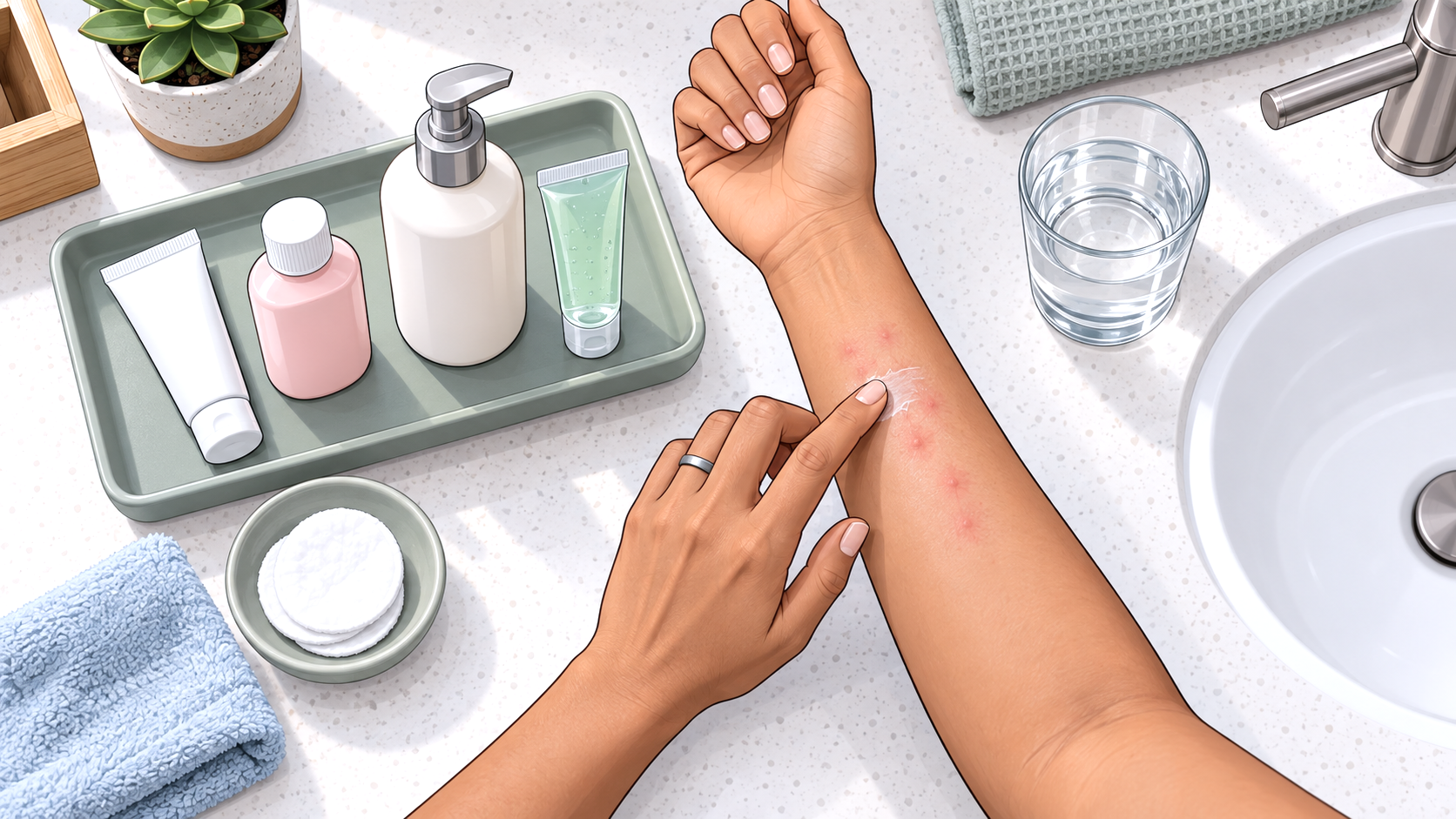
Bed bug bites usually don’t require prescription treatment, but the itching can be uncomfortable enough to make an over-the-counter cream or lotion useful. The products sold for itch relief don’t all work the same way. Hydrocortisone reduces inflammatory skin reactions, pramoxine temporarily numbs the skin, while colloidal oatmeal and calamine are regulated as skin protectants.
This comparison is based on current ingredient information, product labels and regulatory information rather than personal testing on bed bug bites. That’s important because these products relieve symptoms. None treats the infestation itself, and a cream that works well for one person’s itching may not be appropriate for another person’s skin or medical situation.
Cortizone-10 Maximum Strength With Aloe
Cortizone-10 Maximum Strength contains 1% hydrocortisone, an OTC corticosteroid used for temporary relief of itching and inflammation associated with minor skin irritation, including insect bites. That makes it a straightforward option when a bed bug bite is red, inflamed and itchy rather than simply dry or irritated.
The main advantage isn’t unique to Cortizone-10 as a brand. It’s the hydrocortisone. A store-brand product containing the same concentration provides the same active drug, although inactive ingredients and the way a cream feels on the skin can differ between formulations.
Hydrocortisone also isn’t something to apply indefinitely. Follow the directions on the particular package, avoid exceeding the labeled frequency or duration, and get medical advice when symptoms persist or worsen. For uncomplicated bites, the broader approach to treating bed bug bites at home includes avoiding scratching and using simple measures such as a cool compress alongside appropriate OTC itch relief.
Good stuff: 1% hydrocortisone directly targets inflammation and itching, is widely available and is easy to use for localized bites.
Bad stuff: you’re paying partly for the brand and formulation when less expensive products can contain the same active ingredient and strength.
up&up 1% Hydrocortisone Cream
Target’s up&up hydrocortisone cream uses the same 1% hydrocortisone concentration found in many branded maximum-strength OTC hydrocortisone creams. If you’re comparing the active drug rather than the branding, that makes it a particularly simple alternative.
The inactive ingredients can still differ, so two 1% hydrocortisone creams aren’t literally identical products. Texture, moisturizers, preservatives and other formulation ingredients may affect which one you prefer. But a higher price or better-known name doesn’t mean the hydrocortisone itself is stronger when both labels list 1%.
This distinction is useful when choosing a cream for a few uncomplicated bites. You don’t necessarily need a specialized product marketed around insect bites if an appropriately labeled generic or store-brand hydrocortisone cream provides the same active ingredient at the same concentration.
Good stuff: straightforward 1% hydrocortisone without paying as much for a national brand.
Bad stuff: formulation differences can still matter if your skin is sensitive to particular inactive ingredients.
CeraVe Itch Relief Moisturizing Cream
CeraVe Itch Relief takes a completely different approach. Its active ingredient is 1% pramoxine hydrochloride, which temporarily relieves itching by acting as a topical anesthetic rather than a corticosteroid. The current CeraVe label lists pramoxine hydrochloride 1%, while Health Canada’s database also lists the Canadian cream as a marketed non-prescription product containing 1% pramoxine hydrochloride.
That makes it a useful alternative when you specifically want a steroid-free anti-itch product. CeraVe combines the pramoxine with a moisturizing cream containing ingredients such as ceramides, petrolatum and glycerin, so you’re paying for a larger moisturizing formulation as well as the active anti-itch drug.
The U.S. label directs adults and children two years and older to apply it to the affected area no more than three to four times daily and says children under two require medical guidance. It also says to stop and ask a doctor if symptoms worsen, persist beyond seven days or disappear and return within a few days.
Good stuff: steroid-free 1% pramoxine provides a genuinely different approach to temporary itch relief while the cream also moisturizes the skin.
Bad stuff: substantially more product and a more elaborate moisturizing formula can make it expensive if all you need is occasional spot treatment.
CeraVe Eczema Relief Cream With Colloidal Oatmeal
Colloidal oatmeal belongs to a different regulatory category. The FDA recognizes colloidal oatmeal as an OTC skin-protectant active ingredient, rather than classifying it like hydrocortisone or pramoxine.
That makes an oatmeal-based cream more relevant when the surrounding skin is dry, irritated or generally uncomfortable and you also want moisturization. It shouldn’t be presented as simply a gentler version of hydrocortisone, because the two products don’t have the same active ingredient or regulatory purpose.
For someone with several itchy bites, the decision therefore comes down partly to what the skin actually needs. If inflammation and itching are the primary problems, an appropriately used anti-itch medication may make more sense. If dry and irritated skin is contributing to the discomfort, a moisturizing skin-protectant formulation can have a useful role.
Good stuff: combines moisturization with an FDA-recognized skin-protectant ingredient and can suit dry, irritated skin.
Bad stuff: it isn’t interchangeable with hydrocortisone or pramoxine simply because all three products may appear in the same anti-itch aisle.
up&up Calamine Lotion
Calamine is another FDA-recognized skin protectant. The FDA’s current OTC skin-protectant monograph permits calamine at concentrations from 1% to 25%.
That puts calamine in a different category from hydrocortisone and pramoxine. It can provide temporary relief for certain minor skin irritations, but it shouldn’t automatically be described as stronger or weaker than the medicated anti-itch options because they’re doing different jobs.
Be careful with the common advice to reserve calamine specifically for bites that have been scratched open. Broken skin changes what is appropriate to apply, and you should follow the warnings on the exact product rather than assuming a lotion is suitable for an open wound. A bite that has become increasingly painful, warm, swollen or is producing pus may need assessment for a possible secondary infection rather than another layer of anti-itch lotion.
Good stuff: inexpensive, familiar and based on a recognized OTC skin-protectant ingredient.
Bad stuff: it doesn’t serve the same pharmacological role as hydrocortisone or pramoxine, and product directions still matter if the skin has been damaged by scratching.
Which Type Makes Sense for Bed Bug Bites?
Rather than choosing by brand name, start with the active ingredient. A 1% hydrocortisone product is an anti-inflammatory option for temporary relief of itching and inflammation. A 1% pramoxine product provides temporary itch relief through local anesthetic action without using a steroid. Colloidal oatmeal and calamine are skin protectants that may be useful when soothing and protecting irritated skin is part of what you need.
The CDC notes that most bed bug bites require only minimal symptomatic treatment, while more severe reactions may sometimes be treated with topical steroid creams and antihistamines. Evidence comparing treatments specifically for bed bug bites is limited, so there’s no good basis for claiming that one OTC product is universally superior.
Itching itself is worth controlling because repeated scratching can damage the skin and increase the chance of secondary infection. If that is your main problem, there are additional ways to reduce itching from bed bug bites without repeatedly applying more medication than the product label permits.
When a Cream Isn’t Enough
An OTC cream treats the skin reaction, not the cause of repeated bites. If new marks continue appearing, checking whether you actually have bed bugs matters more than continually changing creams. Bite appearance alone can’t reliably confirm an infestation, so look for physical evidence such as live bugs, eggs, shed skins and characteristic fecal spots.
Some reactions also need more than home treatment. Increasing warmth, tenderness, spreading redness or drainage can suggest infection, while extensive blistering or a severe reaction warrants medical advice. Difficulty breathing or swelling involving the face, lips, tongue or throat requires urgent medical attention. The situations that justify professional assessment are covered more fully in when to see a doctor for bed bug bites.
Children require additional caution. Product age restrictions differ, and the current CeraVe pramoxine label, for example, directs caregivers to consult a doctor before using it in children under two. Don’t assume that because one OTC cream is appropriate for an adult it is automatically appropriate for an infant or young child.
Finally, remember that symptom relief doesn’t stop future bites. If bed bugs are confirmed, the infestation itself needs to be addressed. A complete plan for getting rid of bed bugs is separate from treating the temporary skin reaction they leave behind.
Questions About Creams for Bed Bug Bites
Is hydrocortisone or pramoxine better for bed bug bites?
They work differently. Hydrocortisone reduces inflammation, while pramoxine temporarily numbs the skin to relieve itching. There isn’t strong evidence from head-to-head bed bug bite trials establishing one as universally better.
Can you put hydrocortisone on every bed bug bite?
Follow the label of the particular hydrocortisone product and don’t exceed its directions. Extensive, broken, infected or unusually severe skin reactions may need medical advice rather than repeated self-treatment.
How long should bed bug bites take to improve?
Reactions vary substantially between people. Many resolve without medical treatment, but persistent or worsening symptoms deserve medical advice, particularly when there are signs of infection or a significant allergic reaction.
Will any of these creams prevent new bed bug bites?
No. Hydrocortisone, pramoxine, colloidal oatmeal and calamine are used for skin symptoms. They don’t repel bed bugs or eliminate an infestation.
One thought on “The Best Creams and Lotions for Bed Bug Bites”