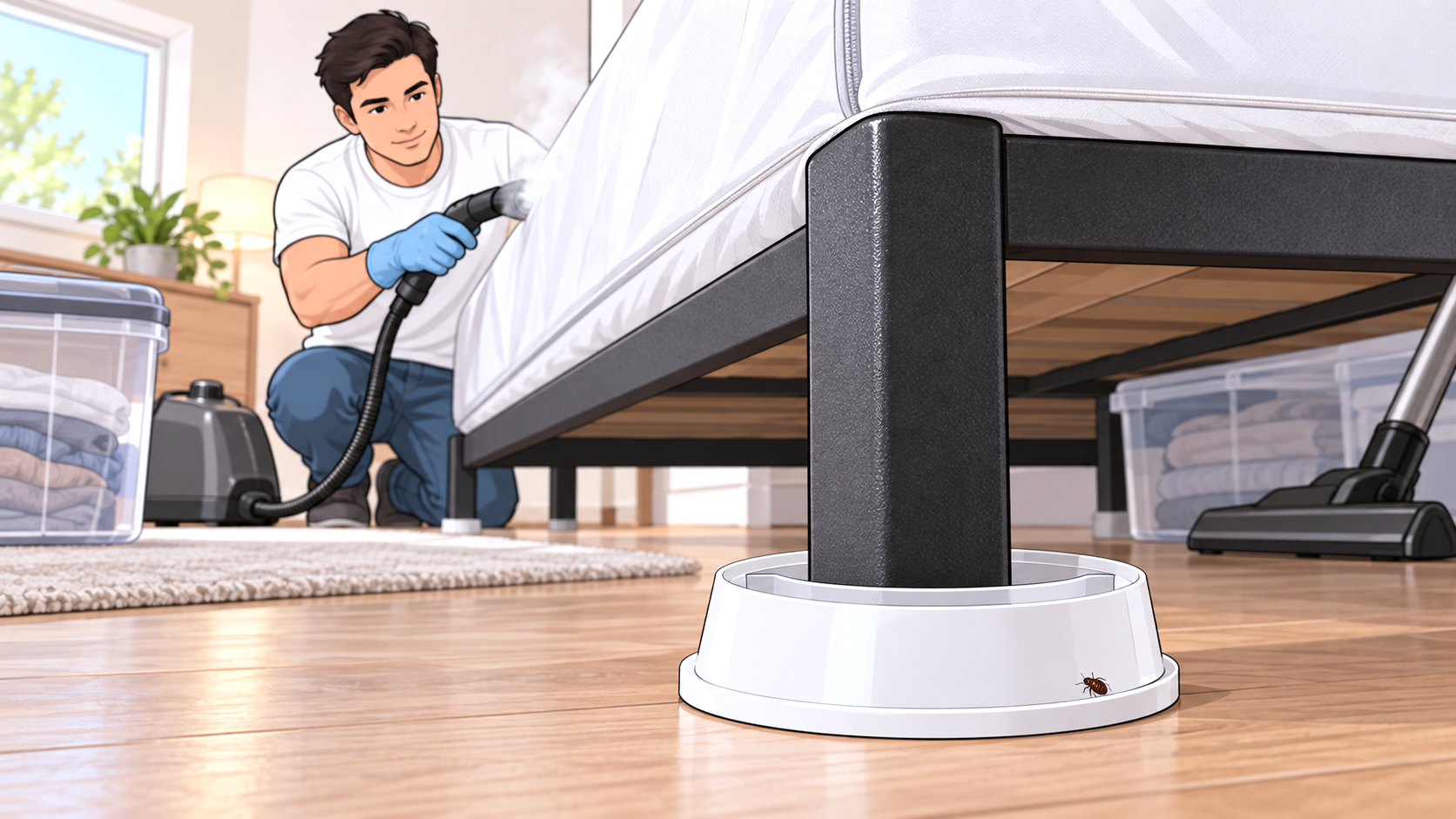
Getting rid of bed bugs naturally does not require essential-oil mixtures, homemade sprays, or substances from the kitchen cupboard. The most dependable options involve heat, controlled freezing, vacuuming, mattress encasements, and monitoring. These methods can reduce or eliminate bed bugs without conventional insecticide sprays, although success depends on reaching the insects and eggs hidden throughout the infested area.
Diatomaceous earth and silica gel dusts can also contribute to control, but they occupy a different category because they are pesticide products when formulated and registered for bed bug treatment. Natural ingredients are not automatically safe, and a method that kills an exposed insect is not necessarily capable of eliminating an infestation.
Begin With the Infested Items, Not a Household Remedy
A natural treatment plan depends on knowing where bed bugs are present. An infested pillowcase requires a different approach from a bed frame containing insects deep inside its joints. Clothing can often be treated in a dryer, whereas a mattress, upholstered chair, or wooden headboard requires other methods.
Inspect mattress seams, box springs, bed-frame connections, and nearby furniture for live insects, eggs, shed skins, and dark fecal spotting. Pay attention to belongings stored beside the sleeping area, particularly bags, folded fabrics, and objects with concealed openings. The inspection of mattresses for bed bugs helps establish which surfaces and items require attention.
Keep confirmed or potentially infested belongings contained until they can be treated. Moving untreated items between rooms can inadvertently introduce bed bugs into additional areas. Avoid discarding furniture simply because insects have been found; many belongings can be treated or contained without spreading an infestation.
Identifying the affected items first also prevents unnecessary treatment of an entire room with a method intended for one specific material.
Use Dryer Heat for Suitable Clothing and Bedding
A household clothes dryer is one of the most accessible nonchemical tools for killing bed bugs. Clothing, bedding, and other dryer-safe fabrics can be treated without applying insecticides or improvised cleaning solutions.
Running suitable items through a dryer on high heat for at least 30 minutes can kill bed bugs and their eggs. The contents must become sufficiently hot, so overloading the dryer or using a low-temperature setting can undermine treatment. Follow the fabric care instructions and use an appropriate alternative for heat-sensitive materials.
Washing alone is less dependable. Some insects may survive ordinary wash cycles, particularly when water temperatures are insufficient. The effectiveness of clothes dryers against bed bugs depends on adequate heat exposure rather than the use of detergent.
Transfer exposed items carefully to prevent insects from escaping during handling. Once treated, place clean belongings in fresh sealed bags or containers until the surrounding infestation has been addressed. Keeping treated and untreated materials separate prevents accidental re-exposure.
Steam Can Treat Furniture Without Insecticide Residues
A suitable steam cleaner can kill bed bugs and eggs in accessible mattress seams, upholstery, carpet edges, bed frames, and certain furniture crevices. The lethal effect comes from heat delivered directly to the insects rather than from a chemical residue.
Steam must reach a sufficient temperature at the treated surface. Although steam of at least 130°F (54°C) can kill bed bugs, effective equipment and application techniques must account for heat loss as steam travels through fabric and other materials. Some professional recommendations target surface temperatures of approximately 160–180°F to provide a more reliable margin.
Move the steamer slowly enough to heat the material rather than quickly passing over it. A wide upholstery attachment can help distribute heat while avoiding a concentrated jet that blows insects away. The effectiveness of steaming bed bugs depends heavily on surface temperature, contact time, material thickness, and access to hiding places.
Steam should not be directed into electrical outlets, energized equipment, or moisture-sensitive materials. Test suitable surfaces for damage and allow treated furniture to dry thoroughly before covering or using it.
The limitation is penetration. Steam can kill insects and eggs that receive sufficient heat, but it does not guarantee lethal temperatures deep inside every piece of furniture or wall cavity. Once the treated surface cools, it provides no continuing protection.
Freezing Is Useful for Small Items When Temperatures Are Verified
Cold treatment can work for belongings that cannot tolerate high temperatures, provided the entire item remains cold enough for a sufficient period.
A freezer maintained at 0°F (-18°C) or colder for at least four days can be used for suitable infested items. Use a thermometer to confirm the freezer temperature, and allow sufficient time for the interior of the objects to reach the required temperature. Thick or densely packed materials can cool more slowly than the surrounding air.
Freezing is most practical for smaller objects that can safely remain in a sealed bag inside a suitable freezer. Materials that may be damaged by freezing or condensation require another treatment method.
Leaving belongings outdoors during winter is not equivalent to controlled freezing. Weather conditions fluctuate, sunlight can warm exposed surfaces, and insulated objects may remain substantially warmer than the surrounding air. The limitations of cold weather as a bed bug treatment are particularly important when dealing with furniture and other large items.
Opening windows in freezing weather is not a dependable way to eliminate an indoor infestation. Buildings retain heat, and bed bugs concealed within walls, furnishings, and other insulated spaces may never experience lethal temperatures.
Vacuuming Reduces the Number of Bed Bugs Left to Treat
Vacuuming physically removes accessible insects and some infestation debris without introducing pesticide residues. A crevice attachment can help reach mattress edges, furniture joints, baseboards, and other narrow locations.
However, bed bugs can cling tightly to rough surfaces, and their eggs are attached with an adhesive substance. The limitations of vacuuming bed bugs and their eggs mean that even thorough cleaning may leave insects behind.
Work methodically through known harborages rather than repeatedly vacuuming unrelated areas. Avoid vigorous brushing or unnecessary disturbance that could scatter insects into additional hiding places.
After vacuuming, promptly secure and dispose of collected material outside the living area according to the equipment manufacturer’s instructions. If using a reusable vacuum, prevent captured insects from escaping during emptying or cleaning.
Vacuuming is particularly useful before targeted heat treatment because it reduces the number of exposed insects while leaving other methods to address those that remain concealed.
Encasements and Interceptors Help Contain and Detect Activity
Not every effective nonchemical method kills insects immediately. Some methods prevent access to hiding places or provide information needed to determine whether an infestation persists.
A properly fitted, bed-bug-rated mattress encasement completely surrounds the mattress and closes with a secure zipper. It traps insects already inside and reduces exposed seams where additional bed bugs might hide. The difference between a complete encasement and an ordinary mattress protector is important because many regular covers leave openings through which insects can move.
Encasements must remain intact and sealed for the period recommended for bed bug containment. Insects trapped inside can survive without feeding for extended periods, so removing the cover prematurely can release survivors.
Interceptor cups serve another purpose. Placed beneath furniture legs, they can capture bed bugs moving between the floor and the bed or sofa. They also provide evidence of continuing activity after treatment.
The placement of bed bug interceptor cups affects their usefulness. Bedding touching the floor, furniture resting against walls, or other objects creating alternate routes can allow insects to bypass the traps.
Neither method eliminates insects concealed elsewhere in a bedroom. Their value comes from containing specific hiding places, reducing access routes, and improving the reliability of follow-up monitoring.
Where Diatomaceous Earth Fits Into Natural Bed Bug Control
Diatomaceous earth is a naturally occurring silica-based material derived from fossilized diatoms. Certain pesticide formulations kill bed bugs by disrupting the protective outer layer that helps insects retain water.
Unlike a fast-acting contact insecticide, diatomaceous earth causes progressive moisture loss. Its effect depends on insects encountering an appropriate quantity of the dust, and mortality can take several days or longer.
A laboratory comparison of diatomaceous earth and silica gel dust found that both tested formulations eventually produced complete mortality under the experimental exposure conditions, but the silica gel formulation killed substantially faster. Those results do not guarantee identical performance in bedrooms, where insects may avoid or never encounter treated surfaces.
The word natural also does not establish whether a powder can safely be scattered around sleeping areas. Only desiccant pesticide products registered and labeled for bed bug control should be used for that purpose in the United States. Food-grade diatomaceous earth and swimming-pool filtration products should not be substituted for registered pesticide formulations.
The effectiveness and safe application of diatomaceous earth depend on the particular product, the label-permitted locations, moisture conditions, and sufficient insect contact. Excessive dust can increase inhalation exposure without improving control.
Someone seeking a strictly pesticide-free approach may prefer to exclude DE entirely. Its natural origin does not change the fact that an insecticidal DE formulation is a pesticide.
Silica Gel Is Another Desiccant, but Not a Homemade Substitute
Silica gel dust offers an alternative for those willing to use a registered pesticide that acts through physical desiccation rather than conventional nerve-targeting chemistry.
Its particles adhere to insects and interfere with protective surface lipids, increasing water loss. Some formulated silica gel pesticides have produced faster mortality than tested diatomaceous earth products, including after relatively short periods of exposure.
The performance of silica gel against bed bugs depends on the formulation and whether insects cross treated surfaces. Strong laboratory results cannot establish that every insect inside a home will encounter a deposit.
Silica packets from shoes, electronics, medicine containers, or packaging are not suitable substitutes for pesticide formulations. Neither are industrial silica powders or other materials containing silicon dioxide.
Desiccants belong in a treatment program only where their labels permit them. An effective ingredient is not permission to spread dust across mattresses, carpeting, or exposed household surfaces.
Homemade Natural Sprays Are Usually a Poor Substitute
Vinegar, essential oils, baking soda, and similar household substances frequently appear in natural bed bug recipes. Their popularity does not establish reliable control of an infestation.
Some essential-oil compounds have demonstrated insecticidal or repellent activity under laboratory conditions. However, activity against directly exposed bed bugs does not prove that a homemade mixture can reach concealed insects, kill eggs, or provide dependable long-term control.
Vinegar and other household liquids have the same basic limitation when used as contact sprays: even if an exposed insect is injured or killed, much of the infestation may remain protected within furniture and structural gaps.
The performance of common bed bug home remedies varies by substance, but several widely recommended approaches lack convincing evidence of successful household eradication.
Some methods add serious hazards. Rubbing alcohol is especially concerning because it evaporates quickly, has no meaningful residual insecticidal effect, and is highly flammable. Its use against bed bugs has caused house fires.
Household cleaning agents should also not be combined or repurposed as pesticides. Mixtures involving bleach, ammonia, or other incompatible chemicals can create dangerous exposures without improving bed bug control.
Professional Heat Treatment Is a Pesticide-Free Option for Larger Areas
When bed bugs occupy numerous hiding places throughout a room, treating belongings individually may not be sufficient.
Professional heat treatment uses specialized equipment to raise temperatures within an affected space while monitoring locations where bed bugs may remain protected from heat. Its effectiveness depends on maintaining lethal conditions throughout the treated area, including colder locations inside furniture and other materials.
Properly delivered heat can kill bed bugs and eggs without leaving insecticide residues. However, heat treatment requires controlled equipment and temperature monitoring. It cannot be reproduced safely by turning up a household thermostat, using portable space heaters, or operating a fireplace.
Heat-sensitive belongings may require protection or alternative handling, and treatment does not prevent bed bugs from being reintroduced afterward. Monitoring remains appropriate even when the initial treatment appears successful.
Professional heat may be a suitable choice for households seeking to avoid chemical pesticides, although the available methods and costs depend on the property and treatment provider.
Keeping a Natural Treatment Plan Organized
The effectiveness of nonchemical control depends on treating different parts of the infestation without repeatedly exposing clean belongings to untreated areas.
Begin by confirming where activity occurs, then separate items that can safely receive dryer heat, controlled freezing, or another appropriate treatment. Vacuum accessible harborages, use steam on suitable surfaces, and install encasements or interceptors where they contribute to containment and monitoring.
After treatment, continued inspection for bed bug activity is essential because missed insects or newly emerging nymphs may remain. Physical evidence such as live bugs, new fecal spots, and captures in monitoring devices is more informative than relying exclusively on whether anyone develops fresh bites.
The broader process of getting rid of bed bugs may involve additional measures when activity persists or spreads between rooms. An infestation that continues despite properly applied nonchemical methods should be reassessed rather than repeatedly experimenting with household substances.
2 thoughts on “How to Get Rid of Bed Bugs Naturally”