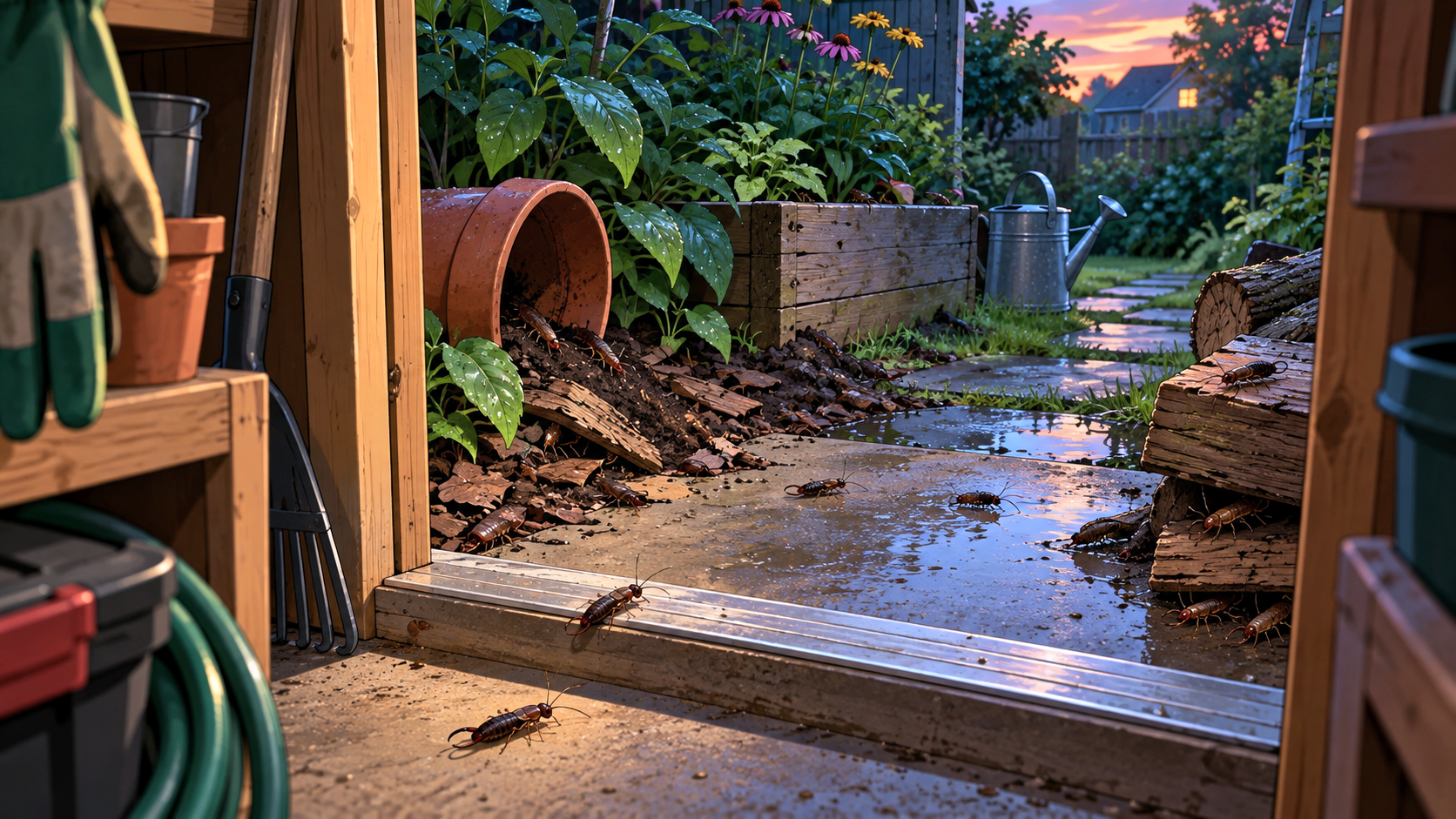
Earwigs have a strange way of seeming to arrive all at once. You can go through spring barely noticing them, then suddenly find them beneath pots, crawling through flowers, hiding around the patio and occasionally turning up inside the house. That sudden appearance is one of the most noticeable parts of earwig season.
In much of the northern United States, earwig season becomes most noticeable from late spring through summer, with activity often peaking during mid- to late summer and continuing into fall. The surge happens because young earwigs leave their protected nests, mature through summer, and join the existing population above ground. Weather and local moisture can make that seasonal increase much more visible around a particular property. The exact calendar is not universal, though. Climate matters enough that asking “what month do earwigs come out?” has a different answer depending on where you live.
Earwig Season Starts Below Ground
The earwigs appearing around a house in July did not suddenly move into the neighborhood that week. Much of the population spent the earlier part of the year somewhere far less visible.
European earwigs (Forficula auricularia) commonly overwinter as adults. Females produce eggs in protected nests in the soil, where they remain with the eggs and early young. In northern areas, this keeps a significant part of the next generation hidden while spring is getting underway. Our guide to the earwig life cycle follows that development from egg through the nymphal stages to adulthood.
As temperatures rise, that hidden population begins moving into a much more visible phase. In Minnesota, for example, nymphs begin emerging from their nests around late May to early June. They mature into adults around late June or early July and remain active into fall.
Northern Utah shows a similar progression rather than a single emergence date. Egg hatch begins around mid-May there, followed by progressively older nymph stages through June and summer adults later in the season. These dates should not be transferred directly to every state, but they show why earwig numbers seem to build rather than appearing at full strength on the first warm day.
That is the first reason summer can suddenly feel full of earwigs. More members of the year’s population have simply become mobile, independent and easy to encounter.
Why Earwig Numbers Can Explode in Mid- to Late Summer
The population curve explains something that the calendar alone does not. Earwig season is not merely a period when insects become more active. It is also a period when the number of independently moving earwigs can increase.
Young nymphs initially spend part of their development associated with their mother and nest. Later nymphal stages disperse and forage independently. In regions of the western United States where European earwigs can produce multiple generations, populations tend to reach their highest densities in mid- to late summer.
Now consider what that looks like from a homeowner’s perspective. Earlier in the year, eggs and young nymphs can remain concealed in soil nests. Later, older nymphs and adults are moving around at night looking for food, moisture and daytime shelter. You are therefore much more likely to encounter them beneath objects, around vegetation and near buildings.
Their daytime behavior amplifies the impression. Earwigs congregate in dark, tight and moist hiding places, so ten earwigs in a yard do not necessarily remain ten separate sightings. Several can occupy the same attractive refuge.
Lift one flowerpot and suddenly there are earwigs everywhere. The population did not materialize beneath the pot overnight. You exposed a place where multiple individuals had concentrated.
That distinction also matters when deciding whether you are seeing normal seasonal abundance or the signs of an earwig infestation. A seasonal increase can be dramatic without meaning earwigs have established a breeding infestation inside your home.
There Is No Single Earwig Month Across North America
A fixed statement such as “July is earwig month” sounds useful until climate enters the picture.
In Minnesota, earwigs can enter buildings during summer, particularly in July and August, while garden activity can continue from late June into October. Colorado commonly experiences earwig problems from mid-July through mid-September.
Move into a substantially different climate and the pattern changes. In milder parts of California, some earwigs can remain active throughout the year. Conversely, earwigs may become relatively inactive during summer in hotter parts of the state. That is a useful reminder that “summer pest” is a regional description, not a biological calendar that every earwig follows.
The better way to think about earwig season is as a climate-driven annual cycle. Spring brings reproduction and developing young in many temperate regions. Summer brings increasing above-ground activity and, in many places, the greatest abundance. Activity can persist into fall before overwintering again becomes important. Our separate article on how earwigs spend winter covers the cold-season part of that cycle.
Weather Can Turn Normal Earwig Season Into a Sudden Invasion
Population growth explains why there are more earwigs available to see in summer. Weather helps explain why you might suddenly see many of them on one particular week.
Earwigs need protected daytime shelter and commonly occupy cool, dark and moist spaces. Consequently, changes in outdoor conditions can redistribute an existing population. When conditions become too dry, hot or cold, earwigs may seek refuge inside buildings.
This is why a sudden indoor wave should not automatically be interpreted as reproduction inside the house. European earwigs do not reproduce indoors. A large number appearing inside can instead represent outdoor insects crossing into the building because conditions outside have changed.
Rain can produce its own conspicuous pattern. Moisture influences where earwigs shelter and forage, while saturated conditions can disrupt the places they were previously using. The result can be a sudden burst of sightings that feels disconnected from what you saw a few days earlier. We deal specifically with that weather event in why earwigs appear after heavy rain.
Cool, wet conditions can also favor earwig abundance in some agricultural settings. For example, populations in Utah fruit systems become noticeable by mid- to late June, and wet, cool springs and summers favor European earwigs.
So there are really two overlapping changes during earwig season. The seasonal population itself is developing, while day-to-day weather keeps changing where those earwigs are easiest for you to notice.
Your Yard Can Make the Seasonal Peak Look Much Bigger
Two neighboring properties can experience the same summer weather and have very different numbers of visible earwigs.
Earwigs spend daylight hours in protected spaces. Boards, debris, dense vegetation, groundcover and objects lying against the soil can supply those refuges. Mulched and heavily irrigated areas can also support greater abundance, which helps explain why some landscaped yards seem to become earwig magnets during the summer peak.
This does not mean mulch or irrigation magically creates earwigs. Instead, an already growing seasonal population has more suitable places to shelter. The combination of moisture and cover can concentrate earwigs into small areas where they become particularly noticeable. That broader relationship is covered in our guide to what attracts earwigs.
Gardens also supply food. European earwigs are omnivores that consume plant material, fungi, decaying organic matter and small invertebrates. Therefore, a productive garden can support their nightly foraging even though they are not necessarily there to attack your plants. Their mixed role as both plant feeders and predators is why earwigs can be either helpful or harmful in a garden.
This is one reason we would not judge the severity of an earwig problem solely by a dramatic summer sighting. A seasonal population concentrated beneath one damp object can look extraordinary without causing meaningful damage.
What to Do When Earwig Season Hits Your Property
A seasonal surge is a good reason to inspect before it is a reason to treat.
Start by checking where the earwigs are concentrating. Look around unnecessary debris, movable garden objects and other protected areas close to the building. Reducing excessive moisture and removing unneeded hiding places can make those areas less favorable. Where possible, drip irrigation can reduce surface moisture without depriving plants of the water they need.
If plants are being damaged, inspect them after dark with a flashlight. Earwigs are nocturnal, so nighttime observation can show whether they are actually responsible for the feeding. Finding earwigs elsewhere in the yard does not prove that they made every hole in a leaf.
Indoor waves call for a different response. Vacuum or sweep up the earwigs that enter, then focus on the route from outside. Sealing cracks and other entry points and reducing shelter immediately beside the structure addresses the source better than repeatedly treating rooms where wandering earwigs happen to appear. Our guide to keeping earwigs out of the house goes deeper into exclusion.
Most importantly, expect the numbers you see to change with the season. A summer spike does not mean the property will support that same visible activity all year. Earwig abundance follows biology, climate and local conditions, which is exactly why they can seem to arrive in force and later become much harder to find.
Other Questions About Earwig Season
What time of day are earwigs most active during earwig season?
Earwigs are primarily nocturnal. They usually shelter during daylight and emerge at night to forage. Therefore, someone trying to determine how many are active around a garden will usually learn more from an after-dark flashlight inspection than from searching exposed surfaces during the afternoon. Our guide to earwig nighttime activity explains that daily pattern in more detail.
Does seeing earwigs in fall mean their season is starting again?
No. In temperate regions, fall activity can be the later portion of the same annual cycle. Adults also enter the overwintering and reproductive part of their life cycle as colder weather approaches, so fall sightings do not represent a new summer generation suddenly beginning everywhere.
Can earwigs still appear during winter?
Yes. Winter does not make every earwig disappear. Climate and shelter matter, and an individual can occasionally be encountered outside the usual period of peak activity. In mild climates, some earwigs can remain active throughout the year.
Will earwigs come back every summer?
Earwigs can remain established in an area from year to year, but the number you notice can change considerably. Weather, available shelter, moisture, food and local population levels all influence how conspicuous they become during a particular season. A bad summer one year does not establish an exact number you should expect the next.