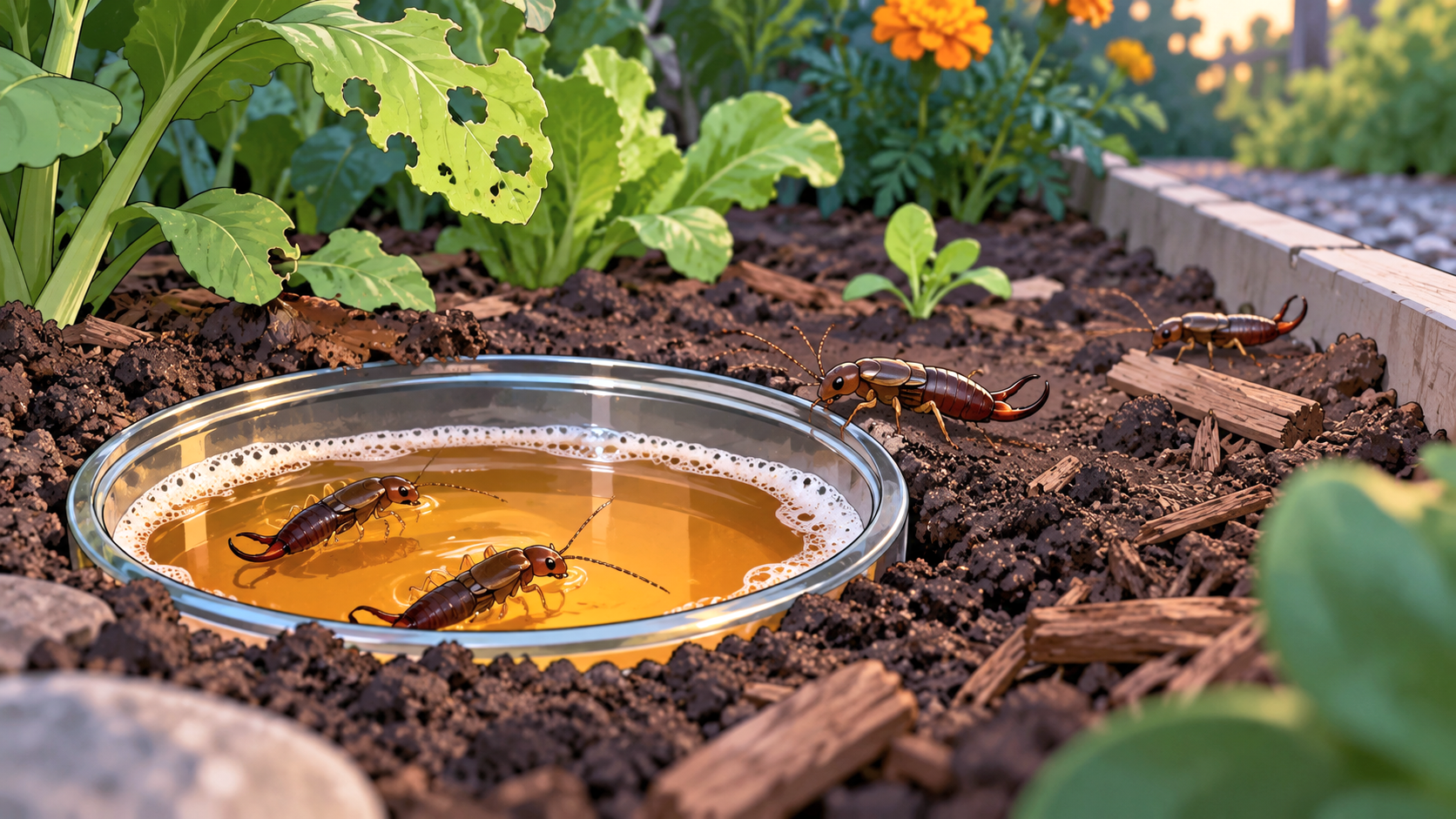
A cup of beer buried in a garden bed is a familiar homemade pest trap. The problem is that its reputation comes largely from trapping slugs and snails, not earwigs. When both pests are chewing holes in the same garden, it is easy for advice meant for one of them to get transferred to the other.
Beer traps are not a well-supported choice for earwig control. Beer is an established attractant for slugs and snails, while proven earwig traps use vegetable or fish oil, strong-smelling food baits, or dark shelter materials such as rolled cardboard and newspaper. If earwigs are the target, we would use one of those methods instead of beer.
Why Beer Traps Get Recommended for Earwigs
The confusion makes sense because earwigs and slugs overlap in several ways that matter to gardeners. Both can be active after dark, both favor protected areas with moisture, and both can leave irregular feeding damage on plants.
That overlap can make the culprit surprisingly difficult to identify from a damaged leaf alone. Earwig feeding can resemble slug damage, although slugs characteristically leave slime while earwigs do not. Checking affected plants at night is a better way to determine whether you are dealing with earwigs before choosing a trap.
Beer enters the picture because it really is used as a slug trap. Slugs are attracted to yeasty or malty odors, and a container containing beer can intercept them as they move through the garden. A fermenting mixture of yeast and water can serve a similar purpose.
That does not make beer a universal trap for crawling garden pests. The attractant has to match the animal you are trying to catch.
What Actually Attracts Earwigs Into a Trap
Earwig trapping uses a different set of attractants.
One established design is a low-sided container sunk into the soil with vegetable oil inside. Adding fish oil or a small amount of bacon grease increases its attractiveness. Oil-filled cans can capture large numbers of earwigs when they are positioned where the insects are active.
Strong-smelling oils also appear repeatedly in earwig management guidance. Fish and seafood oils or bacon grease can attract earwigs into container traps, while the oil prevents captured insects from escaping.
Another option does not rely primarily on food odor at all. Earwigs spend daylight hours in protected spaces, so rolled newspaper, corrugated cardboard, bamboo tubes and short pieces of hose can become artificial hiding places. Set near affected plants in the evening, these traps can accumulate earwigs by morning.
That behavior is useful because it gives you two different ways to exploit an earwig’s habits. An oil trap intercepts and captures them, while a shelter trap gives them an inviting daytime refuge that you can empty.
Our guide to DIY earwig traps covers those designs in more detail.
Beer Is Much Better Established as a Slug Trap
This is where separating two similar garden problems saves a lot of wasted effort.
Beer traps are specifically recommended for slugs and snails. A container is buried near ground level and filled partly with beer. The fermented odor attracts the mollusks, which enter the container and drown. Sugar water and yeast can substitute for beer because fermentation is responsible for the attraction.
Earwig recommendations look noticeably different. For earwigs, vegetable oil combined with fish oil or bacon grease is used in low-sided cans. The same guidance also recommends rolled newspaper, bamboo tubes and pieces of hose.
Some garden guidance even places the methods side by side while keeping their targets separate, recommending rolled newspaper for earwigs and beer traps for slugs and snails.
We think that distinction is more useful than asking whether an occasional earwig might ever fall into a cup of beer. A trap can accidentally capture an insect without being a reliable trap for that insect. When the goal is deliberate earwig control, there are better-supported choices.
Use an Oil Trap Instead of Sacrificing a Beer
For a simple earwig pitfall trap, use a shallow container rather than a glass or open bowl with tall sides. A tuna or cat-food can is a common example.
Sink the container so its upper edge is near soil level in an area where earwigs are active. Add about half an inch of oil. Fish oil can be used, or vegetable oil can be combined with a small amount of bacon grease. Ground-level oil traps are an established method for monitoring and reducing earwigs.
Placement should follow the damage rather than convenience. Put traps near plants where earwigs have been observed or near the protected areas they use. Earwigs are primarily active at night, so an evening inspection with a flashlight can help locate the areas worth trapping.
Check the containers regularly and remove captured insects. For a garden with several active areas, multiple strategically placed traps make more sense than one container sitting far from the plants being attacked.
If you specifically want to try a different kitchen-based bait, the soy sauce and oil earwig trap is a more appropriate variation than replacing the oil trap with beer.
A Trap Full of Slugs May Tell You Something More Important
There is another reason we would not dismiss a failed earwig beer trap as useless.
Suppose you place beer beside plants with ragged holes and return the next morning to find slugs in the container but no earwigs. That result should make you reconsider what is actually damaging the plants.
Slugs and earwigs can produce similar-looking holes. However, slime trails around damaged vegetation strongly point toward slugs. Earwigs do not produce the characteristic slime trail associated with slug movement and feeding.
Nighttime inspection makes the distinction clearer. Earwigs can be observed on damaged plants after dark with a flashlight. Slugs are also commonly active at night, so you can look for the animal itself rather than diagnosing the problem from holes alone.
This is particularly useful around plants that earwigs readily damage, including dahlias. Our guide to earwig damage on dahlias explains how to separate suspected earwig feeding from similar garden damage.
A beer trap that repeatedly catches slugs is therefore not evidence that beer is an effective earwig trap. It may be evidence that the garden has a slug problem.
Do Not Judge an Earwig Trap by One Night
Even a suitable earwig trap depends heavily on location and repeated use.
Earwigs primarily move by crawling and seek protected shelter during daylight. A trap placed directly along their active route has a much better opportunity to catch them than one positioned randomly in an open section of the yard.
For established earwig problems, repeated trapping can gradually reduce numbers. Daily trapping can bring populations down to tolerable levels, particularly when it is combined with reducing unnecessary hiding places and excess surface moisture.
However, the objective should still be protecting plants rather than removing every earwig from the garden. Earwigs also consume aphids and other small organisms, so they can be useful when they are not causing unacceptable plant injury. Our guide to whether earwigs are good or bad for a garden covers that tradeoff separately.
For a damaging population, use a trap designed around earwig behavior. Oil traps, cardboard refuges and similar methods have a much better foundation than borrowing a beer trap from slug control.
Other Questions About Beer and Earwig Traps
Can beer attract other garden pests?
Yes. Beer traps are intentionally attractive to slugs and snails, so finding those animals in the container is expected. Open pitfall-style containers can also catch non-target invertebrates that happen to enter them.
Does the type of beer matter for earwigs?
There is no established beer type for trapping earwigs because beer is not a standard earwig attractant. Choosing lager, ale, stout or nonalcoholic beer does not solve the more basic problem that other baits are better supported for the target pest.
Can yeast be used to trap earwigs?
Yeast mixtures are established substitutes for beer in slug and snail traps. For earwigs, use documented attractants such as fish oil, vegetable oil with bacon grease, or appropriate shelter traps instead.
Can an oil trap catch slugs too?
A ground-level container can capture organisms other than the pest you intended to catch. Because pitfall traps are not perfectly selective, check them regularly rather than leaving open containers unattended for long periods.
What if oil traps keep catching large numbers of earwigs?
Repeated catches show that earwigs are active around that location. If they are also causing unacceptable plant damage, continue trapping while reducing nearby hiding places and unnecessary surface moisture. For a larger problem, use the broader measures in our guide to getting rid of earwigs in the garden.