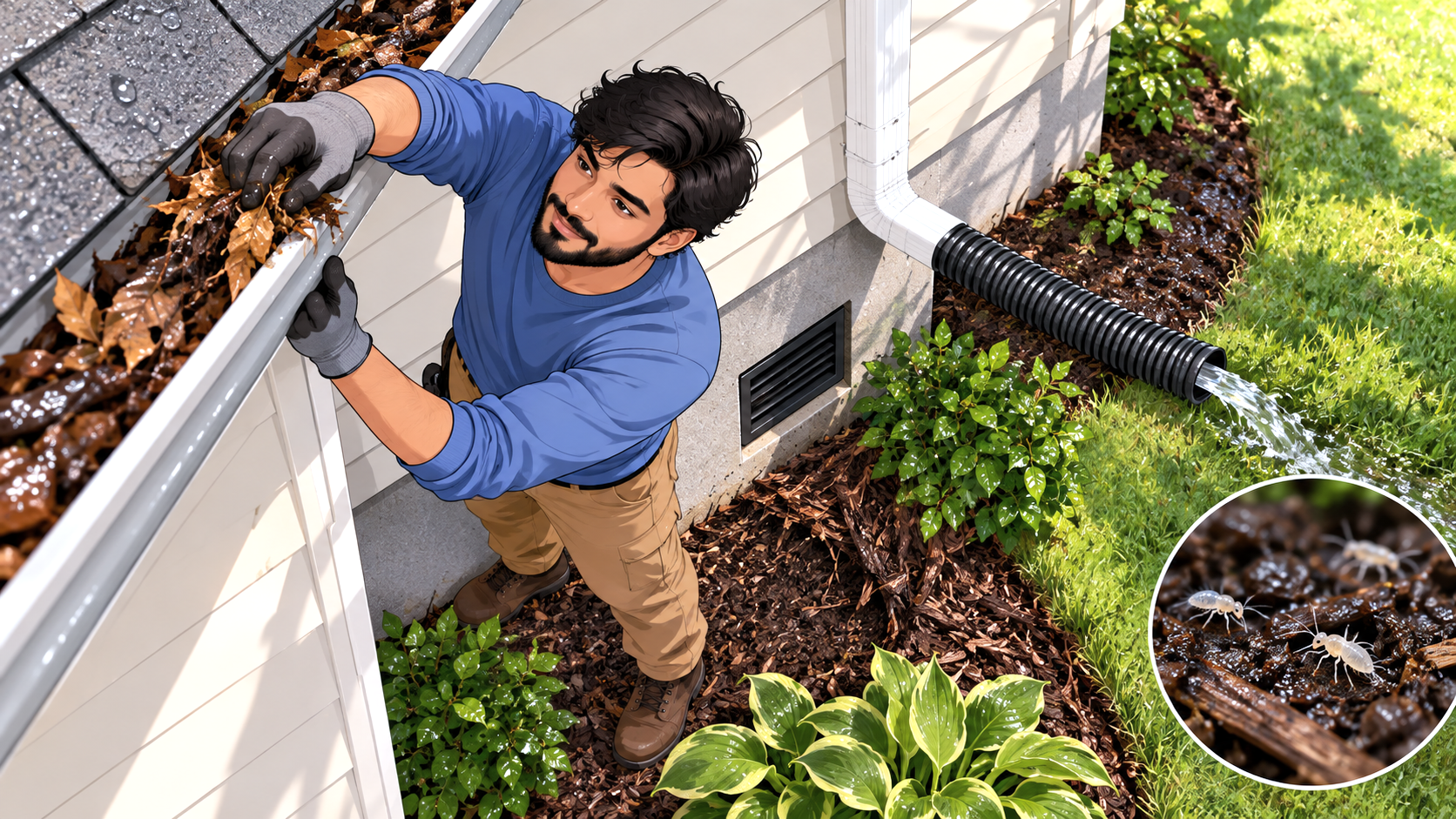
A springtail problem can disappear so completely that it feels finished. The bathroom dries out, the basement floor stays clear, or the mass of tiny jumpers along the foundation vanishes. Then a wet week arrives and they are suddenly back. That return usually means the first cleanup removed springtails without permanently changing every condition that allowed them to reach the house.
To prevent springtails from coming back, keep problem areas dry, correct leaks and drainage problems, reduce persistently wet mulch and organic debris near the foundation, avoid overwatering plants, and close the small openings springtails can use to enter. Long-term prevention comes from keeping their preferred habitat away from the building and removing indoor moisture that lets them persist.
The useful part is that recurrence can tell you what was missed. Springtails returning to the same bathroom corner are giving you different information from thousands suddenly coating the outside foundation. Prevention becomes much easier once you stop treating every comeback as the same event.
When Springtails Return to the Exact Same Indoor Spot
The location deserves more attention than the springtails.
Repeated springtail activity indoors is strongly associated with moisture. Bathrooms, basements, kitchens, plumbing areas, crawl spaces, and wall voids can support them when dampness persists. Springtails that merely wander into a dry building usually do not establish themselves there for long.
That makes a recurring cluster beside one baseboard, pipe, cabinet, or wall especially worth investigating. Dry the visible surface, but also ask why that particular area keeps becoming favorable again. A plumbing leak, condensation, wet building material, or excessive room humidity can outlast the original cleanup.
Simply running a towel over the floor after each sighting does not change any of those conditions.
Our guide to signs of a springtail infestation can help when the pattern is unclear. For repeated bathroom activity, the more focused guide to preventing springtails from persisting in a bathroom covers the moisture sources most relevant to that room.
When excessive indoor humidity is the problem rather than a leak, a dehumidifier can help make the space less suitable. Drying the air is useful only when humid air is actually contributing to the dampness, though. A dehumidifier cannot repair a pipe or stop water entering through the building envelope.
A Dry House Can Still Receive Springtails From a Wet Yard
Sometimes nothing is wrong with the room where the springtails appear.
The population is outside.
Springtails commonly live in soil, leaf litter, organic mulch, decaying wood, and other damp material. Excessive mulch, wet leaves, heavy irrigation, and low areas that remain moist can create favorable habitat immediately beside a building. Reducing excess moisture and organic material around foundations is a central part of springtail management.
This is where prevention can fail even after the interior looks perfect. Springtails continue reproducing or congregating a few feet from the wall, then some find their way through openings in the structure.
Walk the perimeter rather than staring at the room where they ended up.
Look at the mulch beside the foundation after watering. Check whether irrigation repeatedly soaks the same strip of soil. Notice where downspouts discharge and whether the ground slopes toward the building. University guidance identifies inadequate drainage, excessive irrigation, and rainwater management around the foundation among the moisture conditions associated with springtail problems.
Our guide to springtails outside the house is the better starting point when most activity is exterior.
Do Not Make the Foundation the Dampest Edge of the Yard
Mulch is useful landscaping material, but a permanently wet layer pressed against a building gives springtails exactly the kind of sheltered organic environment they use naturally.
Springtail guidance recommends removing excessive mulch and moist leaves around foundations, allowing mulched areas to dry, and avoiding unnecessary irrigation.
This does not mean stripping every landscaped bed down to bare dirt.
The goal is to stop maintaining a continuously wet band of decomposing material against the structure. Thin out excessive accumulation where springtails have repeatedly been a problem, remove wet leaves that collect against the wall, and adjust watering so the foundation edge is not being soaked simply because nearby plants need water.
Drainage deserves the same attention. A patch of ground that remains saturated long after the rest of the yard dries can keep producing springtail activity even when the surrounding landscaping appears normal.
A house with recurring exterior populations needs habitat prevention, not just repeated removal. Our guide to what attracts springtails covers those favorable conditions in more detail.
Close the Route Only After You Know Where the Route Is
Springtails are tiny enough to enter through small cracks and openings around doors, windows, vents, screens, utility penetrations, and other parts of the building envelope. Repairing screens and sealing appropriate gaps with caulk, weather stripping, fine mesh, foam, or another suitable material can reduce entry.
Randomly sealing every visible crack is less useful than following the pattern of activity.
Repeated springtails beneath one exterior door make the threshold worth inspecting. Activity concentrated around a basement window puts the screen, frame, sill, and surrounding gaps higher on the list. Springtails clustered where pipes pass through a wall justify checking those penetrations.
This is why prevention works best after the source has been narrowed down. You are not trying to create a hermetically sealed house. You are closing the routes that connect a known exterior population with the indoor area where springtails keep appearing.
The article on how springtails get into the house goes deeper into those entry routes.
Houseplants Can Quietly Restart an Indoor Springtail Problem
A room may be dry while one flowerpot stays wet.
Springtails commonly occur in damp potting soil, particularly when the growing medium remains excessively moist. Indoor-plant guidance recommends allowing the surface soil to dry as much as the plant tolerates between waterings rather than keeping the pot continuously wet.
That makes houseplants worth checking before concluding that springtails are still entering through the structure.
Look at the soil immediately after watering. Check saucers for standing water. Compare activity around the plant with activity elsewhere in the room. A population concentrated in one pot needs a plant-watering solution more than a foundation-sealing project.
Springtails in potting soil also should not automatically trigger pesticide treatment. They are primarily scavengers in this setting and rarely damage indoor plants.
Our guide to springtails in potted plants keeps that problem separate from whole-house infestations.
Weather Can Bring Them Back Even After You Fixed the House
Not every return means your prevention failed.
Springtail movement can increase during environmental extremes. Prolonged saturated conditions can push them from overly wet outdoor habitat, while dry conditions can also drive them in search of moisture. They may then move toward buildings and enter through doors, siding, windows, sill plates, or screens.
This can produce a sudden burst of activity after months with almost none.
The useful question is what happens next.
If springtails appear briefly after unusual weather and then disappear in a dry home, you may be seeing temporary migration. If they remain for weeks in one damp indoor area, the building is providing something more favorable.
That difference helps prevent overreaction. A temporary wave outside may call for cleanup, habitat adjustments, and exclusion. Persistent indoor activity deserves another moisture inspection.
Pesticide Residue Is Not a Prevention Plan
It is easy to think of prevention as maintaining an insecticidal barrier indefinitely.
Springtail biology makes that a poor foundation for the strategy.
Current management guidance emphasizes moisture reduction, removal of excess organic material, and exclusion. Pesticides generally do not provide long-term control by themselves when favorable springtail conditions remain.
An exterior insecticide can have a role in some serious perimeter problems when its label includes springtails and the intended site. That is different from spraying periodically because springtails might someday return.
We cover chemical choices separately in our review of springtail sprays and insecticides. Keeping this prevention article focused on recurrence also avoids the common mistake of treating pesticide application as a substitute for correcting the habitat.
If the ground remains saturated beside the house, the mulch stays wet, and the entry gap remains open, the conditions that produced the first invasion are still waiting.
Prevention Gets Easier Once You Keep One Area Under Suspicion
You do not need to inspect the entire property every week.
Remember where the previous problem was strongest.
A basement wall that once stayed damp deserves another look after heavy rain. A troublesome foundation bed should be checked after irrigation changes. A houseplant that previously held springtails is worth inspecting after watering. A doorway that served as an entry point can be watched during major springtail activity outside.
This is more useful than waiting until dozens appear indoors again.
Springtails themselves can become an early signal that moisture has returned to a place you thought was fixed. Their continued indoor presence is associated with dampness, so a recurring cluster can justify checking the building condition before simply removing the insects again.
For homeowners who are still actively dealing with a current population rather than preventing another one, the complete springtail removal guide is the better starting point.
Prevention begins after that work succeeds. The goal is not to make sure another springtail never crosses the property. It is to stop the house and its immediate surroundings from repeatedly giving large numbers of them an easy source, route, and place to remain.
Springtail Comebacks That Need a Little More Explanation
Why do springtails come back every year at the same time?
Seasonal weather can recreate favorable outdoor conditions or trigger springtail movement. If they repeatedly appear at the same part of the house, inspect that location for persistent exterior habitat and entry routes rather than treating each year’s appearance as an unrelated infestation.
Can springtails return even after all visible ones are removed?
Yes. Removing visible springtails does not affect animals still living in soil, mulch, potting media, or another hidden moist habitat. Preventing recurrence depends on changing the source conditions and limiting entry rather than eliminating only the individuals currently in view.
Should I keep a dehumidifier running permanently to prevent springtails?
Not solely because springtails once appeared. Use a dehumidifier when the space has an actual excess-humidity problem. Once the moisture issue has been corrected, future humidity should be managed according to the building’s conditions rather than maintaining a machine indefinitely just as a pest precaution.
Will sealing cracks alone keep springtails from coming back?
Sealing known entry routes can reduce indoor movement, but outdoor populations can remain large when moisture and organic habitat persist beside the building. Exclusion works best alongside habitat and moisture correction rather than as the only preventive measure.
Why do springtails return after heavy rain when the house is dry?
Waterlogged outdoor habitat can cause springtails to move in search of more suitable conditions. A sudden post-rain appearance therefore can originate outside even when indoor humidity is not the issue. Watch where they gather around the exterior and which openings they use to enter.
One thought on “How to Prevent Springtails From Coming Back”