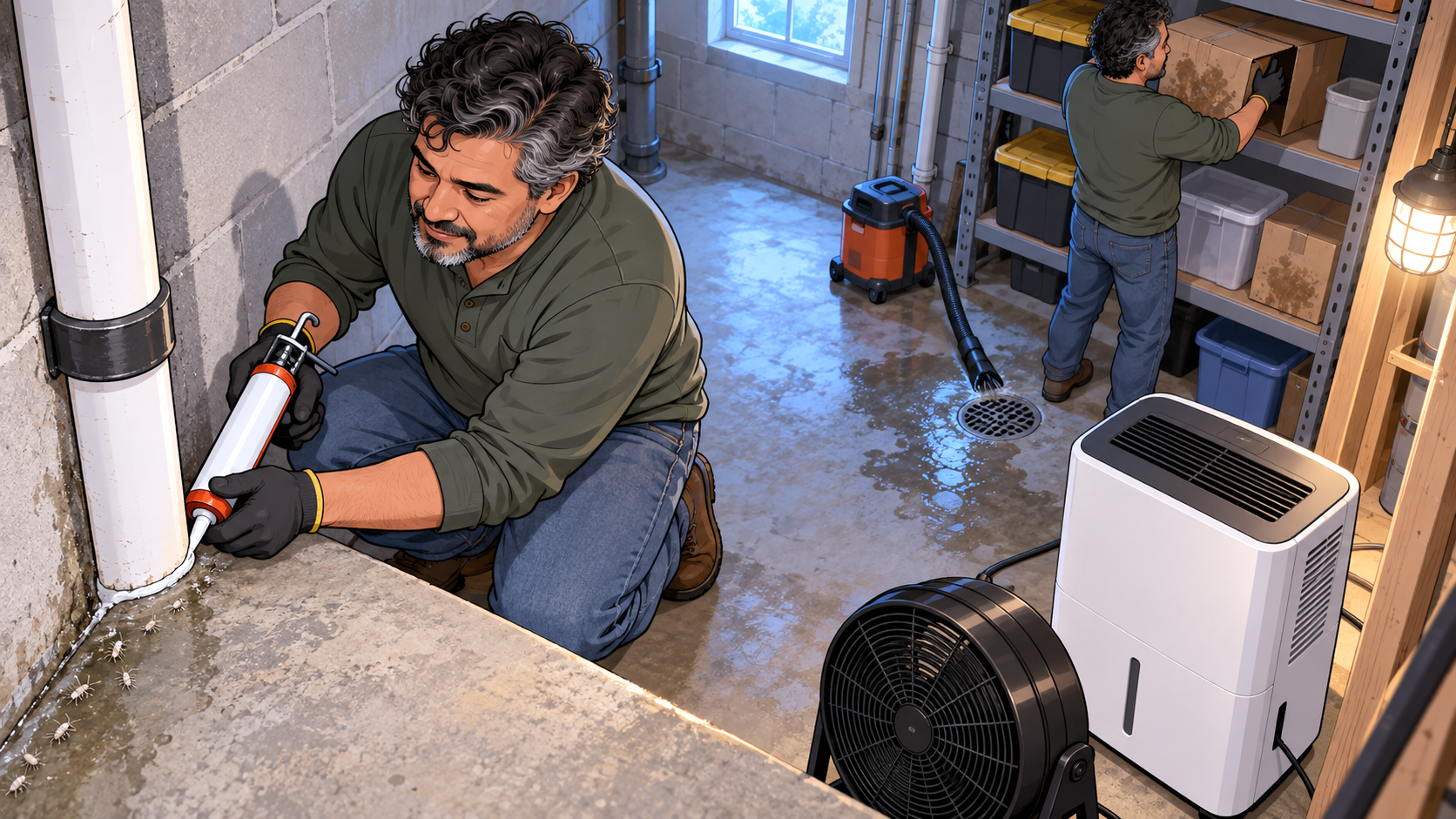
Springtails are tiny, moisture-loving arthropods that can suddenly appear in large numbers around bathrooms, basements, kitchens, houseplants, foundations, patios, and other damp areas. Although they are harmless to people and do not damage buildings, repeated indoor sightings usually mean the environment is providing the moisture they need.
Getting rid of springtails therefore requires more than killing the individuals you can see. The most effective approach is to remove visible springtails, find where they are coming from, reduce moisture, correct leaks or drainage problems, and make the affected area less suitable for them. Insecticides are rarely the first or most important step indoors.
Make Sure You Actually Have Springtails
Before trying to eliminate them, confirm that the tiny animals are springtails.
Springtails are extremely small and are commonly noticed because many species jump when disturbed. They use a forked structure called a furcula beneath the abdomen to propel themselves away from danger. Depending on the species, springtails can appear white, gray, brown, black, or other colors.
Our springtail identification guide covers their appearance in more detail.
Jumping alone is not enough for identification. Fleas also jump, while fungus gnats and other tiny moisture-associated pests can appear around houseplants and damp areas. Correct identification matters because the control strategy changes depending on what you actually have.
Remove the Springtails You Can See
For springtails already inside the house, physical removal is usually the simplest immediate response.
Vacuum springtails from floors, windowsills, baseboards, cabinets, tubs, sinks, and other accessible surfaces. This removes large numbers quickly without unnecessarily applying pesticides indoors. Dispose of the vacuum contents appropriately afterward.
Small numbers trapped in sinks, bathtubs, or other washable surfaces can also be rinsed away.
Do not mistake removal for complete control. Vacuuming can make a room look springtail-free within minutes, but more may appear if the conditions supporting them remain unchanged. The visible springtails are often the symptom rather than the source of the problem.
Find the Moisture Source
Moisture is the central factor in most springtail problems.
Springtails thrive in damp environments containing fungi, algae, decaying plant material, microorganisms, and other organic matter. Outdoors, these conditions occur naturally in soil, mulch, leaf litter, compost, and vegetation. Indoors, persistent moisture can create similar habitat.
Inspect the area where springtails repeatedly appear. Check beneath sinks, around plumbing fixtures, near washing machines, around basement walls, beside floor drains, around windows, beneath damp materials, and anywhere condensation or water regularly collects.
Look beyond obvious standing water. A slow plumbing leak, damp wall cavity, poorly ventilated bathroom, wet foundation area, or consistently humid basement can provide enough moisture to support springtails.
Springtails can also become conspicuous when moisture is trapped in newly constructed buildings. Our guide to springtails in new construction covers that situation separately.
Fix Leaks and Dry Damp Indoor Areas
Once you identify excessive moisture, correct it rather than repeatedly treating the springtails.
Repair leaking pipes and plumbing fixtures. Dry wet materials. Improve ventilation where condensation persists. Use exhaust fans appropriately in bathrooms and kitchens. If excessive indoor humidity is contributing to the problem, a dehumidifier may help bring conditions under control.
The goal is not simply to make the room feel less humid. You want to remove the persistently damp microhabitats where springtails can survive.
This can take time. A basement wall, damp building material, or concealed area may remain moist even after the obvious water source has been corrected. Continue monitoring the location while it dries.
Deal With Springtails Around Drains Correctly
Finding springtails in a sink, bathtub, shower, or floor drain often creates the impression that they are living deep inside the plumbing system.
That is not necessarily the case.
Springtails may gather around drains because the surrounding area stays damp. They can also fall into sinks and tubs and become trapped on the smooth surfaces. Simply pouring increasingly aggressive chemicals down the drain can therefore miss the actual source.
Inspect around the fixture for leaks, condensation, damp organic buildup, and moisture beneath or behind nearby materials. Clean the area and keep it as dry as practical.
Our guide on how to get rid of springtails in a drain covers this situation specifically. If the problem is concentrated throughout the room rather than the drain itself, see our guide to getting rid of springtails in a bathroom.
Reduce Springtails in Houseplant Soil
Houseplants are another common source of indoor springtail sightings.
Springtails can live in damp potting media where fungi, decaying plant material, and other organic matter provide food. Watering can drive them toward the soil surface, making a population that was previously unnoticed suddenly obvious.
Allow the upper portion of the potting mix to dry as much as the particular plant safely tolerates before watering again. Avoid keeping the soil continuously saturated, and empty standing water from saucers when appropriate.
Do not automatically treat the plant with insecticide simply because springtails are present. Springtails generally cause little or no damage to established houseplants, and reducing excessive moisture is usually more useful.
Our dedicated guide to springtails in potted plants covers the plant-specific problem in greater detail.
Stop Outdoor Springtails From Continually Entering
Not every indoor springtail population is reproducing inside the building. Large outdoor populations can migrate indoors when environmental conditions change.
Springtails may develop in moist soil, mulch, leaf litter, landscaping, and other organic material close to the foundation. When conditions become too wet, too dry, or otherwise unfavorable, large numbers can move and accidentally enter buildings.
Reduce excessive moisture immediately around the structure where practical. Correct drainage problems, avoid unnecessary irrigation against the foundation, and remove accumulations of persistently wet organic debris from areas where springtails are concentrated.
Also inspect likely entry points. Gaps around doors, windows, utility penetrations, and other openings can allow tiny arthropods indoors.
Our guide to how springtails get into a house explains the entry process in more detail.
Pay Attention to Where Springtails Keep Appearing
The location of repeated sightings can tell you more than the number of springtails you kill.
A few springtails appearing once near an exterior door may simply have wandered inside. Hundreds repeatedly gathering along the same basement wall, bathroom fixture, or window deserve more investigation.
Look for patterns. Are they appearing after heavy rain? Are they concentrated beside one wall? Do they show up immediately after watering a houseplant? Are they repeatedly gathering around a leaking fixture?
These patterns can help separate temporary migration from a persistent indoor moisture problem. Our guide to the signs of a springtail infestation explains what recurring activity can look like.
Do not assume that large numbers mean the springtails are damaging the house. Population size mainly tells you that conditions somewhere nearby are favorable enough to support many of them.
Control Outdoor Springtail Habitat
When the source is outside, indoor cleaning alone may not stop springtails from returning.
Inspect soil, mulch, leaf litter, compost, shaded landscaping, and other damp organic areas close to the building. You do not need to eliminate springtails from the entire yard. They are normal soil organisms and can occur in extremely large numbers without creating a problem.
Instead, concentrate on areas directly contributing to indoor migration.
Improve drainage where water collects beside the foundation. Avoid excessive watering near the structure. Move persistently wet organic debris away from entry points when practical. Correct leaking outdoor faucets, downspout problems, or other conditions that keep one area unusually damp.
Our guide to getting rid of springtails outside focuses specifically on exterior populations.
Do You Need Insecticide for Springtails?
Usually, indoor insecticide treatment should not be the starting point.
Springtails depend heavily on moisture, and spraying visible individuals does not correct the environmental conditions supporting them. Even if a pesticide kills exposed springtails, new individuals can continue appearing from a damp source or migrating indoors.
Outdoor pesticide treatment may sometimes be used for severe migrations around a structure, but product choice and application must follow the current pesticide label. Chemical treatment should complement habitat correction rather than replace it.
If you are considering professional treatment, our article on whether pest control can get rid of springtails explains what professional control can and cannot accomplish.
Keep Springtails From Coming Back
Long-term prevention comes down to making the problem area less suitable for springtails.
Keep indoor spaces reasonably dry, repair leaks promptly, prevent persistent condensation, avoid chronically saturated houseplant soil, and correct drainage problems around the foundation. Monitor areas where springtails previously appeared so you can catch returning moisture problems early.
Outside, there is no practical reason to try to eradicate springtails from healthy soil. The goal is simply to prevent unusually favorable habitat from developing directly against the building and contributing to indoor migration.
If springtails return after the visible population has been removed, reconsider the source rather than immediately escalating treatment. Persistent springtails usually mean persistent moisture or continued entry.
Other Questions About Getting Rid of Springtails
Can you vacuum springtails?
Yes. Vacuuming is a practical way to remove springtails from indoor surfaces quickly. However, more can appear if the moisture source or outdoor migration remains unresolved.
Will springtails eventually go away on their own?
They can disappear when environmental conditions become unsuitable, particularly after an outdoor migration ends or a damp indoor area dries. Persistent moisture can allow the problem to continue.
Do you need to throw away furniture because of springtails?
Normally, no. Springtails do not feed on or structurally damage furniture. If they repeatedly appear around a piece of furniture, investigate whether the surrounding area or material is unusually damp.
Why do springtails keep coming back after I clean them up?
Cleaning removes the springtails you can see but may leave the source untouched. Continued moisture, damp potting soil, outdoor populations, or an unresolved entry route can produce repeated sightings.
When should you call pest control for springtails?
Professional help can be useful when large numbers continue appearing despite moisture correction, when the source cannot be located, or when you are uncertain whether the pest has been identified correctly. A persistent moisture or building problem may also require a plumber, contractor, drainage specialist, or other appropriate professional rather than pest treatment alone.
17 thoughts on “How to Get Rid of Springtails: The Complete Guide”