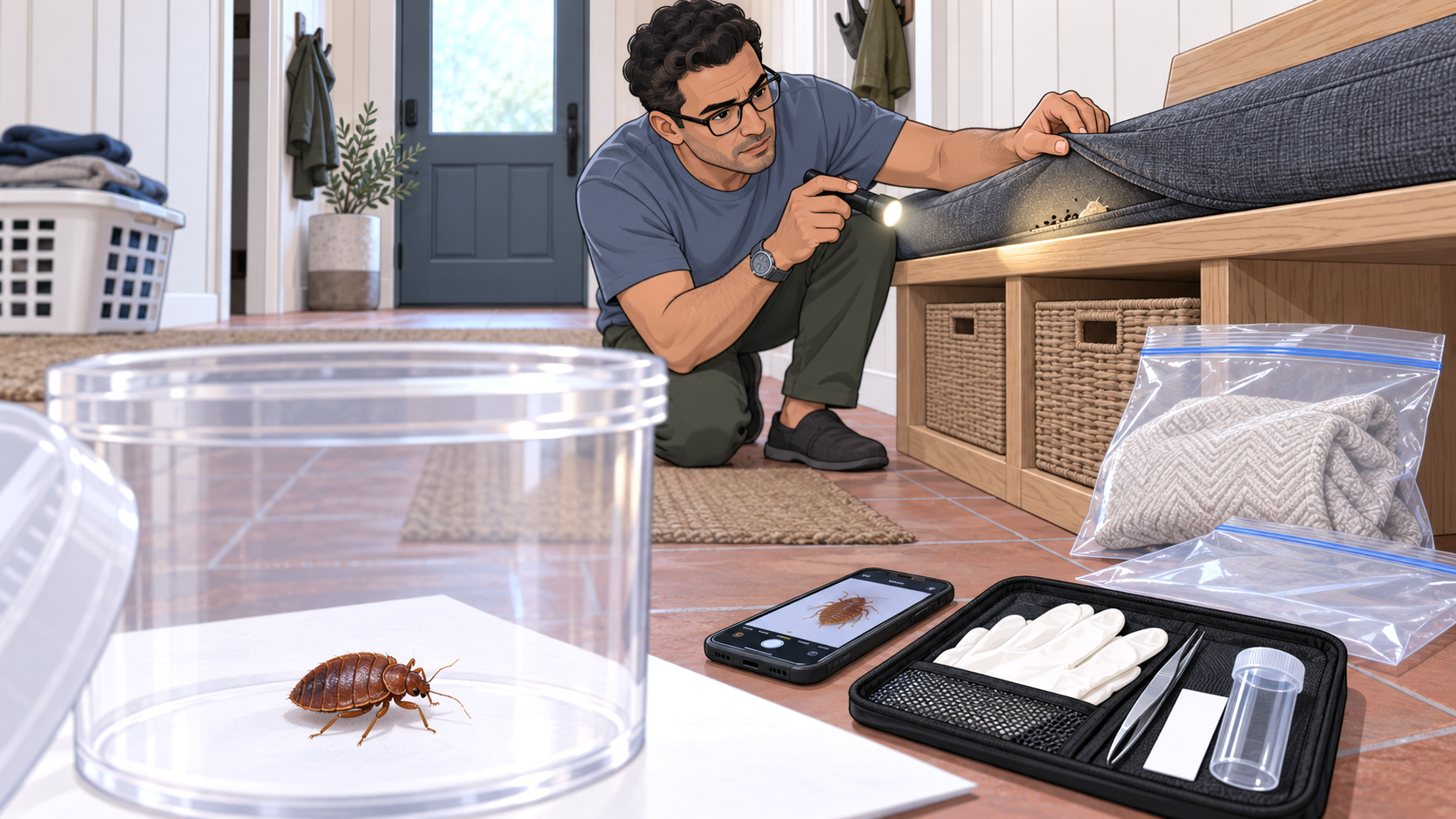
The first instinct after finding a bed bug is usually to drag the mattress to the curb, and that’s exactly the move worth resisting. Confirm you’re actually looking at a bed bug before doing anything drastic, then hold off on throwing things out. Most infested belongings can be treated rather than replaced, and carrying them through the house or leaving them at the curb can spread bed bugs somewhere they weren’t before.
If you’ve found what looks like a bed bug, confirm the identification, keep belongings in the affected area, avoid throwing furniture out, and decide on treatment from there. Anything that has to leave the room should be contained first so you aren’t carrying bed bugs into another part of the home.
Confirm What You’re Actually Looking At
Before anything else, make sure the insect you found is genuinely a bed bug rather than a close look-alike. Bed bugs are easily confused with other insects, and bat bugs are similar enough that distinguishing the two can require close examination. Bites alone also aren’t enough to identify a bed bug infestation.
That confirmation matters more than it might seem. Everything that follows, whether you treat, discard something, or call a professional, depends on knowing what you’re dealing with. The full standard for what actually counts as confirmation is covered in how to tell if you actually have bed bugs. If you’ve already confirmed the insect, what finding one bed bug actually means explains how seriously to take a single find.
Resist the Urge to Throw Everything Out
Once you’ve confirmed it, the disposal instinct is the mistake worth naming directly. Most belongings don’t need to be thrown away simply because bed bugs are present. Many can be treated and saved, while unnecessary disposal costs money and creates another opportunity for the infestation to spread.
Furniture should only be discarded when it can’t be successfully treated. Even then, discarded furniture should be destroyed or clearly marked so someone else doesn’t take it home and inherit the problem.
This is one of those situations where doing less in the first few minutes can actually be the smarter response. A mattress sitting where you found it is easier to account for than a mattress dragged through hallways, doorways, and other rooms before being dumped outside.
Contain the Area Instead of Spreading It Further
The second instinct worth resisting is moving things around in a panic. Don’t carry belongings from an infested area into a room you believe is clear. Items that need to be moved should first be placed in sealed plastic bags, which reduces the chance of carrying bed bugs elsewhere while you’re cleaning, inspecting, or preparing for treatment.
The bed itself can also be moved at least six inches from the wall as part of preparing the sleeping area. However, moving the bed isn’t enough by itself. Bedding shouldn’t touch the floor, and the larger goal is to separate the bed from surrounding surfaces while you inspect and deal with the infestation.
The important distinction is between containment and relocation. Containment keeps potentially infested belongings controlled. Relocation takes the same belongings into another part of the home and risks turning one affected area into several.
Don’t Turn One Bed Bug Into a Bigger Problem
Treating a single confirmed find as an emergency that demands an immediate, drastic response is where people can make the situation harder to manage. Confirmation comes first. After that, keep potentially infested belongings contained and treat what can be treated rather than automatically throwing it away.
That doesn’t mean ignoring the find. It means using the first few hours to understand what you’re dealing with instead of scattering belongings around the house while trying to solve it. Panic creates movement, and movement is exactly what you want to control.
Decide How You’re Going to Treat the Bed Bugs
Once you’ve confirmed the find and contained the immediate area, the next decision is how you’re going to deal with the infestation. That may mean handling part of the process yourself or bringing in professional help. DIY versus professional bed bug treatment breaks down that decision in more detail, while when to call an exterminator for bed bugs covers the situations where professional treatment makes more sense.
A mattress encasement can also be useful as part of a broader control plan, but it isn’t a complete bed bug treatment by itself. If you’re considering one, our guide to the best mattress encasements for bed bugs covers what to look for.
For now, the useful first move is much simpler. Keep the affected area controlled, stop unnecessary movement between rooms, and make the treatment decision before you start dismantling or discarding things.
Other Questions After Finding a Bed Bug
Do I need to start treatment immediately, or can I take a day to plan?
You don’t need to throw together a treatment plan within the next hour. Taking time to confirm the identification and decide on an appropriate approach is reasonable. In the meantime, avoid moving potentially infested belongings into other rooms.
Should I sleep in another room after finding a bed bug?
Moving to another room can complicate containment because bed bugs seek access to a host. Rather than automatically changing sleeping rooms, focus first on confirming the infestation and preparing the affected area for an appropriate treatment plan.
What if I’m still not sure it was actually a bed bug?
Keep the specimen if you can. A physical sample gives you something that can actually be examined rather than trying to identify the pest from bites or memory alone. You can compare its features with how to tell if you have bed bugs or have the specimen identified by a qualified pest professional or local extension service.
Should I tell my landlord if I find one bed bug?
If you rent, check the reporting requirements in your lease and local housing rules. Bed bug responsibilities and notification requirements can vary by location, so don’t assume the same procedure applies everywhere.
Can I keep using the furniture where I found the bed bug?
Finding a bed bug on a piece of furniture doesn’t automatically mean the furniture has to be discarded. Whether it can remain in normal use depends on where bed bugs are present and the treatment plan being used. Avoid moving the furniture elsewhere in the home while you make that decision.
6 thoughts on “What to Do When You Find a Bed Bug in Your House”