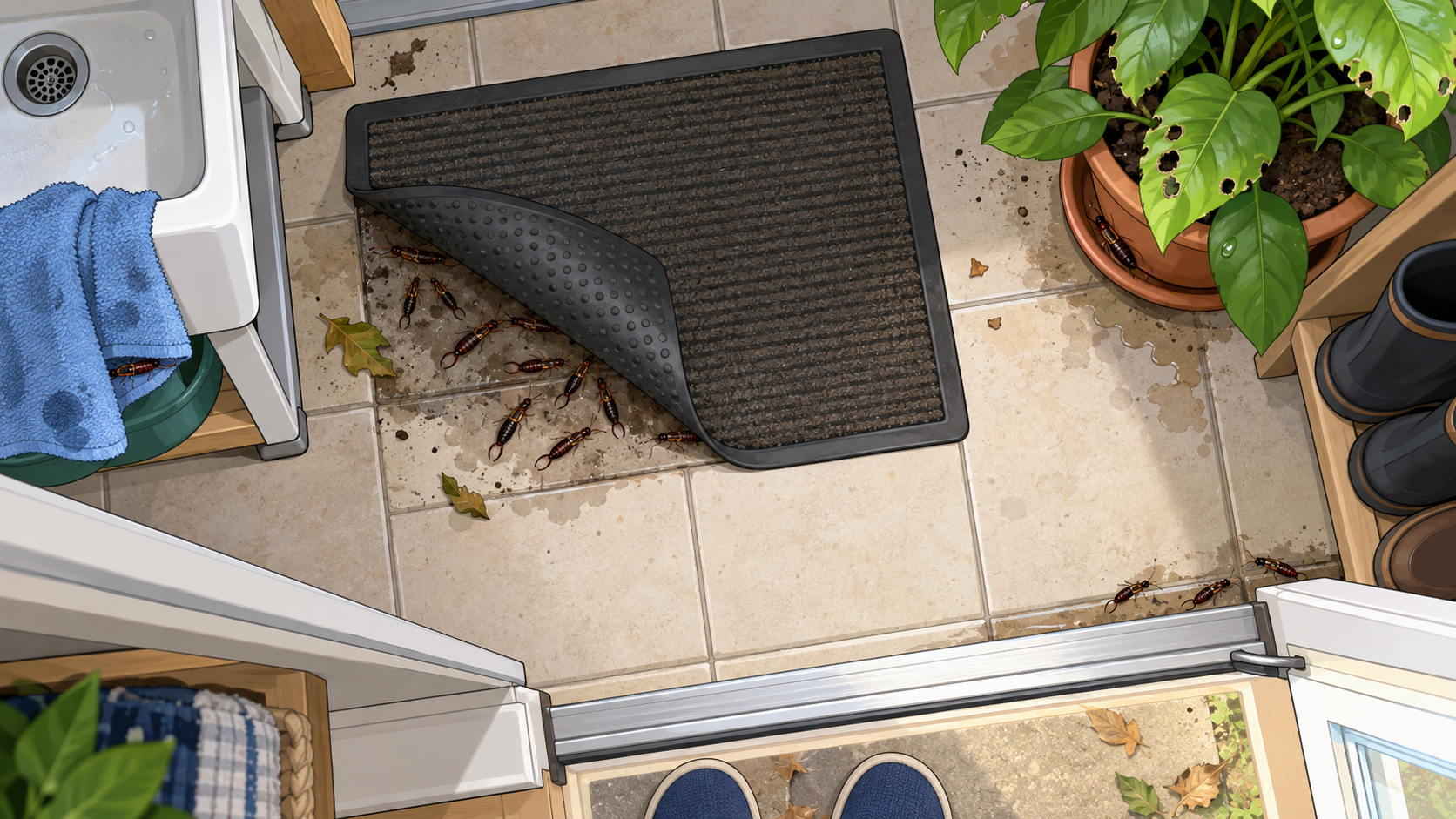
Finding one earwig under a flowerpot is not much of an infestation sign. Finding them beneath several pots, catching them night after night, and repeatedly discovering new ones inside the house tells a different story. With earwigs, the pattern matters more than any single sighting.
Signs you have an earwig infestation include repeated sightings of multiple earwigs, groups hiding in dark and damp outdoor shelters, recurring nighttime activity, persistent indoor appearances, and characteristic feeding damage on susceptible plants. Indoors, however, repeated earwigs usually point to an outdoor population entering the building rather than an infestation reproducing inside it.
Repeated Earwig Sightings Matter More Than Finding One
Earwigs are outdoor insects, so seeing one in a yard or garden is normal in places where they occur. The stronger warning sign is frequency. When earwigs keep appearing in the same areas over several days, especially in substantial numbers, there is probably a well-used shelter or larger population nearby.
This becomes easier to judge after dark. Earwigs are primarily active at night and spend daylight hours concealed in cracks, crevices, and other protected spaces. A garden that looks empty at noon can therefore have considerable earwig activity several hours later.
Instead of counting every insect you happen to see, look for a repeatable pattern. Check the same locations after dark with a flashlight on several occasions. Understanding when earwigs are active explains why nighttime inspection can reveal much more than a daytime walk around the property.
One earwig tells you an earwig is present. Repeated activity tells you something about the scale of the problem.
Groups in Damp Hiding Places Are a Stronger Sign
Daytime shelter can reveal an earwig problem surprisingly quickly. Earwigs favor dark, confined, damp places, so multiple insects can accumulate beneath objects and within protected crevices rather than remaining evenly scattered across a yard.
Turn over boards, movable pots, or other objects in areas where earwigs have been appearing. Also inspect existing sheltered spaces around vegetation and landscape materials. European earwigs can occur in large numbers beneath boards, decaying bark, and other moist, dark refuges.
Several earwigs sharing one shelter does not mean you have discovered a colony comparable to an ant nest. Earwigs can aggregate, and their social behavior is more complicated than simply describing every individual as solitary. The distinction is explained further in whether earwigs live in colonies or alone.
For infestation purposes, the useful information is simpler. Repeatedly uncovering groups in multiple suitable shelters suggests that the visible earwigs are not isolated wanderers.
Plant Damage Can Reveal Earwig Activity You Never See During the Day
Sometimes the plants show the problem before the insects do.
Earwigs can chew irregular holes in leaves and flower blossoms. They can also attack seedlings and corn silk, while large numbers may seriously damage seedlings and flowering plants. However, feeding damage alone is not enough to diagnose an earwig infestation because other garden pests can produce similar injuries.
That limitation makes nighttime confirmation important. When fresh damage continues to appear, inspect the affected plants with a flashlight after dark and look for earwigs actively feeding. This is more reliable than identifying the pest from the shape of a hole alone. Slugs can produce similar damage, although their activity may leave slime trails that earwigs do not.
The vulnerability of the plant matters too. Seedlings have much less foliage to lose than established plants, while flowers such as dahlias can develop conspicuous damage to leaves and blossoms. Earwig damage on dahlias is one example of how their feeding can become obvious on a susceptible plant.
A much stronger diagnosis is damaged plants plus earwigs caught feeding on them at night.
Earwigs Keep Appearing Inside Your House
Repeated indoor appearances are probably the sign homeowners notice fastest, but they are also easy to misinterpret.
European earwigs can enter homes in large numbers, particularly when outdoor conditions encourage movement. They are nuisance invaders indoors rather than pests that normally establish reproducing populations throughout a house.
That means ten earwigs appearing over several days should not be interpreted the same way as ten German cockroaches appearing indoors. With earwigs, repeated appearances generally point toward insects entering from outside rather than a self-sustaining population multiplying throughout the rooms.
This changes what an “indoor earwig infestation” usually means. Persistent sightings can indicate an entry problem and substantial activity immediately around the building. Earwigs may seek refuge indoors when outdoor conditions become unfavorable, and large indoor accumulations can occur without the house functioning as their normal breeding habitat.
Bathrooms can make the problem particularly noticeable because wandering earwigs are easily discovered there. If sightings repeatedly concentrate in that room, getting rid of earwigs in the bathroom requires looking beyond the insects you can see and considering how they are entering.
Finding Earwigs in Several Parts of the Property Changes the Picture
Location gives repeated sightings more meaning. Five earwigs uncovered beneath one damp board could represent a particularly attractive shelter. Earwigs repeatedly appearing under landscaping materials, around the foundation, beside exterior doors, and inside nearby rooms suggest a broader pattern.
Moisture and shelter often connect these locations. Leaf litter, ground cover, mulch, wood piles, and other protected materials can provide outdoor harborage, while drainage or irrigation problems can maintain damp areas near a structure. Removing unnecessary refuge sites and keeping excess moisture away from buildings are therefore important parts of earwig management.
Weather can temporarily change what you see as well. A sudden increase in indoor sightings does not necessarily mean the local population suddenly multiplied. Earwigs can move when outdoor conditions change. Earwigs appearing after rain are therefore different from a persistent pattern that continues under ordinary conditions.
The best infestation assessment combines frequency, location, and duration. Those three pieces tell you considerably more than the raw number found on one particular morning.
Traps Can Show Whether the Problem Is Bigger Than It Looks
When sightings are inconsistent, trapping can turn guesswork into something you can observe.
Outdoors, rolled newspaper, bamboo tubes, and similar shelter traps exploit an earwig’s tendency to hide in protected spaces during daylight. Low containers containing vegetable oil with an attractive food odor can also trap them. Checking traps daily helps reveal whether substantial numbers are using a particular area.
Place traps where you already have reason to suspect activity rather than distributing them randomly across the property. Several consecutive catches near one flower bed, foundation section, or doorway give you a useful concentration point for further inspection.
Several practical designs are covered in DIY earwig traps that actually work. Store-bought options can also help with monitoring, particularly indoors where adhesive traps can intercept crawling insects along travel routes.
Trapping is especially useful when the earwigs disappear during daylight. You are effectively letting their hiding and foraging behavior reveal activity that a daytime inspection might underestimate.
What to Do Once the Signs Point to an Earwig Problem
The next move should target where the earwigs are coming from rather than simply removing each one you encounter.
For an outdoor problem, inspect the immediate area for excessive shelter and persistent moisture. Remove unnecessary debris and correct irrigation or drainage issues that keep areas beside the building continually damp. Where valuable plants are being damaged, targeted trapping can reduce earwig numbers without treating an entire garden unnecessarily.
For repeated indoor sightings, vacuum or sweep up the insects you find and concentrate on exclusion. Seal accessible cracks and other entry points, reduce exterior shelter beside the structure, and address moisture around the foundation. Indoor pesticide applications do little to prevent continuing earwig invasions, so repeatedly spraying the rooms where they appear can miss the source of the problem.
A few occasional wanderers rarely justify treating the situation as a major infestation. Persistent indoor entry, large outdoor aggregations, repeated trap catches, or confirmed plant damage provide a much stronger reason to act. Once those signs are established, getting rid of earwigs should focus on the source and affected area.
Other Questions About Signs of an Earwig Infestation
Does finding baby earwigs mean they are breeding inside my house?
Not necessarily. Young earwigs normally develop outdoors, so a nymph found inside can enter from outside just as an adult can. Identifying what baby earwigs look like can also help distinguish a young earwig from another small household insect.
Is a bad smell a sign of an earwig infestation?
Earwigs can release an unpleasant defensive secretion when disturbed, so odor can accompany earwig activity. However, smell is not a useful stand-alone measure of population size. Seeing or trapping the insects provides much stronger evidence. The odor itself is explained in why earwigs smell when disturbed or crushed.
Does finding earwigs near a drain prove they are coming through the plumbing?
No. Finding an earwig beside a sink, bathtub, or floor drain identifies where you saw it, not the route it used to enter the building. Earwigs can crawl through other openings and later end up in bathrooms or other protected areas. A drain should not be blamed without evidence of the actual entry route.
Can an earwig infestation damage the house itself?
Earwigs are nuisance invaders indoors rather than structural pests. Their presence does not mean they are consuming structural wood in the way termites can. Repeated indoor sightings are more useful as a reason to investigate entry points and nearby outdoor conditions than as evidence of structural damage.
3 thoughts on “Signs You Have an Earwig Infestation”