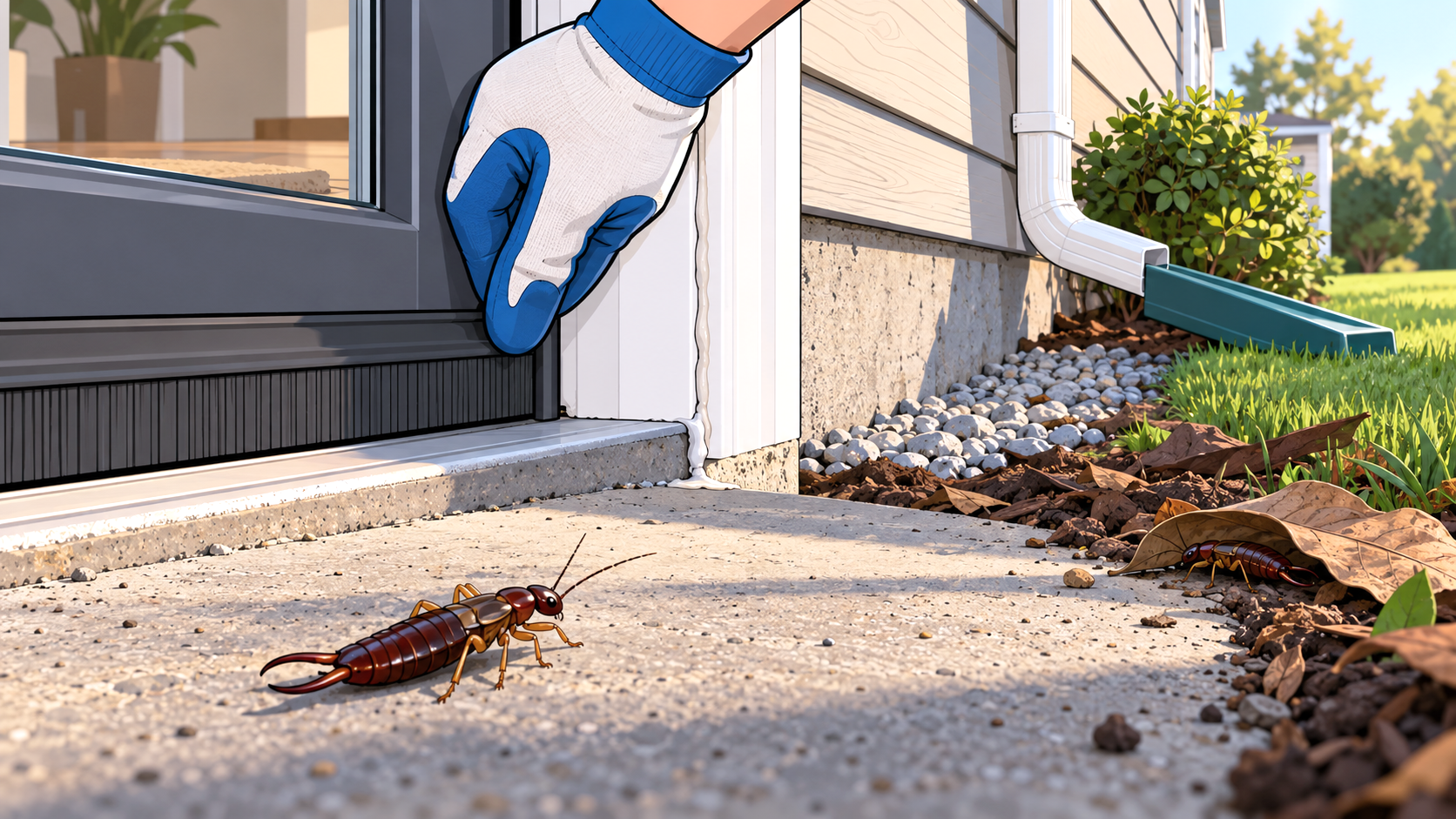
Finding an earwig indoors often sends people looking for something to spray inside. Prevention works in almost the opposite direction. By the time an earwig is walking across your bathroom floor, it has already crossed the part of the property where the better prevention opportunities were.
To prevent earwigs from getting into your house, concentrate on the exterior boundary. Seal gaps around doors, windows, vents, utility openings, siding, and the foundation. Then reduce the damp, protected hiding places immediately outside those areas. Keeping earwig shelter away from likely entry points makes physical exclusion much more effective.
The useful way to think about earwig prevention is not simply “seal the house.” Instead, look for places where an attractive outdoor hiding spot sits close to a possible way inside. Those combinations deserve attention first.
Start Where Earwig Shelter Meets Your House
Earwigs spend the day in dark, protected places and become active mainly at night. Around a house, that can put them beneath leaves, boards, vegetation, mulch, flowerpots, wood, and other objects that provide cover. When these hiding places sit against the building, earwigs have very little distance to travel before encountering a door, basement window, crack, or other opening.
That is why we would not start by caulking every tiny imperfection on a large house at random. Walk around the exterior and identify places where shelter and entry opportunities overlap. A damp basement window well full of leaves deserves more immediate attention than an exposed section of siding surrounded by dry pavement.
Clear unnecessary debris and dense shelter from these areas. Removing vegetation and sheltering material beside likely access points is a standard part of keeping earwigs out of buildings. Pay particular attention to doorways and basement window wells, where hiding places can sit directly beside potential entry routes.
This does not mean stripping every landscaped bed around your house bare. Mulch and vegetation have legitimate landscaping purposes. The goal is to avoid creating especially favorable earwig shelter immediately beside places where they can cross indoors. If you are unsure what conditions are supporting them around the property, our guide to what attracts earwigs goes deeper into that question.
Seal the Openings Earwigs Can Use
Once the exterior hotspots are obvious, exclusion becomes much more targeted. Check around exterior doors and windows first, then inspect vents, utility penetrations, faucets, siding-foundation junctions, and other openings around ground level. Caulking and repairing exterior cracks and gaps is one of the primary measures recommended for keeping earwigs outside.
Doors deserve more attention than they sometimes get. A door can look completely closed from standing height while still having an opening along the threshold. Under-door sweeps are specifically recommended as part of earwig exclusion from buildings, along with tightly sealed screens. Garage doors and frequently used exterior doors are worth inspecting in the same deliberate way rather than assuming the visible frame tells the whole story.
Windows need the same treatment. Repair damaged screens and look around the frame instead of checking only the glass and screen surface. Vents should have intact screening appropriate for their purpose. Where pipes, cables, or other services penetrate an exterior wall, inspect the surrounding opening rather than the utility itself.
The distinction matters because prevention is not about making a house theoretically airtight. It is about interrupting realistic crawling routes. Earwigs are primarily crawling insects, so a series of small exterior corrections can matter more than treating the middle of a room where one eventually appears.
Make the Foundation Less Comfortable for Earwigs
Sealing an entry point is useful, but leaving a damp earwig refuge directly outside it means insects can continue accumulating around the same vulnerable area. The stronger approach changes both sides of that boundary.
Earwigs favor protected, moist daytime shelters. Therefore, check whether irrigation regularly wets the foundation area, whether downspouts are directing water where it can collect beside the house, and whether drainage leaves parts of the perimeter persistently damp. Keeping water and moisture away from the structure is specifically recommended for reducing earwig problems around buildings.
Landscape watering does not need to stop. Instead, avoid unnecessary moisture immediately beside the structure and correct drainage problems where water is accumulating. Drip irrigation can help reduce surface moisture in suitable landscapes, while irrigation systems should be checked for leaks or excessive watering.
Gutters deserve a look too. Leaves and other organic material collected there can provide shelter, which is why current earwig prevention guidance includes removing gutter debris. The useful principle is broader than any single object. Damp organic shelter pressed against or immediately beside the building works against the dry, exposed boundary you are trying to create.
This also explains why earwig appearances can change after weather shifts. Earwigs sometimes move indoors when outdoor conditions become too dry, hot, or cold. A sudden indoor sighting does not automatically mean something is reproducing inside. Our guide to earwigs after heavy rain covers one situation where changing outdoor conditions can alter where you notice them.
Check Your Outdoor Lighting
Exterior lighting is a smaller piece of prevention, but it is worth correcting when earwigs repeatedly appear around an illuminated doorway or porch. White outdoor lighting can attract earwigs, while yellow lighting is less attractive to them.
We would treat this as a supporting measure rather than the main solution. Changing a bulb will not compensate for a damaged door sweep, an open gap beside a window, or damp debris against the foundation. However, reducing attraction around a doorway makes sense when that same doorway is one of the insects’ possible routes inside.
This is also why a porch light should not automatically be blamed for every earwig in the house. Moisture, shelter, seasonal activity, and access all matter. We cover the lighting question separately in whether earwigs are attracted to light rather than turning lighting into a larger prevention claim than it deserves.
Reduce Earwigs Outside Before They Reach the Wall
Sometimes exclusion is only half the problem because there are simply many earwigs living around the immediate perimeter. In that situation, trapping can reduce the number reaching the building without turning the inside of the house into the treatment zone.
Earwigs readily use dark daytime refuges. Rolled newspaper, corrugated cardboard, bamboo tubes, and short pieces of hose can exploit that behavior. Place refuge traps near outdoor activity areas before dark, then check them in the morning. Oil traps are another established option. Daily trapping can reduce earwig numbers when populations around a problem area are high.
Placement is more important than scattering traps everywhere. Concentrate on the outdoor areas where earwigs are actually active, particularly near the side of the property producing repeated indoor sightings. Our DIY earwig trap guide covers the trapping methods in detail.
This gives you another benefit that killing a random indoor earwig cannot provide. Outdoor trapping can help show where activity is concentrated. When one side of the house consistently produces more earwigs, inspect the nearby shelter, moisture, doors, windows, and foundation more carefully.
Indoor Spraying Does Not Fix an Outdoor Entry Problem
One of the easiest prevention mistakes is spraying baseboards after earwigs have already entered. That focuses effort on the last few feet of their journey instead of the conditions allowing the journey to happen.
Earwigs found inside can simply be vacuumed or swept up. More importantly, European earwigs do not reproduce indoors. Repeated sightings can therefore point to continued movement from outside rather than an indoor breeding population that needs to be chased through the house with insecticide.
Indoor pesticide treatments are not recommended as a way to prevent earwig invasions because they do little to stop new insects from entering. That is a meaningful distinction between killing and prevention. A dead earwig beside a baseboard tells you the insect reached the interior. A sealed opening prevents the next one from making the same trip.
Exterior insecticide barriers can supplement physical exclusion in some situations. However, we would treat that as an additional control measure rather than the foundation of prevention. Anyone choosing that route should use a product specifically labeled for the pest and intended treatment site and follow the current label. Our best earwig killer guide deals with product choices separately so this prevention guide can stay focused on keeping them outside.
Use Indoor Sightings to Find the Weak Side of the House
Where an earwig appears can provide a starting point for your exterior inspection, but it does not prove exactly where the insect entered. Finding one in a bathroom, for example, does not establish that it traveled through the drain. Likewise, an earwig in a basement does not prove there is a particular crack directly behind it.
Instead, look for patterns. Several sightings near the same exterior door make that section of the building more interesting. Repeated basement appearances justify inspecting nearby window wells, foundation openings, vents, and exterior shelter. Earwigs appearing in several unrelated rooms require a broader perimeter check.
Our guide to why earwigs get into houses covers the reasons behind indoor appearances. For prevention, the useful part is turning those sightings into an inspection map without treating the exact place you found the insect as proven evidence of its entry route.
Build a Dry, Sealed Boundary Before Earwig Activity Peaks
Earwig prevention is much easier when the work happens before repeated indoor sightings begin. Inspect exterior doors, window frames, screens, vents, utility openings, and the foundation while you can work methodically rather than reacting to insects already inside.
Then walk the same perimeter again, this time looking outward instead of at the building. Move unnecessary boards, leaves, debris, and other protected hiding places away from likely access points. Correct persistent moisture where practical, clear gutters, and inspect irrigation and drainage. Where outdoor earwig numbers remain high, use traps to reduce activity around the problem area.
That combination is what makes prevention different from simply killing earwigs. You are reducing the number of insects reaching the house while simultaneously removing the routes they can use to cross inside. If earwigs are already appearing regularly indoors, our broader guide to how to keep earwigs out of the house covers the active-control side of the problem.
Other Questions About Preventing Earwigs Indoors
Can earwigs come through an open window?
An unscreened open window provides an obvious opening for insects. Keeping window screens intact and properly fitted is part of physical earwig exclusion. When a particular window is regularly left open, inspect its screen and frame rather than relying on indoor treatment afterward.
Will keeping my house clean prevent earwigs?
Ordinary indoor cleanliness is not the main prevention issue. Earwig exclusion focuses much more heavily on exterior openings and the shelter and moisture around the building. Cleaning still helps you remove insects you find, but a spotless room can still receive earwigs through an accessible exterior gap.
Should I seal my house before or after reducing earwigs outside?
You can do both as part of the same prevention effort. There is no reason to wait for the outdoor population to disappear before repairing obvious openings. In fact, combining physical exclusion with changes around the exterior is stronger than treating either side of the problem alone.
Can earwigs still get inside after I seal obvious gaps?
Yes. Exclusion can substantially reduce entry without guaranteeing that no earwig will ever appear indoors. Buildings have many possible openings, and some are easy to overlook. An occasional earwig after prevention work is therefore different from a persistent pattern. Continued sightings are a reason to inspect the perimeter again, especially around the part of the house where activity keeps recurring.
When should repeated earwigs inside become a professional pest-control problem?
When repeated entry continues despite correcting obvious gaps, moisture, and exterior shelter, a professional inspection can help identify access points or outdoor activity you have missed. The decision becomes more reasonable as sightings remain persistent rather than occasional. Our guide to when an earwig exterminator makes sense covers that decision in more detail.
One thought on “How to Prevent Earwigs From Getting Into Your House”