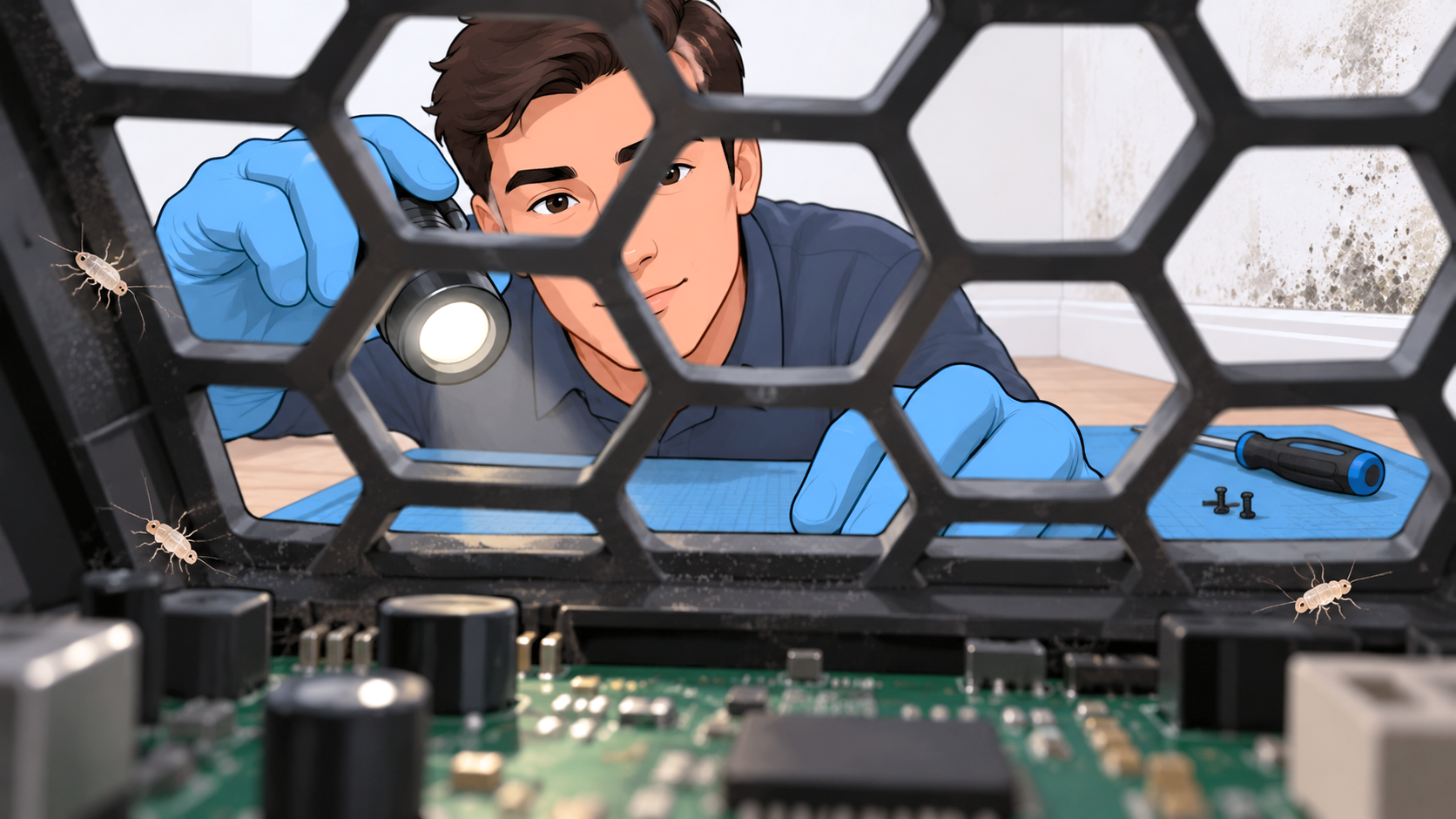
Tiny booklice crawling around a laptop, television, game console, router, or power strip can look like an electrical problem waiting to happen. Their size also lets them disappear into narrow seams around electronic equipment, which makes the situation seem worse. Fortunately, booklice are not known for feeding on the materials that make up electronics.
Booklice are generally not harmful to electronics. They do not eat wires, circuit boards, plastic casings, or electrical insulation. Finding them around a device is more likely to indicate a humid environment or nearby mold than an attack on the electronics themselves. The moisture supporting the booklice may be more concerning than the insects.
Booklice Do Not Eat Electronics
Booklice have chewing mouthparts, but their normal diet does not consist of plastic, metal, copper, rubber, or the other major materials used in electronic equipment. Indoor booklice primarily feed on molds, fungi and suitable starchy materials.
They are therefore very different from a pest that physically consumes the material it inhabits. Booklice may walk across a circuit board or crawl through a gap in a device, but simply occupying that space does not mean they are feeding on it.
This fits what we know about what booklice eat. Their food can include fungi, mold spores, grains, insect fragments, and some starchy materials. None of that gives them a reason to chew through an electrical cable or consume a computer component.
In fact, booklice are described as insects that do not directly damage non-food items such as fabric and paper products. Although some psocids can graze susceptible surfaces, they are not destructive borers or material-chewing pests capable of tunneling through electronic components.
Why Do Booklice Show Up Around Electronics?
The electronics may simply be sitting in a place that also happens to suit booklice.
Indoor booklice favor warm, humid and relatively undisturbed environments. They can become numerous where dampness permits microscopic fungi and mold to develop. Some devices and the spaces surrounding them provide darkness, narrow crevices, warmth, and long periods without disturbance, but those characteristics alone do not provide the insects with food.
Moisture completes the picture. Booklice are so closely associated with damp conditions that their presence is commonly treated as a warning of excessive humidity. If a router is tucked against a damp basement wall or a computer desk sits in a humid room, booklice may occur around the equipment because the surrounding environment supports them.
That is also why understanding why booklice need humidity is more useful than focusing exclusively on the device. Removing insects from a keyboard will accomplish little if hundreds are breeding somewhere damp nearby.
Can Booklice Get Inside a Laptop or Computer?
They can potentially crawl through sufficiently small openings.
Common indoor booklice are tiny, with many measuring only around 1 to 2 millimeters long. Their small, flattened bodies allow them to occupy extremely narrow cracks and protected spaces around a home.
A booklouse disappearing through a ventilation opening or another accessible gap in an electronic device is therefore physically plausible. However, we could not find reliable evidence establishing ordinary household booklice as a recognized cause of internal computer or laptop damage.
That distinction prevents a common assumption from becoming a fact. Booklice being capable of entering an electronic device does not establish that they damage it once inside.
If insects are repeatedly emerging from a laptop, desktop computer, television, or another device, the number of insects matters more than a single accidental crawler. A larger population suggests that you should locate the environmental source and also make sure you have correctly identified the insects as booklice.
The Moisture Can Be a Bigger Concern Than the Booklice
This is where finding booklice near electronics becomes genuinely useful.
Booklice thrive in humid conditions that support fungal growth. They can reproduce rapidly when conditions remain favorable, while reducing relative humidity substantially limits their ability to persist. Household guidance recommends reducing moisture as the primary means of controlling them because booklice generally cannot persist under sufficiently dry conditions.
Electronics and persistent moisture are an undesirable combination regardless of whether booklice are present. Water intrusion, condensation, and sustained excessive humidity can create problems that have nothing to do with insects.
Consequently, finding numerous booklice around a computer setup in a damp basement should prompt a search for a leaking pipe, condensation, wet building materials, poor ventilation, or another moisture source. Booklice are commonly found in damp parts of buildings and around materials supporting fungal growth, and correcting the underlying water problem is considered the most effective control.
The insects are often the visible clue. The dampness is the condition worth fixing.
Are Booklice Attracted to the Heat From Electronics?
There is not enough evidence to say that household booklice specifically seek out electronics because of the heat they produce.
Warm conditions can favor booklouse activity and development, but temperature is only part of their environmental requirements. Indoor booklice are particularly associated with the combination of warmth, moisture, suitable food, and protected spaces. A warm but very dry computer is therefore fundamentally different from a warm device sitting in a humid environment where fungi are available nearby.
It would also be a mistake to assume that a glowing screen or indicator light is drawing them toward a device. Household booklice are not generally established as strongly light-attracted insects, and the evidence surrounding whether booklice are attracted to light varies by species.
If booklice repeatedly gather around one electronic device, inspect the location before blaming the device itself. Look behind the desk, beneath nearby cardboard, along walls and windows, around potted plants, and anywhere condensation or dampness might persist.
Can Booklice Cause a Short Circuit?
There is no good evidence that ordinary household booklice are a recognized cause of short circuits in consumer electronics.
It is easy to imagine a tiny insect crawling across electrical contacts and conclude that any insect inside a device could destroy it. That possibility should not be presented as an established booklouse problem without evidence. Booklice are extremely small, and authoritative household-pest references characterize them primarily as nuisance and moisture-associated pests rather than electrical pests.
A large infestation inside any sensitive device is still something we would remove rather than ignore. However, that is different from claiming booklice routinely short out circuit boards.
If a device is already malfunctioning, overheating, sparking, producing a burning smell, or showing evidence of liquid intrusion, disconnect it when safe to do so and have the electrical problem evaluated appropriately. Do not assume booklice caused the failure simply because insects were found nearby.
Booklice Around Electronics Can Point to Mold Elsewhere
You do not necessarily need visible fuzzy mold before booklice can appear.
Their association with fungi means populations can develop where suitable fungal growth is difficult to see. Damp cardboard, wallpaper, wall cavities, paper stored beside a computer, or the underside of furniture can provide better feeding areas than the electronic device itself.
This explains why booklice may appear to be “coming from” electronics when the actual breeding area is nearby. The insects can wander from one surface to another after developing elsewhere.
Checking where booklice actually come from can help when they appear across several objects rather than in one obvious damp location. It is also worth investigating whether mold is supporting the population instead of repeatedly cleaning the same computer or television.
Should You Spray Electronics to Kill Booklice?
No. Spraying household insecticide, bleach, rubbing alcohol, vinegar, essential oils, or other pest-control mixtures into an electronic device is a poor response to booklice.
The insects themselves rarely justify pesticide treatment. Moisture reduction is considered the most effective household control, and pesticides are normally unnecessary when the environmental problem can be corrected.
Liquid products can also create a completely separate risk when introduced into electrical equipment. If booklice are walking across the outside of an unplugged device, remove them carefully according to the manufacturer’s cleaning instructions. Do not pour or spray pest-control products through ventilation openings, ports, keyboards, or electrical connections.
For a substantial population inside expensive equipment, professional electronics cleaning or repair is safer than experimenting with liquids or pesticide dusts inside the device.
How to Keep Booklice Away From Electronics
Start with the room, not the circuit board.
Measure the humidity where the affected electronics are kept and investigate any obvious source of dampness. Improve ventilation where appropriate, repair leaks, address condensation, and dry wet building materials. Booklice populations decline when the conditions required for their survival and fungal food disappear.
Also remove unnecessary damp cardboard, paper, or other materials stored immediately around electronics. Vacuum visible booklice from surrounding surfaces and clean the area while keeping liquids away from energized electrical equipment. The broader approach for getting rid of booklice follows the same principle.
When humidity itself is the problem, a dehumidifier can help control booklice by making the environment less suitable for them. Household recommendations generally target relative humidity below about 45 to 50 percent for booklouse control, although survival varies among species and conditions. The goal is sustained moisture control rather than briefly drying the room for a few hours.
Questions About Booklice and Electronics
Can booklice live inside a computer?
A booklouse is small enough to crawl into accessible openings in some computers, but reliable evidence does not establish computers as a normal food source or booklice as a recognized computer-damaging pest. Repeated insects around a computer are a better reason to investigate humidity and nearby breeding sites.
Can booklice damage a television?
Booklice are not known to eat the wiring, plastic, screen, or electronic components of televisions. If many are appearing around a TV, check the surrounding wall, furniture, stored materials, and room humidity rather than assuming the television itself is being consumed.
Why are there booklice around my Wi-Fi router?
The location may provide warmth, darkness, narrow hiding spaces, and little disturbance, while moisture or fungal growth nearby supplies the conditions booklice actually need. The router itself does not establish the source of the infestation.
Can booklice live in a keyboard?
Their tiny size means individual booklice can potentially enter gaps around keyboard keys. That does not mean they are eating the keyboard. Clean the device according to its manufacturer’s instructions and investigate the surrounding environment if insects keep returning.
Do I need to replace electronics that have booklice around them?
Usually not. Finding booklice on or around an electronic device does not by itself mean the equipment is damaged. Correct the booklouse problem by locating moisture and reducing humidity. If the device has an independent electrical fault or evidence of water damage, have that issue assessed separately.