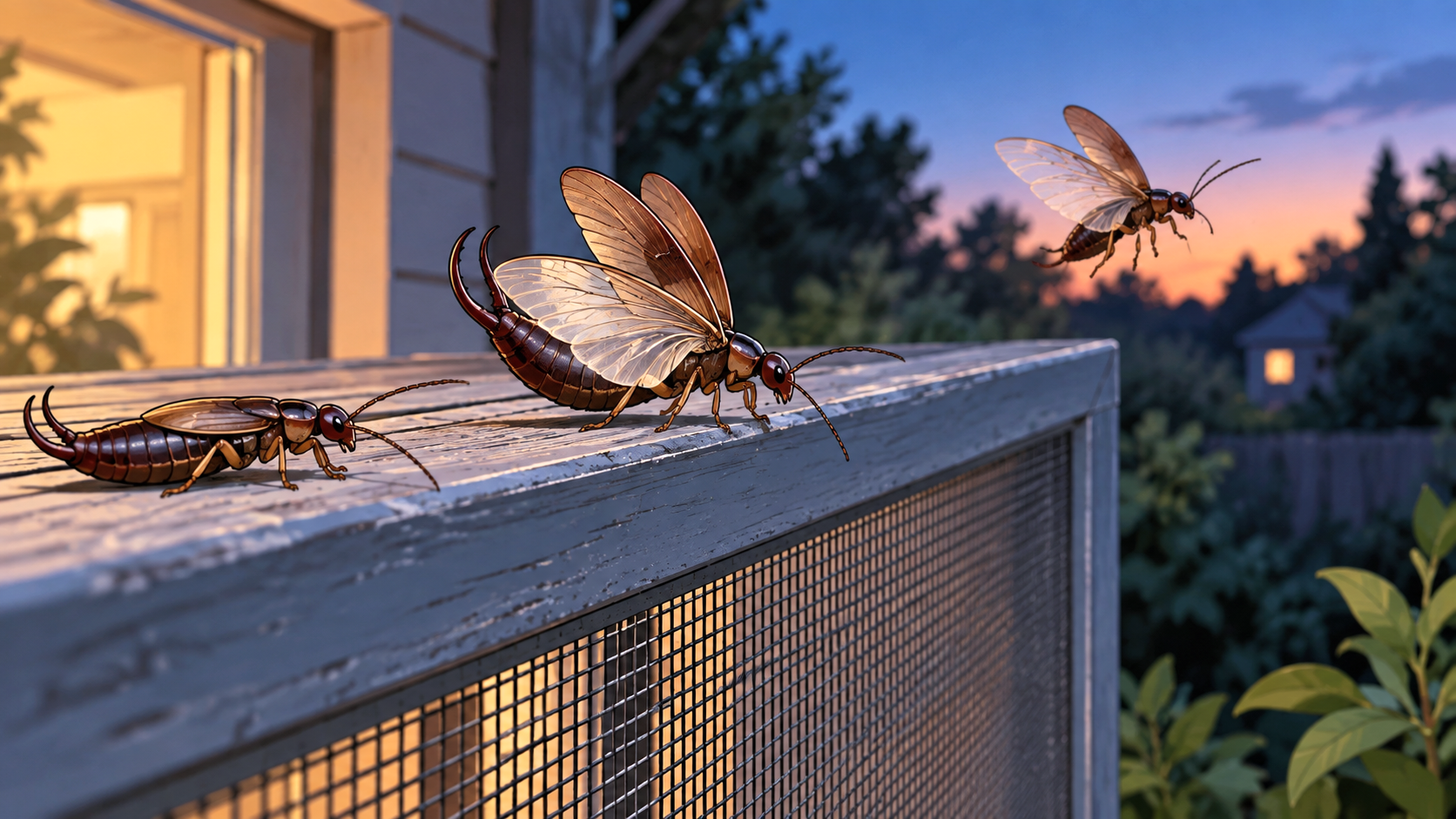
Yes, adult earwigs can have wings, and some can fly, but seeing one in flight is unusual. Most earwig species have a pair of short, leathery forewings covering much larger folded hind wings. The common European earwig, Forficula auricularia, is capable of flight but rarely flies. It gets around primarily by crawling. That combination explains why so many people assume earwigs are wingless. You can look directly at an adult and never see anything resembling the broad wings of a fly or moth. The important wings are packed underneath small covers on its back and may stay hidden for the entire time you watch the insect.
Where Are an Earwig’s Wings?
An adult earwig’s visible forewings are extremely short. They sit near the front of the abdomen and have a tougher, leathery appearance rather than looking like conventional insect wings. Underneath them are much larger membranous hind wings that provide the surface needed for flight.
Those hind wings have to fit beneath covers far smaller than they are, so they fold into a remarkably compact package when the insect isn’t flying. From above, you may therefore see little more than two short plates behind the thorax, with much of the abdomen remaining exposed. Someone expecting long wings running down the back can easily mistake that arrangement for having no wings at all.
The wing structure is also reflected in the name of the insect order Dermaptera. The name refers to the leathery nature of the forewings. It’s one of the less obvious features in what an earwig looks like because the rear forceps usually attract far more attention.
Can European Earwigs Actually Fly?
European earwigs can fly, but they rarely do. Their normal movement is overwhelmingly associated with crawling, and they’re commonly described as weak fliers. So if you see an earwig moving across a wall, patio, plant, or floor, you should expect it to continue on foot rather than suddenly take off.
This distinction matters because “can fly” and “commonly flies” aren’t the same thing. The European earwig has functional wings and the physical ability to use them. Flight simply isn’t its usual way of getting around. That makes a flying European earwig possible without making it a normal sight around your home or garden.
How Can Those Large Wings Fit Under Such Small Covers?
The hind wings fold extensively before being stored beneath the short forewings. Instead of simply closing lengthwise like the wings of many familiar insects, an earwig has to pack a comparatively large flight surface into a very small space.
That arrangement is one of the most unusual parts of earwig anatomy. When the hind wings are fully opened, their size can be surprising compared with the tiny area they occupied while folded. Once flight ends, the wings have to return to that compact resting position.
For us, this is the part that makes the common “earwigs don’t have wings” assumption understandable. Looking at a resting earwig gives you almost no sense of how much wing is actually folded underneath those short covers.
Do Baby Earwigs Have Wings?
Young earwigs don’t have the fully developed wings of adults. Earwig nymphs resemble smaller versions of mature insects, but their wings develop as they progress through their immature stages. Immature earwigs are wingless, so a small nymph can’t suddenly take flight.
That gives wings some value when you’re trying to judge developmental stage. A small earwig without adult wings may simply be immature rather than a naturally wingless adult. The other changes that happen during development belong in the earwig life cycle rather than the flight question itself.
Do All Earwig Species Fly?
No. Earwigs are an entire order of insects rather than one species, and their ability to fly varies. Most species have wings, but that doesn’t mean every species has functional wings or uses flight regularly. Some earwigs have reduced wings, while others are wingless.
Even among winged species, flight behavior isn’t identical. That’s why the European earwig is a better reference for a homeowner than making one rule for every member of Dermaptera. It has wings and can fly, yet crawling remains its primary way of dispersing.
That also means you shouldn’t reject an earwig identification simply because you never saw wings. Visible flight isn’t a requirement for an insect to be an earwig, and resting adults can conceal most of their wing structure remarkably well.
What It Means When You Find a Winged Earwig
Finding an earwig with visible wings doesn’t mean you’ve discovered a different pest. An adult may simply have opened wings that normally remain concealed. Likewise, seeing an earwig fly doesn’t indicate that your home contains some unusual flying form of the insect.
More importantly, flight isn’t usually the best explanation for how European earwigs keep appearing indoors. They commonly move by crawling and can enter buildings through openings from outside. If repeated indoor sightings are the real problem, investigating why earwigs are getting into the house will be more useful than focusing on whether they flew inside.
Other Questions About Earwig Wings
Can earwigs fly at you?
An earwig is physically capable of flight if it belongs to a winged species, but European earwigs rarely fly and primarily move by crawling. Seeing one take off isn’t evidence that it’s deliberately flying toward people.
Can an earwig jump?
Earwigs aren’t built for jumping in the way fleas, grasshoppers, or crickets are. Their legs are suited to walking and running, while winged adults have flight available as a separate form of movement.
Do earwigs lose their wings?
Adult European earwigs normally keep their wings. Their hind wings can seem to disappear because they fold underneath the short forewings when they aren’t being used, leaving very little visible evidence of the larger flight surface.
Can earwigs fly into upstairs windows?
A winged adult is physically capable of flight, so reaching an elevated location that way is possible. However, European earwigs are weak, infrequent fliers and also climb vertical surfaces. Finding one upstairs doesn’t tell you which route it used to get there.
3 thoughts on “Do Earwigs Have Wings? Can They Fly?”