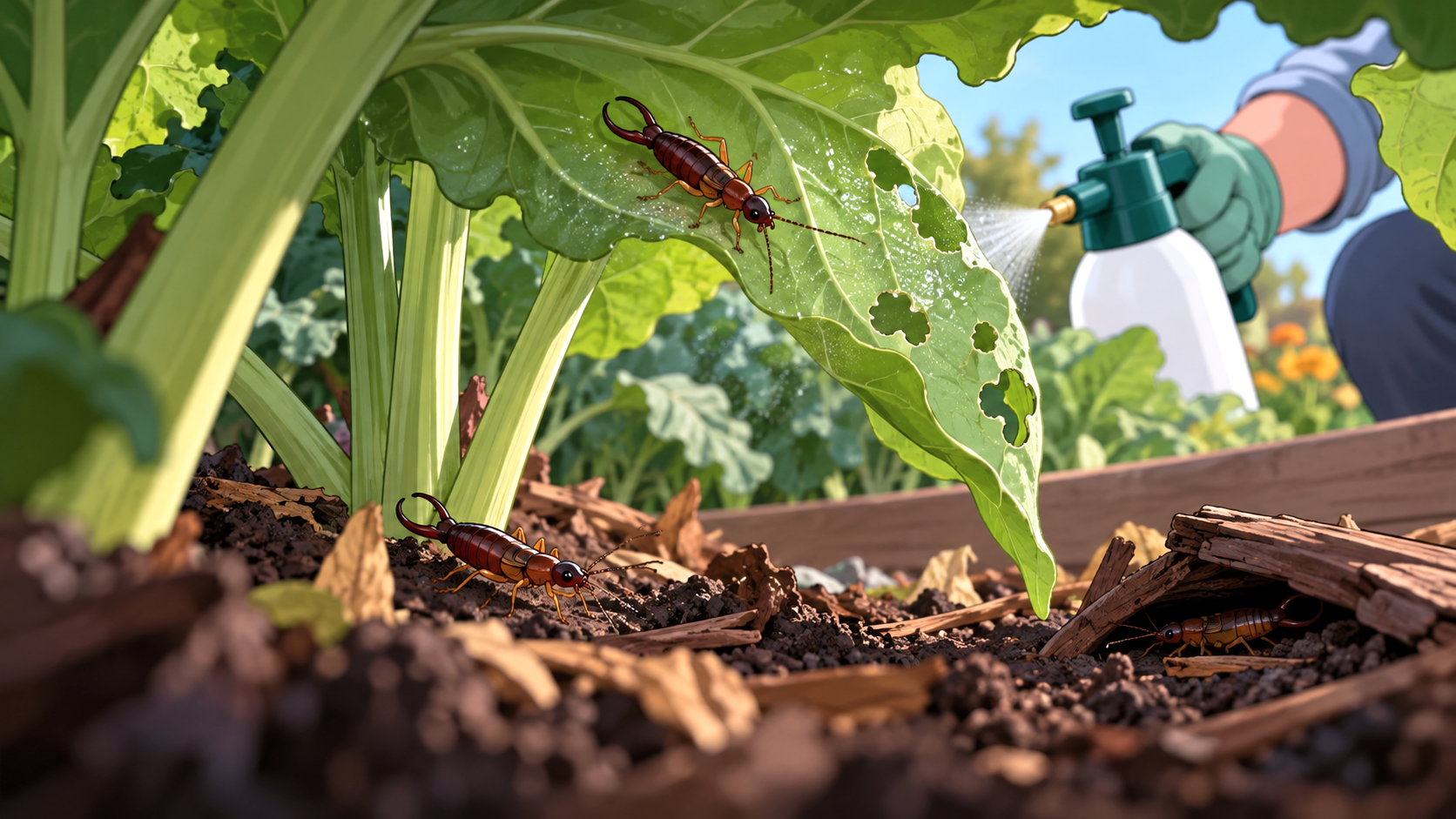
Neem oil gets recommended for so many garden pests that it is easy to start treating the name itself as an insecticide claim. The complication is that products described as “neem” can contain different neem-derived active ingredients, and those ingredients do not all work in exactly the same way. With earwigs, the product label matters much more than the familiar name on the front of the bottle.
Yes, some neem-derived pesticide products can control earwigs. Azadirachtin, an insecticidal compound derived from neem, is listed as an earwig-control option, and some registered neem-oil pesticide labels specifically include earwigs. However, that does not mean any bottle of neem oil will kill earwigs. Use a pesticide product whose label lists the pest and intended treatment site.
What Neem Oil Actually Does to Insects
Neem oil comes from the seeds of the neem tree, Azadirachta indica. It contains numerous components, but azadirachtin is one of its most important pesticidal components. Azadirachtin can reduce insect feeding and interfere with processes involved in growth and reproduction. Neem-derived pesticide products are used against many insects and mites on crops and ornamental plants.
That is quite different from imagining neem as an oily liquid that simply coats an earwig and immediately kills it. Azadirachtin can function as a feeding deterrent and interfere with normal insect development. Consequently, neem products containing it can have effects that are less immediately obvious than those of a fast-acting contact insecticide.
There is another wrinkle. Azadirachtin can be separated from neem oil during processing. The material remaining after much of the azadirachtin has been removed is known as clarified hydrophobic extract of neem oil, which is itself used as a pesticide active ingredient. Both azadirachtin and clarified hydrophobic neem oil appear among registered biopesticide active ingredients.
For a homeowner, the chemistry lesson has a practical purpose. Two products carrying “neem” prominently on their packaging do not necessarily contain the same active ingredient or have the same labeled uses. Reading the active-ingredient panel and directions is therefore more useful than buying a product simply because the front says neem.
Some Neem Products Are Specifically Labeled for Earwigs
Earwig control is not just a theoretical use of neem chemistry. Azadirachtin appears among the insecticide options listed for European earwigs, alongside other control methods. More importantly, actual pesticide labels provide examples of neem-derived products that include earwigs among their target pests.
One registered pure neem oil pesticide label includes earwigs in its pest list. Other products combine neem-derived ingredients with additional insecticides. For example, formulations containing neem oil together with pyrethrins can also be labeled for earwig control.
This is exactly why we would not reduce the answer to “spray neem oil on an earwig.” A combination product may kill or control an earwig, but you cannot automatically credit that result entirely to the neem component when another insecticidal active ingredient is present. Likewise, a neem product intended for a different pest or treatment site should not be repurposed simply because another neem formulation lists earwigs.
The label settles that problem. It identifies the active ingredient, target pests, permitted treatment sites, directions and precautions for that particular formulation. When treating edible plants, this becomes especially important because not every insecticide is registered for every crop.
Neem Makes More Sense for Plant Damage Than Indoor Stragglers
Neem products are most relevant when earwigs are damaging plants and the particular pesticide is labeled for that use. European earwigs are omnivores, so their role in a garden is mixed. They can damage vegetables and other susceptible plants, but they also consume other insects. Control is therefore more sensible when there is unacceptable crop damage rather than simply because earwigs are present.
Before treating a plant, confirm the culprit. Earwigs hide during the day and become active at night, so checking damaged plants after dark can connect the insects with fresh feeding damage. That is especially useful because irregular holes and chewed plant tissue can have other causes. Our guide to what earwigs eat in the garden explains why simply finding an earwig nearby does not prove it caused every damaged leaf.
Once earwig feeding is confirmed, the treatment decision should stay focused on the affected plants. A neem pesticide labeled for the crop and earwigs may be one option. However, the fact that earwigs can also function as predators is a good reason not to turn their mere presence into an excuse for routine spraying. We take the same selective approach in our guide to whether earwigs are good or bad for a garden.
Indoors, the calculation changes completely. European earwigs do not establish reproducing populations inside homes, so spraying neem around a room is not the logical response to an occasional invader. Vacuuming or sweeping up the insect deals with the immediate problem. Repeated sightings call for investigating how the insects are getting inside.
Neem Oil Does Not Replace Earwig Habitat Control
Even a correctly labeled neem pesticide does not change the conditions that allowed earwig numbers to become troublesome. Earwigs spend daylight hours in protected locations and are particularly associated with dark, confined and moist shelter. Gardens can provide plenty of those refuges beneath debris, dense ground cover, mulch and other protected spaces.
That biology gives you another control lever. When earwig numbers are causing damage, traps can monitor and reduce the population, while reducing unnecessary hiding places makes the immediate area less accommodating. Our broader guide to getting rid of earwigs in the garden puts those methods together without treating every earwig in the yard as a target.
This matters because spraying the visible plant can feel more decisive than looking underneath pots, boards or dense ground-level shelter. Yet the earwigs you see feeding at night spend the rest of their time somewhere else. A pesticide can be useful when plant damage justifies it, but we would not let the spray bottle distract from the locations supporting the activity.
The same principle applies around a house. If earwigs repeatedly enter through gaps near doors, windows or the foundation, spraying neem onto individual insects after they appear indoors leaves the route untouched. Keeping earwigs out of the house depends much more on exclusion and exterior conditions than on choosing a different liquid to spray indoors.
Do Not Turn Concentrated Neem Oil Into a Homemade Earwig Recipe
A common mistake with botanical pesticides is assuming that a plant-derived ingredient can be mixed however you like. Neem pesticide products are still pesticides. Their labels specify where and how the formulation can be used, and those instructions matter even when the active ingredient originated in a plant.
Neem oil can cause eye and skin irritation, while azadirachtin can irritate the skin and stomach. Exposure can occur while mixing or applying a product, including through skin contact or inhalation of spray mist. The appropriate precautions therefore come from the specific product label rather than from a general assumption that neem is harmless because it is botanical.
Plants also deserve consideration. A pesticide being labeled for plants does not mean every plant tolerates every application under every condition. Follow the product’s directions and restrictions instead of increasing the concentration because the first treatment did not produce an immediate result.
We would also avoid homemade mixtures that combine neem with dish soap, vinegar, essential oils or other household substances unless the actual pesticide label instructs you to do so. Mixing ingredients creates a different exposure and plant-contact situation from using a registered formulation as directed. It also makes it harder to know what caused any plant injury or pest-control result.
Choose the Earwig Problem Before You Choose the Neem Product
Neem is most useful here when the problem and product line up. Start by identifying where the earwigs are and what they are actually doing. An earwig eating a vulnerable garden plant presents a different control problem from one wandering across a bathroom floor.
For confirmed plant damage, check whether the neem-derived pesticide in your hand specifically lists earwigs and allows application to that plant or crop. Then follow that product’s directions rather than borrowing a dilution or application method from another neem product. If earwigs are concentrated around only a few plants, earwig traps and shelter management may also reduce the local pressure without treating a larger area than necessary.
For indoor earwigs, put the neem bottle aside and investigate the invasion instead. Repeated sightings are more useful as clues to exterior shelter and entry than as targets for repeated spraying. Our complete guide to getting rid of earwigs covers that wider problem when the insects are appearing in several areas.
That is the distinction we think makes neem worth considering without overselling it. Neem-derived insecticides can have a legitimate role in earwig control, but “neem oil” is not a universal treatment instruction. The actual pesticide formulation, its label and the location of the earwig problem determine whether it belongs in the plan.
Other Questions About Neem Oil and Earwigs
Does neem oil kill earwig eggs?
Do not assume an earwig treatment that targets mobile insects will also control their eggs. Female European earwigs place their eggs in protected soil nests and provide maternal care, so an above-ground plant treatment is not automatically an egg treatment. Our guide to what earwig eggs look like covers where the eggs fit into the life cycle.
Will neem oil repel earwigs without killing them?
Azadirachtin can deter feeding in insects, but that does not turn every neem product into a dependable perimeter earwig repellent. Use the product for the pests, sites and purposes stated on its label rather than treating the smell of neem as an invisible barrier around a garden or home.
Can I use neem oil on vegetables that earwigs are eating?
Only when the specific pesticide label permits use on that crop and includes directions appropriate to the pest you are treating. Vegetable gardens make label checking particularly important because pesticide uses differ among products and crops. Confirm the earwigs are responsible for the damage before treating.
Is neem oil safer than a synthetic earwig insecticide?
“Natural” and “synthetic” are not useful shortcuts for deciding whether a pesticide is safe to use in a particular situation. Neem products still have exposure precautions and application directions. Compare the actual products, permitted sites and label requirements rather than assuming the botanical option is automatically safer.
One thought on “Does Neem Oil Kill Earwigs?”